
Most people know who invented the car and the airplane, but how many people know who invented the TV? Yet, according to google most Americans spend approximately 4 hours in front of the TV a day and they spend far less time in a car or on an airplane.

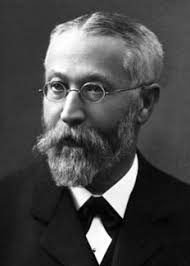
Perhaps people don’t know who discovered TV since it turns out the TV was not invented by one or two people, but by many individuals. TV started with the German physicist Karl Ferdinand Braun who invented the cathode ray tube in 1897. It was later that German inventor Paul Nipkow created the scanning disk. Later, in 1907, Russian scientist Boris Rosing combined those two discoveries in an experimental television system.
Mechanical television was later developed by British inventor John Logie Baird. At the same time and separately Charles Jenkins was working on an electronic television system based on the cathode ray tube. An Idaho teenager by the name Philo Farnsworth realized that the electronic beam could scan a picture in horizontal lines reproducing the image almost instantly. Presto the TV was invented.

Remarkably, the first TVs were as small as 5-inches and as large as 12-inches. Compare that to the 80-inch or larger TVs of today!
TVs became available in 1950s and took off in 1955. During this time shows, a couple of which still exist such as the Today Show and the Tonight Show. Others have come and gone but remain with us, such as my favorite I Love Lucy. Initially TV shows were 15 minutes in length and grew to 30 minutes. Television then and now reflects cultural standards and also influences cultural. Language on TV is regulated by the Federal Trade Commission. Networks had sponsorship initially from a single sponsor but later from multiple sponsors. Advertisers brought one to two-minute spots on a show. It is interesting to note that public television, which was paid for by the government, was initially for people in rural areas who could not afford to pay for a private television service. Now adays PBS receives very little government funding. However, in the UK the BBC has been and remains financed by the British government. Other countries, such as France, have similar government funding.

Between 1959 and 1964 the popular and engrossing Twilight Zone was broadcast. Rod Serling the writer and star of the show. Serling wrote stories about the common man with adages examining themes such as “Be careful of what you wish for” and around punishment or comeuppance such as having people where mask showing their true feeling that cannot be removed. It was a creepy, surreal, and highly engaging show. Rod Serling not only created a great show but he forced people to think about the repercussion of their behavior. Its impact led to other similar type shows but none could replicate The Twilight Zone. This was the first time a television writer became a celebrity.

The sixties also brought about bringing news into your living room. We saw the first man orbit the globe, the assassination of JFK, the Vietnam War, and the man on the moon. TV began to change policy and the killings in Vietnam made people question why we were there. The sixties also brought about the first satellite television signal but, it was not until the 1970s that we began utilizing satellites for broadcasting purposes.
The 1980s brought about the explosion of cable TV this led to a sudden increase in news and entertainment channels. In the 1990s and 2000s networks became more specialized catering niche markets in order to meet the needs of a diverse and fragmented audience.
It was the 21st Century that brought about digital TV. Again, TV changed radically. Outlets such as YouTube could broadcast whatever they wanted. The 16-year-old with no script, producer, or director could have his own TV show and suddenly become a celebrity. Other outlets such as Netflix were able to move beyond the mailing of CDs to producing their own content. All of a sudden anyone could be a producer and develop a wide audience, and content could be viewed on one’s phone. This is the TV we know today.
 Mass Media and American Life
I think it interesting to see how fast tv has advanced compared to other forms of media. Seeing that it hasn’t even been around for 100 years yet and yet watching tv shows today looks nothing like what it did at the start or even 10 years ago. I think it’ll be interesting to see if tv will go the direction of streaming services and faze out of being on air or if something else will come along.
LikeLike
I think it was interesting to note that people know about the invention of the car or the plane but do not know about the invention of television. This was certainly true for myself until reading the chapter on television in Understanding Media and Culture. I think that it is also cool to see how television has morphed into what it is today. It is true that streaming is more popular than actually sitting down to a regularly scheduled TV show. I think that streaming services will continue to increase because they are so convenient. I mean, look at Disney + for example. How many kids are actually sitting down and watching the Disney Channel anymore with any Disney movie at their fingertips through the Disney streaming service?
LikeLike