Sheep in the Era of Information

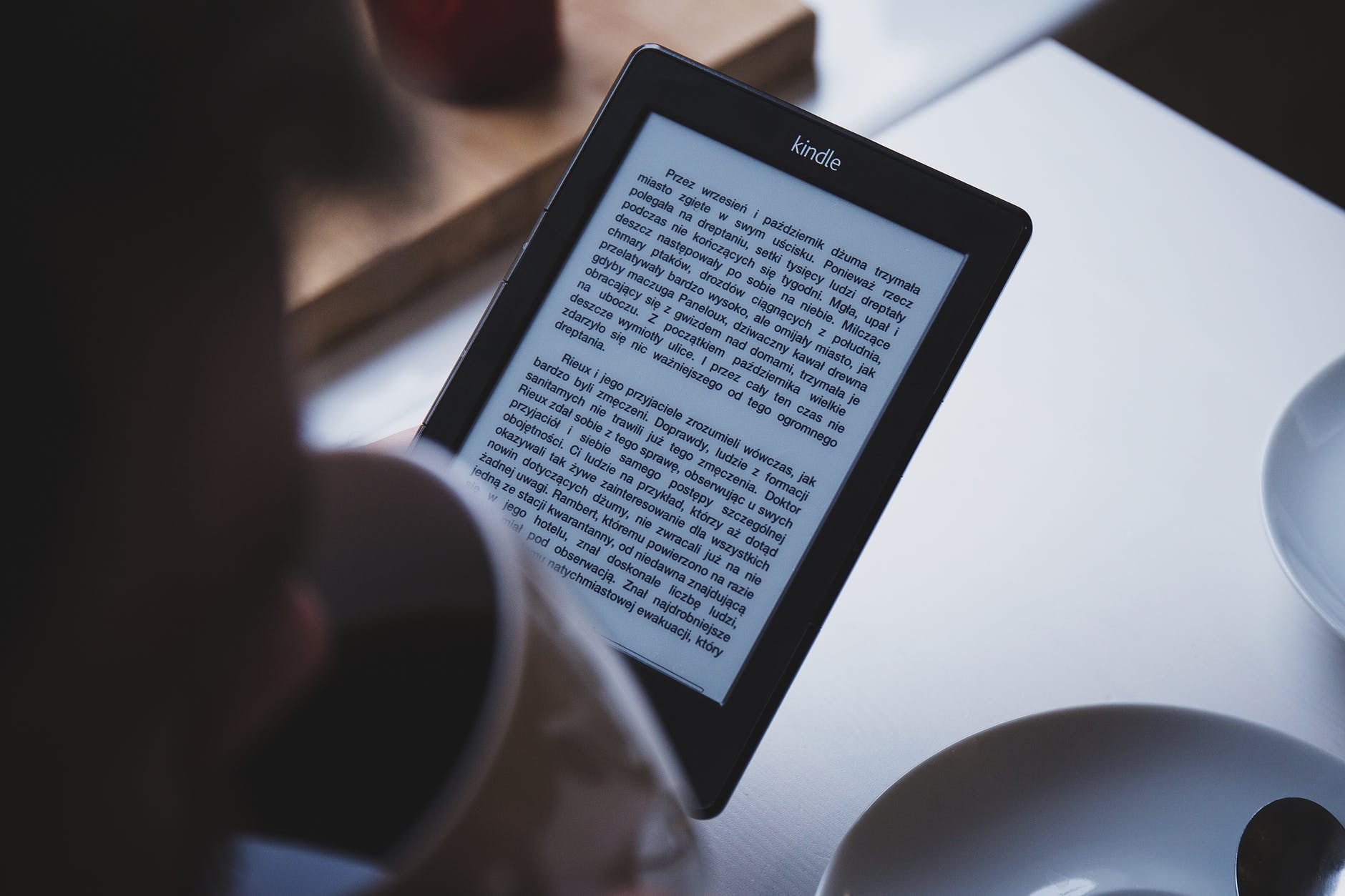
Photo by Mark König on Unsplash

From the early years of printing, books have been a form that expressed the worldly diversification of knowledge. Today, anyone can pick up a book, search something on the internet, or get an ebook to receive information. Nevertheless, after reading “Understanding Media and the Culture” and watching the film “Out-of-Print,” my views on books have changed. Acknowledging that I was born within generation z and all of the children born into this period was at the internet’s starting line. To others, I can imagine how looking, finding, and experiencing a book may seem prehistoric. This concept of having a book for knowledge may appear as a hassle as we were the guinea pig to “what’s now, and trending on the market.” While this is something societal forecasters may not have spotted, this access to information has resulted in an era of communication. Students found it more useful to make a few clicks on the web than digging research and getting a proper understanding of topics.

How can future generation function when no one is thinking more profound than what they are click baited?

Before the internet, books were a form of controversy, tales, and enlightenment because these scribbles on pieces of paper can build or divide a nation. Giving readers the ability to understand ideas that someone else may have been thinking and gave hope for a society of intellectuals and like-minded individuals. Specifically, books such as “Uncle Tom’s Cabin,” written by Harriet Beecher Stowe, “helped establish the political novel as an important touchstone of American literature.” (96). Readers in the 1800s were seeking books to stay up to date and inform themselves of worldly and individual views. The influxes of knowledge trained society to think more than what was plain to their eyes.

However, in today’s sense, the lack of reading and understanding more profound concepts leads to a world of mindless sheep because we outsource information.

“If you don’t have a citizenry trained to think precisely about ideas, your democracy will increasingly be one of the know-nothings. As long as people accept the illusion that they don’t have to learn to read and write well, they will essentially be locking themselves out of any opportunity to take the levers of power in this society.”

Stated by Scott Turow, Out-of-Print

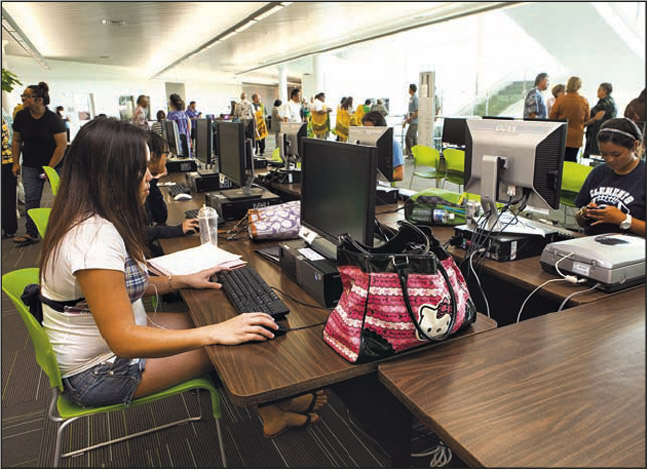
Photo by bantersnaps on Unsplash

This quote resonated with me as I always wonder how a society can function without rich knowledge, especially future generations. As younger students are normalized and consumed by the internet, parents and teachers had to counter this under learning by building healthy habits early. Specifically, in my household, my younger sister had to spend time not only reading what’s on the page but understanding what texts mean and how she felt post-reading. Having students find their “take away” at any point in the book, while it doesn’t compensate for the lack of worldly knowledge, gives students a more in-depth understanding. Especially now more than ever, it is essential to train students of the credibility of each clickbait, so they aren’t fooled by the overflow of information and become another sheep controlled by wolfs that actually read.
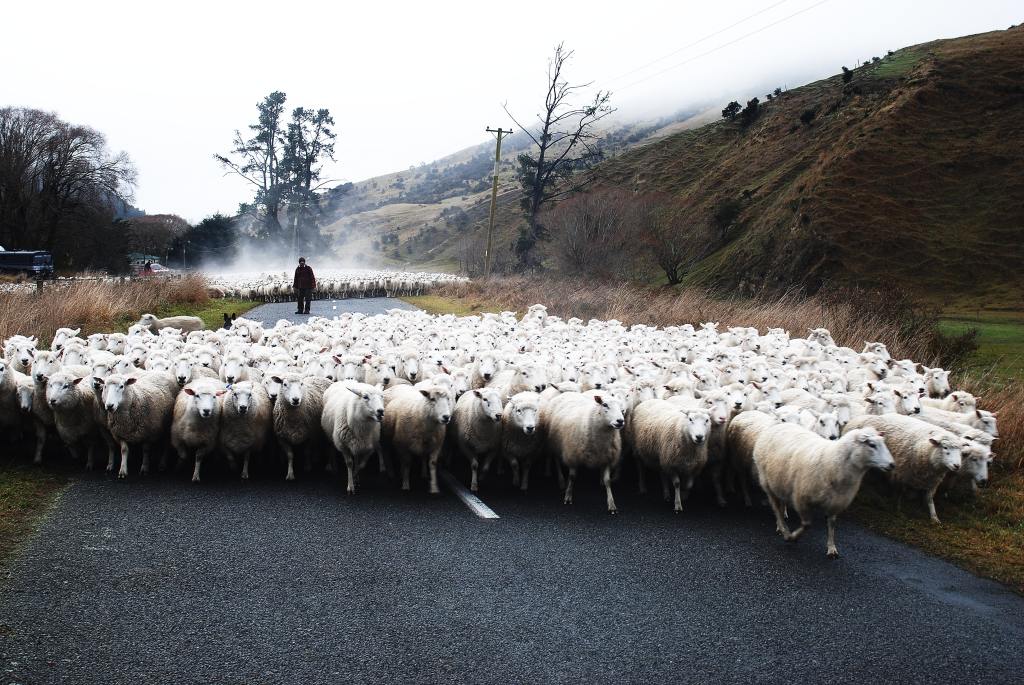
Photo by Mita Park on Unsplash

My question to the reader: For students, books may seem like the problem, while reading is; how would you glorify reading to younger students? Note any technology or form can be used.
The Evolution of Media and Culture

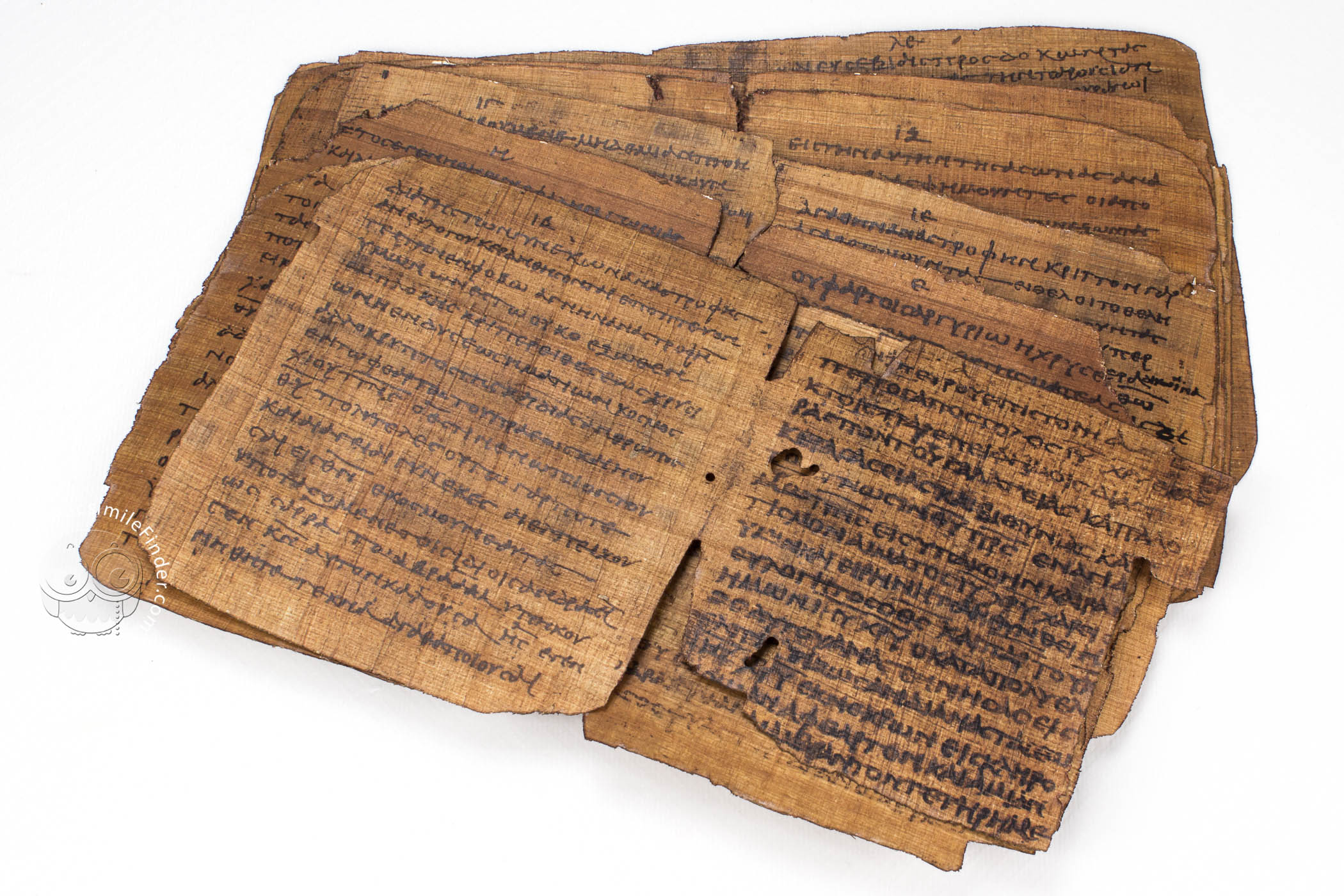
Media has had a huge impact on the way we interrupt everything in our society. Many people believe that literary reading has been lost over time. Throughout time research has been done to find out why this problem has occurred. The age that research has been focused on is ages 18-24 because they would be more educated to read literary books. After some research has been done, they have found that young adults are more prone to electronic reading rather than hardcover because of the generation we are in. Over the years by watching my generation and seeing that we watch television more than reading a book is because of how our world is constantly changing with technology. Books were first brought to our era by papyrus scrolls. Papyrus scrolls were made by ancient egyptians out of tall reeds that were gathered in the nile valley. Papyrus scrolls were put together usually glued and were often 30 feet long. During the middle ages next came the cortex it became the next advancement made out of parchment paper. The reason for the cortex was because they were more durable to use. The invention of the mechanical type books changed how media was passed along. The gutenberg revolution made books less expensive and easier to distribute. To see the advancements that our world has made in a short period of time is astonishing. To go from paper bound books to limitless information right at our fingertips. I lastly found the blockbuster syndrome particularly interesting. The media focuses the majority of their attention on the authors receiving high praise from publishers. Authors can receive a major advance or royalty depending on the status of the writer.

Bodmer VIII Papyrus - Epistles of St. Peter « Facsimile edition
Ancient Papyrus scrolls are still being sold in today’s market.

Massive corruptions such as Google and Amazon have been colliding with writers over copyright and other property laws. Google was accused of downloading millions of books with unclear status laws. This move by Google was deteriorating the sales and revenue to writers and publishers. Amazon made a similar move when they created the Kindle. Amazon’s price for the Kindle was incredible low but hoped it would draw readers into e-books. This would then force the price of e-books to be much lower than a hard copy. The lack of control publishers had over marketing became a huge outcry and complaint. Several publishers eventually forced Amazon to return the control of e-book pricing. The access to digital libraries gave people the opportunity to read and download millions of different versions of books. At one point google tried to digitize there books to make profit from the content being sold. There are policies and rules that these online readings have to follow, the open book alliance soon found out google was copyrighting all of their content and selling it.

Out of Print' Doc Examines The End of Print Books and What It Portends

The transformation of hard copy books to electronic forms of reading such as e-books has shifted the way we interpret information on any given day. Many statistics shows “One out of four American adults did not read a single book in any format in 2012″(Streep paragraph 1). By seeing these statics it shows how our generation has moved towards. We start to realize is the reason people aren’t reading anymore because of technology?

Are Books on their Way Out?

Since the beginning of written history, books have had an integral part in our everyday lives because of the information that contains but recently books have become a little outdated because of the internet and digital media. In the reading, it says “According to the NEA, the overall 10 percent drop in literary readers represented a loss of 20 million potential readers, most of them young. In 1982, young adults (people aged 18–34) were most likely to engage in literary reading; by 2002, they were the least likely group.” (p.82) This decrease is most likely greater now then it was in 2002 due to the internet being much easier to access now compared to 18 years ago. Not only are most classes (as of writing this) are taking place online but more teachers are most likely going to assign textbooks online rather than forcing students to buy the paper copy because of how widely available it is on the internet and how cost-effective it is. Along with the fact that they are up to date with the info online because it’s easier to fix small errors through a webpage compared to a paper copy. 

Another factor that is driving consumers away is the waste that they produce. Books are filled with hundreds (if not thousands) of pages in each book wasting paper, in turn killing trees, and rather then having multiple uses, books have only one purpose for their entire lifetime and once its ruined, it becomes waste that is extremely unnecessary in the age of the internet. The reading back statement up when it says “E-books differ from their print equivalents in many significant ways. For one, there’s no physical production cost, which means that e-books are generally less expensive than traditional books. There’s also no cost to store or transport e-books. Because an e-book’s publisher doesn’t need to order a set print-run, a text issued as an e-book doesn’t ever have to go out of print. E-books also appeal to readers who want instant gratification. Instead of having to travel to a brick-and-mortar bookstore or wait for a delivery, a reader can download an e-book in a matter of minutes.” (p.108)

 “In 2009, the average American spent 56 percent of his or her free time watching TV, and less than 7 percent of his or her free time reading (Bureau of Labor Statistics, 2010). Video game sales rose 19 percent in 2008 alone and have continued to climb (MSNBC, 2009).” (p.111) This evidence from 11 years ago is still relevant because of the rise of social media such as Youtube, Instagram, Twitter, TikTok, etc taking young readers away from the books and grabbing their attention through quick spurts of entertainment that are no longer than 5 minutes. A lot of the youth nowadays have almost no attention span because of the clickbaity media landscape that they were raised up in. The internet was built to keep the attention of viewers for as long as possible, and that’s shown with the over-saturation of ads and pop up links that force users to interact with sites like Snapchat and Instagram. 

One question I would like to poise to you (the reader) is that do you believe books will be COMPLETELY useless and digital E-books will take over or do think that books will still serve a purpose long after we are gone?       

A National Crisis? Or Just The End of Era?

Over the years reading a paper book has been declining in popularity rapidly. Why is that? Some might say there are bigger and better things to be doing nowadays. Some might say its the newer inventions that allow you to read it electronically. What makes reading a book electronically better than reading the hard copy of a book? All of this comes down to preference in my opinion.

Photo by freestocks.org on Pexels.com

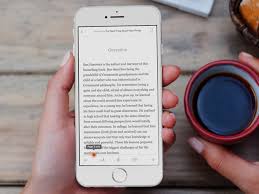
Reading can be able simple as pressing which book you want to read on the screen. As technology has developed you can download as many books as you want, or as many as you can fit on your device. But what is the benefit of doing this instead of getting tons of book and storing them in your house? Well mostly the answer to that was in the question itself. How would you store so many books? Most people can’t afford to have a library in their house. Though that would be amazing, it’s just not realistic. Although technology has the same issue if you think about it. Eventually you will run out of space to download books. So, what is the real reason that everyone uses a tablet to read a book? Portability. Have you seen someone walking down the street carrying 50 books in their hands? If they were walking with 50 books on their iPad or Kindle you would never know.

On the other hand, some people love the feel of their paper book. Having it on hand to show someone or reference something can be beyond helpful. Showing someone an article or a novel on a screen can sometimes be a hassle. Personally, when it comes to have a hard copy of a textbook for classes or a downloadable copy, I would always choose a hard copy. Being able to take my book and do homework without having to pull up the downloaded PDF is nice. It can also be a pain to navigate the PDF and find the information you are trying to write about.

Ultimately, I feel the choice is yours when it comes to reading. Some would prefer the portability and ease when it comes to reading electronically. Others enjoy that new book smell and feel when reading their favorite novel. There’s no right or wrong just preference.

I feel over time, creations of other activities have also had an effect on the joy of reading for fun. In the past there was not as much to do. Now a days you can go to a water park, go to the movies, go watch a sporting event, and so many other options. When Gutenberg first invented the printing press, there was not much to do other than working. Most of the days were spent working and after work and dinner was finished most would read books that were printed. Do you feel like over time reading will become less and less popular? Or do you feel like reading will come back around? I feel like it might be the end of a era.

Photo by Wendy van Zyl on Pexels.com

Introduction

Hey! My name’s Danny. I’m non-binary and go by they/them pronouns. I’m currently a sophomore in Art and Design right now, taking glass and sculpture studios. When I first got here, I was super interested in 2D animation, but I’ve since shifted interest into tattoos and considering that as a career path.

I was born in Rochester, and I grew up in some smaller areas called Batavia and Le Roy. Alfred feels a bit like home since it’s not very city like and has a smaller population but it’s definitely more populated and active than Le Roy.

Back to art, it’s one of my biggest interests in life. I grew up drawing and creating with different materials and just never stopped. I constantly pick up new interests and after a bit get bored and have to find something to move onto, but art has never disappeared from my interest, so it’s only fitting I find a way to meld my life into it. Most artists use art as a way to translate and express their feelings and while I probably do that in some ways, I mostly use art as a way to escape and cope. I have lots of sensory issues and small things that most people probably wouldn’t even think about can send me into something like a panic attack where it’s the only thing I can focus on. Sometimes art, usually patterns I like to mess around with, helps me to focus on something else and distract from what’s causing me issues.

Overall, art’s provided me with so much, and I have no idea where I’d be without it. I’m super interested in seeing how mass media and art interact and play off of each other and I’m excited to see how I might be able to have that influence what I make while I’m at Alfred and later on in life.

Revolution of Books and Humans

Why does history always change when we invent a new way of reading? Reading through the chapter it became apparent that at every cross roads to a new way books are made or kept it allowed for human kind to evolve in a mental capacity right along side it. This fact alone shows how books became the best invention human kind ever made. Books allowed for preserving information such as our own history which allowed for better story telling and learning about ones own culture and heritage.

This form of learning was truly adopted by two civilizations the Romans who helped develop the codex and the Chinese who had their own forms of writing they did on bamboo slabs. These inventions allowed us a look on how daily life developed around written word which allowed for official laws to be mandated and taxation be easier on the subjects. Although most people still couldn’t read it was only wealthy people within nations that could afford to learn.

Another point in history the garners merit for its direct line to human evolution should be the invention of the movable type. This invention by Gutenberg was astronomically important it paved the way for less wealthy workers to be able to learn to read. Although the first thing to be printed was the Bible the flow of information from the once select priests and rich oligarchs to the poor peasants allowed for people to spread ideas more easily which could have also caused a few violent revolutions along the way.

An important part of American history was the civil war that brought with is a lot of death and blood shed over slavery. But one of the main factors that definitely had a influence over the war being started was Uncle Toms Cabin. Stowe’s novel was credited with depicting African American treatment by Southern Landowners that disgusted many northerners at the time. This mark in history also left some of the stereotypes we still see today of African Americans. This important book helped lead to the emancipation of slaves which was a defining moment in the United States history.

In the 1900’s books became cheaper due to the paperback revolution which ended the distinction between high and low art. This revolutionized how we see books even today because it allowed for more expressive diversity in voices and experiences sense people couldn’t tell which books were better or worse based on covers. Which leads us to today where we as people value more on the quick and easy content to read just looking at the surface while not diving in to the readings. All these ways have allowed humans to evolve right along side books. Do you think books have influenced human history more than any other invention?

The Reality of Paperback

Reading is a true skill that all kids must have when going through school. Not being able to read really holds you back in many ways. It is useful for so many things around the world. Thats why we are reading as soon as we enter Kindergarten, (and for some kids its even longer) However, the world around us is changing in drastic ways. The early stages of technology are shooting through the roof and only improving from here. Most people now are just reading what they want to off of their phones or tablets. It started about 10 years ago when amazon came out with the Kindle. That was the first big step into reading over a screen. After the kindle started coming out, buying paperback books started to go down tremendously.

Do we need books? yes, absolutely, if we didn’t read about things then we would be so unprepared and left in the dark. It iOS very important to stay up to date on current events and write ups and new books. With today’s modern technology though, most of that reading is done off of social media and off of our screens, rarely do we pick up a book anymore hoping to better ourselves for the immediate future.

Amazon.com: Kindle - Now with a Built-in Front Light - White -  Ad-Supported: Kindle Store

Our generation is the first group that was born into technology like this, with the smart phone and the Smart TV’s and computers and also the kindle. My parents still mostly read paperback books because that’s what they know, they grew up on paper books so they like to stick with it. It is completely opposite with our group however, we are starting to grow up on all of these technology devices and we will most likely continue using those until we die, because of comfort. Not because we know it’s better, just simply because we are comfortable using that equipment and we tend to gravitate more towards the way we are comfortable with. In multiple years, there will be something else that comes along that blows all of this under the water. Something that is very convenient and at the same time just better than everything else before it when it comes to technology. I’m equally excited as I am scared. Technology is a very intimidating aspect of life that we can’t let slip our minds. Books have drastically changed over the years from paperbacks to completely on technology now. We buy most of our textbooks online now just for example, but as technology changes, surely we will too.

Could I see a picture of a mass-market paperback book? - Quora

Christianity and Print

The textbook, Understanding Media and Culture, in chapter 3 gives a history of how the books that we all know and love came to be, from the ancient beginnings of papyrus scrolls to the E-books downloaded on almost every tablet in the world.  What is interesting however is that one specific movement that has changed millions of lives can be tracked along with the evolution of print.  The Christianity movement has grown greatly since it began, and the written word of the Bible seems to be connected.  The question is, did the spread of Christianity and the drive of Christians lead to the developments in print, or did the rise of printed materials lead to the spreading of Christianity?  In addition, has the continual development of technology, and therefore the cheap introduction of any genre imaginable, taken away from various developments of religions and the desire of individuals to immerse themselves in religious texts?

Some Scrolls

               Understanding Media and Culture and the documentary, Out of Print, both spend a little time on the history of books, and both of them begin with talking about scrolls.  Out of Print points out that people realized that to get to the end of a passage, one had to unroll the entire scroll.  The specific scroll in the video was one that was about Christ’s life.  To avoid this hassle came the idea of the codex, which was especially helpful in the spread of Christianity.  “Between the 2nd and 4th centuries, the Romans began sewing folded sheets of papyrus or parchment together, and binding them between wooden covers…The codex was the preferred form for early Christian texts, and the spread of Christianity eventually brought about the dominance of the codex; by the 6th century CE, it had almost entirely replaced the scroll” (Understanding Media and Culture 84-85).  Faith and religion was very important during that time—so much so that in the Middle Ages, monks laboriously copied by hand many classical texts—both religious and secular; they thought that studying even secular works could bring someone to God (Understanding Media and Culture 86).

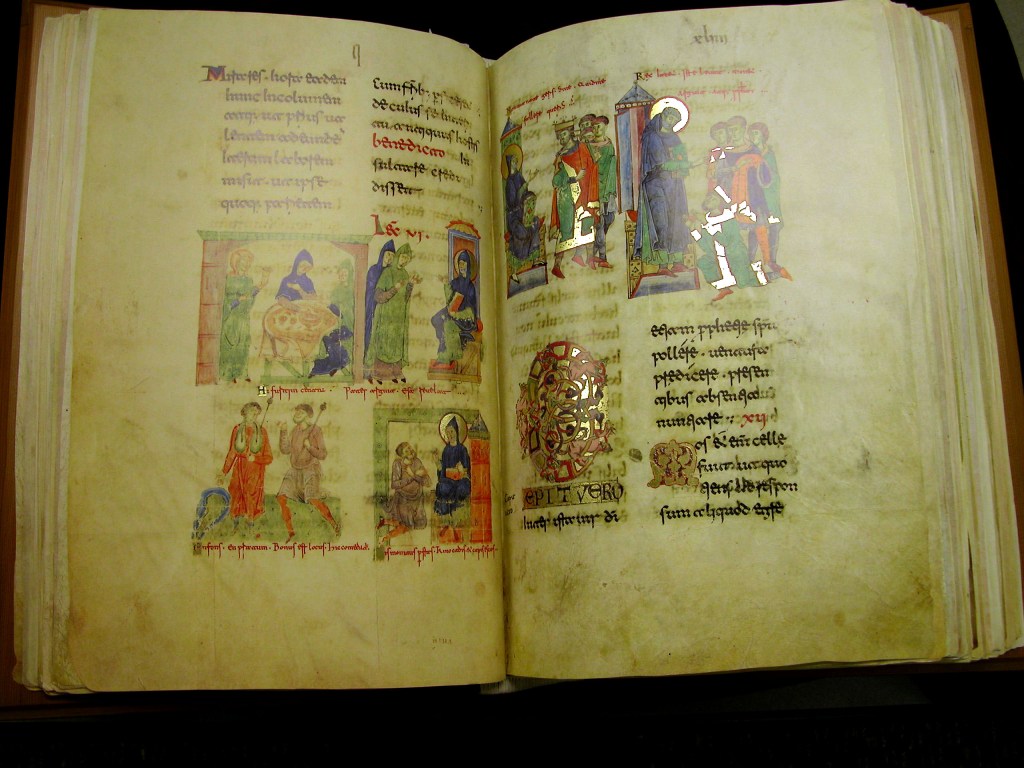
Illuminated Medieval Manuscript

               From there technology developed with Gutenberg’s invention of the printing press.  And what was one of the first things that he printed?  The Bible (Understanding Media and Culture 86)!  Professor Ugo Rozzo in the documentary, Out of Print, says about Gutenberg’s invention that, “It was not an invention of a cultural nature…we know that the printing press is responsible for the spread of the Reformation…”  Though Gutenberg chose the Bible as his great work, the printing press was soon used to print all sorts of things.  Books were so available that they lost value (Understanding Media and Culture 88). 

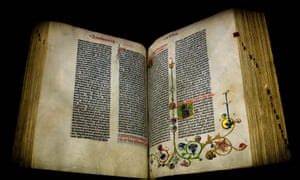
Fragment of Gutenberg Bible

The textbook and the documentary both go on to tell about the development of technology all the way to today, and therefore, the options that people have for reading are endless.  Unlike it may have been in the Middle Ages, one does not only have religious texts to choose from anymore.  I propose that perhaps people have stopped seeing the value of the Bible and other texts like it because they are produced like everything else and there are so many other things to read.  There is no real cost anymore for reading materials; we do not have monks hand copying the most important texts anymore.  Ultimately, it is nice to have the choice to read whatever you want to, but the question is because this is the case, are people not as interested in the spiritual realm as they used to be?  Is the development of the technology of reading and books related to the decrease we see in the practicing of religions in America?

Books and Libraries: Are we nearing the end?

In the screening, “Out of Print,” they talked about libraries becoming obsolete because it is more convenient for people to look for reading materials online.  This made me a little sad when I think about the architectural marvels that some of these libraries are.  I think that being in a good library is like going to a museum. 

There is something about the smell of old books and the way they are organized on their shelves and even if I don’t read a ton of books, it is the feeling that I could if I wanted to.  The feeling that anything that I want to learn about is right there.  You may have to work a little to get the information or find that book that resonates with you or is just what you need to nourish your soul in that moment. 

I understand why people would simply want to search for their research online.  In today’s fast paced world and everyday obligations, we may not have the time to go to the library and do research, so it is more convenient to access a digital library.  It seems like libraries are being used more for accessing the internet and a sort of gathering place. I wonder what will happen to all the books and libraries if we just stop using them? Will we simply move forward without them or will they continue to exist alongside digital materials?

I can relate to the overall experience of getting a new book or enjoying the look of old books.  There is a certain nostalgia for entering a library and immediately being able to see the massive collection of books and how they are arranged.  I also see the appeal in having books to collect and display.  I may not read them all, but I like to have them in case there is an urge.  Currently, I have several books that I have started and not finished.  Some books, I got bored with and some I got close to the end and got out of it what I needed and that was it.  Maybe the internet has affected me in that I will start a couple different books and read them simultaneously when I do read a book.  Mostly, I search online about what I want to know, keeping in mind to get my information from reputable sources.

In the documentary, “Out of Print,” (2013) Professor Wesch mentions that “we have to start questioning what a book is because they will cease to exist in large part.”  There are now several ways to access the same book.  How does that change the significance of publishing?  When digitizing becomes standard, what will we consider the equivalent to writing a book?  Meryl Streep asks, “If books are the foundation of society, how does that change the world of ideas and how does that change us”?

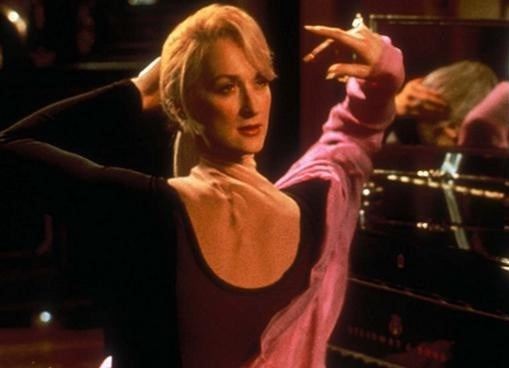
How I picture Meryl Streep. 😉 One of my favorite movies of the early ’90’s, “Death Becomes Her.” (1992)
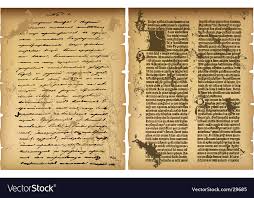
old papyrus scroll isolated on white background 3d render

I think we are evolving just as we have evolved from using papyrus scrolls and just like we have moved from typewriters to PC’s. I found it interesting that according to our text, Project Gutenberg, the oldest digital library existed three years before the Internet went live.(Ch. 3.6, Digitizing Libraries) Did they already anticipate what is happening now?  Overall, I am split on whether digitizing libraries is the best route to take.  I think that I will find myself looking to the internet for the answers to my questions and the research to support them.  Do you see yourself going to the library to access information for research or are you more comfortable using a digital library?

Blog One: Do you know the history of books?

The first form of book was the Papyrus scroll by the ancient Egyptians around 3000 BCE. They made these scrolls with anything they could get their hands on, they usually used metal, leather, clay, stone, and bones.  During the 6th century BCE, papyrus was the most common to write on throughout the Mediterranean.  In the 2nd and 4th centuries the Romans would use parchment or papyrus and would bind them together which is called the codex. To get a visual picture, its like books today, it was quicker than the papyrus scroll.

Gutenberg’s industry caused a revolutionary invention which was the mechanical movable type in 1448.  There is a bible in 1455 that he renown, he printed 180 copies. Most of them were on paper but only 45 of them were on vellum, this bible is also called Gutenberg Bible.  After Gutenberg printed out his bible, Pope Innocent VIII demand that all books be viewed by the church authorities before they could be printed. The Pope want allowed to ban books before being printed which he did. He banned the bible being printed in any other language other than Latin. At this point Martin Luther started to challenge the church authority. He believed that everyone has a right to read in their own language and not having to learn a different language or not being able to read at all.  In the 20th century America created a law for copyright to protect authors from censorship and they were able to make a profit from their work. The very first copyright was England’s Statute of Queen Anne in 1710.

In the 1800’s there was a very famous book called Uncle Tom’s Cabin. The novel sold 300,000 copies in the first year, this book became the second- best-selling book after Gutenberg bible. This book was created to give the North and South tension which helped start the Civil War. In the 20 centuries, paper back books with different genres like science fiction, mystery, romance, and children’s literature became popular.  

E-books is the electronic way of reading a book, which is the less traditional way of reading a book. These e-books are not usually as expensive to a cover or a paperback. There is no production cost, no transportation, no baggage to deal with. Instead, by a click of a button readers can have hundreds of books downloaded in a couple of minutes. The only problem is, people will need a laptop, phone, tablet to read it on. Most people in todays world has come kind of technology but some people are not willing to spend a couple hundred dollars just to read. An author named Dan Brown released a novel called The Da Vinci Code, there was over 100,000 illegally downloads of this book.  Some authors are worried that the common person will try to find a way around from spending on a book. E-books are accounting less than 5% in the book market but its slowing growing, in 2010, Amazon accounted for 15-20% for e-books in the United states which is about 400,00 titles that are available on kindle. Amazon started the e-book prices at $9.99, in the long run Amazon would be losing money for every book.

The problem with independent book retails is that they cannot win with the larger chains.  Barnes & Nobles is one of the top 2 retailers in the United States. Ever since 1972 the independent bookstores have fallen, in 2005, the number as declined by 65%.

Having an actual book either it is a hardcover or paperback its more personal for people. You have the feel of the book, the unique texture of each page, the smell of an old or new book. By using our senses, it gives us a whole other story on where it came from.  There are people that worry about our future generations, never learning by an actual textbook, or even knowing what a book is.  According to the “Out Of Print” video, “E-books account for 31% of publishing Revenue for adult fiction”. Later, it also says,” we are making 1 million new books a year globally”. The problem is the individual publishers could be doing miserably. A company called Open Road (Integrated Media) is a digital company only. they have around 250 authors and around 3,000 titles. Having E-books is like having no baggage, no transportation, and no emptying boxes. they are simply on technology either it is a laptop, tablet, or your phone. just a click of a button you have countless book on a screen