THE FUTURE OF JOURNALISM

Truth matters more now than ever

In 1791, the First Amendment was born. Then in 1798, the Sedition Act in reaction declared writing, printing, uttering, or publishing any false, scandalous, malicious writings against the United States government. Then, when Thomas Jefferson was elected President in 1800, he allowed the Sedition Act to lapse, claiming that he was lending himself to a great experiment. This free press experiment has continued to modern times.

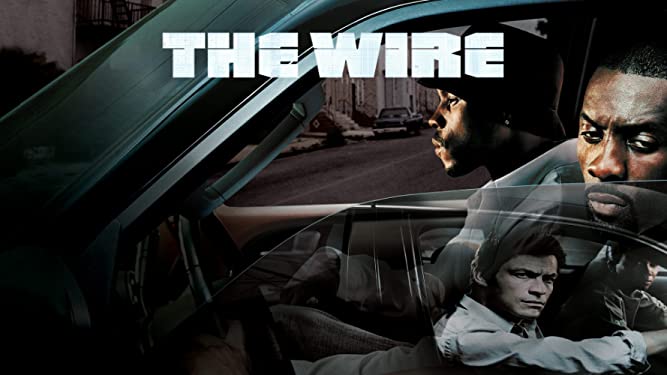
David Simon, journalist and creator of the hit television series The Wire warns if fact-checkers aren’t allowed to attend local government meetings, we could see significant state and political corruption due to unaccountability. Journalists are ground zero in reporting the truths of the world. With more and more people getting their news online and through unreputable resources, what is the future world of the news industry going to look like? In the article, The Guy Who Wouldn’t Write a Hit: An Interview with David Simon, Mr. Simon mentions that he was encouraged to write what he knows and to put himself in someone else’s shoes. He says, “what we filed was so depressing that NBC refused to make it.” He was pressured to write in life’s victories and “fluff.” As he moved into the world of television, his journalism career “just kind of fell away.” I think that we will slowly rely more and more on individualistic reporting in the future, which is both good AND scary. How can we actually regulate everything that is being reported? How can we see what may or may not have been edited? At the same time, there would be more transparency.

The creation of the internet and digital publishing has changed what we consider to be truthful and reputable sources of journalism.
One area of journalism I find interesting is Interpretive Journalism. Established in the 1920’s and 1930’s, it was used to explain issues and to provide readers with a broader context for the stories they encounter. This type of journalistic reporting goes beyond the basic facts of an event or topic to provide context, analysis, and possible consequences. There is a need to separate objective news from opinions and analysis. We have a lot of this now, but I think this type of news reporting will become more popular, especially if we continue to devalue journalists.

John Oliver on Journalism: “The future of journalism could be in trouble. What is true is not always what is popular.”

Another area of journalism that has increased in popularity is advocacy journalism. Advocacy journalists promote a particular cause and intentionally adopt a biased, nonobjective viewpoint to do so effectively. Despite the challenges and potential pitfalls inherent to advocacy journalism, this type of journalism has increased in popularity over the past several years. In the text, Understanding Media….Newspapers, USA Today reporter Peter Johnson states, “Increasingly, journalists and talk-show hosts want to ‘own’ a niche issue or problem, find ways to solve it, and be associated with making this world a better place (Johnson, 2007).” For example, Oprah Winfrey is used as an example of having used her show as a platform for issues and concerns, which made her one of the most famous advocacy journalists. While many praise Winfrey for using her celebrity to draw attention to causes she cares about, others criticize her techniques, claiming that she uses the advocacy style for self-promotion.

Yet despite this somewhat harsh critique, many view Winfrey as the leading example of positive advocacy journalism. Regardless of the arguments about the value and reasoning underlying her technique, Winfrey unquestionably practices a form of advocacy journalism. In fact, thanks to her vast popularity, she may be the most compelling example of an advocacy journalist working today.

As individuals turn to the Internet to receive news for free, traditional newspapers struggle to remain competitive and hold onto their traditional readers.

Blogs have offered a new take on the traditional world of journalism. Blogs feature news and commentary entries from one or more authors. However, journalists differ on whether the act of writing a blog is acutually a form of journalism. Many old-school reporters do not believe blogging ranks as formal journalism. Unlike journalists, bloggers are not required to support their work with credible sources. This means that stories published on blogs are often neither verified nor verifiable. Despite the blurry lines of what constitutes “true” journalism—and despite the fact that bloggers are not held to the same standards as journalists—many people still seek out blogs to learn about news. Thus, blogs have affected the news journalism industry. Beyond the lack of accountability in blogging, blogs are free from the constraints of journalism in other ways that make them increasingly competitive with traditional print publications. Significantly, Internet publication allows writers to break news as soon as it occurs. Unlike a paper that publishes only once a day, the Internet is constantly accessible, and information is ready at the click of a mouse. (2010, Understanding Media…Online Journalism Redefines News)

With declining readership and increasing competition from blogs, most newspapers have embraced the culture shift and have moved to online journalism. For many papers, this has meant creating an online version of their printed paper that readers will have access to from any location, at all times of the day.

Some benefits of online writing:

As newspapers contemplate making the transition from print to online editions, several editors see the positive effect of this particular issue. N. Ram, editor in chief of The Hindu, claims, “One clear benefit online editions can provide is the scope this gives for accommodating more and longer articles…. There need be no space constraints, as in the print edition (Viswanathan, 2010).” With the endless writing space of the Internet, online writers have the freedom to explore topics more fully and to provide more detail. Online writing also provides a way for beginners to enter the professional realm of writing.

The online newspaper is, in reality, still trying to figure out what it is. Indeed, this is an uncomfortable position familiar to many online-only papers: trapped between the printed news world and the online world of blogs and unofficial websites. Despite these challenges, newspapers both in print and online continue to seek new ways to provide the public with accurate, timely information. Newspapers have long been adapting to cultural paradigm shifts, and in the face of losing print newspapers altogether, the newspaper industry continues to reinvent itself to keep up with the digital world. (Understanding Media)

Have YOU ever read a printed newspaper? Where do you get most of your news?

Works Cited:

2010, M Libraries Publishing, Understanding Media and Culture

https://www.nybooks.com/daily/2018/08/22/an-interview-with-david-simon/

News article of the week:
“Facebook said, it will begin barring politicians from placing new ads on Facebook and Instagram”

Stop Printing

In this week’s screening, we spiral into the sad reality of the decline of press circulations within The Wire. In this episode, characters spoke on the real but unfortunate truth that newspapers are becoming a past thing. As of today, the Internet has become extremely accessible to information that society tends to forget. Within The Wire, we discuss and tackle the fact that people are moving away from physical print and the enforcement of credibility.

The majority of news reporters and broadcasting stations today uses newspapers as a form of reliable reference as newspapers were made to find the truth. These publishers are still the anchors for the truth as lies and mistrusted information is a form of liability; after a law was passed in 1733, within the John Peter Zenger case. This case created a presidency for future publishers as the “truth is the best defense against liable.” Specifically, this case became the stamp that enforced the Press’s Freedom in the United States and was included in the Bill of Rights.
However, Within The Wire, we saw in the infringement between characters that there are still bad apples that would risk the publishing company for a “good story” than finding credible sources. But with false information Newspapers, prints can face harsh backlash and legal enforcement if they followed through.

Unfortunately, with today’s technology evolution, the Internet doesn’t hold such enforcement and standards. This leak of information makes lies, and clickbait spread quite efficiently while the newspaper is still finding the truth.

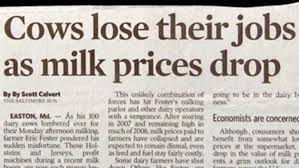
In the past decade, newspapers have begun to decrease exponentially. As readers are no longer home, and many things are exchanging to be online, many publishing departments began to see cuts in staff, pay, and locations.

“Newspapers have control over which stories are told and how those stories are presented. Just as the newspaper industry has changed dramatically over the years, journalistic writing styles have been transformed. Many times, such changes mirrored a trend shift in readership; since the 1950s, however, newspapers have had to compete with television journalism and, more recently, the Internet. Both television and the Internet have profoundly affected newspaper audiences and journalistic styles.” (157)

I have recently noticed at Alfred University the change of readers on campus. Younger folks who were once readers are beginning to decline as older and genuine readers are the few that still pick up a print. Regardless of the world going through a pandemic, which increased everyone’s screen time, college students have begun to stop reading print thoroughly. And in the Fiat Lux News attempt to find more content to navigate students to pick up the newspapers more frequently, this has forced the newspaper to move online. Many Newsrooms now hope that their credential and standards still live up to what they had before.

My question to the reader: Do you feel that the switch to online will put regular blogs and factual newspapers at the same level? Will society begin to believe that everything on the Internet is a creditable source?

Will it be the END?

In all honesty, can you recall the last time you saw someone reading a newspaper or even reading one yourself? If so, I’m sure it was probably someone older person reading it or you’re probably a person who’s more old fashion. In today’s generation newspapers are almost outdated. Now of days it’s rare to see someone physically reading a newspaper. Usually you would see people doing everything else with a newspaper but reading it! For example, people use it for their dogs bathroom, or even as a shield for fragile objects like a vase. Technology is taking over the world, and as it advances it’ll become even more intense for newspapers to be as convenient again.

See the source image

Newspapers are actually extremely relevant and has been around for approximately 300 years! For the most part, newspapers are one of the main sources to where news cites there information. Yes, the news that we watch on television cites their facts from newspapers. Newspapers are a big deal in the Journalist industry. They provide jobs and work for people. With all the current events going on COVID-19, this pushed everyone away from newspapers and technology took over. Due to the quarantine forcing everyone to stay inside, this made people rely on social media platforms for information and updates.

Back to the Future of Electronic Newspapers - Science Friday

The end is near! The convince of a newspaper doesn’t overpower the convenience of technology. Although a physical newspaper is very meaning full, times are changing for the better. People are attracted to quick and easy. A physical newspaper might be outdated but the structure of how it’s supposed to be will be valued forever.

Newspaper on the Fritz

What’s with this old thing with words on it? Ohh, yeah that’s a Newspaper. Its weird because I remember how my grandparents and mother would save every news article from my sporting events, my community outreach programs, and school accomplishments. To older generations newspaper was just the thing you got your news from and also meant a kind of careful thing to preserve. But today we have seen less and less usage of newspapers by younger generations and people in general.

There has been the newspaper for a very long time in human history just in different forms. They were a way to communicate and learn new things about the world that we live in. You could hear how a war started between European powers the world has ever seen while sitting on your couch in New York. They provide a staple of how our society has grown more intelligent about world affairs and how they will effect us in turn.

The news in American history has always been biased in some ways such as during the Revolutionary war where writers up-played the scale of events such as the Boston Massacre. But such as the filmed showed us in today’s society there has been skewed from reporting the news to just getting content out to the people. Americans have become very impatient therefore news needs to be on a want now timing compared to actually doing research on the subject. News stations and paper review have not tried to stop this cycle because its the only way they can possibly stay afloat in our capitalist economy.

With news papers not reporting on correct information will they eventually stop existing?

2020: A Year of MisInformation

In this chapter of the textbook, it had focused on newspapers and the effects they have had on shaping this country. One part, in particular, had caught my eye though because it had covered yellow journalism and how it gave false info about the Spanish-American war and how “Both Hearst and Pulitzer filled their papers with huge front-page headlines and gave bloody—if sometimes inaccurate—accounts of the war.” (p. 138). This reminds me of the sensational, and clickbaity headlines of news sites in the current internet age. 

It has gotten so bad that people can’t trust the news anymore, for example, this year we are going through a terrible pandemic in the middle of an election year, so the chances of finding non-bias information on the issue are slim because of how politized it has become. One major talking point out of everything to come out of the pandemic is how effective are masks? Most people know that putting on a mask will help slow the spread of Covid-19 but due to the president of the U.S spreading false and dangerous information to his millions of followers, some nutjobs are still going out without a mask, knowing the consequences and ignoring then or not believing that the virus is real because they can’t trust the media. This is just the tip of the iceberg as there have been multiple incidences this year where the spread of false information has caused a divide in the country.

When the news first broke out about George Floyd, there were millions of articles uploaded about it, and with that came the clickbaity articles talking about previous criminal history and vilifying him to try and silence the angry mob wanting justice for his death. There were also news sources leaving out important details and gatekeeping information to their viewer base so they can make their twisted narrative of how it all went down. This isn’t at all the first time nor will it be the last time this happens in our current society but it is a very recent and modern example of how the news can manipulate its audience much like publications back in the early days of journalism. 

The current landscape of journalism is a lot different then what it says in the textbook, for example, when it says “ The online newspaper is, in reality, still trying to figure out what it is. Indeed, this is an uncomfortable position familiar to many online-only papers: trapped between the printed news world and the online world of blogs and unofficial websites.” (p.164) this statement does hold up now but now instead of trying to compete with print, they are trying to compete with social media and the bloggers that breaking the news seconds after it happens. (ie Shaun King, a left-wing activist that posts injustices daily to his Instagram and Twitter accounts). 

One question I would like to leave up to you (the reader) is where do you get your news from currently? This might be a simple question but I want you to think, who is it coming from, is this person (or publication) a reliable source, are they bias toward one part of the political spectrum? I usually get mine from twitter because it’s easier and more accessible for me. 

News Papers, Will our kids ever see one?

News Papers they are multiple pages, they have news and sports in them, they even have comics, and they weirdly smell kinda good we all know that. Our parents and grandparents grew up on the news paper, but have you actually ever read one from start to finish? because I never have, they are kind of just those things that we started fires with for a bonfire. there is no arguing that the newspaper is a thing of the passed but is it just because people would rather watch the news on TV? or is it the fact that news papers don’t dramatize the news so it’s less entertaining to people? I tend to say it’s both, because the news paper was very cut and dry it gave you the news, some current events, and the scores of the sports games the night before. On the other hand the news is a full blows production that tells you everything that’s going on and with the addition of Video footage, interviews, and lastly news archers giving their opinion. Does one seem a little more entertaining?

Local Newspapers in US Facing Their Own COVID-19 Crisis | Voice of America  - English

I would definitely say the news is more inflated for views for sure, it’s more than just getting news now, people want to feel like they have been there. So long story short I feel confident in saying that our country isn’t done with the news paper because the news on tv is so much better its because the news on tv is like a tv show. So what do you think, why do you think people are not reading the news paper anymore? is it the need for entertainment or Is it that would rather watch information, then reading the news paper?

Newspapers Effect on Society

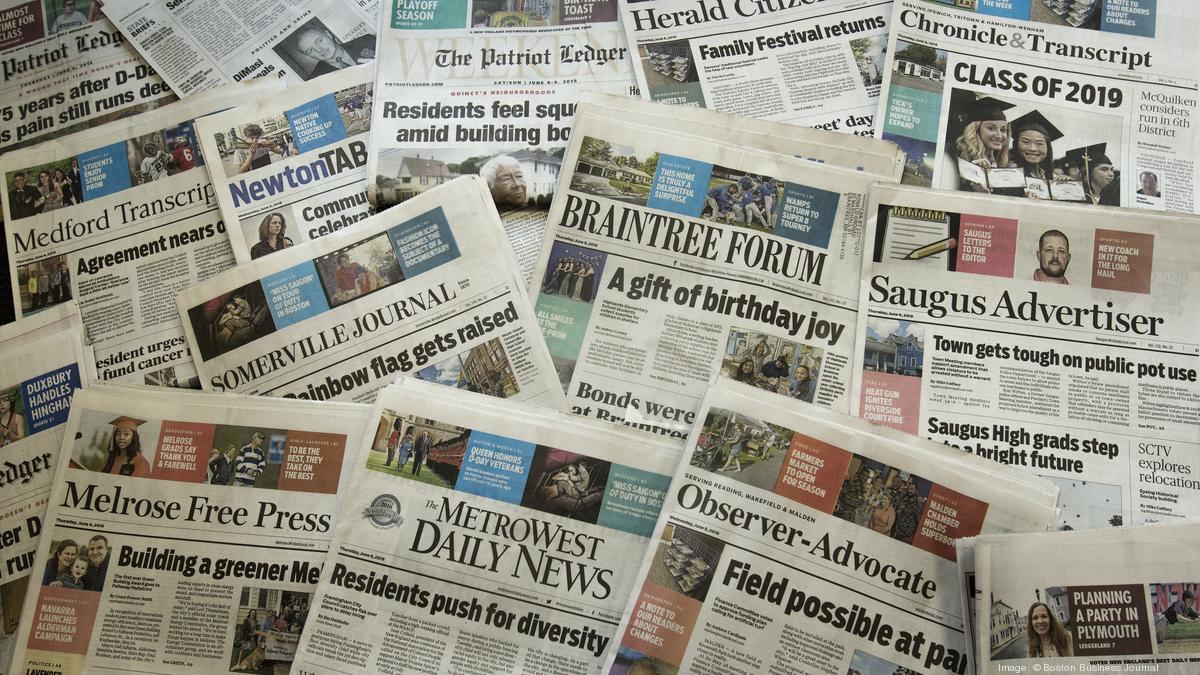
Papers vs. profits: Questions persist about priorities at GateHouse Media -  Boston Business Journal

Our society has had an eye for newspapers for centuries. Newspapers offer convenient access and are fairly direct in their stories and messages. Newspapers give us the information we are searching for in a relatively short amount of time. Most stories people want to read about are distributed through newspapers very quickly. Journalists go through lots of work and different interviews with different people to give the best, liable story to the public. There are some people who do not read newspapers because they believe the information is “fake” or skewed. When big incidents or achievements occur, people tend to look towards newspapers to receive the full story. I see more enjoyment in older people reading newspapers than my generation. I believe the reason for this is because my generation will use their technology to find information that’s in newspapers faster than waiting for an article to come out.  Even if the information they find online seems not liable we still feel that we have found the answers just because it’s available on the internet.

What lasting effects did the Penny Press have on modern newspapers? |  oliviamoyers
“The Sun” the first penny paper published by Benjamin Day in 1833.

Newspapers have existed since the roman times, dating back to modern newspapers called german style. In the 1600s newspapers were printed by the gutenberg’s printing press. The gutenberg printing press gave editors a high quality print that made materials print over 4,000 prints per day. The printing press made journalists happy because that meant their stories that they wanted published could be printed overnight and published the next day. In 1833 Benjamin Day first published “The Sun” which was a penny paper. The invention of penny paper was to be able to have a bigger audience of readers but affordable for everyone who was interested in reading the penny paper. When entering the journalist world you need to know a few important things before choosing this career path. Journalists need to think highly of themselves and to be truthful about everything they publish to the media. When being a journalist they want their audience to believe that there stories are true and factual not fake news. There isn’t one person in our society who wants to read a newspaper and when reading it they believe this information to be not true. A journalists career is over if they are caught publishing made up information or plagiarism, they have ruined the trust of the audience and ruining the reputation of the company they work for.

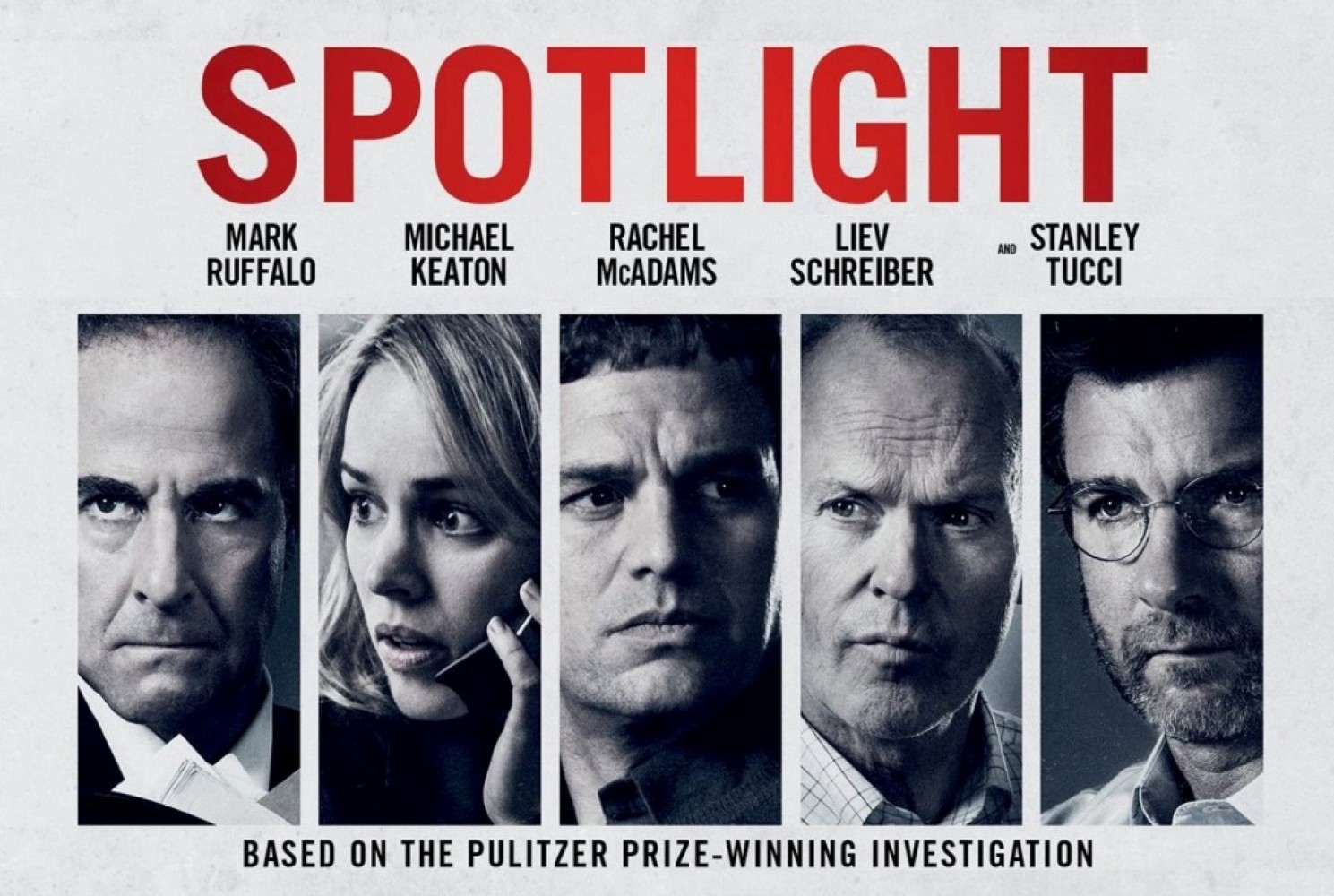
Spotlight — Film Review. When discussing any 'true story' media… | by The  Omcast Movie Reviews | Movie Time Guru
5 journalists that work for the Boston Globe, trying to publish the best article on the biggest secret in boston.

After watching this film you see the behind the scenes of a journalist and editor. The audience sees the nitty gritty play by play for a journalist. There are people in these corporations that do not want it out to the public for some time because they know the reaction it may cause. There is so much frustration that a journalist indoors when working on a story. They have to know when they cant record conversations or even write down what this person is saying during a questioning. when they have found a big story that needs to be shown to the public.

tom mccarthy | Tumblr

The movie Spotlight was very drama filled and exciting movie. The boston globe is incharge of getting a team together to publish a story about a priest who molested over 80 boys over the decade. At first the team had little to no information about what happen but they had to search in books and online sources till they got a lead to start working on publishing something. During the movie the reporters go out in boston to get information and stories about this incident with the priest. Many high class people knew for years that this incident had happen but pushed it under the table. They knew it would look very bad for there town and company if this got out ever. It was said that 53% of the people who read The Boston Globe were catholic and would be very upset about the story being on a headline.

My question is will newspapers continue to influence our society or fade out in our generation?

Are Newspapers an Artifact of the 20th Century?

Newspapers have had a glorious history. From Gutenberg’s movable type, which lead to the printing press, to the uncovering of the Watergate burglary that led to resignation of President Nixon, and from Benjamin Day’s penny newspaper, The Sun, to digital media, newspapers have played an important role in how we think.

Some people say that newspapers are dinosaurs. How many people actually read newspapers? People watch the news on TV and they read it on their computers and smartphones, but the days of newspapers are dwindling. Circulation is decreasing. Newspapers like USA Today, with it’s TV like presentation of news, have become among the highest circulating newspapers today. But even USA Today is increasingly moving to an online format. My family still subscribes to a newspaper, but when it didn’t arrive one Sunday morning my father went to the local store to purchase a newspaper and found out they no longer sold newspapers and the nearest store that sold them was ten blocks away.

We learned in our readings that newspapers have existed since Roman times, but the modern newspaper exists primarily from Gutenberg press German papers printed in the 1600s. But it was Benjamin Day who brought newspapers to the masses by having them cost only a penny so that more citizens could afford a newspaper. This is when media became mass media.

The 1800’s welcomed newspaper men like Joseph Pulitzer and William Randolph Hearst. To compete with one another the two used sensationalism and crime, sex, and scandal became the news of the day. Yellow Journalism as it was called, printed misleading stories exaggeration and misinformation. Today, this would be called fake news.

During this era, cartoon newspapers, such as The Yellow Kid were prominent since they were easier for Immigrants to read and understand. Other types of Journalisms evolved such as literary which combined research and reporting with the writing style of fiction. We see this type of work today in publications such as the New Yorker and written by prominent writers such as Tom Wolfe, and Truman Capote. Other styles such as advocacy journalism, consensus journalism, and conflict journalism also evolved which lead to niche newspapers. Today, this is been further dissected with the advent of blogs and extremely narrowly focused online publications.

Within newspapers there evolved columns or sections of the newspaper that focused on issues that were either ignored or not fully investigated. The film Spotlight focuses on the Spotlight team at the former Hearst newspaper, The Boston Globe and there investigation of sexual abuse by the Boston’s Catholic priests. The team spent eight months digging into the roll of the Boston archdiocese in covering up the sexual abuse of children by priests. It is a chilling study of the way power operates in the absence of accountability. The movie is a gripping detective story of group of journalist who gradually uncovered the crimes by 249 priest and brothers. Rather than stop at one or two they saw a house of cards which could not be written about until all the cards have fallen.

It is movies like this that underscore the the importance of newspaper. Papers like The Globe take the time to do the research to uncover the facts that lead to change. We see this in the New York Times, Wall Street Journal, Washington Post and other newspapers. They write stories that can and often do change the world.

So, are newspapers an artifact of the 20th century? Probably the paper is an artifact since printing is expensive, but the style and approach that newspapers and news magazines take will be with us for centuries to come — it will just be online.

Out with the old, and in with the new

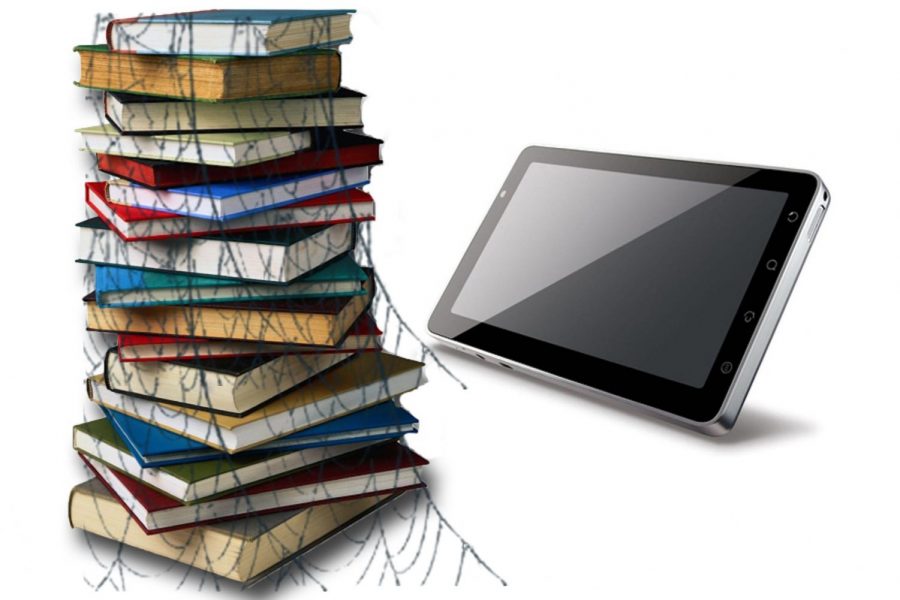
As we advance further and further into the future, we find ourselves straying farther from elements of the past, specifically literature. In the past 200 years we have upgraded from writing on a piece of paper with a feather dipped in ink with candle light, to having any piece of knowledge in the world at our finger tips. Humans are straying away from books because technology is growing and is just so much easier to use then having to read a whole book or skimming through it to find the one part you need. Libraries are becoming more and more useless are we advance our technology and at some point in the near future will be going out of business. With things like nooks and kindle’s, you can just buy books on these devices and store them on there and not have to leave the comfort of your own home.

Literature can not be taken for granted though. It can be very knowledgeable and informative and I think kids should read more. The library piece is what can be taken out. We do not need to go anywhere when we have the most valuable piece of technology at our finger tips and can look up anything within seconds.

Why millennials hate technology and love books – Voyager

Standards and Survival

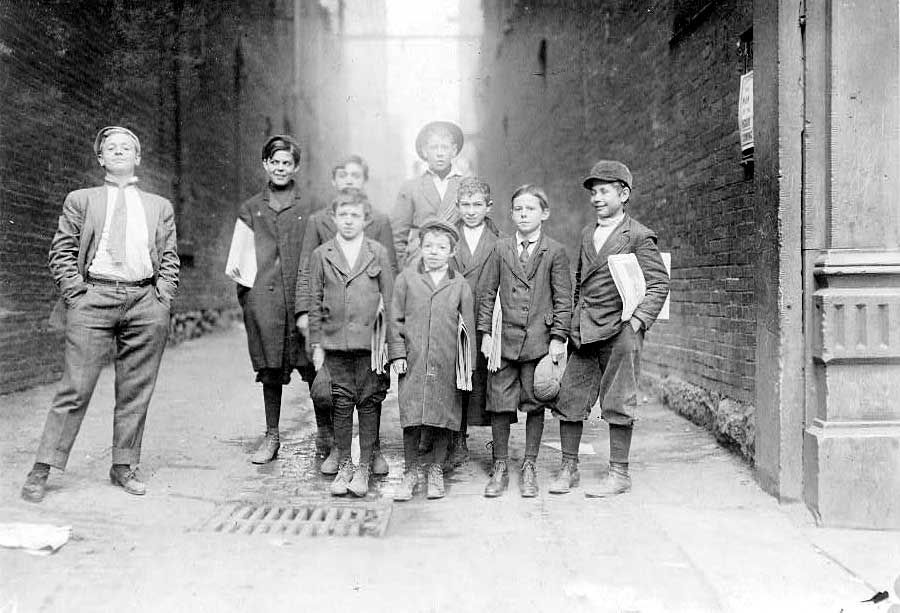
Some Newsboys of history

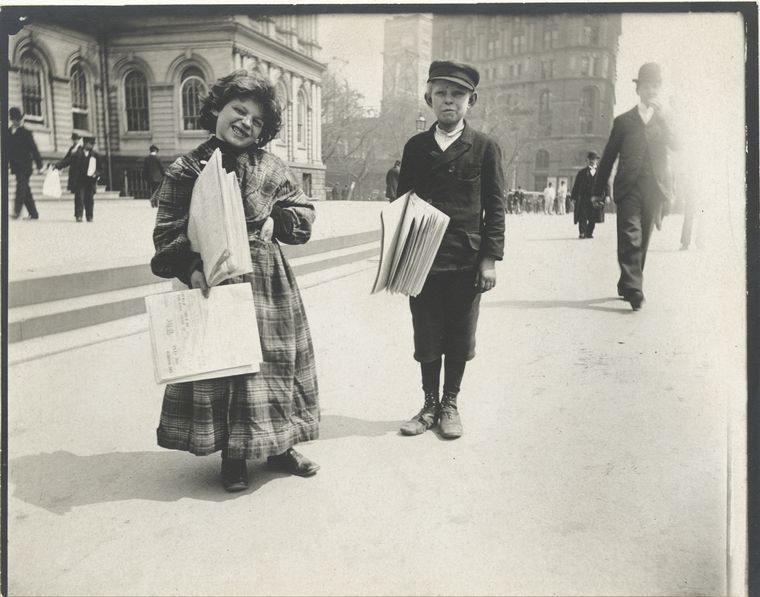
“Extra!  Extra!  Read all about it!” the little boy on the street corner shouts.  It is 1899, and in his waving hand is a copy of the New York World, published by Joseph Pulitzer.  The juicy headline beckons those walking by to stop and pick up their own copy from the boy.  The boy smiles as the paper exchanges between his hands and the young woman’s.  The more scandalous the headline—the more copies he sells.  It’s going to be a good day.

The textbook, Understanding Media and Culture, talks about the subject of newspapers in chapter 4.  Newspapers have been around for quite a long time with the first weekly newspaper using Gutenberg’s press being printed in 1609 (Understanding Media and Culture, 131).  Newspapers, like books and other printed materials, have evolved, and like most evolution, it is not always a good thing.  Through the years of experimenting with how newspapers are written and what articles are found within, one can see the highs and lows of the newspaper business.  Always connecting with the content in the newspaper is the subject of money.  What articles make the most money?  Should making the most possible money be the goal of a newspaper?  How far is too far with “scandalous” articles?  Where does important news fit in?  Can articles that portray the truth and important issues also be profitable financially?

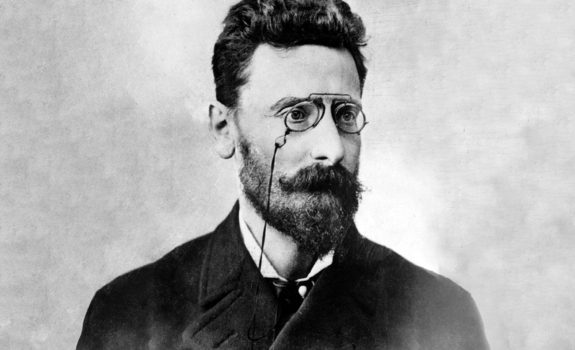
Joseph Pulitzer the inventor of sensationalism

Through laws like the First Amendment in the United States, newspapers have had the freedom to write about important issues and not be worried about being prohibited by the government for what they wrote (Understanding Media and Culture, 135-136).  Unfortunately, some publishers took advantage of this freedom, and they realized that to make the most money, they had to write articles with bold headlines that may or may not be very accurate.  Understanding Media and Culture says that, “In the late 1800s, New York World publisher Joseph Pulitzer developed a new journalistic style that relied on an intensified use of sensationalism—stories focused on crime, violence, emotion, and sex” (138).  “Sensationalisim” is still a tactic used to today, and it demonstrates how newspapers have adapted to make money and survive.

Children selling papers in the late 1800s

Sadly, newspapers are downsizing and cutting off workers because people just do not read them anymore.  Part of this is because of the introduction of the internet.  The TV show, The Wire, in a short clip on YouTube demonstrates this in the words, “It’s a bad time for newspapers.”  Newspapers need to make money to survive, so again, this could lead to less important and less accurate articles.  In the article, “The Guy Who Wouldn’t Write a Hit: An Interview with David Simon” by Claudia Dreifus, David Simon talks about leaving The Baltimore Sun because its quality was going down.  Simon made a tough choice, but that is what people need to do for the truth to continue to be told.  John Oliver on Last Week Tonight also brings up this balance of expansion and the danger of just going after what is popular when he says, “It is clearly smart for newspapers to expand online, but the danger in doing that is the temptation to gravitate toward whatever gets the most clicks.”

So again, the question remains: How does a newspaper balance the need to survive with the need to write important articles that may not be as popular?  Should it be the publisher to make this choice?  How much of a change can individual journalists make?  As a consumer of media, what media choices can one make to help the newspaper industry both financially and in its content?