Piracy in the Music Industry

Aviici

Piracy in the music industry has been a reoccurring problem in the during the last fifty years. 

Piracy in the music industry has been happening for a long time.  It didn’t just begin with Napster, it has been happening in the form of cultural appropriation, hijacking, and copyright infringement. (ie. The sampling of an artist’s music without their permission).  Napster was a game changer in the way we consume music, but if we examine how the hijacking of African American music occurred after the Great Migration, we will see that this has been a practice of the music industry for a long time.  (2010, Understanding Media. CH. 6.2) The music industry giants didn’t like that it was being done to them (with respect to the musical artists).

Napster Logo-Sam Hanks design

Napster rocked the music industry in 1999 by creating a system to download songs from musicians and artists which created massive controversy and turned the music industry on its head. Napster was inevitably going to happen at some point. We saw similar algorithms like Limewire. Some people said that the business model at the time wasn’t working, and that the future of the music industry was already moving towards programs like Napster, but it needed to be regulated.  Napster was instrumental in starting what would become membership based music subscriptions. They needed investors who weren’t afraid to look ahead to the future. They needed people to see where music was going – into the consumer’s hands. Napster gave people the accessibility to choose new artists and independent musicians who haven’t been able to get their music out into the mainstream.  Napster had over 50 million members.

Shawn Fanning started the program Napster, a programmer and hacker started in 1998. It uses an algorithm to download music in the form of an mp3.  The program spread across college campuses like wildfire.  The masses were divided on whether this was piracy or simply bringing the music to the people.  One thing was certain – it changed the way we consume music forever.  Most of the internet was information storage and retrieval; not sharing bandwidth with one another.

Sean Parker, co-founder, “Suddenly you were connected to everyone.” This revolutionized the way we use computers- the way we interact with one another. Sean Fanning thought that every way this would be a better system:  allow people to connect over music, allow independent musicians to get their music out there.

The top music industry heads were freaking out. There were a lot of pre-realeases that were being downloaded and this shook them.  What will happen with record stores and the way people get their music?  There was no denying that the record industry giants were behind the times.  The future of the music industry was knocking.  People no longer had to go to record stores to buy their music – they could just download it from their home.  Technology was very beneficial to the record companies, such as CD’s and LPs. “All of a sudden technology and how music was going to be recorded went somewhere else.”

“A bomb went off.  I don’t know what happened. The cat wasn’t going back in the bag.”

-Don Ienner/Chairman & Founder IMO Entertainment and Dashbid.

Napster offered convenience, price, and choice.  It put music into the consumer’s hands.  The band, Metallica sued Napster.  Metallica thought that the choice should be in the artist’s hands and they should have choice of whether to sell their music.  Napster was ordered to remove millions of songs owned by the record labels. Jon Stewart joked, record companies fought tooth and nail over the issue.  It’s the record companies that hold the patent to cheat musicians out of money.”

On October 31, 2000, Bertelsmann Media Group invested 80 million dollars in Napster to create music subscription service. 

Aspiring artists no longer need to rely on expensive publicists, recording studios, or contacts within the industry; they can connect directly with fans to sell their music.

Person Listening Music Headphones Concept

With respect to the musical artists, I have to applaud Napster for sticking it to the Big Music Industry giants. They have been cheating artists out of their profits from record sales since going back to the Great Migration.
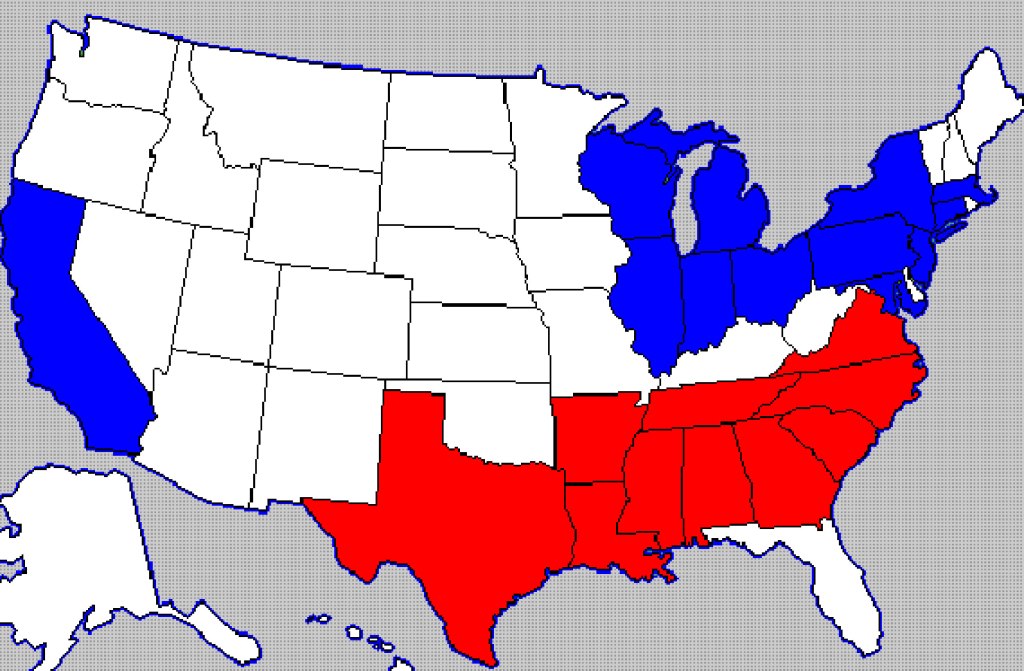
During the Great Migration, the 12 states in blue had the largest population growth of Black individuals, while the states in red had the 10 largest net losses (Martin).

To capitalize on the public’s enthusiasm for rock and roll and to prevent the loss of further potential profits, big record companies signed White artists to cover the songs of Black artists. (2010, Understanding Media) Because Music Industry giants like RCA could widely promote, the hijacker’s hits would often outsell the original version. Many White artists and producers would also take writing credit for the songs they covered and would buy the rights to songs from Black writers without giving them royalties or songwriting credit. Independent record producer Danny Kessler of Okeh Records said,

“The odds for a black record to crack through were slim. If the black record began to happen, the chances were that a white artist would cover—and the big stations would play the white records…. There was a color line, and it wasn’t easy to cross (Szatmary).”

Piracy transpires in many forms in the record industry. From copyright infringement, to cultural appropriation and hijacking….

Napster rocked the music industry in 1999 by creating a system to download songs from musicians and artists which created massive controversy and turned the music industry on its head. Once digital music technology was introduced to the world, its domination of the music industry was almost instantaneous.    For better or worse, it changed the way that we consume music.
I think I had one of these growing up.

Do you think the down-loaders were stealing music?

Do you think that fans and music lovers should be able to download music from their favorite artists?

One of my favorite songs right now. Heard it on Sirius XM ALT Nation. Speaking further on the single, Simpson says, 
“‘Summer’ is so much more than a song about the summer. ‘Summer’ is about bottling escaping nostalgia, being present, being flung into the afterthought of the future. It’s sarcastic, it’s cheeky, it kisses your forehead. ‘Summer’ sees you, remembers you, and doesn’t forget you. ‘Summer’ is what you were looking forward to that ended up letting you down but you were so fucked on it exceeding expectations you didn’t even realize it. ‘Summer’ is a person, summer is a place, summer is a thing, summer is a feeling, if it is the song of your summer.”

check her out: https://www.onestowatch.com/blog/simpson-is-ready-to-make-her-mark

Works Cited:

Downloaded, 2013

2010, Understanding Media, M Libraries Publishing
WEEK 3 NEWSPAPERS

POSTED LATE W/ PERMISSION FROM PROFESSOR.

I had just finished watching Spotlight, phenomenal movie. It kept my engagement all throughout. That is because it was such an interesting story. I did not know how much goes into writing a story to this caliber. The fact that the whole city of Boston knew about this huge scandal and it was being covered up is appalling. I loved Mike Rezendes’ (writer from the movie) passion to cover this story and expose the Catholic Church system. It is crazy that those houses for those bad priest existed. Where are the good Catholic ethics when it comes to your own priest molesting children basically in the name of God. Ruining the church for all the victims. The film also did a great job at depicting what it is like to be a reporter and many things which go into working for a newspaper. I also love when reporters dig up scandals like this and exploit people for wrong doings. I am in an Environmental Journalism class and have to do a similar thing just with an environmental topic. I viewed the film as a guide on how to track down sources and documents. I have never done this before and I was able to get some tips on how to go about it the right way.

Although I do not read the newspaper, I think they are essential to our society. Without them, our world would go uninformed on so much. The news writers spend hours, months, and years working on stories. They dedicate so much time to the stories they write, taking time away from their friends and family. To be a writer/reporter for a newspaper truly takes a different breed of a person- someone who is completely passionate about their work.

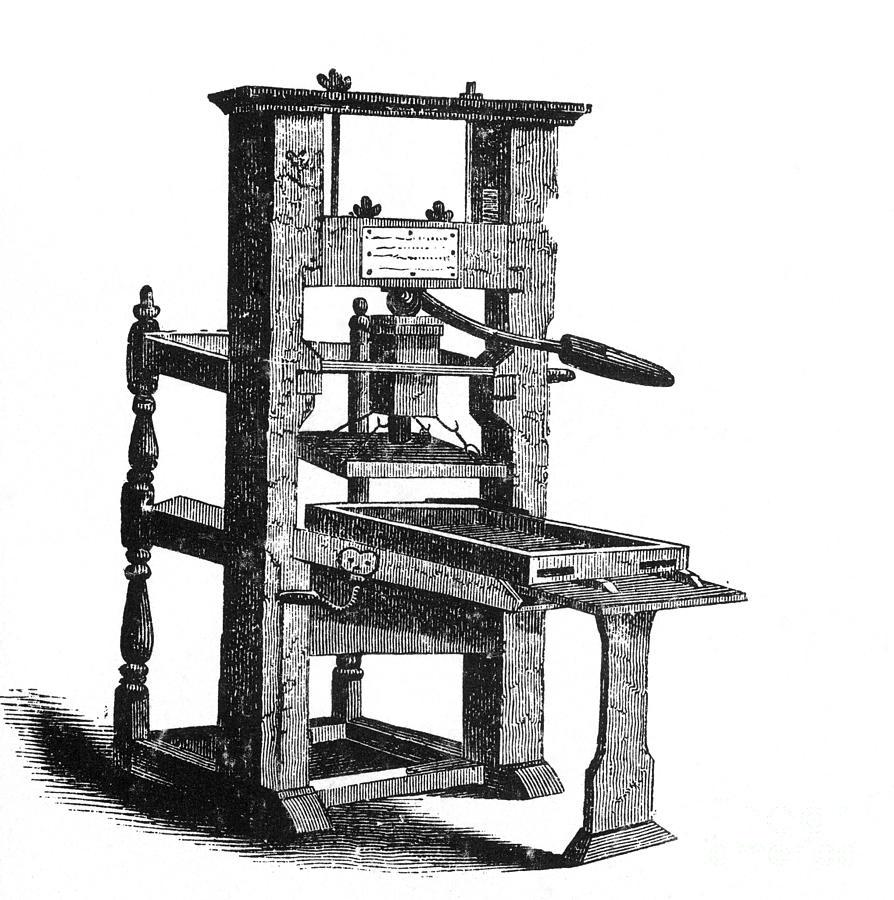
Johannes Gutenberg’s printing press started everything with the distribution of news to the general public, and fast forwarded things a lot with reading in general. The newspapers nowadays can at times be biased depending on who is the one controlling the content. I would like to think that doesn’t exist but at the end of the day people are people and we have our own opinions.

Yellow journalism is so necessary in this world we live in. These are the stories that grab peoples’ eye and they are eager to read. In other words “the juicy stuff.” But I don’t like how these reporters are sometimes diving into peoples lives and reporting on topics that don’t need to be reported on. Such as a celebrities’ sexual orientation being front page news, when in reality it is nobody’s business. At one time we thought it was okay and it happened frequently and I think it happens less now. Because times are different now from compared to 10 years ago. But say something like a Jeffery Epstein story, that needs to be put out and heard about. Ethics is not a huge part of yellow journalism, sometimes you have to hurt feelings in the process. I wouldn’t like hurting people, especially if they didn’t deserve to be slandered.

Early Media, More with Less

This week in class, we talked a lot about the media and how it affects our everyday life. It is hard to talk about a lot every week when we only have one class, but there is a lot said in our block time. We touched on the topic of the newspapers and the media behind it.

Newspapers have been an extremely pivotal part of our history, That is how the news began. Unfortunately technology has taken over the news media and newspapers are becoming outdated. Everything that we need to know can be seen in seconds from our phone. If we don’t see it on our phone then it will definitley pop up on the TV or even the radio. I will say though, I like to read sports news papers because you can read about the back stories and the quiter topics. You wont see that on TV or on your phone because it doesn’t really attract immediate attention. My parents and my grandparents grew up on newspapers, so they understand the change way more than I do, or for any kid. Cellphones weren’t a thing during that time so newspapers were the next best thing. Politics, Economy, sports stats, movies. People found out everything through the newspapers. It’s not completley dying down either. For example, the FIAT LUX is still an up and moving newspaper across campus. One of my roommates is currently writing for them and he is busy all the time writing. There are still so many journalists and writers still that i’m not sure if the newspapers will ever die down. I know you can find the same article online usually, but I think more people by from stores.

The film we had to watch this week was “The Wire” season 5 episode 1 (More with Less). The whole episode is based on a very stressful time for politics. Mayor Carcetti is trying to get a campaign together and is sturggling with what is known as a “campaign promise”. He is attempting to modernize the Baltimore Police department when his whole operation is stopped due to the funding needed for the educational community. That is a really tough situation to be in. He rightfully leads people on to believe that his campaign will make a difference to the Police Department and then he has no say in the shutdown to funds and there is no way to fight for it because education is the future of our people. Drug frontiers is also a topic brought up in this episode. Trying to make boundaires and dividing lines between counties. Not only did this episode make me a little anxious, but it also keeps you interested throughout the hour.

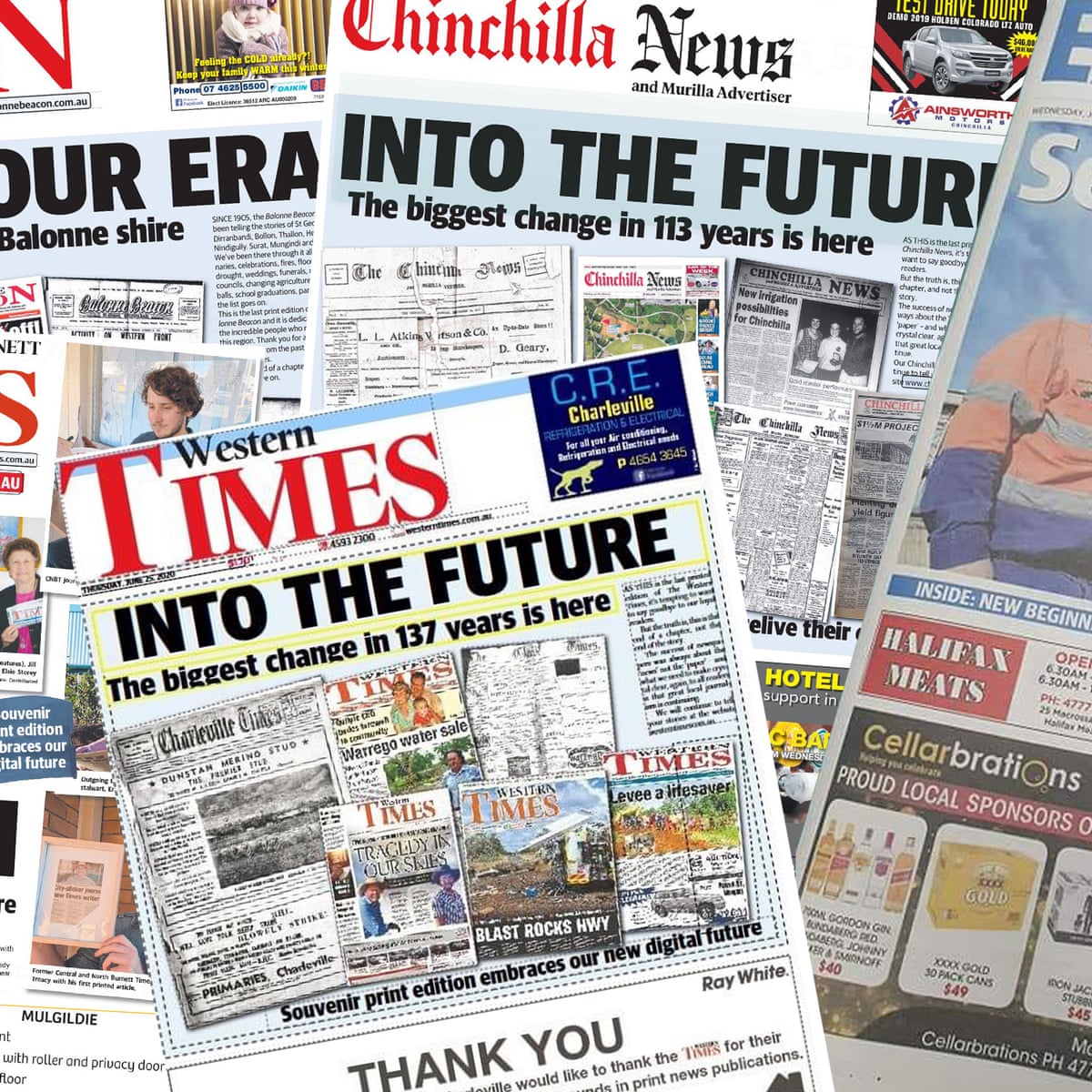
The presses stop: final newspapers printed in dozens of Australian towns |  Media | The Guardian

Newspapers in the 20th Century

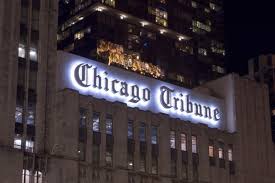
I have always found a strange fascination with newspapers. They are timeless and have (somewhat) been able to stand the test of time- even with the hurdles of improved technology and the influx of fake news. However, over past years they have been slowly dwindling. As someone from Chicago, I was heartbroken when I found out that the Chicago Tribune had closed it’s physical office a few summers ago. Their main building stood alongside the Chicago River and had been (in-building) operation since 1847. When I was younger I would strategically walk by to see what was going on inside and had actually planned to work there as an adult. They have since turned the old Tribune building into luxury condominiums on the river but the owners have decided the keep the historic sign. In Chicago, the Tribune is still in operation but made the final transition to being 100% online with building closing.

Chicago Tribune sign to remain on Trib Tower condominiums - Curbed Chicago

According to John Oliver on the Tonight Show, the downfall of newspapers is having a ripple effect on industries like print ads which are creating much less revenue digitally. He also points out that the 2015 Academy Award for best picture Spotlight could be seen as a ‘slap-in-the-face’ for actual journalists as real life investigative-journalism is just so much different than as glamorized in the 2 hour Drama. This extremely intense in-person, victim/perpetrator journalism is breeding ground for misinterpretation, lawsuits and scandal. Marty Baron, executive director of The Washington Post discussed the extreme pressures and expectations put on journalists saying that they not only need to do their traditional reporting- but participate on social media, are asked to produce a wire service that’s available 24 hours a day and be responsible for video. Not your average workload and certainly a lot to ask any working adult.

Amazon.com: Spotlight: Mark Ruffalo, Michael Keaton, Rachel McAdams, Liev  Schreiber, John Slattery, Stanley Tucci, Tom McCarthy, Michael Sugar, Steve  Golin, Nicole Rocklin, Blye Pagon Faust, Josh Singer, Tom McCarthy, Tom  McArdle: Movies

I first watched Spotlight when it came to theaters in 2015 and it’s one of my favorite movies today. With it’s criticism, it tackles the extremely sensitive topic of ongoing sexual assault in the Catholic Church and does it in a way that’s respectful of the victims and lets people know how long this major issue has been swept under the rug and covered up for sooo long, many of the victims still waiting to receive justice… But isn’t this what true journalism is all about?? This movie came out and drew people in with famous actors and actresses that everyone loves and reminded the public of this huge injustice. An ongoing issue that the Church has tried to cover up from being in the media. Sooo, it definitely gets 5 stars for me.

The Evolution of Newspapers

Are you wondering how the newspaper developed? The very first newspaper was in the early 1800’s, it was 6 cents and back then the working class and the artisans couldn’t afford this price. It was only for the elite. The first print that the common person could afford was sold for a penny.  This is in September of 1833 and the title of it was called The Sun.  It is hard to believe you could get something for just a penny!  The Sun was primarily about people’s interest and police reports. The very first newspaper would only print 125 papers an hour and the penny press would 18,000 papers an hour.  Another successful penny paper was James Gordon Bennett’s New York Morning Herald. Bennett had a more aggressive ways to get news, he sent reports to actual crime scenes.  

By the late 1800’s Joseph Pulitzer and William Randolph Hearst were major competitors in the paper industry. Joseph Pulitzer started a new “style” that used sensationalism which is stories-based crime, violence, emotion, and sex.  In 1896, William Randolph Hearst established New York World. Hearst published Yellow Kid; it was to attract the immigrants even though they mostly likely did not purchase a paper that was based on the English language. Most of the published works were comic based. In other words, called as yellow journalism

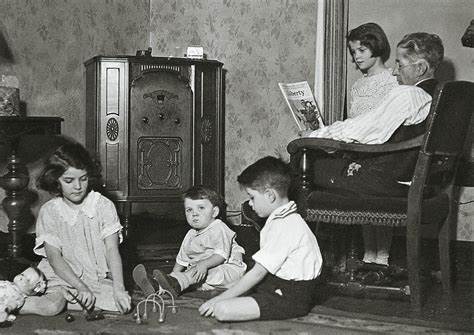
At the end of the 19th century, New York Times started to battle with Pulitzer and Hearst. They raised prices to pay for bills which led to a decrease in readership and New York Times went bankrupt. In the 1930’s was the development of broadcasting. Radios were common in most of U.S. households, the problem for newspapers was people had to pay for news and radios are giving free news.

The journalism struggled between consensus and conflict journalism. Consensus Journalism is usually in small communities, it provides calendars, meetings, articles and local schools, events, government, property, and crimes. Conflict Journalists provide news as social conflict, and issues that violate social norms. Watchdog journalism developed the public with information about business owners and government.

In the 1970’s there was a decrease in the newspaper industry and started to get more competition.  There was an act that congress established called the Newspaper Preservation Act which is to give formation of a joint operating agreements.  In other words, two newspapers could share expenses of advertising, and distribution of the company.  With the being said, this act started to fail when the industry started to decline rapidly. The two newspapers companies could not function successfully in one community.

The newspapers made it through the invention of the radio, and the television. The newspaper industry had to evolve somehow which was online newspapers.  In 2010, there were over 10,000 newspapers there transferred to online for the public. Modern journalism referenced to the inverted pyramid style. The top of the pyramid is about the most important information that leads to the story, then the subsequent paragraphs that give additional facts, and lastly, the least important information that closes the story.  This style helps author to write more effectively.

For me, I never had a chance to read a newspaper. I live in the country, so no one delivered them to our house.  When I think of newspapers, I think it is for older people to read. In today’s world, we have our car radios. The news on the TV, we can stream on our phones, we have googled if people want a certain question. There is so much technology surrounding us there is not a point of newspapers for the younger generations.

Newspapers- Always in Our Hearts and Never Forgotten

This week we covered the topic of Newspaper and the importance of credibility in news. I have always been fascinated with newspapers, which is totally weird, but as a kid I wasn’t super interested in watching the news or keeping up with the news in any way. When my dad or grandparents would read the newspaper though, I would always smell it (I know, ew) and really take in the texture of the pages. Something about the paper made me feel connected, to something I couldn’t comprehend. It made me feel older, to have all that information in the palms of my hands. Sadly, newspaper is hardly appreciated and valued as it once was. Information that you had to pay for that was highly consumed is now a has been compared to online news, social media, and television.

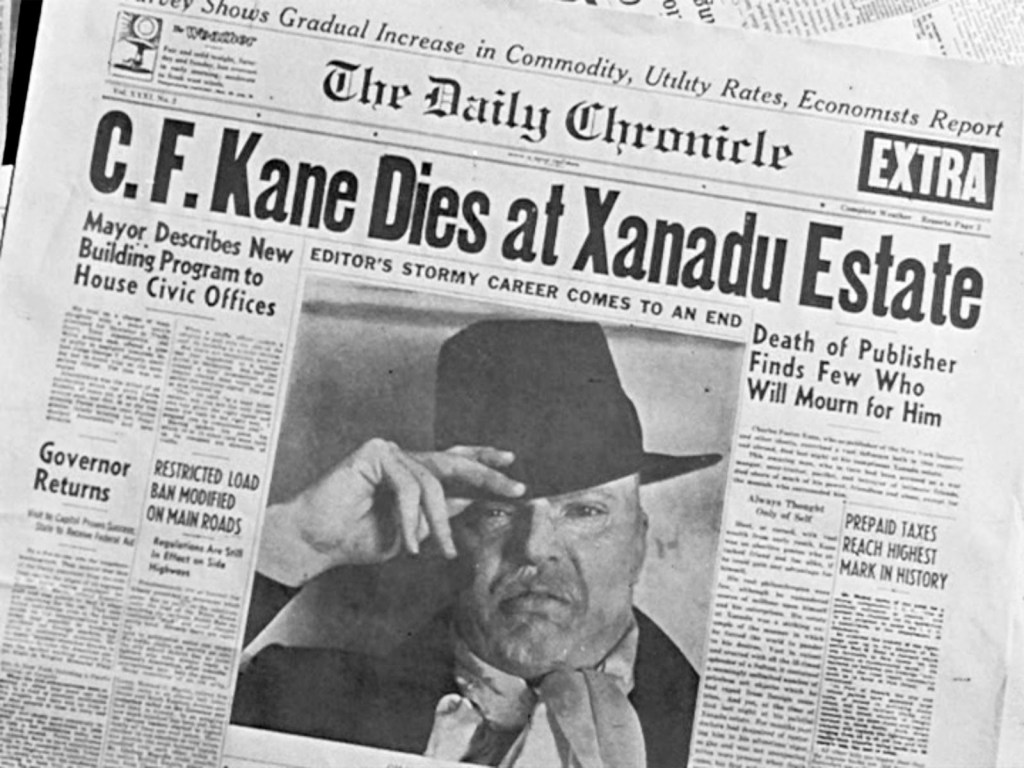
Citizen Kane wouldn’t be the masterpiece it is without the press involved. Charles Foster Kane, the man in the picture and the main character in the movie, plays a spin off of a news paper mougel who was injured charge of mass numbers of news paper companies. He controlled the narrative, and had power over his imagine, which many people with power over media still do today. I think a lot of people who strive to be rich, famous, powerful, and dominating all resemble a bit of C.F. Kane. Temper tantrums in bedrooms are included in that, I’m sure.

The episodes of The Wire that we watched in class really highlighted the harsh reality of the press. Reporting on true information, not just for story and talk, is so important. “Truth is the best defense against liable”, as we heard this week, means if things ever happen to get legal, truth is the only thing that will protect you. False information spreads like wildfire, especially with the change of mediums to consume it. We have everything we want honestly, just in the palm of our hand, so you can imagine that newspapers in a few years will really not be doing good. In my opinion I think magazines will always stick around, for places like waiting rooms, offices, nail salons and places like that. People would rather look at images in magazines than read in the paper, in my opinion. Do you think magazines for example, will fall out of style and demand similar to newspapers? Do you see them staying around longer?

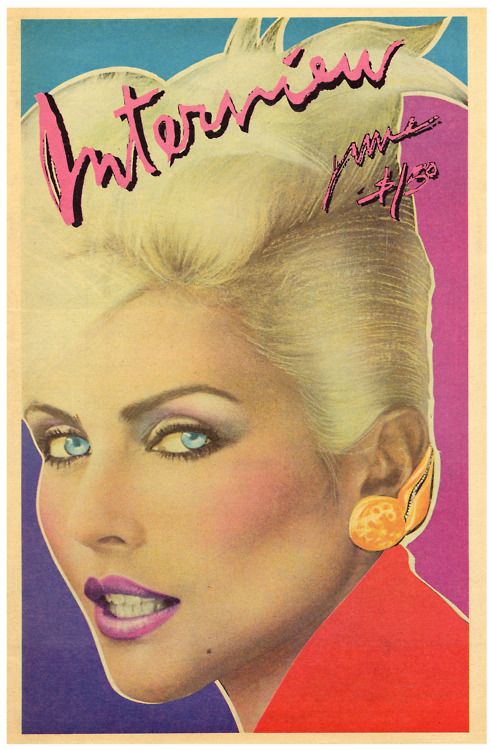
Interview Magazine, my favorite magazine, I hope never goes anywhere. It has been around for so long and in my opinion captures everything someone needs to know about what is relevant to this time through average people, art, and people in the public eye. They usually print their magazines larger than average, which makes the experience of reading them so special. Can’t get that type of read over the phone!

Newspapers

Newspaper holds truth 

No one reads Newspapers anymore because we can get the news by turning on the TV or opening our phones. Both of which take a lot less effort than physically finding a newspaper and reading it. When we look at people who are sitting in waiting rooms or traveling on a train or even just walking down the street while texting, it is easy to point at it and say “technology is ruining our social world.” However, while this is definitely true, it is important to note that there are more similarities between now and the pre cell-phone era than we might think. For example, waiting rooms, train cars, and sidewalks were full of people reading the newspaper. Now, we see the same thing but the news is on our phones.

The quote, “truth is the best defense against libel” exemplifies how important truth is. Which brings up a good counter argument for what I just said. Yes, we get news on our phones, but is that news true? Consider the fact that anyone can go on the internet and write whatever they want. Is this really “news”? The abundance of stuff on the internet makes it very difficult and time consuming to actually find the truth. The idea of circulating news is that any average joe can get on the internet and post something false, claiming to be a news article. Other journalists could then find his story and post their own news article based completely on what this average joe said. Eventually, this cycle continues enough that for every post about this false topic has a multitude of sources that make it seem reliable, but really it is all from this one false post. So, some might argue newspapers are a better source for the news after all.

This is probably why Newspapers are still alive today. The fact that they cost money, are printed, and you know who the news is coming from, makes it a lot more appealing for those who do want the truth without having to sift through the entirety of the internet. 

I agree with this to a point. You can still find the exact news on your phone that is available in the newspaper. But, you do need to purchase a subscription. Once again, allowing access to the truth. So, I understand why Newspaper companies themselves survive. We all know how important truth is and we will be willing to pay for that truth. 

Newspapers: Do We Still Need Them?

Before doing this weeks readings I never even thought about how much goes into producing a newspaper article. I always imagined the classic office going crazy with papers flying and phones ringing scenes in movies and television shows, but never gave it enough thought. Newspapers were one of the key places to get your information and happenings on the world and still is for most people. Its also interesting to think about how much the newspaper persuaded people in how to think because it was their main source of information, especially which newspaper you read.

The very first form of a newspaper was created by Julius Caesar in 59 B.C. to inform the public about important social and political events. Before the printing press it was hard for information to get around, especially because most people didn’t even know how to read! In 1440 Johannes Gutenberg in Germany invented the printing press which was able to print over 3,000 pages a day compared to the handwritten 40 pages a day, but enough about old ancient history!

The newspaper has developed into a super major source of mass media. They travel all over the country spreading news and major events. Its crazy to think about how many things have been filled into newspapers to seem more appealing to almost every audience there is. There’s the basic news sections where you can learn on day to day things happening in the country, there’s a sports section for those who might’ve missed a game or event, there are crosswords and word searches and other puzzles to keep the viewer more interested and keep up there brain muscles active, and there are even cartoons so kids can start being interested about reading the news! Though, since technology has advanced highly over the years, is the newspaper something of the past?

Nowadays the television is a much more popular outlet to be informed than the newspaper. In the interview with David Simon he talks about the times when he was a reporter for a newspaper in Baltimore and never even had television on his mind, then ended up working for television for over 10 years. Simon also discussed how the newspaper business as a reporter is ruthless with having the high expectations to find the best stories. He had to pick and choose between different things he could potentially make into a headline. When Simon talks about working for HBO he brings up how they had to pick certain characters to be in certain scenes so the viewers would enjoy the show better. Simon discusses how mostly rich white people get murdered on shows like Law and Order, “They’re protecting the franchise. Those stories are more interesting to the white consumerist audiences coveted by advertising executives. The truth is that violence follows economic deprivation. The vast majority of murders have to do with people who don’t have a lot. They’re chasing after the scraps falling off the table.” This helps shows almost a similarity with newspaper and television considering both make adjustments to what they are presenting that make the viewers enjoy the media more.

In present day I almost never see people reading the newspaper, maybe only my grandparents occasionally. There are so many other ways to receive news and important information than sitting and reading a newspaper. The news and ads scream at us all day long on our devices popping up over and over again, does this mean we need newspapers to keep us from our heads exploding? or do we just stop wasting money on it and throw it away because we already have so many other outlets? Are newspapers a thing of the past, or will they stay relevant for a few more years until another new technological form of media takes it over? Do you read the paper or even touch a paper on the regular?

It’s Black and White but is it still Read all Over?

The newspaper market has been spiraling downhill fast for the past few years. Why is that? The creation of online articles and mainly the internet makes it hard for a physical paper to thrive. But how could a newspaper or news company stay in business when nobody gets a physical newspaper anymore? In the past the newspaper was the only way of seeing current events and news stories not only from your community but worldwide. Before the television and before the internet you would get the news from the newspaper. That’s why it’s called the newspaper. Everyone in America would wait till that one day that newspaper would come to their doorstep. The times when there used to be a paperboy or would come around on his bike and throw the paper to your doorstep. Now a days most people don’t receive any mail at all. They will have their bills electronically sent to them and most ads are done through emails.

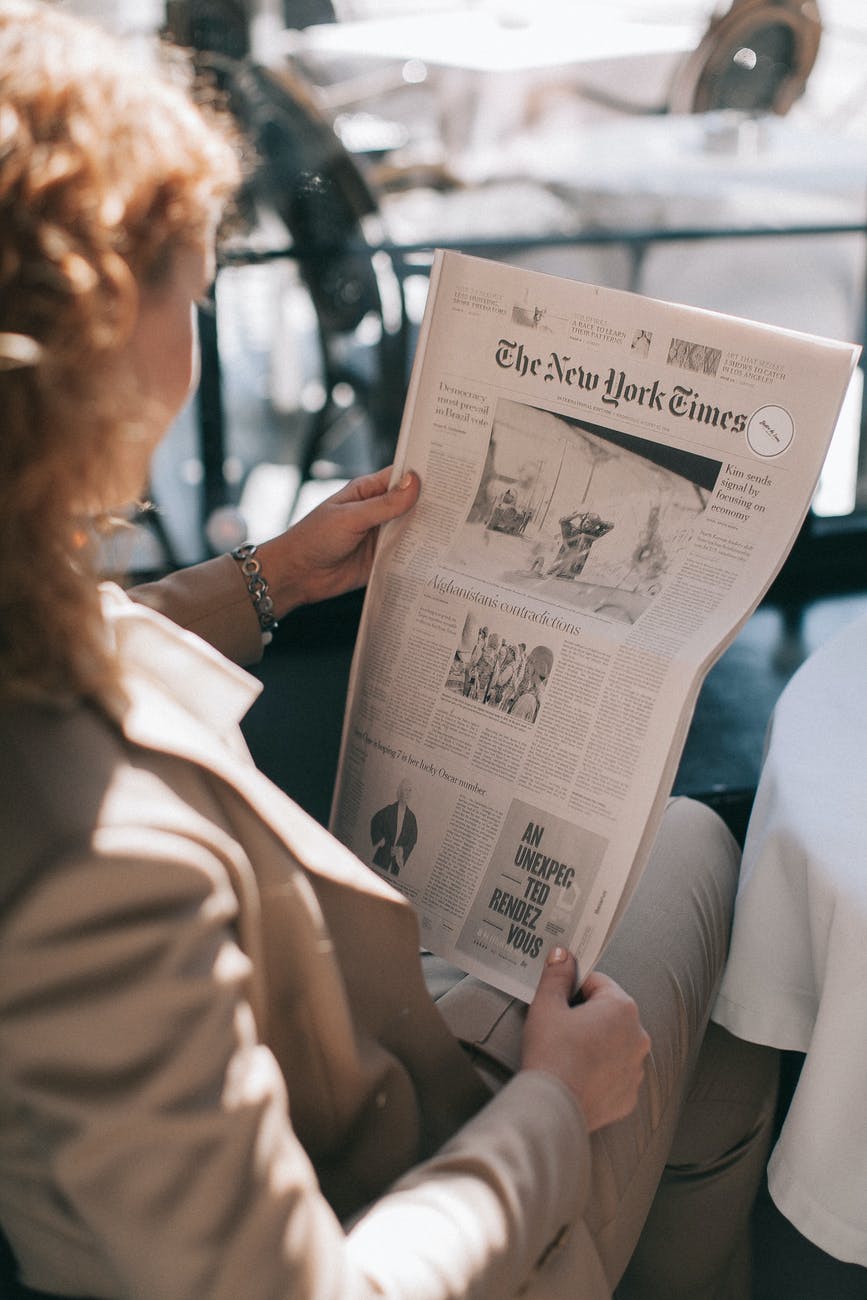
Photo by Lina Kivaka on Pexels.com

In today’s society there is few newspaper companies that are still in business. The few that are still in business are those who adjusted to the times. These companies include, The New York Times, Los Angeles Time, The Washington Post, and Chicago Tribune, USA Today, and The Wall Street Journal. Obviously, these are some of the biggest printing companies in the U.S. if not the biggest. Smaller papers tended to fade away after time and technology game around. Some if not all of these major paper companies all started producing online articles that are read almost every day. These articles as sited by many students because these were thought to be reliable articles. In the past this may have been wrong.

At a time in history there was a problem with newspaper stretching the truth. This method was called yellow journalism. It would start by something happening that could be small and insignificant but the newspaper would stretch the truth and make it sound like a big deal. These stories can be so wild that other newspaper companies want to report it and then they stretch that story to a point where there is no truth to their story what so ever. This is how so many stories became such a big deal and there has to be truth behind a story now. Over time there has been laws put in place to prevent lies from being spread. Sometimes newspaper or news articles online might spread the truth, there is no doubting that, but legally there has to be some truth behind what they are saying. I feel TMZ, an online news reporting company and TV show, reports on the most outrageous news. Anything from nudes on celebrities to a baby duck that took its first steps. This company stretches the truth and reports nonsense and I don’t understand how this company is still allowed to make news articles. Personally, I feel the move away from physical newspaper is a good decision but when there is this huge move to electrically, there is lies that come around. Do you feel that this is a good move or the physical paper is better choice?

Who Controls the Newspaper?

“The corruption of the best things gives rise to the worst.”

-David Hume

I have always admired the work of that true journalists and reporters do. It’s sad to see the decline in newspapers but technology has just simply made them inferior. While newspaper readership has went down, the majority of these companies have put their focus on televised and online news. We have the ability to access almost any information possible from every angle possible. This makes it great to combat disinformation or an altered display of information by giving you the opportunity to do your own research and to see both sides of the story.

I have also always been a huge fan of any and all watchdog reporters with actual factual backings and objective research. Without people like this, our government, as corrupt as it is, would basically fly even more under the radar than they have in the past.

“None of the main issues which humanity is facing will be resolved without access to information.”

-Christophe Deloire

It has always been blatantly obvious to me that major newspapers and media outlets push an agenda onto their readers and viewers. The journalists all put forward the articles they are either told to look into or choose to look into.

As someone who doesn’t make and opinion or speak about something before doing my research, it’s appalls me to see the non-objective based news we are being fed every single day. It doesn’t necessarily bother me that news papers and media outlets choose what stories to report on because I understand they need to make money and certain stories sell better than others. The thing that bothers me is the obvious omission of important facts, jumping the gun, and creating their own conclusions for the viewers. While I take everything I generally read with a grain of salt these days, there’s a vast majority of people who don’t do their due diligence and just hop on the sheep train. When six major companies own 90% of the major news network viewership and employ 232 media executives in charge of what information is being given to the entire country something seems like it could go wrong. At this point we are at it doesn’t really matter how credible an article is or a media outlet is, i’m still going to do my own research. I just can’t imagine where we would be at as a society if all our news and information was still in a physical form.