As an Artist, Music plays a major role in my life. Not only does it serve as inspiration for my work, but also it brings different ideas that I hadn’t once thought before into mind. This is mostly the case for nearly everyone who listens to music, no matter the genre, and it’s easy to see why. Music isn’t just an inspiration to others, but it’s an art form within itself which is a beautiful thing in my opinion.
Music tends to be a way for others to share life experiences, sharing personal feelings that some may see as just that, personal, but in a way that can truly affect the listener. This has become a much bigger theme in modern times when there are more than enough things to talk about, personal or otherwise. Though, that isn’t to say that we all have the same experiences in these times, but that’s what makes music so fascinating! Even if two separate people had the same exact experience, they could each write a song in two different genres that could display two totally different tones and auras around that situation. It’s something that i don’t think people think a lot about but it’s certainly something really makes you think in my opinion.
We may not all be in the same boat, but we are certainly all in the same storm, and with music it allows us to truly expand upon the many ideas in the world and it’s a truly beautiful thing!
Music is a timeless form of communication that has been utilized to unite people, spread messages and as a means of artistic expression. It changes so much every decade, often outlining generational gaps. It’s so funny to think that oldies stations are going to turn into something ancient and unheard of in the next 10-15 years. Today’s top artists have gained recognition in so manydifferent ways. Some by social media outlets like YouTube, others through putting their music on Spotify.. This would not have been possible 20-30 years ago.
I watched the Napster Documentary in Social Media and Society last semester and just found it’s creator, Shawn Fanning so interesting. He struggled a lot growing up and used listening to music as an outlet. He didn’t feel the need to pay for to download songs (through big music corporations) and therefore created ‘Napster’ a free music platform that people could share songs on.. putting huge music/recording agencies out of business. He was even sued by the band ‘Metallica’ as well as The Recoding Industry of America’ for copyright infringement (essentially stealing copyright). In the end Shawn Fanning settled paying both a portion of money and converted Napster to a subscription system (to reduce site traffic.) Watching this documentary made me realize how powerful the internet is and how easily platforms, app’s and sites can be created. His story is just so cool.
Napster made history in peer-to-peer music sharing so much that ‘Time Magazine’ featured him on their cover. He was only 19 at the time. Does anyone think that Metallica and the Recording Industry had a valid reason for suing? Or… believe it’s as simple as everyone deserving the right to free music.
The first commercial radio station gained establishment in 1920 and paved the way for radio to be a booming business for the next decade. People took listening to the radio really seriously and would tune in to listen to the president speak and make important announcements. This was really popular during WW1 and WW2 as entire families would turn on the radio just to hear the latest announcements in battles that were won and lost- as deployment was necessary and most people had family members fighting overseas.
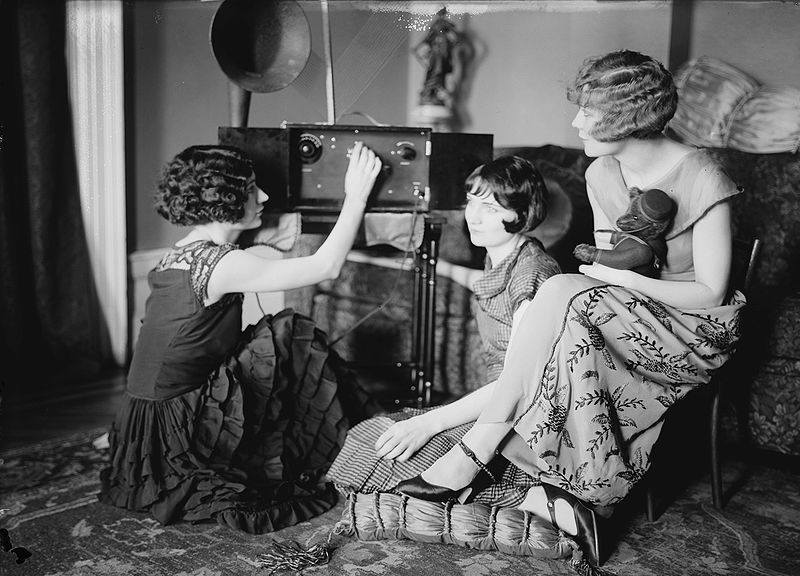
#tbt to when sitting around the radio and tuning it improve the sound quality was still a thing.
I thought the Frasier episode we watched about radio was really funny. It’s so easy give off a fake persona on air as nobody is able to watch your facial expressions. It also really highlighted just how popular radio was ‘back in the day’. People incorporated the radio into their day just as people use music as such a vital part of living now. However odd that may seem to a lot of people, I love listening to the radio. I enjoy listen to NPR’s Story-core among other programs that I find interesting and intellectually stimulating. For me (among many other people) it’s easy and takes minimal effort to just turn on the radio in the car, if your not really in the mood to jam out. There are so many talk shows on television that are really popular however, just lack the overall convenience of turning on the radio. That being said, music consumption is still wayyy more popular.
Does anyone think that radio could make a major return? I (for one) see it with Gen. Z getting so involved in politics and leading movements.
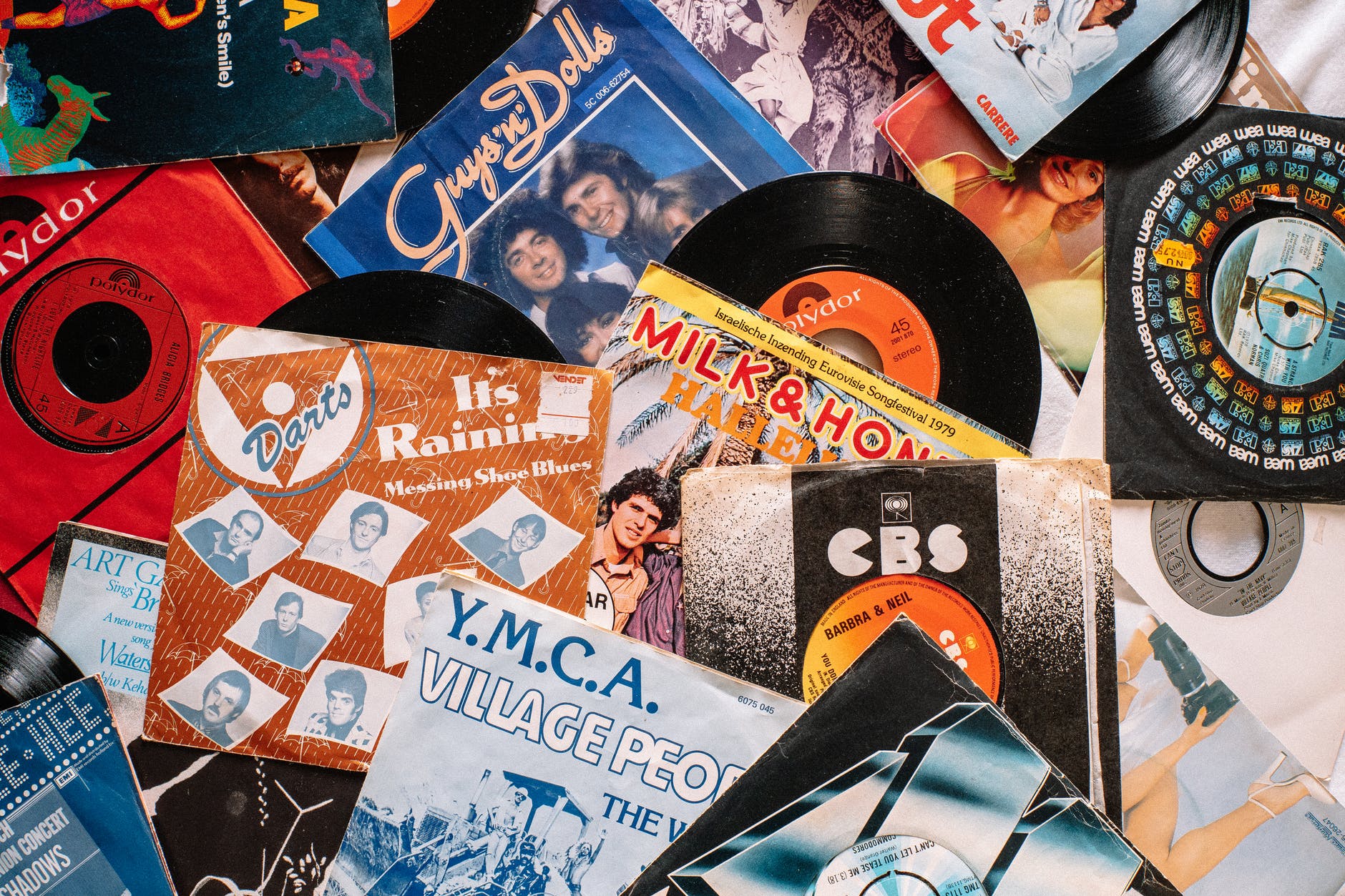
As we see with all technology and all forms of communication, music has evolved over the years. From live music performances, to vinyl, to CDs, to streaming iPods, to streaming platforms, and now at the center of many social media sites. In particular, TIkTok. TIkTOk actually started under a different name: Musicly. The idea of the app was to lip sync and or dance to popular songs. The app has evolved into something much bigger than that. Yet, still based on the premise of recording a video to a certain sound.
The songs heard on TikTok often become famous because of who is posting the videos using the sounds or because of the creative dances made for the songs. As the songs go viral on the platform, they also become extremely popular across many platforms. TikTok videos usually quickly transfer to Instagram and Facebook. The songs also rise in the chart, are played more on the radio and go up in streams across streaming platforms.
This has created an interesting phenomena where songs are gaining interest and popularity based on something more than just the song itself. Additionally, the song is often more linked to the TikTok trend or famous TikToker who started the trend, rather than the songs artist themself.
This is similar to the advancements in technology that occurred at the end of the 20th Century. As mass communication increased, fans were able to gain greater insight into music artists lives. Because of this, there was a shift from music being appreciated for how it sounds itself to who was creating the music and what they were like. Is the artist attractive? Is the artist interesting? Does this artist have a lot of drama going on in their life? None of these things mattered when your only access to music was the radio. Now, these artists are seen as idols and hold a greater social status because of their music ability alone.
The recording abilities and streaming abilities for music are only increasing and becoming more advanced. And I think a lot of music is advancing along with the technology. However, the interesting point is that these artists are not necessarily getting as much recognition as before.
With all of that said, I am only focusing on the TikTok songs. The advancements in technology and streaming has also resulted in a greater abundance of artists and songs available. There are many songs that don’t have anything to do with social media.
My final thought on music is this: Unlike many other forms of entertainment, communication, or technology, I can confidently say that music will never become obsolete.
Within the Digital Age, music has flourished immensely. Bands and songs have taken the global stage and has set records that would normally be unprecedented. However, with streaming services being available and the internet being free, songs that would normally fall behind mainstream music would suddenly become famous due to just random chance and luck. And songs can remain the Top 100 songs for such a long time as well because of it. However, with the invention of the internet came a whole lot of laws in order to preserve the artist’s ownership to their own music. We have seen many copyright controversies in services including Youtube, Spotify, and even Twitch.
Youtube has many videos uploaded to their site by the minute, to the point that they have bots look over every single video. They also ask their community members to report any videos that goes against their Terms of Service. They instituted a Copyright Law on their videos that takes down certain videos that have clips of music that is considered against Fair Use. This has been controversial, because of their next policy, and that is copyright strikes. Anyone can copyright strike someone else if they think that said video has went against Fair Use. There have been multiple instances of unfair copyright strikes from other uses and even companies that don’t own the music. Youtube itself has even went against their own Fair Use policies. The most controversial instance was when an artist got copyrighted by a separate company for his music that he owned, and could not fight them cause of the way the system works. It has not been resolved entirely, but users have been fighting back by suing Youtube.
Spotify is a music streaming service that has been used by many globally. There have been many controversies surrounding the site, despite their many efforts. Copyright laws have been resolved thankfully, but there have been many instances of Spotify not paying artists enough for the listens on their albums. There have been several lawsuits and people suing in order to have proper pay. Even still, the artists have not been paid enough due to Spotify needing some form of income. It is a double-edged sword. While Spotify gives artists the limelight, they also take pay from them.
Twitch recently came under fire for their DMCA issue, that states that copyrighted music will put a strike on said Twitch channel. While Twitch is not a good source of attention for music, musical games are, and have generated a good source of revenue for the company and spotlight for certain artists. This DMCA issue complete blocks musical games, decreasing their own revenue in turn. Its supposed to increase their own revenue due to DMCA strikes giving them money, but has hurt many streamers, and pissed many more off in turn. This DMCA issue is still in place, unfortunately.
In the middle of the 19th century, the telegraph was the popular way of communicating. The telegraph is connected by cables, the united states and England was using this technology. The telegraph helped to develop the telephone which could transmit single voices over the same cable. Hienrich Hertz started to experiment early forms of wireless communication, but Guglielmo Marconi successfully sent broadcasted. Marconi lived in Italy in his young years, he went to the Italian government to get support of his success. Sadly, he was denied so he moved to England and made his device better. He used other people ideas and experiments to make this into a communication tool even better. Marconi thought his device would allow the telegraph to function without being connected by cables.
In the early 1800’s the common people would rely on telephones to transmits news, music, church sermons, and weather reports. In Hungary, the people were able to listen to the news and fictional stories on their telephones. In 1909, the telephones could transmit entertainment performances from Pairs to London. This technology appeared in the United States as a pay per play phonograph service in Delaware, people could listen to specific music on their phones. By the 1906, Regianalod Fessenden started the first radio od the human voice but ended up failing. Ten years later Lee de Forest was successful, he used the radio was a more modern idea. Forest would give nightly broadcastings of music and news until World War I. The government could calculate the required licenses and limited broadcasting ranges for the radio. This gave the president the power to shut down all stations. In 1917, the United States began in World War I, the radio was used in the military. The land stations and ships could communicate with each other. After the World War I radio stations started to appear, they would broadcast religious sermons, sports, and the news. By the 1922, WGY station was broadcasting 40 dramas then they started to create their own performance in live.
When I think of advertising, I think of nagging ads. Back in the day advertising was considered “genteel sales message broadcast during business hours” they would not talk about price. Which is CRAZY! My whole life the advertising was heavy. Your phones are listening to you so if you talk about getting fridge a big chance it would be an ad in Facebook, watching tv the commercials there’s ads “if you get this product you will get one for half off or for free with free shipping”. I never see an advertising without talking/ showing the price. In the 1930’s advertising agencies started their own radio programs; they would run ads during the day as an economic pressure during the Great Depression.
The radio stations started to play a lot of music formats for different age range such as country, News/talk/information, adult contemporary, pop contemporary hit, classic rock, urban contemporary, and Mexican regional. The country was the most popular format of music for both males and females. News/talk/information was focused on network new, sports, and personal talks, around 59 million listeners in 2010 the age range is about 65 and older. Adult contemporary focused on pop music such as hot AC and modern AC the individuals that listen to this format is over 30 years old. Pop contemporary hit is a wide span of music such as country, rock, and urban the listeners are around teenager to under 35-year-old. Classic rock would play a range of rock singles to 1970’s from 1980’s, the listeners are mostly men around ages 35 to 54. Urban contemporary is modern hits from mostly black artists and people would listen to this between ages 18 to 34. Mexican Regional focus on Spanish language music 96% of Hispanics would listen to this format. Something that is very interesting is that the Western and Southwestern regions of the country this music was popular, but the Eastern regions were less popular.
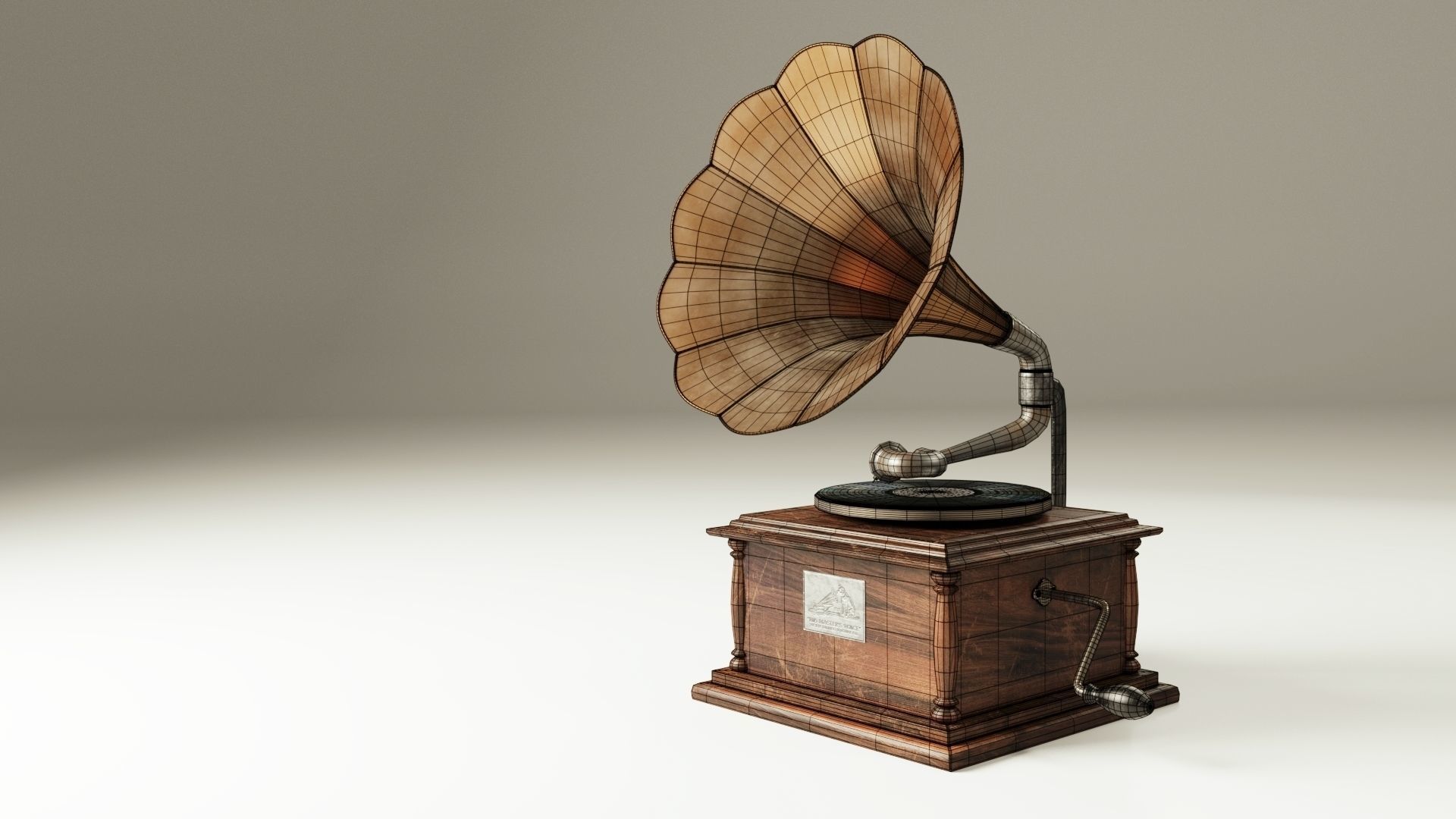
In 1877, Thomas Edison realized that sound could be created by using tinfoil stings that were wrapped around a rotating metal cylinder this was called phonograph gave an insight for Emile Berliner’s gramophone. The Gramophone is a flat disc that record sound, these were more affordable and simpler to produce than the phonograph. The gramophone was a huge impact of the popular music industry, the middle class was able to afford this technology. Jazz appeared and became popular in the 1930’s, jazz goes all the way back to slavery times. Slaves would do their cake walks to mimic the slave owners.
When I think of music I think of digital music. Everything before digital music it is a thing in the past even CD’s. News cars do not even have a CD player in them, our society pushes us have smartphones and having music on our phones. Either paying for albums or having them downloaded, subscribing to a music app, or YouTube. Businesses are greatly affected; most people do not bother having older technology of music, so businesses are not getting enough sells to be able to afford rent or bills. The video called downloaded supports my claim when technology evolved no one would not predict how much it changed society to the point where the older versions of music pretty much go extinct.
Music. It’s the one thing everyone can agree on. Over the generations of music changing, forming, and inventing, It’s one of our main sources of entertainment. Whether your out for a run or in the car blasting bops, You can’t deny the impact music has on our daily lives. Music has a way of moving people and bringing people together in the best and worst of times. Not only does it have an impact on us as individuals, but as whole societies.
The human race has been creating and inventing new ways to produce music and sound since the cave men. Making sounds is literally how we communicate today! (Except we have actual languages created) Archeologists have been digging up all sorts of ancient musical instruments and other pieces of evidence that supports our ancestors creating music. Whether you realize it or not, music has been brainwashing you and implanting its rhythmic ways inside your head! We hear certain tunes or rhythms and beats and we connect it specific memories or feelings, almost as if music holds the memory for you. Whenever you hear the graduation song (do you hear it lol) you usually either get excited (if you haven’t graduated yet) or get emotional because it was a big step in your life, the same with wedding bells. As a musician myself (classically trained violinist for 10 years), whenever I get into the rhythm of a song my whole body tends to feel the beats and melody’s and tends to move with it. Creating and playing music tends to act like writing in your diary and helps let loose of all your feelings and feel fresh again. I know that sometimes if I am feeling stressed or sad or overwhelmed, I like to take a drive in my car and blast my sad or favorite songs and screaM just to let out my feelings. Heck! I listen to music all day! I’m even listening to it while writing this blog! Music has also brought me together and closer to a lot of relationships I have. I would’ve never met some of my bet friends today without music. It has also helped me to become closer with my family, singing during long car rides or even just randomly in the house ( have 6 people living in my house so some dance parties got a little more crazier than others LOL).
Music can influence generations of people! I remember reading about how when the Beatles got popular everyone wanted to buy those cliche bowl cut wigs so they could pretend to be them. It’s crazy what music can really do and how it can affect our everyday lives. That being said, Do you think music has enough social power to create a whole movement and bring real change to our society today?
Post 1999 the world began on a new era of music facilitated through technology. Through the creation of Napster and the worldwide use of file sharing technologies, people around the world were given a chance to figure out what music really speaks to them. At the touch of their fingers and about a half hour later people were able to download and listen to anything from Chopin to Nirvana for the first time ever without having to purchase it. It started this movement of people just playing song after song and finding a genre they can vibe with.
Before file sharing music was even a thing people’s tastes in music were just formed mainly by their parents, friends, radio stations, and culture. Having this new ability opened up a world of possibilities with music. It is now just simply less expensive to explore new music than it was in the past. Regardless of the legality of sharing music online, there have been so many positive outcomes of this that the latter seems insignificant. While it is completely legal for an individual to download all the free music they please online it is illegal for them to share it with others.
Having the ability to pay cue up almost any song I want for just $5 a month has completely changed my taste in music. I feel like i’m finding a new artists every single month that I enjoy because my Spotify suggests some bangers on occasion based off the music I already listen to.
Music has the ability to influence a person’s mood and behaviors and is generally heard in every aspect of our lives. I’ve always had playlists specifically for if i’m with the homies, driving, studying, or just relaxing at my apartment because of this.
I’m able to concentrate better and almost begin to enjoy the endless amount of assignments given to me throughout the course of a week when I’ve got some of my favorite music on.
Starting in 1999, Shawn and John Fanning started developing Napster. A free way to download music to the mp3 drive on your computer. Being that this service required to share your information to others across the world and allow the computer to access your files, nobody thought this service would take off. Not even the developers themselves. At the height of development, Napster reached 80 million users. Why would people want to give up their privacy and information? Free things make people go crazy! If you are going to give someone something like unlimited music for free they are going to ignore all consequences. If it was anything like how Apple is today, they were notified before downloading that their privacy was at risk. Although they were notified, it was long small print information that was several pages. They just clicked accept happy as can be to get free music.
Anyone else listening to this story and thinking, “This can’t be legal”? Me too! Later Napster was shut down for their illegal operations and the lack of control over the transfer of copyrighted material across its network. Most would figure this operation they were running was not going to last. The RIAA was filing a large lawsuit against Napster because of their distribution of copyright material. They eventually had to shut down from losing the lawsuit. How could a company do so well and be shut down just two years after they start and do nothing about it? Napster wasn’t satisfied by crushing their expectations and 80 million users, but who would be? Napster came back years later and were under the name Rhapsody. This company is very large in Europe. Although this was Napster’s comeback, this is a legal operation.
Although it would be nice to be able to get all music for free, people have to have restrictions on the things they give out for free. Music is a great example. Though it would be nice to get it for free, it’s not right for artists or companies such as Apple, with Apple Music. They pay money to produce the music as well as the companies such as Apple, have to pay the rights to play this music. Most people would understand this but there is always people looking for handouts.
Do you guys feel like Napster did nothing wrong?
Would you give up your privacy to receive free music?
With all the content this week about music and radio, there’s definitely a lot to talk about. I found it interesting how many juxtaposing views there are throughout all of the developments in this particular media. It seems with every new advancement and change that happens to music, someone is helped and someone is hurt. When the gramophone came out, it made music more accessible to the middle class which is fantastic, but at the time it greatly hurt those who sold sheet music. Again when records came out and then CD’s and so on. Every time there’s greater accessibility, at least one market gets hurt. Looking back on this though, I don’t think anyone would say it shouldn’t have happened. As said in the showing we watched, Downloaded, it seems that those who sell music become too complacent with the current times and feel the repercussions of that once things change. These advancements end up helping so many people in a vast amount of ways in the long run, it’s a shame to know how many of these were most likely hated on or discouraged because of how they force the market to change. Imagine a world where something like the record was never developed because the dent in the previous industry it would cause. It’s almost impossible to try and think of it!
The best example of the shunning developments receive within the music industry is Napster. While it was being created and used people demonized it and focused on how it harms certain people instead of the incredible improvements that came from it and the possibilities it could be used for. Thankfully, it’s been a while since Napster happened and we can now see how it’s influenced the current music industry and how things have changed. It was one of the first ways of truly spreading music, yes it is considered pirating or stealing, seeing as once one person had the music, anyone else using the service would also be able to listen to it. However, it helped many artists in different ways. Some artists saw more fans than they could imagine at distance concerts purely because Napster introduced so many people to their music. Sure the download is free, but people love to find other ways to support musicians such as seeing them live or purchasing merchandise. Instead of viewing Napster as hurting one way and helping in another, I feel it should be seen for how it instead shifted how the market works.
Throughout all the developments in the history of music and radio, music was made more and more available to those who are not seen as elite. Music has always been available to everyone, but as an industry, it had to be forced to allow more people into it’s market. Not only did these advancements allow for at this current time, basically anyone to have access to all music, but it allowed for more diversity in music that gets pushed into the public’s view. The use of the internet especially encouraged more people to gain success with music. No longer did you need to be associated with a label or anything like that to have your music heard. At this point you just need to find a platform to upload your music and most likely, it will amass some kind of traffic. It makes me very happy to know that music has become much less of a corporate structure and has been changed to what it is today. It makes me wonder what the next kind of change in the industry might happen. What are the problems that still exist with the current system of music sharing and what kind of opposition might any fixes face? It’s hard to remember that what the present is like now is bound to change, it’s easy to say “well of course that would get improved upon” to past things like records, but it’s not as easy to have the same view with our present.
Music is one thing in this world that everyone can relate to with someone else. It is one thing that can bring massive amounts of people together and just make them forget about everything around them and just enjoy the moment.
Music has been around since the start of time and was created for humans by humans because it makes us feel warm, and just makes us move in ways nothing else does. The rhythm, the base, the chorus, the beat, everything about it is specifically designed to be put together and just make something that is appealing to your emotion and mind.
Each different style of music has its own eye catching or appealing look to them to get an audience. For example, rock and roll has people with long hair, loud music, tank tops, skinny jeans, piercings, makeup etc. Also, hip hop has a thuggish/ gangster look, i. e. N.W.A, Notorious B.I.G, Dr. Dre, etc. These certain aspects bring in their audience because that is what their audience likes and think is “cool” at the time. In a way, music is trend setting.






 Mass Media and American Life