Category Archives: Uncategorized

Self Awareness ESSAY (POSTED LATE WITH PERMISSION)

The effect of the media on it’s audience’s thoughts has been a very important topic of study over the years. It is agreed that the media doesn’t directly put thoughts or opinions in your head but rather reinforces current thoughts or beliefs and trains your mind over time. There have countless multiple studies done by the public health community, physicians, scientists, and psychologists that have supported this idea that the media affects how and what people think. But how does a message turn into an opinion or the reinforcement of a current opinion?

In order to understand and be self aware of how the media influences our thoughts and our actions I believe it is a good idea to start with The Sleeper Effect theory and then go into and understand how to break down the Hypodermic Needle theory. The Hypodermic Needle is a pretty general and broad theory can be broken down into the Two Step Flow, Agenda Setting, Cultivation, and Uses and Gratifications theories by differentiating between a passive and non-passive audience. While none of these theories directly stem off of each other by any means and are their own separate theories, I felt that this is a good order to start with when understanding how media can impact its viewers.

In 1951 The Sleeper Effect was proposed by Carl Hovland and Walter Weiss which proposed that as time goes on a repetitive message followed by a “discounting cue” is increasingly likely to influence the way a person thinks. This “discounting cue” is normally something that softens the blow or purposely suppresses the message (Hovland). This can be something like running a political ad against Donald Trump and putting “paid for by Donald Trump” at the end of it. These “discounting cues” are anything that leads you to believe there is a lack of credibility in the source of the information (Sleeper).

“Nobody wants to think their views are not their own”

-Anonymous

Throughout the day we are being bombarded with ad after ad on almost every platform we go to in media, whether it be the news, youtube, or a video game. Looking back at this you can’t really remember what ads were displayed but rather what was happening in your show, video, or game. Although they seem to just get pushed to the side, at some point these ads begin to worm their way into our subconscious and start affecting our thoughts and actions. When you start to become aware of the pervasion of all of this information you are unwillingly become susceptible to you begin to take a step back.

The Hypodermic Needle states that the media directly influences the public opinion. Although it is no longer accepted, it is a good preliminary theory to start on because people generally view the media to have that power (Lamb). It was later advanced to say that there is actually a middleman or, “media leaders”, that pass this information on to a passive audience . This is called the Two Step Flow theory, and these “media leaders” are often someone in the social eye and are respected and trusted by the targeted audience (Two-Step). A question I ask anyone I am having a serious discussion with is “how do you know what you know” and I feel it’s a very important one. At some point in time there was someone you trusted enough who said “the sky is blue” for you to believe them.

Going off of this is the Cultivation theory, proposed by George Gerbner in 1975. It is the belief that media has gradual effects on what the already already thinks and reinforces these opinions. It goes off the assumption that many people pick and choose what they watch and read for their own opinion’s convenience (Cultivation 1). For example you could have the opinion that all guns are bad so you read all these articles that go along what your opinion, strengthening the belief of your opinion. The more you are consuming media either passively or actively you are more likely to be susceptible to this theory. By implementing this theory in media today it reinforces the individual’s world view so that they only see one perspective. After seeing this one perspective over and over that reinforces your belief you would become more passionate and eventually become brainwashed. While this theory assumes that the media is not the one who initially put this idea in your head how did it get there in the first place? Who controls what the media is talking about?

“If you pull on the saw machine arm long enough you will win. You will know which pull will award you”

-Jordan Peterson

Out of all of this comes the Agenda Setting Function Theory from Lippmann in 1922 which was advanced by McCombs and Shaw 50 years later. This theory was based off a study of what voters think is important vs what the media reports on at the time. It was concluded that there was in fact a strong correlation between what people felt was most important to them vs the frequency/importance of the media’s broadcasts. It shouldn’t be new to anyone that media is a business that prioritizes themselves over all else. Later in 1988 this theory was advanced once again to include something called “framing” (Agenda). It is a very common tactic used by both sides in today’s media that adds or omits certain facts to influence the way a person views that topic or to make them think they came to that conclusion themselves. It is one of the more threatening tactics used by the media because a lot of people fall victim to it. It creates a strong bias within the article and while not being factually incorrect, it purposefully influences the audience to come to the same conclusion. Everyone has a different political view. Some people prefer CNN while others prefer Fox News as they identify more with one than the other.

But why do people even use media?

The Uses and Gratification Theory addresses this question and begins by breaking it down into 5 reasons to use media. To be informed, to be entertained, to adopt an identity, social interaction, and to escape. As humans we tend to gravitate towards things that make us feel nice, so we tend to gravitate towards the media that makes us feel nice too. This theory assumes that people will gravitate towards the media that is most convenient to them. It goes off of the cultivation theory to say that people will most likely research their side of an argument or only view articles that seem to support what they believe. Rather than view the effect media has on people this theory reverses this and analyzes how and why people use the media that they use.

My advice is to still have your opinions and still gravitate towards those cites that generally support and reinforce your opinion. But do so with an open mind and a curious mind that will do the due diligence and go directly to the primary source so that you can make your own opinion and have your own information and facts to back it up. This is one of my biggest beliefs when approaching politics and just talking with someone who has the same beliefs or different beliefs as you. I never like to talk about anything I did not look into or research myself. I do not like “he said she saids” or subjective reasonings as I always look for the facts. I try not to let my emotions guide the conversation but the facts themselves first. There is always room for emotions but they should not get in the way of the truth.

Works Cited

Mainly used MEDIA COMM THEORIES PP 97-2003.ppt

“Agenda Setting Theory: Media Theories.” Youtube, Mr Sinn, http://www.youtube.com/watch?v=12xwHhCntHA&t=37s.

“Cultivation Theory.” Mass Communication Theory, 31 Dec. 2013, masscommtheory.com/theory-overviews/cultivation-theory/.

“Cultivation Theory.” Wikipedia, Wikimedia Foundation, 27 Oct. 2020, en.wikipedia.org/wiki/Cultivation_theory.

Hovland, Carl, and Walter Weiss. “The Influence of Source Credibility on Communication Effectiveness.” Oxford Academic, 1951, academic.oup.com/poq/article-abstract/15/4/635/1923117?redirectedFrom=fulltext.

Kumkale, G Tarcan, and Dolores Albarracín. “The Sleeper Effect in Persuasion: a Meta-Analytic Review.” Psychological Bulletin, U.S. National Library of Medicine, Jan. 2004, http://www.ncbi.nlm.nih.gov/pmc/articles/PMC3100161/.

Lamb, Brett. “The Hypodermic Needle Theory: VCE Media, Victorian Curriculum, Media Arts, Digital Literacy, Media Education, Filmmaking.” Lessonbucket, 3 Oct. 2019, lessonbucket.com/media-in-minutes/the-hypodermic-needle-theory/.

“Sleeper Effect.” Wikipedia, Wikimedia Foundation, 8 June 2020, en.wikipedia.org/wiki/Sleeper_effect.

“Two-Step Flow Model of Communication.” Encyclopædia Britannica, Encyclopædia Britannica, Inc., http://www.britannica.com/topic/two-step-flow-model-of-communication.

The Social Internet (Final Essay)

This year in Mass Media, we have focused on some very pivotal and important topics when talking about advancement in communication and entertainment. I enjoyed researching and writing about all of these. I’ve learned a lot in this class while talking and going in depth with all of these topics. The two topics that I enjoyed writing and learning about the most was the social media week and the internet week. I enjoyed those the most because our generation relates to those topics the most. We are very effected by it. Our generation was the start of both of these concepts, Social Media and the internet all happened in our life so far. The advancements will just keep happening and keep getting better and better as time goes on.

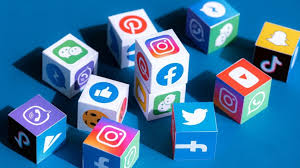
Social Media is such a strange concept but also such a very important concept. In modern day society. Social media is the top way to communicate. No matter what platform you use, you can find a way to communicate with everyone using that platform which is mostly the entire population of teenagers. It has sky rocketed as an idea in just about ten years. It isn’t all for entertainment and communication though, a lot of people are able to make a living off of social media, making a stable income from it. There are a lot of what are known as “influencers” on social media that try to really expose new fashion trends or styles that are really liked on social media. There is also a ton of advertising that goes on all over social media. People run businesses over social media and are able to promote and sell their products from people that saw the products on social media such as Tik Tok, Instagram, Snapchat, and Twitter. Instagram has been around the longest. That was my first social media platform that my parents allowed me to use. Then came snapchat which was very different from everything else at that time. Snapchat wasn’t an app for trends or styles or to scroll on a feed. It simply was an app that was made for communicating with pictures. You could take a picture and add a caption and send it to someone. I had both of these because of how different they were from eachother. Then Twitter came out which was a little different from instagram because it was all “Tweets” which were usually slogans or phrases that were 200 letter or less. At the start of twitter, there were no pictures. It has changed now because you can now add pictures to tweets so it’s more like instagram now but I mainly use twitter because you can find a lot of vitol information that everyone should know. I’m not even talking about sports stats and scores or movies coming out but national crisis’s or national news or important deaths across the country. These can all be found on Twitter almost immediatley after the event happens. For this reason, Twitter is my favorite platform. I would love to learn more about social media and the effects it has on the nation.

How To Grow Your Personal Brand On Twitter In Only 10 Minutes A Day

The internet was my second favorite topic because that was also a very pivotal movement for society and it all happened in my lifetime. Technology really started moving once the internet came out. The internet was a game changer. If it wasn’t for the internet there would be no email, no social media, no search engines. If there wasn’t internet then the only communication would be a phone call or talking face to face. During this COVID crisis, we have used the internet for EVERYTHING. All of our classes and meetings have been online. If this crisis happened before the internet, we would literally all be in a stand still. Nothing would be going on except emergency jobs. A huge amount of the population makes a living using the internet. A lot of jobs are being moved online and more and more jobs are relying on the internet and technology. The world wide web has hepled our economy in so many ways. Allowing people to have information by typing on a keyboard. Communication is most efficient when used online and lastly people support their families from making a living online. Most entreprenueres now a days are all online trying to promote and sell their products and the people that buy their products all find them online. In person stores are becoming the runner up of online shopping.

In conclusion, We need both of these things in our lives and in our society. Some of the other topics that we learned and researched about are things that we don’t need in our lives today, but both of these topics need to be around in order for our economy to run smoothly and I’m very confident when saying that these are two very important things that will be around for our whole lifetime.

World Wide Web inventor reveals plans to save the Internet | ITProPortal

Final Essay

The Health of Social Media

A Chronological History of Social Media

Social media is a tool that we all use daily. It’s quite popular and it has given us access to websites and applications to share our lives as quickly as possible, in real-time. Social media started way before the use of cellphones. It started when dial up internet was still around.  Not only has the format changed, but it has transformed the way we live today.

“All communication areas are significant in that each area represents a system that operates within a broader system of destination management, and contributes to its overall efficiency. However, each area of communication has its own characteristics and the knowledge of these characteristics will ultimately help establish an efficient communication pattern. There can be no argument that technology has had a major impact on the world and how people communicate.” (Omrcen, 2009)

Social media is unique but not new. We have been so consumed and wrapped up in social media that we forget that we have access to newspapers, articles, new broadcasting stations, the radio. Our traditional way of information is timeless but fading. Everything we need is at our finger tips, all we have to do is search. Although, social media allows access for people to be more updated and aware on the things going on in the world, it also distances from newspapers and the actual news. There are many advantages and disadvantages to it. It’s a platform of all platforms that can be censored or uncensored.

There are multiple types of social media but the social aspect of it is the biggest. It’s the rising trend in the world today. We can all agree that we use social media for social purposes. People are communicating almost every day through text messages, email, and instant messenger apps. There are even clips, GIFS, you can send, emoji’s, emoji’s that look like you, and games. There’s always an update so that we can have the latest information, the hottest scandals of celebrities, and Global issues or updating on your personal page as big as a birth announcement to as miniscule as what you ate for dinner. There isn’t just one specific group proclaimed to social media. Social media has brought an aspect of different age groups and social groups together in a community.

In the advantages and disadvantages of social media, communication skills are exemplified. Social media allows for a communication outlet. It allows for family members and friends to communicate freely with anything that carries a signal. I’m interested in the role of social media because I use some form of social media every day. 

Facebook and Snapchat have become my first two choices of social media.  Facebook is a popular social media app that was introduced February 2004. However, there were other social networks such as Bebo or Myspace. Facebook happens to be one popular site that has stuck through decades. To constitute, Facebook had more than 2.2 billion active users in 2019. Social media links are at the bottom of everything that is broadcasted. Twitter is a common platform that I notice most celebrities use.  I notice that a lot of social media platforms are used for celebrities to use their voice, popular brands to promote their business, even my friends promoting their businesses and ideas.

There has been a spark in the growth of social media networking, there is always an opportunity to market and expand. Some platforms provided tools to users to expand, such as promotions to get fans. As technology advances, so does the way social media. Whilst, almost everyone we know, young or old, is on social media there are disadvantages, too.

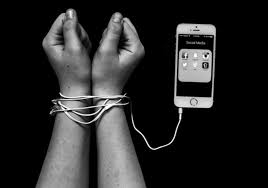
Social media has people feeling trapped. | Social media photography, Social  media art, Conceptual photography

The more negative exposure of social media is usually within the younger age group. We know more teenagers and adults using social media more than our parents. Younger age groups are typically more on social media with an average of 12 hours and 9 minutes per day. Parental controls are accessible however, if you’re old enough to create a social media page there is no need for parental controls. Nothing online is permanently deleted.

There is no rule book on the Do’s and Don’ts of social media. There are unspoken rules. We have to revisit and think to ourselves, “Is that appropriate?”. Now, comments are filtered out for the protection of other uses. This wasn’t always the case. Social media could be a cruel place to be involved.  Being on social media you are vulnerable to all types of harassment. Luckily, policies and procedures have been changed to ensure the safety of other users.

We’re able to positively like and respond to comments, we’re able to negatively like and respond to comments and vice versa. It is up to each individual to make that decision to make social media a safe environment for themselves and others. It is okay to laugh, and joke but we also need to be aware of what we post and how that can effect another individual.

To be more actively aware, you are able to protect the privacy of yourself. Several different engine websites have privacy settings where you can control who can see your posts. Social media is a growing product every day. Protect yourself and protect your privacy. As social media evolves, communication will improve. It has a positive impact in the community that I experience every day, it overcomes the negative and makes it beneficial to everyone involved.

https://www.thebalancesmb.com/what-is-social-media-2890301

https://review42.com/how-much-time-do-people-spend-on-social-media/#:~:text=16%2D24%2Dyear%2Dolds,was%20142%20minutes%20a%20day.

Final Essay

Facebook is a social media platform, created by Mark Zuckerberg in 2004 while he was a student at Harvard University in Cambridge, Massachusetts. Zuckerberg wanted to connect the world. That idea is what sparked the Facebook we know now. He started small with just Harvard and now he has achieved connecting people all over the world. But how did he achieve this? How much did he have to sacrifice to make it to this point? Is Facebook still an innocent way to connect friends around the world, or is it hurting society? I will argue that Facebook has turned into something that hurts society. There are good parts of the platform. Yet, the bad outweighs the good. 

https://www.phocuswire.com/How-Facebook-plans-to-connect-the-whole-world-to-the-web

Similar to most forms of social media, Facebook can make people feel lonely. In the article, “Is Facebook making us Lonely?” by Stephen Marche, he argues that Facebook, while connecting people, also makes people more disconnected. The wider your social circle gets, the more shallow it becomes as well. With Facebook, along with constant communication, constant access to News, and the ability to see so much about so many people’s lives, comes alienation. This is the same across all forms of social media, but Marche argues that Facebook is at the center of it. Facebook is the most widely used social media and brings so many people together from all over the world (2). 

One reason for this loneliness is the possibility of connectivity that does not always happen. This also causes anxiety which is bad for society as well. The possibilities are endless. If you have an old crush you wish to connect with, you can click on that friend request button. But there is no promise of that friend request being accepted. This can lead to obsession, anxiety, and a deep loneliness. Always checking your screen and refreshing, waiting for a response that may never come. 

Facebook is also the perfect place for someone to go to find out they are being left out. If not actively left out of social gatherings by people who were thought of as your friends, you can also see aspects of other people’s lives that you wish to have but do not. This can cause jealousy, FOMO (fear of missing out), anxiety, and of course, more loneliness. 

Being lonely is not a good thing. Obviously we do not want all of society to be lonely. But it is important to note that loneliness leads to other bad behaviors as well. When people are lonely, they have less of a desire to workout. This leads to obesity. Loneliness also leads to a lack of sleep, lack of motivation, hormonal issues, depression, worse health, and so on (2). 

Using the Like button on Facebook does a lot more than add another number to the likes on a post. It affects people deeply. It affects what society thinks about things. This seemingly simple button plays far too large of a role in our lives. In the article, “The social significance of the Facebook Like button” by Veikko Eranti and Markku Lonkila discusses the social aspects of using the like button. By using Facebook, the idea of the like button becomes ingrained in people’s minds. They become overly obsessed with others’ reactions and approval. 

https://en.wikipedia.org/wiki/Like_button#/media/File:Botón_Me_gusta.svg

In James Mathews’ Ted Talk, “How the Like button is Shaping your opinions” discusses how the like button plays a role in us losing our ability to think completely by ourselves. Facebook has an algorithm that shows you things they think you want to see. The amount of likes something gets, determines it’s likeliness for other people to see it. While at the same tie, the more likes something has, the more likely you are to also like it. This leads to a snowball effect. The way that Facebook really started to affect society was through these algorithms. In the past, before this technology came out people went to search for their information. You would go to a search engine and look up something you wanted to know more about. But now, Facebook decides that for you (3). Instead of browsing through a search engine to find a credible source that you trust, Facebook just throws these sources at you. It has made us lazy in how we learn information and has given Facebook too much power. We need to be more independent and in charge of the media we consume. 

So, I argue that Facebook is bad for society because of the loneliness it makes people feel, the anxiety it causes, the emphasis on other people’s opinions,  and the ability it has to choose what information is presented to us on a daily basis. There are plenty of other negative things Facebook can lead to as well such as privacy issues, their focus on making money and growing, instead of on the safety of its users and so on. But we can not forget the positive things it does as well. Zuckerberg achieved his dream of connecting the world. So, while Facebook, the way it is right now has a negative impact on society, I think that if some changes were made to the platform, it could be something truly great. Because connecting the world is a pretty powerful thing. I have a hope that connecting the world could lead to more peace because once you start talking to and understanding people who are unlike yourself, you are able to learn and appreciate what you previously thought of as foreign and unknown. 

Works Cited

Eranti, V., & Lonkila, M. (2015). The social significance of the Facebook Like button. First Monday, 20 (6). doi:10.5210/fm.v20i6.5505

Marche, S. (2012). Is Facebook Making Us Lonely? The Atlantic.

Matthews, J. (2012). How the ‘Like’ Button is Shaping your Opinions. Retrieved November 07, 2020, from https://www.ted.com/talks/james_matthews_how_the_like_button_is_shaping_your_opinions

How Social Media Has Evolved Into A Political Ring

In today’s world, we have a large intake of media everyday. Whether it’s a newspaper, television, or an ad on Hulu, you’re taking in some form of media designed to influence you. In the past, humans didn’t experience anything near the amount of media we intake today. Back then, people relied on radio and newspapers to give them the information they needed on just generic news and political standings. The first newspaper was printed in 1690 and the first radio broadcast aired in 1906, so the radio was a very exciting technological advancement for its time. As technology evolved over the years, we see televisions being used more and more frequently for spreading news around. Soon Movies and cinematic films became a big industry for media around the world and especially in Hollywood. More and more television shows and movies and news outlets were created and now everyone has a TV in their households. But what is the largest source of media in the modern world for us? Social Media. With the creation of these social media platforms had to come the invention and spread of computers and smartphones. One of the first social media’s created was Mark Zuckerberg’s Facebook.

Facebook. One of the first major forms of social media that has spread from a few thousand to millions of users everyday. This website was created by Mark Zuckerberg when he was attending his sophomore year at Harvard University in 2004. The initial reason Zuckerberg created this platform was to get back at a girl he was dating because she dumped him. Jealously, Zuckerberg stayed up for hours setting up a website for people at his school to rate girls that attended. Very quickly word got around of this hilarious website where you could see all the girls that went to your school and rate them. This soon became a big problem, obviously, when the school heard about it. They let him keep the website up as long as it was for the benefit of the school, so Zuckerberg made Facebook. At first it was just Harvard, then it quickly spread to universities everywhere. Zuckerberg eventually got it spread to people all over the country, even those who didn’t attend a University. This soon evolved into a very commonly used social media that has influenced many other people to build and design other platforms like it. Today we have multiple social media apps and websites such as Twitter and Instagram, and others like them. Now with these platforms, contact and interaction with others on social media has become one of the biggest ways we communicate and spread information throughout the world. In the United States, many people nowadays share posts about their political beliefs and what they stand for. This has brought a lot of division in the country especially during these past four years. When I go onto Instagram or Facebook or Twitter my whole feed is filled to the brim with posts about human rights and problems we need to fix in the country, but it wasn’t always like that. A study taken in 2013 said that more people were willing to discuss a political issue in person than on Facebook. The study also showed that people were less willing to discuss political issues on Facebook because of the fear of being the minority. Nowadays the country is so divided that people hang flags and signs outside of their house displaying their beliefs and they certainly don’t mind arguing with people on Facebook about them.

 In 2007, the world shook when a new invention was brought to the market. The smartphone. The first iPhone was on the market in late June of 2007. This invention put newspapers, radios, computers, and televisions all into your pocket. With the technology evolving everyday and more and more people buying smartphones and joining social media, there was and still is some contradiction with the massive intake of these platforms and other media outlets. With everyone having a phone with everything they needed in their pocket to communicate with others, people stopped interacting with others in real life. Everywhere teens and adults were being sucked into their screens. Today, everyone around the world can stay connected and informed through their smartphones, but is it worth the price of losing real interaction with others. Teens everywhere are sucked into social media platforms and just sit in their room all day and don’t come out. In my personal experiences I have also been at many times sucked into my phone, especially recently with having to be in quarantine for the majority of 2020. Social media has also gotten into the White House and is being used within almost all government officials. President Donald Trump has been especially known for his outrageous tweets and making very big statements on his accounts throughout the social media platforms. But with all these news sources and ways of absorbing information, how much of it can we trust? There’s the classic saying of don’t trust everything you see on the internet, so how can we trust the content of the tweets the President sends out.  This dishonesty of the media being flooded into the world has many people only trusting limited sources. Even the president continuously talks about “fake news” and has led people to only watch certain news stations that only discuss people’s certain beliefs. This has also been a big impact in how the country is divided, peoples social media are full of one-sided discussions and posts, and this isn’t an accident. Social media create algorithms so only show you what you are interested in, and this goes for even ads too. 

Social media has been a widespread form of communication and has connected people from  all over the world, but is it helping the state of our country? Or is it one of the key factors that contributed to our mass division? Before it was integrated into the White House and other government functions, people didn’t feel comfortable sharing and speaking about what they believed in online. There were so many different kinds and alterations of beliefs that people feared being the minority. Nowadays the beliefs in this country have become so black and white and two-sided that families are ripped apart from debating. Social media has had such a huge impact on our country that I’m not very sure on how it will recover. Whenever I go on any social media I only see political posts or some sort of repost of news that I rarely see people posting and sharing pictures of themselves and their experiences. This sort of evolution of social media has changed life forever. Though these platforms have brought division within the country, I don’t see social media as a total negative. Now we are able to see horrific scenes of police brutality within our country and in others. We are able to spread more awareness for issues than we ever could have in the past. People are learning from their mistakes and taking responsibility for their actions. In the darkest of times, I see hope that people will soon come together and care for each other as we did so long ago. 

Works Cited

Douthat, R. (2016, May 21). Facebool’s Subtle Empire. The New York Times, pp. 1-4.

Hampton, K. N., Rainie, L., Lu, W., Dwyer, M., Shin, I., & Purcell, K. (2014, August 26). Social Media and the ‘Spiral of Slence’. Pew Research Center.

Is it Our Need to Follow or Our Fear of The Worst? (Essay)

With all this violence in the world today it’s impossible to not ask yourself what is making this happen. Is it all the violent video game or movies or is it just because we hear about it more due to mass media? I tend to think that it is because we hear about almost every violent thing that happens in the world as soon as it happens, which could make you feel like you are surrounded in violence. “In 2019, the Pew Research Center found that over half of Americans (54%) either got their news “sometimes” or “often” from social media, and Facebook was the most popular social media site where American adults got their news.”(Meyer Robinson, 2016) This means that people are seeing news faster than ever now and there’s almost no way to get way from news now a days I don’t think that humans are any more violent then we were before, but I do think that we are more scared then we have ever been. I think instead of violent movies and video games making us more violent I think it has made us more scared of it violence. I think this is due to people seeing things on movies and video games that would be the worst thing that could happen in that situation so it makes us fear the worst because we’ve seen the worst even if it is fake, it makes you think it could happen to you. I know I’m not the only one that uses what they see in movies to make choices sometimes if I have no other experience otherwise, but it’s not because I think that its right but because it’s all that pops into my head first. Movies are so much more relatable then they used to be, movies are now almost so realistic that it makes you feel like you are watching real life. Not just the special effects but the way the actors and actresses act in the sense and how the stories are written they are much more realistic there not nearly as predictable and the decisions they make are more on point to now people live in real life.

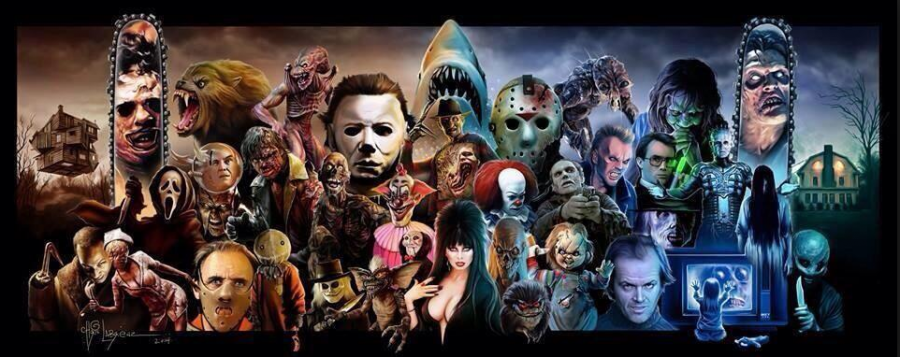
Top Five Horror Movies to Watch – The Tower

After watching the screening last week, it got me thinking about how people react to a bad situation and in particular the COVID-19 pandemic. I made me ask “would the COVID pandemic of been more controllable if people didn’t always fear the worst?” What I mean by that does the bad situations depicted in movies and video games make use fear the absolute worst case when things like sicknesses and wars? “When we watch a horror movie, it stimulates the brain and the brain responds with the physical and emotional sensations we call fear,”(Fellizar, Kristine, 2019) if we have real life bodily responses to horror movies could that mean if we encounter a situation that is similar of one that was in a movie could it trigger the same response even though it could not end up the same way as the horror movie. They could be connected, because when the news hit the USA that COVID-19 had started to pop up in the United States almost everyone ran to the stores to get everything they could just like every post-apocalyptic movie ever seen. Going to the stores were kind of scary to see empty shelves and not being able to get what you want or need in some cases. Would it have been so much easier if everyone remanded calm and just bought what we needed and there wouldn’t have been shortages. I’m not saying the pandemic wasn’t scary but if we didn’t have that fear surrounding us at all times.

Mothers And Kids Who Rely on Federal Food Aid Struggle to Get Groceries  Safely During the Covid-19 Outbreak | Time

On the other hand, there is a possibility that the panic came from our need to follow one another due to human nature which was shown in the Stanford prison experiment. If you are not familiar with the Stanford prison experiment was an experiment held in 1971 to see how people in power would respond with little instruction. They did this by splitting up 24 men in to random groups somewhere prison grads and somewhere prisoners.(McLeod Saul, 2020) This experiment was only able to be held for one week even though it was supposed to be 2 weeks this was because the guards of the fake jail were starting to harass and abuse the fake prisoners.(ibid) This experiment has been the one biggest example of social conformity to date, I think the actions displayed in the experiment can be found in the response in the COVID-19 pandemic because of the way everyone did just because they were seeing it happen. Just from seeing the people wait in line at grocery stores made people feel like they had to go too. Even the fear of bring the vires home on your food was a crowed fear that spread to a lot of people, people where wiping there food down with wipes before they even put it in their pantry or fridge. I’m not saying this wasn’t a good idea at all but it started with a few people and then before you knew it everyone was wiping their food off to just be safe. Humans are very smart animals but we have a burning need to follow the person in front of us, just because we are one of the smartest things on earth we still long for approval and not to be alone in making decisions.     

Meyer, R. (2016, July 07). How the Average American Gets Their News. Retrieved November 09, 2020, from https://www.theatlantic.com/technology/archive/2016/07/how-the-average-american-gets-their-news/490244/

Mcleod, S. (n.d.). The Stanford Prison Experiment. Retrieved November 09, 2020, from https://www.simplypsychology.org/zimbardo.html

Fellizar, K. (2019, September 30). Why Horror Movies Can Feel Comforting, According To Experts. Retrieved November 09, 2020, from https://www.bustle.com/p/why-horror-movies-can-feel-comforting-according-to-experts-18814314

ESSAY- THE DIGITALIZATION OF BOOKS

The first known printed book is the ‘Diamond Sutra’ dating back to 868 AD, during the Tang dynasty in China. Soon after, scrolls were invented which were primarily used for texts, some being religious and scholarly. Invented by the Greeks and Romans, these increased in value during a time when scribal skills became more rare among people. These giant rolled manuscripts were made from the papyrus plant and were used by many religious groups, like Judaism with the Torah. It took an estimated 3,000 years for this long rolled document (read horizontally instead of vertically) to transition into a more modernized device with printed pages. Scrolls soon evolved into the codices by the ancient Romans during the first century, pages with print made from parchment paper and bound with wooden covers. These most emulate the novels we read today, featuring colors, pictures and documenting stories.

Codex, Illuminated manuscript, Facsimile, triumphs, Petrarch, Vitr 22/4

An ancient Roman scroll with colored graphics and writing.

Area bookstores respond to shifting business model | Coronavirus |  bendbulletin.com

The Coronavirus has impacted the already struggling book-business franchise even more. While seeing the big chain bookstores shut down, It’s especially saddening to see small independent book sellers go out of business.

Traditionally bookstores have served as a backbone for new authors to advertise their published works. Authors could get a leg up in advertisement through having their books being advertised in key sections like the ‘staff’s pick’ with their summaries advertised in attention-grabbing fonts and covers. Small independent book sellers were hot-spots for avid readers and book-consumers to confide in with regards to the best ‘just in’ books and their personal opinion on whether or not they were worth the read. Amazon introduced it’s Kindle in 2007, the most widely used device to buy and download books and (now) movies. Within the last decade, digital e-book purchases have sky-rocketed and the consumerism of paperback books have suffered immensely. As a result, many bookstores have permanently closed and have gone out of business, affecting personal author-relations and their own book-store goers. Many people grow nostalgic for exploring a bookstore and purchasing a book or perhaps even going inside to simply sit at a cafe inside to read or people watch.

Calling Off Auction, Borders to Liquidate - The New York Times
Barnes & Noble wants fans to help save store - South Florida Sun-Sentinel

Major Bookstore chains like Barnes and Nobles, Borders, Book World and Discount Chain, Atlantic Books have been unable to stay open amidst digital pressures.

Soon to follow, have been libraries which have dwindled immensely since the rise of e-book rentals, sold even more cheaply than regular e-books. Libraries are state-funded and proper funding often lacks when you factor in everything needed to keep a library running like book-cases, proper storage, archivists, librarians and updated computer appliances. As a result, libraries have suffered almost as greatly as bookstores have. Many libraries are built inside historic buildings and offer readers a special historic experience when going inside to check out a book. Like public libraries, university libraries have also experienced closings as even students are checking out books less and less, opting more for the study-experience or to login on a school computer. Alternatively these activities can be done in study spaces, cafes and lounges where the massive up-keep of books is unnecessary.

St. Paul's James J. Hill Center to close in July

St. Paul’s James J. Hill Center permanently closed in July of 2019, it first opened in 1921 and remains one of Minnesota’s most historic buildings.

James J. Hill Library struggled for decades as a privately funded non-profit library, completely reliant upon the Minnesota Historical Society, private grants and public donations. They even changed their name from a ‘Library’ to a ‘Center’ in 2013 to advertise their public services going beyond books to attract more consumers. The Executive director Tamara Prato sorrowfully justified this closing in not having adequate funds to maintain their services to the public. “As a privately funded nonprofit, our ability to provide these services to the public for free is not sustainable,” said Prato, in her statement. “We continue to be challenged to develop a financial model that can deliver the original intent while being fiscally responsible for the ongoing operating costs of the organization and necessary capital investments in the historic structure.” This unfortunate trend in library closings has hit the United States (especially) by storm.

Being a author in this day and age is extremely difficult. According to the Taleist self-publishing survey from 2012, half of all self-published authors make $500.00 or less. Agents used to promote books are dwindling in numbers, causing a ripple effect in the amount of available editors and publishers. In addition, many writers can’t financially sustain themselves through solely writing, even with hopes of publishing their work and making money from their book sales. It is not uncommon for writers to take on multiple jobs for financial support, taking away from the time spent on the writing process. The tedious steps of writing, editing and finally publishing their book comes at a hefty price and sometimes isn’t worth it. Many writers will do these steps themselves to save money but then lack the additional support in the final stages, often times leaving them to feel alone and confused. Darcie Chan, author of The Mill River Recluse worked on her novel while being a full-time attorney. “I did it mostly in the evenings after work, on weekends, it took me about two and a half years to write.” Chan got an agent who made great efforts to sell to publishers however, as an unknown author nobody was willing to take the risk to take a chance on her novel. Chan took a break from trying but when she read about the increase of popularity in e-books and kindles, she decided to go ahead and self-publish. Chan wasn’t looking to get rich fast or sell a huge amounts right away but merely thought that the feedback she would get would be conducive to her writing. When she uploaded her book to the Kindle Store and to her surprise, sold about 100 copies within the first month. Flashback to around a year later, her book’s e-book success landed her on the New York Time’s best seller list.

Amazon and Google have marketed on e-books, PDF’s and even movies, cutting down the price and making resources readily available to almost anyone. Scott Turow, President of the Author’s Guild credits this easy accessibility with a simple solution: the power of big tech corporations and their grasp on the industry. “Google a number of years ago entered into an arrangement with seven major university libraries and scanned their entire collections- and proposed to make snippets of these books available to Google users.” Unlike Amazon, selling e-books for less than a third of their marketed prices, Google has made many texts free, at the cost of only a few clicks.

Report: Amazon to overtake Walmart as largest retailer by 2022 – Produce  Blue Book

This blatant transition from the way in which people read traditionally to a new modernized method has been thought to negatively affect younger minds. The 2013 Tribeca award-winning film ‘Out of Print’ draws attention to this important issue presented by many parents and educators, worried that future generations will never know the feeling of ‘opening up a good book’, not merely just skimming for information or digitally highlighting passages they need to read for school by searching for the key words at the top of their screens. When a group of teenagers were interviewed about their perception of reading, one young boy said, “A book is something I’m being forced to read, so I spend my time thinking about how I’d rather be sleeping.” Many older-generations find these common perceptions among youth to be shocking and dis-heartening. Has digital reading taken away key aspects from the overall intellectual experience of reading a book? Children and teenagers alike are less likely to go to the bookstore or library simply because they see doing so as a chore or homework assignment but this takes away from the enjoyment of exploration and possibility. As an adult now, I am grateful that I experienced the joy of going to the bookstore and reading the book summaries on the backs of novels for pure curiosity and excitement. Hopefully, there will be efforts made to preserve this youthful curiosity and comfort of going to the bookstore or library for personal and not just education or parental-forced experience.

Amazon celebrates its first '$10 billion quarter' in sales, finds Kindle  books overtaking paperbacks | Engadget

This mass-accessibility has angered some authors and publishers who feel as if the power of their book’s success is no longer up to the consumer but at the hands of massive tech companies. Many people feel as if books carry a special effect in their traditional paper form and offer a more immersive experience for the reader. Like Chan however, some authors enjoy the seemingly endless opportunities of being able to mass-market their work on their own and make more money than if they would’ve marketed their book to a traditional store with higher prices. Low prices target large groups of people who aren’t willing to spend more than a dollar or two on a book that could be marked as $20.00 in store. According to John Perry Barlow, founder of the Electronic Frontier Foundation (referring to Google Books), “They’re making a privately owned copy of many many works that are already in the public domain.” Most people feel a sense of trust towards the main tech companies like Amazon and Google as they are trusted known and established. Users know that they aren’t downloading a virus or the wrong book for a the cheaper price but are just widening their browsing space to get the best possible deal.

What Ever Happened to Google Books? | The New Yorker

At first glance, browsing Google Books could emulate ‘shopping’ except everything is free and available immediately to the Google User.

Works Cited

https://artsandculture.google.com/story/a-brief-history-of-books/OAXR-SPrQmOCew?hl=en

Arts and Culture, Google. “A Brief History of Books – Google Arts & Culture.” Web. 09 Nov. 2020.

Out of Print. By Ray Bradbury, Jeffrey Preston “Jeff” Bezos, and Meryl Streep. Dir. Vivienne Roumani. Web.

Melo, Frederick. “Nearing the Century Mark, Downtown St. Paul’s James J. Hill Center to Close in July.” 13 June 2019. Web. 10 Nov. 2020.

The Story of Rock n Roll

The genre of rock is responsible for moving America forward when we were “stuck in our ways.” Life had become predictable, people started wondering “there has to be more to this” (referring to life). The term rock n roll was used as slang in jazz and blues lyrics to mean, or to engage in sex. African Americans owned the jazz and blues genre. At a time when discrimination and racism was very strong America, the 1950s, adults did not want their children listening to music by African Americans with suggestive, sexual lyrics. This is why the genre was under so much scrutiny in the beginning.

Before rock n roll, the music scene consisted of pop or easy listen musicians, like Frank Sinatra and Dean Martin. Big band, which was a music ensemble of jazz musicians country music, with stars like Hank Williams. Blues music, which was founded by African Americans in the 1860’s. These genres continued on with popularity into the early 1950’s.

Blues in Hoss' Flat” (1958) Count Basie – Swing & Beyond

Blues, along with rhythm and jazz were very popular among kids growing up in the post-World War II era. Young boys across America trying to emulate this blues beat they were hearing on the radio. The next sound was bound to be rock n roll because of this. The southern blues beat could only be heard on the black radio stations across America. The genre of blues is the back-bone of rock n roll, and without it rock n roll doesn’t exist. Famous blues artist such as B.B. King,  Muddy Waters, John Lee Hooker, Freddie King and Buddy Guy were crucial components to the genres evolution into rock n roll.

Muddy Waters (1915-1983) - Find A Grave Memorial

Some early rock musicians who had played a huge part in moving the genre forward were Elvis, Buddy Holly, Bo Diddley, Chuck Berry and many others. 1954, Elvis came onto the scene, and not long after was deemed the King of Rock n Roll. Elvis was way before his time in terms of the sound he was putting out on the radio. With a sped up, new and improved sound along with a pretty white face singing like Elvis, the younger generation went mad for it. “When I heard Heartbreak Hotel, it was the end for me. Once I heard it and got into it, that was life, there was no other thing. I thought of nothing else but rock n roll,” said John Lennon in an interview. The sound, the beat, it was something new and fresh. With the lyrics being about love and full of sexual innuendos, younger generation was looking to rebel against their parents ideology and wanted to express themselves in a different way.

Elvis Presley History Timeline 1955

The younger children who were influenced by the 1950s rock n roll, by the 1960s, were producing music of their own. The British Invasion which included The Beatles, The Rolling Stones, and The Kinks were reinventing the sound they grew up on and throwing an R&B twist on it. The Beatles thrived in America, topping the fame of Elvis and selling millions of records. “Nothing affected me until I heard Elvis. Without Elvis, there would be no Beatles,” John Lennon famously said about the King of Rock ‘n’ Roll. Although they may have become more popular, The Beatles had much respect for The King and made it known they were big fans. The early 1960s sound was catchy, upbeat, and usual was about loving a girl. The industry loved that stuff, mostly because it made them money.

BEATLES EARLY PHOTOGRAPH BY MIKE McCARTNEY
The Beatles really young, notice the Elvis hairstyle

The upbeat, catchy, good loving rock n roll sound continued up until about the mid-1960s, and then something changed. The beatnik culture throughout the 1950s and eventually turning into what we know as the counterculture movement in the 1960s loved rock. In fact, Rock n roll was the center piece to this movement based around peace, love and enlightenment. The 1960s brought something totally new to the table with rock. The lovey-dovey rock jams were out and social change was in. Rock artists started to use their music as a way to address the social problems that America was facing at this time. Groups like The Doors produced a song Five to One referring to a generational takeover by the young. Five to One being the ratio between young protesters to law enforcement. The point being about the ratio and how they have the older generation outnumbered, nothing can stop them and change will come, peace will prosper.

The Doors Reflect on Early Shows, Jim Morrison's Genius - Rolling Stone

The drug LSD, played a huge part in changing the sound of rock n roll again. The bands indulging in it found that people enjoyed a solid jam with an electrifying guitar solo to take you to “that place” while on the drug. This was the start of psychedelic rock which meant less lyrics, loud guitar, and eerie yet pleasurable sounds that make you wonder what instrument created them. The main hub for this sound was coming from Austin, Texas and San Francisco, California. Every artist in the mid to late 60s was moving out there. San Francisco became an epicenter for rock music and the counterculture, it was peace, love and rock n roll all the time. Janis Joplin, and the 13th Floor Elevators were two groups to make it big from Austin after moving further west. “As the front man of the 13th Floor Elevators, Roky Erickson helped define the outer limits of psychedelic rock” (Erlewine, 2019). Other bands who had success from San Francisco included the Grateful Dead, Creedence Clearwater Revival, Jefferson Airplane, and Steve Miller Band, all main stays in the rock genre for years and years to come.

As the years went on, the rock genre continued to develop, change and evolve throughout and into ‘70s, ‘80s, and ultimately saw its demise after the ‘90s. Without artist like Muddy Waters, B.B. King and the popularity of blues, rock n roll would not exist. The blues musicians are the original rockers who set this great genre we call rock in motion.

Youtube Videos

https://youtu.be/4fk2prKnYnI   B.B King – Thrill is Gone

https://youtu.be/w5IOou6qN1o  Muddy Waters – Manish Boy

https://youtu.be/1qpM2wSD7BA  Frank Sinatra and Elvis

https://youtu.be/jenWdylTtzs  The Beatles – I Want to Hold Your Hand

https://youtu.be/3tHPsphg9xc  The Doors – Five to One

https://youtu.be/a6JLKbSjH3E  13th Floor Elevators – You’re Gonna Miss Me

https://youtu.be/zq8sp6WF3bQ  The Grateful Dead – The Eleven

References:

https://www.beatlesstory.com/blog/2017/08/11/the-kings-elvis-presley-and-the-beatles/#:~:text=%22Nothing%20affected%20me%20until%20I,of%20Rock%20’n’%20Roll.

https://pitchfork.com/thepitch/remembering-roky-erickson-a-forefather-of-outsider-rock/

Video Games and Technology

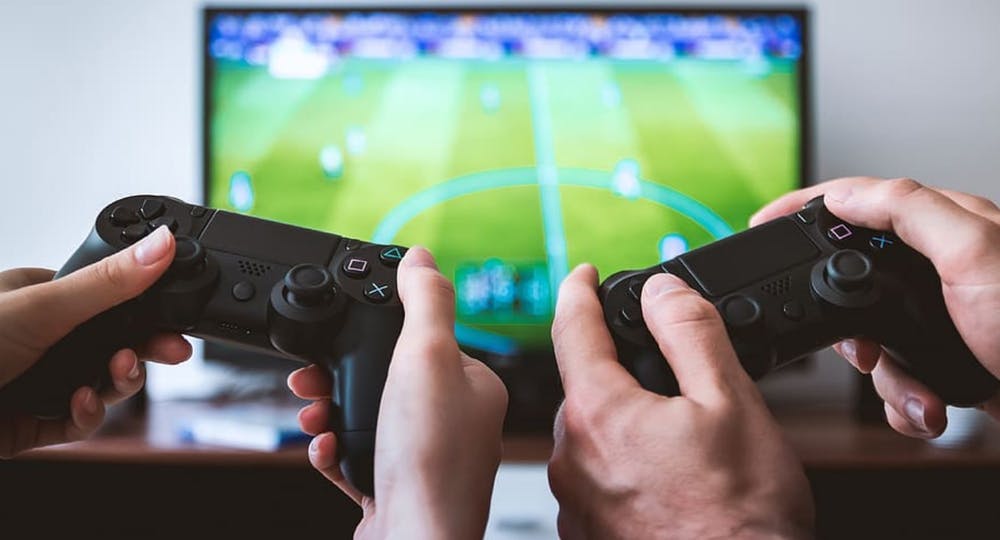
Over the years technology has been a huge factor in the way that children are being raised now. Children are growing up with gaming devices, televisions, tablets, and other various forms of technology. This is not the case in the past. In the past most children went out and played with the neighborhood kids and played baseball, rode bikes, or went for a walk. They would go out and enjoy the outdoors. Kids still do this today, but with the ever changing technology that has become so advanced, kids are drawn into the technology and staying inside. One huge form of technology that has become so popular is video games. Instead of playing baseball or basketball with your friends in real life, you are playing against them online using professional players on a television screen.

Now during times such as the pandemic, we are forever grateful for technology such as video games. It allows children and teens to have something to do as well as be social with friends and the public. But before the pandemic most older individuals looked at video games as a waste of time and a reason that children were becoming lazy and not productive. In some cases this may be true but in most cases this is not true. Video games can be very beneficial for kids growing up. Some of the positives of playing video games are, improved coordination, improved problem solving skills, enhanced memory, improved brain speed, and improved social skills. All of these are important when looking at what a child should be trying to do when growing up at a young age. Now there are some negatives that come along with these as well. All these positives have to come with negatives or everyone would be 100% behind allowing their kids to play video games and there are people who are very much against them. Some of these negatives include, reduction of motivation, poor mental health, relationship issues, and social disconnection. Now with these negatives comes counter arguments. This happens with any pros and cons discussion. When looking at the reduction of motivation, I feel that the motivation is still present, it is just pointed towards a different outlook that most people would not understand. When playing video games your motivation is presented through goals and achievements in the video game. When making this counter argument most people who do not play video games would say that this is a waste of time and you could be doing more important things. Having the feeling of self achievement when reaching a goal or achievement not only in video games but in life means a lot to the younger generation. Though to a parent it being pointed at a video game is not presented as an accomplishment. Now with the argument of poor mental health, video games are an outlet to most of the younger generation. When the younger generation is presented with hard times such as depression or stress, video games allow the youth to escape to the real world. Relationship issues can occur with playing video games. You will be putting more time into the video game and less time into spending time with family. At the same time you are able to build relationships with friends and people all around the world. With it being so easy to communicate with random people that you do not know, children need to be educated on what is okay on the internet and what is not. Talking to random people about personal information obviously is not okay. But connecting and making long-term friends with people in another state is very beneficial. It gives kids something to look forward to.

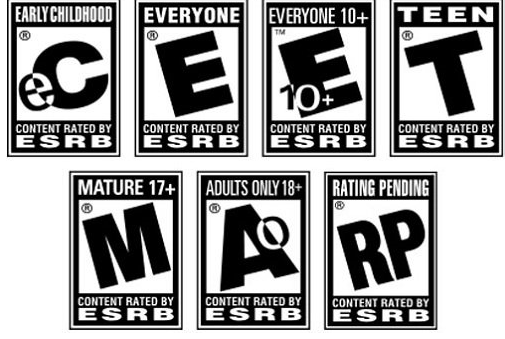
There is also a big problem that people look at when trying to determine weather or not video games are beneficial or harmful. This factor is violence caused because of video games. The question has been around for awhile and that is, Do violent video games cause violence in kids? With this discussion there is a somewhat simple solution. Parents when allowing to let their children play video games at a young age should always look into the ratings of the video games that they buy for their kids. These rating will allow parents to know what graphic content may be in the video games presented to your kid. Obviously we do not want 10 year old boys and girls playing GTA or other violent shooting games. This is mainly on the parents to know what they are buying for their children. Some games are very beneficial for children at young age and some are very harmful for children. Its on the parents to make sure they are not only old enough but ready for the game that they are going to be playing.

Citations:

Eugenio, Sheila. “8 Cognitive Benefits of Playing Video Games for Kids.” Engadget, 10 Mar. 2020, http://www.engadget.com/2017-02-09-8-cognitive-benefits-of-playing-video-games-for-kids.html.

Lal, Kabir. “10 Negative Effects of Video Games.” Healthy Gamer, 1 Oct. 2020, http://www.healthygamer.gg/10-negative-effects-of-video-games/.

“ESSAY” Is this fake News?

“No democracy has existed in the modern world without the existence of a FREE PRESS.” Newspapers, specifically journalism has to be the foundation Of the United States, this form of media can enforce law, justice and create a nation. In 1733, John Peter Zenger publication his first copy of the New York Weekly Journal, which he was accused of libel and went to trial to ensure the court that the information printed about the defendant was public. Of course, this trial turn heads, as it showed that “truth is the best defense against liable.” Later this trial influenced the Freedom of the Press and was added as the First Amendment in the Bill of Rights. Consequently, providing newspaper outlets with credibility we see today.

In week 2, on Newspapers, we tackled the reliability journalism has on the circulation of media. And how journalism’s credibility can impact people’s minds. Based on the newspaper’s history of being unbiased and providing factual information in the years, this notion has fallen short.

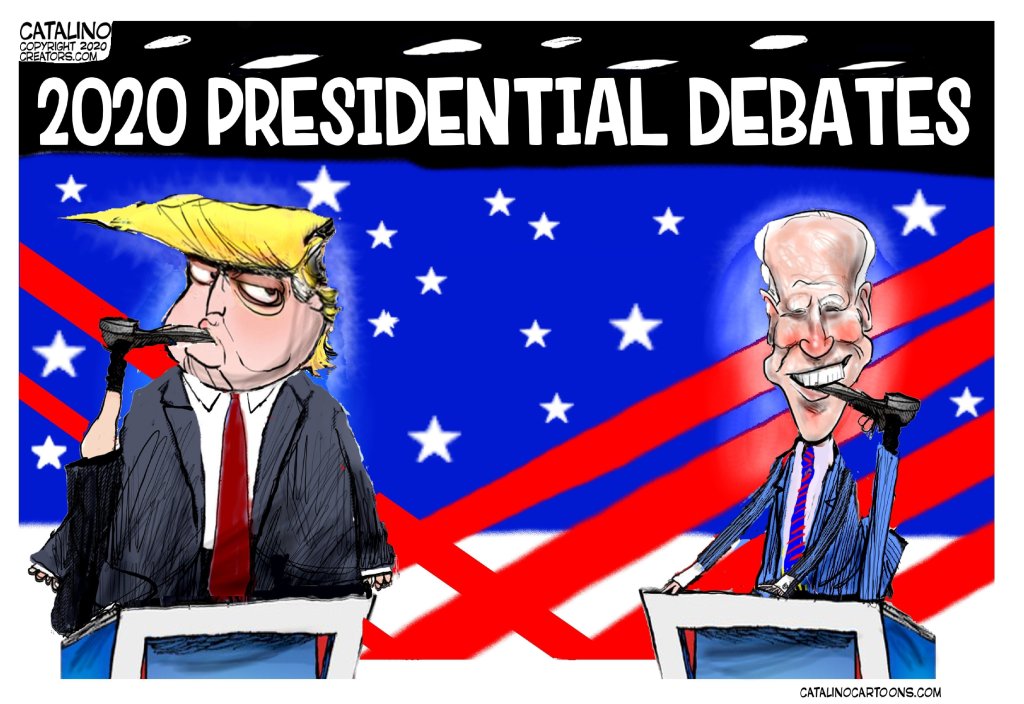
With the United States’ undergoing a political frenzy with the campaigning of Donald Trump and Joe Biden, I couldn’t help to wonder how media ensure “fakes news” was demolished. 

Leading toward this election, many concerns were in the air if a similar incident occurred with the 2020 election, which happened in the 2016 election. In 2016, Russia took over Facebook and created target groups to persuade and fire up Trump supporters. In that demonstration, Russia interfered with the ballots and allegation that were published in American media outlets. 

As 2020 voters prepared for this election again, during this vulnerable time for America, “fake news” can still travel faster than the truth.  

Throughout our Former President Trump’s term in the White House, he called out media coverage as he sought to destroy media outlets that oppose to shine him in bright light. However, while that may not be how the world work, it did shine a light on how credible journalism is to the nation. This form of journalism is supposed to provide sourced-information on worldly situations— which gave citizens the decision to choose their sides or viewpoints on the given data. However, over the years, these creditable sources such as Washington Post, NYTimes, local Terbunes have become diluted to laziness and uncited text.

“Newspapers have control over which stories are told and how those stories are presented. Just as the newspaper industry has changed dramatically over the years, journalistic writing styles have been transformed. Many times, such changes mirrored a trend shift in readership; since the 1950s, however, newspapers have had to compete with television journalism and, more recently, the Internet. Both television and the Internet have profoundly affected newspaper audiences and journalistic styles.” (157)

On recent news, The News York Post’s published an article a few weeks before the election. As stated by the NY Times, “The article relied on documents purportedly taken from the hard drive to suggest that the elder Mr. Biden, as vice president, had directed American foreign policy in Ukraine to benefit his son, a former board member of Burisma Holdings, a Ukrainian energy company.” However knowledge of this alleged harddrive flew around social media as because NY Times was known to be creditable only a few questions it. Making this “fake news” a factor that could stagger Joe Biden’s campaign. Nonetheless, “The story was vetted, and The Post stands by its reporting,” a Post spokeswoman said in a statement; but left a terrible taste in the NYTimes mouth. 

This, however, has led to a monopoly effect of the world carry a lie faster than the truth. For instance, podcasts, Facebook groups, and other news outlet have gaslight this story, which causes founders of platforms such as Youtube, Twitter, Facebook, and Yahoo to block this misformation before it “ignited a different kind of firestorm.” 

The problem with many of these articles and headlines is that “only a small percentage of false headlines ever get checked and marked: Fact-checking is a painstaking, time-consuming process, whereas troll farms and internet bots can create and distribute misinformation with alarming speed.” (NY Times). However, This is a problem as traditional media has to ensure their headline are credible because readers most likely wouldn’t ensure what they are reading. Of course, while the Joe Biden incident may have reduced the confidence in all news outlets, hopefully, this encourages readers to engage more with critical thinking. If readers can effectively identify sources of misinformation, many incidents that have occurred wouldn’t have happened. 

The obvious conclusion drawn from my evidence against “fake news” and the newspaper’s credibility is that it is essential to search for evidence-based proof. The US is a vulnerable time for media outlets, and mistrusted information can cloud our minds. Research has shown how misinformation is most likely lacking fact-checking, and this information is then sourced, which creates a pipeline of lies. It is more effective to take charge of what we consume and become our independent researchers to ensure reading isn’t fake news.

Work Cited

Pennycook, G., & Rand, D. (2020, March 24). The Right Way to Fight Fake News. Retrieved November 09, 2020, from https://www.nytimes.com/2020/03/24/opinion/fake-news-social-media.html

Robertson, K. (2020, October 18). New York Post Published Hunter Biden Report Amid Newsroom Doubts. Retrieved November 09, 2020, from https://www.nytimes.com/2020/10/18/business/media/new-york-post-hunter-biden.html

The Trial of John Peter Zenger. (n.d.). Retrieved November 09, 2020, from https://www.ushistory.org/US/7c.asp

Understanding Media and Culture