Category Archives: Uncategorized

Stunt Journalism

When I was doing this week’s reading on newspapers, over all it was pretty interesting to see just how intertwined everything in our daily lives is with the growth and development of newspapers, something I don’t think much about. They helped to spread so much information and ideologies, thinking about it now, who knows how different history might’ve been if it weren’t for that development. Although the change of structures and approach in making papers, such as the penny papers or literary journalism, is admittedly pretty interesting, my attention seems to keep wandering back to a specific subject within the reading.
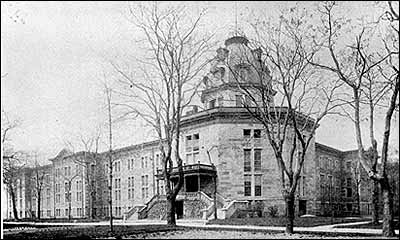
Yellow journalism is something I glossed over for most of my education, taught to me as only being propaganda about the Spanish-American War. This reading showed me that it was a bit more than just that, and it also helped to create what I’ve been most interested in this week, stunt journalism. More specifically Elizabeth Cochrane’s stunt journalism. I remembered hearing about her particular stunt of making her way into a mental asylum before though I’m not sure where. I’ve always been a true crime fan, and as some might know that tends to leak into other areas of history too, including how mental health was handled in the past and what people might have had to go through. Getting back on track, I feel like it’s very entertaining to learn about a woman like Elizabeth, she’s not how most would imagine a woman of her time. It’s amazing to hear about a woman putting herself into extreme situations for something like journalism. The reading had stated “…stunts such as these were considered lowbrow entertainment and female stunt reporters were often criticized…” but I believe that this kind of journalism could be seen as much more given the right attention. Sure, it’s probably very entertaining to hear about such a removed place you’ve most likely never been, such as a mental asylum, but I feel it could hold educational value. A lot of mental patients at that time most likely weren’t given voices or seen as their opinion holding any value, for Elizabeth to do this, it’s almost like she’s being a voice. Now I haven’t read her piece, and my opinion could possibly change if I did depending on how she wrote, but I feel like her piece could provide a great clear view on what went on in the New York City Lunatic Asylum. I would even guess her article could be used as a primary source.

Thinking about the idea of stunt journalism, I would like to ask the class if maybe they can think of a present example. I believe there’s probably a bit more modern stunt media that we consume, but is there anyone you can think of that holds as much of a shock factor as Elizabeth did in her time?

Books? Bound to fail or barely keeping it together?

With the rise of the internet and media outlets, it’s as though the medium of books has become less and less of an everyday occurrence. This, of course, isn’t to say that books are obsolete, on the contrary, Text books and academic journals are still going strong and books as a whole seem to be keeping their stride as entertainment for certain people. Though there is the flip side to every coin. With every rise, there is a fall. With the rise of the internet, it’s taken the book world by storm as the age range of 18-34 year olds went from one of the highest percentages of personal reading to one of the least.

Although production of books has been nearly streamlined, it’s as though most of the revenue made from the author themselves aren’t as plentiful as years past. With production costs lessening with E-books and different styles of literary pieces being made, it’s no doubt that books as a genre of entertainment and information has tried strategizing on ways to cope with such a vast changing world. Though, with the changing world comes people who use that to their advantage. Such as the super stores such as barnes and noble taking over and nearly devouring the book distribution industry. With connected coffee shops to get the atmosphere together and a vast majority of books to choose from, even electronic, it was no question that Barnes and Noble along with other larger brands were to take up the collective space in our minds when we think of books.

But even then, with the rise of the internet and the shortened attention spans of readers, it’s only a matter of time before books become something of the past, with online literature to take its place. There will always be that thought in the back of people’s minds for said literary pieces but the forms it may take may differ as time rolls on.

So that begs the question. What form do you think literary mediums will take after online may grow old? Do you believe it will grow old? How so? Personally i believe that Books as a concept will always be alive and well, but there’s always the chance of change when it comes to the presentation of said books.

Newspapers- the rise and fall

The textbook makes a great point of connecting the printing press from the previous chapter and this one, just hitting home how important that invention really was. As important books were to furthering culture and increasing knowledge they took a long time to be written and wide produced. On top of this many books were stories, mostly historical fiction stories based on a real time but with a fictitious plot. While the idea of knowing what’s happening around the whole in real time isn’t radical to us the access to quick and reliable news wasn’t available to the general public. While books paved the way for more people being able to read and understand Newspapers paved the way for people to read and act upon events that are happening in their life.

THE FIRST NEWSPAPER IN HISTORY | The Mitchell Archives - Original Historic  Newspapers
An early newspaper

During these times having a democratic government wasn’t popular, there for you saw a lot of the people in power restricting the knowledge that was being put out there, which has been a problem for a long time. As the textbook covered that in the early days many governments wouldn’t let local news be written about, probably so the common people didn’t realize how much they were getting f-ed over.

LOT:122 | ENGLISH PARLIAMENT. The heads of several proceedings in this present  Parliament from the 22 of November, to the 29, 1641 - London: 1641. 4to.  pp. [i], 8. A very good
One of the first newspapers reporting on local news after King Charles I was overthrown

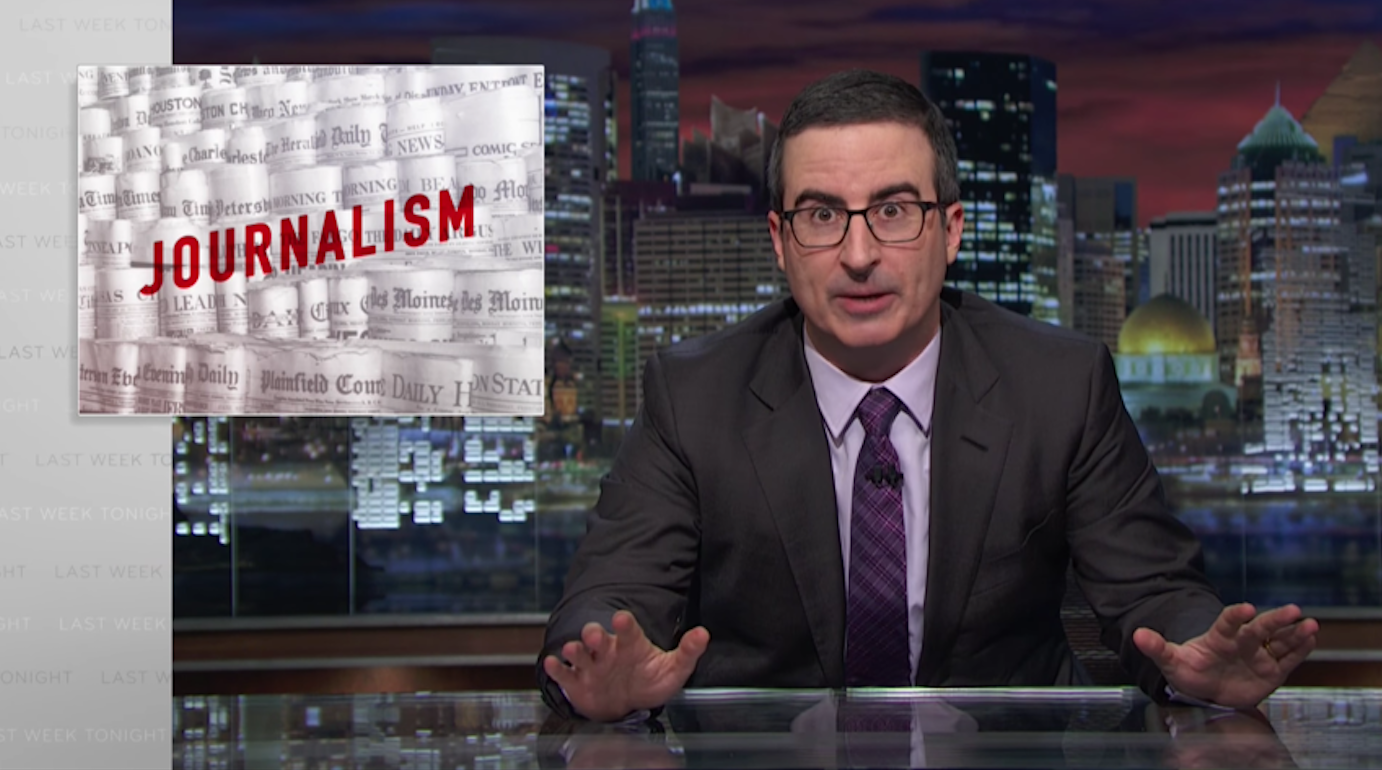
John Oliver

Oliver makes a lot of good points, losing these newspapers can be catastrophic to news in general. While many not the general public read the newspaper day after day the outlets we get out news from do need these newspaper, especially the local newspapers. While in the early days of newspaper were regulated by the government and the public couldn’t get their own local information. We are now on the flip side of that where we might have bankrupt our only way to get local news.

John Oliver Explains Why Local Newspapers Are So Imporant
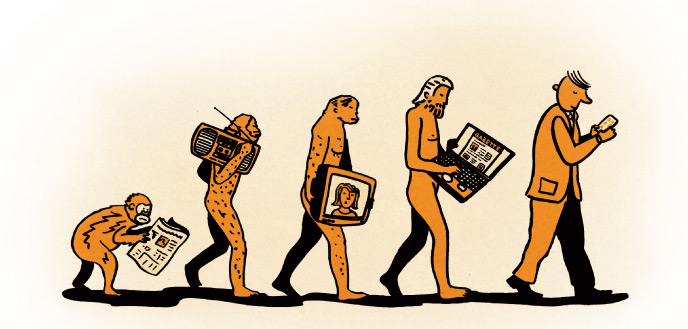
The Evolution of Journalism | Occidental College

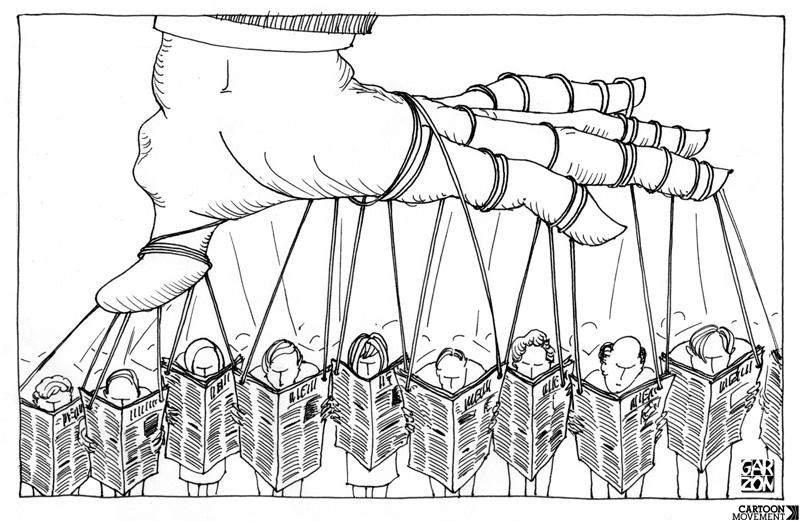
This leads into the fall of newspaper. I used to want to be a journalist freshman year of high school, both my parents told me it was useless as I wouldn’t have a job out of college. I still went and took a journalist class that same year and my teacher told me the same thing. The fact of the matter is ( at least in america ) most intelligent people don’t trust a lot of the news they see anymore. It takes a lot for them to full trust a source. On the other side is people that believe everything they read no matter how poorly it is written. Why would they pay for a a trusted source that put a lot of time and energy into something when they can get something for free on Facebook.

How does convergence impact Journalism? – Journalism Blogs by Alex

“The Wire” brings up really important points about the lives of these Journalist. We can all talk about how sad losing newspaper is but this episode show how it is impacting thousands of lives. How matter of factually he talked about closing all those branches around the world as you see the employees faces fall is heartbreaking. On a lighter note it touches on how the integrity of journalism is held to the highest standard among journalist. It shows why all other new sources come back to these writers because they are held to such a high standard for their stories.

” Truth is the best defense against libel ” – Lastly I wanted to talk about this quote we went over in class. I think its very relative right now in our country. Libel and slander seem to be the other laws in our country that the plaintiff has to come into court with evidence they are innocent instead of the other way around. Right now in this country there are a lot of people who are bringing up those who are victims of police brutally pasts. These people can’t defend themselves which is why this is a flaw in our system.

My question to the class: As 18-24 year olds have you ever sat down and read the newspaper. Do you remember what you read? Did you read it for information or for the cartoon? ( I definitely only read it for the cartoons when I was little ) If you did read the newspaper at what age did you stop or do you still read it?

Are Books a Thing of the Past?

Every month, year, decade comes with change and innovation. The 2000’s brought great technological advancements that gave people of all kinds new tools and resources to work with. Computers became more advanced, smartphones became a thing and people started streaming new movies on their television through Netflix and HULU, putting old fashioned movie theaters out of business. But what about books? An important tool used for all things pleasure, knowledge and school.

The film documentary, Out of Print by Vivienne Roumani sheds light on the current status of book and publication businesses and how they are struggling fit in with the online era. The sad truth boiling down to people just not having the drive to ‘sit down and read a good book’ anymore. That’s just so much work.. when you can just open Amazon-owned Audibly on your iPhone and listen to the book your “reading” while driving or doing work around the house. Sounds a lot more practical for busy life in the 20th century where work and personal life often overlap equating to a limited amount of free-alone time. The film outlines the tech corporations which are taking over books like Amazon and Google, the main culprits of everyone’s new favorite ‘e-books’, the cheaper and more convenient alternatives to paperback books. Some books can even be found online for free.. so why even bother going to the bookstore at all? Jeff Bezos, CEO of Amazon describes novels in a interestingly unorthodox way, “When you get into a book, the book disappears.” He also describes books as a “technology”, something that may not sit right with older generations.

Access 1.4 Million Digital Books For Free At The National Emergency Library

The first books were Papyrus scrolls invented by the Ancient Egyptians. This was a four stage process from cutting a papyrus plant into strips and overlaying the pieces in a criss cross motion. Since then the more ‘recent’ printing press was invented by Johannes Gutenberg in the 15th century, providing the tools to cheaply mass produce books to the public. This was seen as an advantage for everyone, making literacy and knowledge accessible to people of all classes as well as improving the economy. The recent debate is if the big tech giants (the new booming industry) has the same golden intentions. This film seems to think not as Millennial’s were raised in the digital era. They are taught to find their assigned books for school on websites because it’s cheap and easy. The act of going to the library or bookstore is kind of a hassle when you can spend a few minutes online downloading a digital copy. Besides, if you already have an account with Amazon, it’s cheaper to just get it from there anyways. This is the premise of what this film argues as most threatening; being taken over. The big tech giants giving so many the older respected book businesses a run for their money.

The question of longevity is an open-ended one in the film, how soon will everything just be digital? Nobody really knows, people do still read paperback books and perhaps they will for the next few years but ten, twelve years down the line? While watching this I thought it would be interesting to know just when books would disappear, if they would one day turn into $2 bills or collectors items. This is a sad thought for someone who does enjoy reading paperback books

Out of Print' Doc Examines The End of Print Books and What It Portends

Week 2 : Books

“A reader lives a thousand lives before he dies, said Jojen. The man who never reads lives only one.”

― George R.R. Martin, A Dance with Dragons

I feel that the majority of people these days take literature for granted. While we definitely are not reading literature as much as we used to as a society, we are reading more than ever because we have access to almost anything imaginable in the palm of our hands. Many continue to endlessly browse social media and the internet for hours on things that aren’t necessarily intellectually stimulating or even worth while. However, I don’t blame a single person for this. We live in an age where this is widely accepted and encouraged almost every where we go. Each technological advancement stems off the last and has created and endless cycle of a technology dependent society (which is definitely not a bad thing but should be taken with caution). We’ve gain this attachment to our phones and our this stimulation of dopamine that our life style relies on this to function and many of us lose grip with reality. How many times have you felt your phone vibrate only to pick it up and see no notification?

These days anyone would rather sit on the couch scrolling on their phone then sit down and quietly read and take in everything a book is trying to tell/show you. It isn’t until you truly appreciate what literature is and how it has and can improve your life until you start to enjoy reading. We have all taken literature for granted through the ease of information, but at some point it may come back to hurt us.

No matter how old you think the Earth is or when humanity first started, billions of humans and animals alike have walked, swam, or flown across the world. Each with their own individual perspective and set of experiences that makes them who or what they are. But these experiences are just a reflection of one singular existence on this planet. An intangible amount of these experience have been lost and forgotten over the years before the first examples of cave drawings and literature began to appear. Although some may say that simple cave drawings or ancient Sumerian cuneiform do not necessarily constitute literature, this was an early form of communication and the first way for another person to walk in their shoes.

Without literature life would only be from your own perspective. From cover to cover, we are able to imagine the unthinkable and share the author’s experiences and take in new perspectives and opinions. Discussion is able to be had and what we regard as humanity is established. I mean how would we know what to know and how to act without a previous recollection of how other’s evolved to act as a functioning society?

But why do we believe the things that we believe?

At some point in our lives someone told us something that they insisted was true and we believed them. As a society we can see where this comes into play because there is a vast consensus on whether the sky is blue or not.

“It is the mark of an educated mind to entertain the thought without accepting it”

-Aristotle

When you look at the culture of today, everyone gets their original information on current events from the news. Today, there are five big players that control the media and how it is being put out for their viewers. These five big players have an overwhelming pervasion on our everyday life because they are constantly pushing the same perspectives over and over onto their audience. What Aristotle is saying is extremely relevant to the times. Many of us have all fallen victim at one time or another to reading an article or a headline and believing it right away, no matter if it was written an hour or a month after the event happened and took it to be true. What I have learned to do over the past few years is to always watch both sides and then go look at their primary sources to find the facts. There is always this picking and choosing of information depending on if it helps your message and it’s begun to be a huge problem. We’ve learned everything about our past by reading personal recollections and history books about our past.

When you start thinking about how divided our country and our people are portrayed to be and this picking and choosing and choosing of information, how can we as a society produce a clear record of what is actually happening for future generations to look back on and for us to appropriately react to?

Books!

I think the part of the textbook where they talk about the effects of the mass production of books is huge! This was really a turning point in modern history. I know Professor Schlegal said the printing press is the second biggest invention behind fire, which I think you can change to the biggest invention in modern history. As stated in the textbook the printing press lead to the growth of the middle class and the knowledge that was being able to spread that wasn’t available before. Now we know that the easy access to knowledge and education is the key to advancing as a civilization and the printing press allowed that.

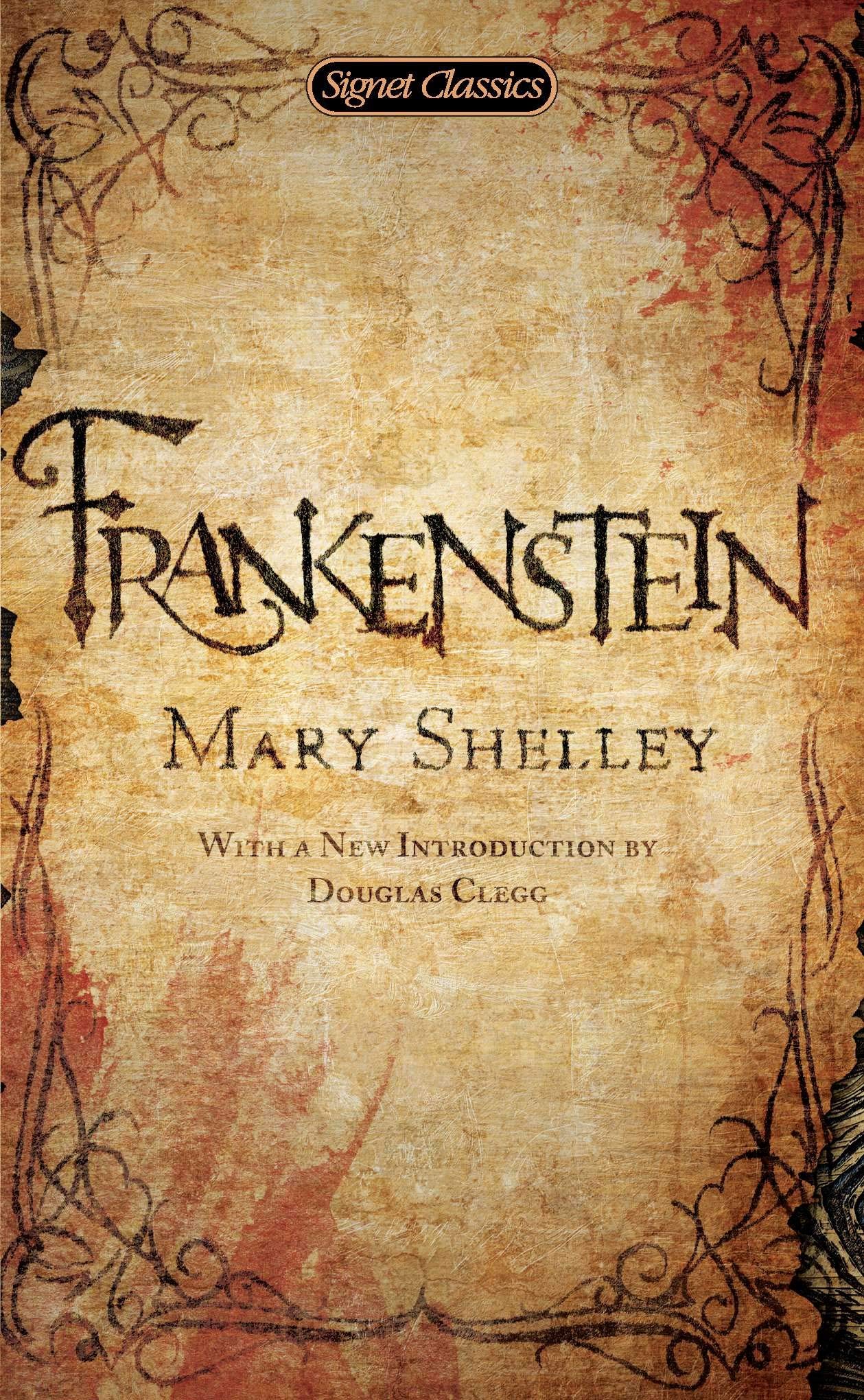
The next important things books brought was a way for females to get their voices out there. Early on writing under a male name but still being able to put work out there that connected to other women. Jane Austin being a huge influence, even now I had to read ‘Jane Eyre’ in high school. I am super interested in how women thought back then and how they expressed themselves so I went on and read ‘Pride and Prejudice’ which is her most famous piece. If you haven’t read it I highly suggest, has more than just romance!, it has a strong female lead that stands up for herself and her family as well as speak out against her social status. For a woman in that time it was almost unheard of and if you did speak out you were rejected by society so having a story that could connect to them must have been huge. On top of Jane Austin you also had Mary Shelley who basically started a genre with ‘Frankenstein’. I think a lot of women gain respect through their writing and broke out against the sexist world they lived in.

My Question for the class is for then women if there was a female author you grew up reading did her writing change you as a woman? and for the guys did you have a female author you grew up reading that made you see women in a different light?

Frankenstein (Signet Classics): Shelley, Mary, Clegg, Douglas, Bloom,  Harold: 9780451532244: Amazon.com: Books
Pride and Prejudice: (Original publication January 28, 1813) - Kindle  edition by Austen, Jane. Literature & Fiction Kindle eBooks @ Amazon.com.

Lastly I want to bring up the trouble I and I’m sure you guys are also feeling, there are no books written for 18-24. I used to read a book a day over my summer breaks in middle and high school now I can’t even remember the last book I read cover to cover. I used to read all types of young adult books and I still have all of those books in my room, I went to go read one that I remember being my favorite and I could barely get past the first chapter. As amazing as this book was in my memory I have out grown the story and the writing, not that the author is a bad writer but it was written for a fifteen year old brain not my twenty one year old brain. I tried to get into some of my mom’s book which I call real adult books and I felt like while the writing was more my speed the story isn’t something that connects with me. Anyone have any thoughts about that?

Is the Extinction of Books Nearrrr?!

As we know it the world we live in has been becoming more and more advanced. Specifically, with technology. The new era of technology makes everything 10x easier and it has become the new normal. This generation of children are way more familiar with a iPad or a phone rather than a book. Especially in a time like this almost everything is digital. As we continue to dive into the future, the more updated everything becomes.

fire hd 10 kids edition kindle kids edition

The convenience of having a digital book or digital platforms to read is just amazing. Humans went from cave drawings to electronic books! The hardships it took to communicate and keep things noted isn’t anything compared to the various ways we have to read. There was a point in time when people took note of things on scrolls and now we can go anywhere and search up thousands of books from our phones.

Paper books are most definitely legendary and will always be around. Books are able to fund jobs such as librarians. In books is where the most amazing historical events were captured in.

Kyle Bean's Future of the Book

In the documentary, Out of the Print (2013) Robert Darnton the director of Harvard University Library, organized conference filled with leaders in foundations of libraries and computer engineers. They discussed about the possibility of creating a public library for people who rather be digital. This would be called The Digital Public Library of America. This goes to show how technology is making the things we know it evolve in ways we would’ve never imagined.

From Books to General Online Reading

Reading is a necessary component of everyone’s daily life, and some have considered it a good hobby in the form of books. Written writing has been a part of our history since its inception. It is used for communication purposes, story-telling, and a multitude of uses. These stories have fueled imaginations in such works of art like “The Odyssey”, any of Shakespeare’s works, and even “Frankenstein.”

Reading and writing has significantly changed with the inception of the internet. Books have been shifted to online reading, to the point that paper-print and hardback books have been neglected and sometimes even ignored in favor of E-Books. Books written in the past can even be found as PDFs online. However this does not mean reading has lessened, only shifted and changed as more and more generations of people adapt to the easily accessible online sources. And even reading itself has changed. There are multiple translations for each book, a multitude of independent writings, rewrites of famous books, and so much more. But while book reading has been more accessible, so has the amount of information that we receive on a daily basis.

The internet also came with social media sites, such as Reddit, Twitter, and the infamous Facebook. People read and write more than ever, just in a different form. It is more quicker and faster using these methods, and many have stopped reading books in favor of social media posts from their friends, family, and famous celebrities. The style we read at has also shifted from methodical and careful to fast and skimming. If the work does not catch our eye, it is easily forgotten and replaced by something new and eye-grabbing. With each up and coming generation, the difference is staggering. Many of the newer generations favor these sites heavily as their lives revolve more and more around it. Why find and read a physical book when you can probably find it for free online? Why even bother with books when they are not eye-grabbing?

Books will not be gone anytime soon, or probably at all. Their importance is too much to give up. But the internet has definitely taken books and put them into a new format, and even shifted that format to a more quicker and easily accessible platform. While we as a people might read books less, it is easier than ever to find one in your language and start getting lost in its story.

Books

The 20th Century saw many changes in the role books played in society.  In the beginning of the 1900s, the production of books increased as the cost of production decreased.  The increase in production led to many changes in the world of books.  There was an expansion of genres that were able to appeal to more types of people with a diversity of interests and experiences. Just as the 20th Century started with an increase in book production, it  ended with an increase in a multitude of other forms of media that posed as strong competition for society’s attention (Understanding Media and Culture). The modes in which both information and entertainment are shared is changing. I was born in 2000 and books play a much smaller role in my life than they did in my parents’ and an even smaller role in my life than they did in my grandparents’. When I Google information, they read it in a book. When I am tired after a long day, I wind down with a TV show, whereas my grandparents would read a book. For entertainment on a rainy day, I enjoy a movie marathon, whereas past generations would read. 

It is important to note however that there are still people in my generation who do prefer books to TV, and plenty of people who still choose to read even though that is not the only option for entertainment or information. Yet, as “Out of Print” discusses, what might the relationship between three or four generations from now with books look like? If we think about the fact that entertainment through video games, tv, and movies has only been available for about 100 years, and are only becoming more accessible, along the fact that the internet has only recently been made easily accessible at the touch of a finger tip, and we already see such a dramatic shift away from books, we can only imagine how this relationship between society and books will evolve as technology continues to improve. 

While TV, movies, video games and the internet can be seen as a replacement for the same entertainment and or informational uses that books have, there is something different about books. The brain comprehends the information differently based on the mode in which it is received. Reading takes more active attention than watching does. When we are watching something, without actively paying attention, the brain is not completely understanding it. Technology allows for more multitasking than reading does. Multitasking allows the brain to do more things at once, but it is doing those things to a lesser capability than if it were doing just one thing at a time. Thus, overall,  it is more productive to actively focus than to multitask. 

Reading will always be an important mode of information sharing for human beings. However, that does not mean that books will definitely survive. Reading can happen through various mediums and though I hope that books do continue to thrive, it is absolutely a possibility that books will die out and our reading will happen solely on screens, or whatever technology comes next. 

The Beat Generation

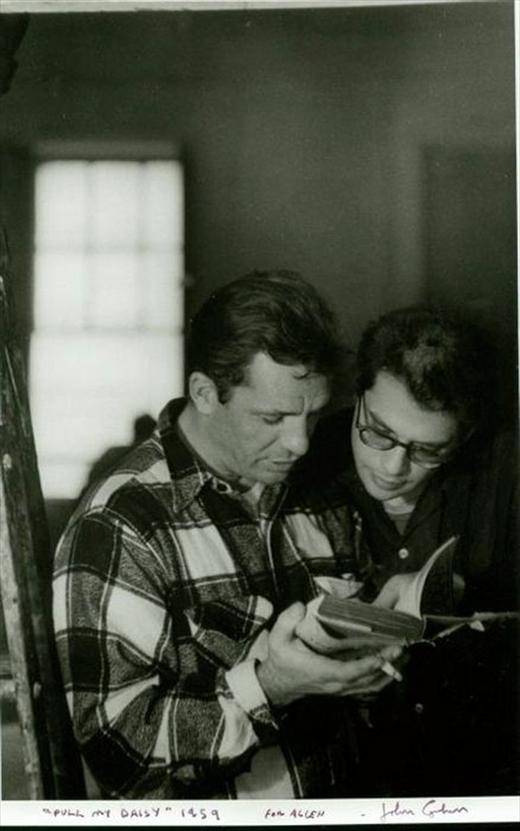
I have always loved books. My mom has always has a special place for the Beat Generation writers, mainly Kerouac. Seeing the name in the book for this class made me really happy. The Beat Generation paved the way for so many brave ideals to come to light. They were amazing writers who didn’t give two shits what anyone thought.

One of Kerouac’s most famous novels, On the Road, was about two friends on a road trip and their adventures. These adventures consist of sex escapades, drug trips and trying to discover yourself. I’ve always liked the message that it tells. No matter how old you are, you can always continue figuring yourself out.

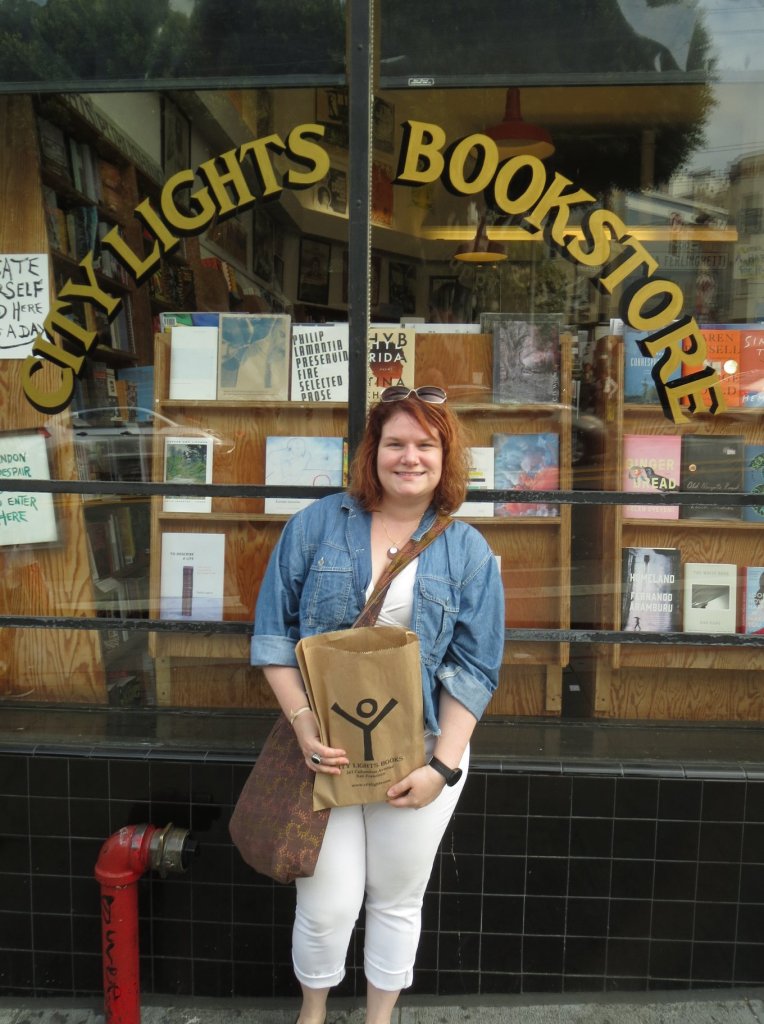
Last year, my family and i took a trip to San Francisco and saw City Lights, the bookstore that published a lot of the Beat Generation’s books. We also saw a Jack Kerouac and Beat Generation Museum. I got a cool Fuck Hate poster that was made around the time of the Howl trial i believe. We also saw Big Sur which Kerouac named a book after.

^Big Sur
^Big Sur
^my mom in front of City Lights
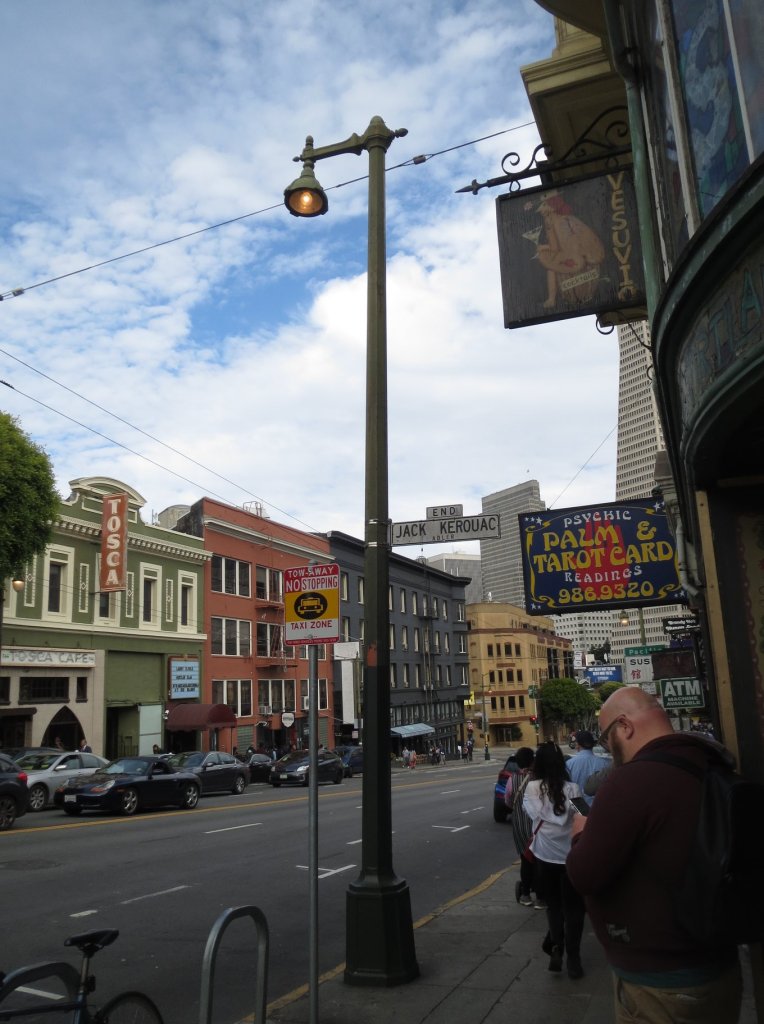
Road named after Jack Kerouac

The streets of San Francisco are just beaming with the imagination and legacy of the Beat Generation. The Beat Generation was, in my opinion, one of the best and most creative and open group of writers ever.