Category Archives: Uncategorized

TV pt. 2

We continued to discuss the world of Television this week in our Wednesday class. Theres is so much to talk about when on the topic of TV and how it has changed our world. TV stars are some of the most influential people one our planet. They have all of the attention, so they also have a platform to speak on and share their opinion. TV has shot up like a rocket overtime. Like every technological advancement, it took time for the TV to really lift off even though it was mind blowing from the start. it became a household object which meant everyone was watching the same thing, the same people, the same platform and TV service.

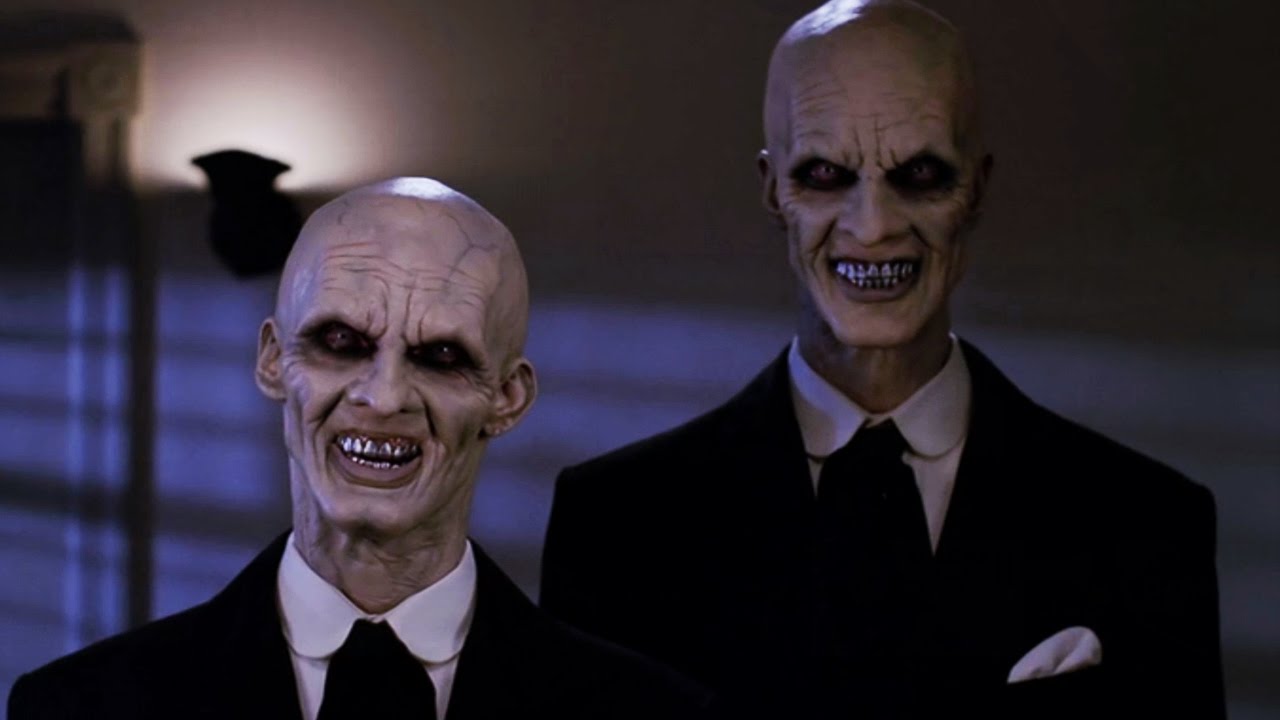
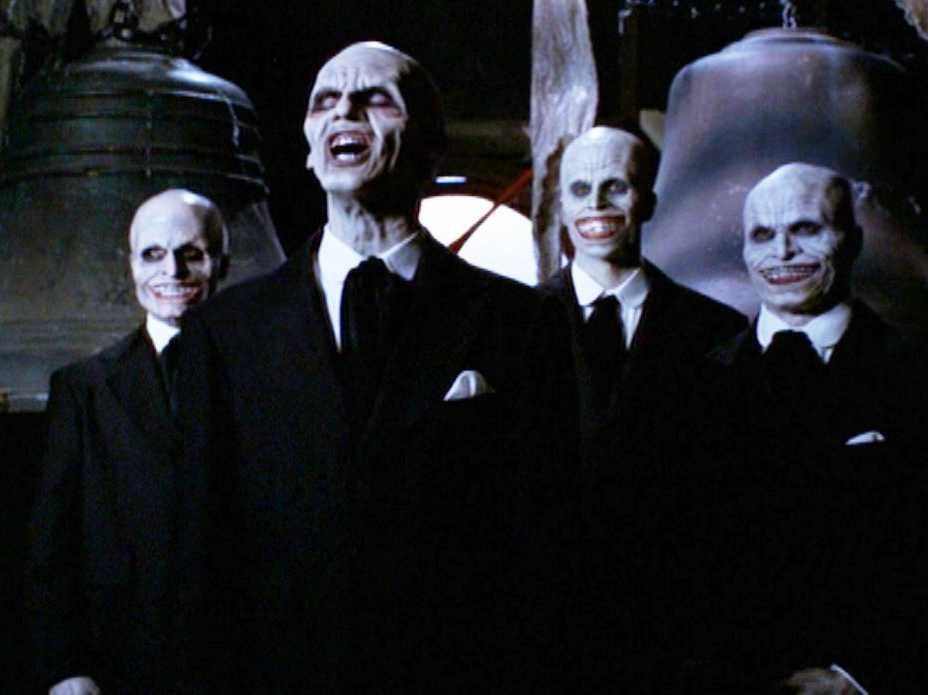
We focused more on the power that Woman brought to the world of Television. A lot of older shows were focused on men but then Women started entering the game of TV and then never looked back. We watched a film from the “Pioneers of Television” called “Funny Ladies”. I think we watched this film because of the one very pivotal actor in that film. Lucille Ball was part of the first wave of women that really got their feet when in acting. I Love Lucy is one of the most iconic TV shows of all time and she was the star. It’s a very old show and it has been for a while being in all black and white. However, even though it is old, everyone knows that show. I am only 19 years old and I have known about that show since I was a small child. We then had to watch a film and read about a girl named “Buffy the Vampire Slayer”. The episode we had to watch was called “Hush”. The whole concept of the show was really good. A group of mystic “ghouls” called “The Gentlemen” steal everyones voices leaving everything silent. It took a very unique approach to this episode which made me very intrigued. It was even nominated for an Emmy Award for Outstanding Writing in a drama series. In the end of the episode Buffy fights and eventually wins everyone’s voices back by destroying the “voice box”

Television will only keep getting more advanced and better. The more into the future we get, the more efficient the idea of the TV will be. It’s so hard to even guess what kind of changed will happen to the TV. With VR becoming a popular feature to watching things, who knows what else could happen. very exciting to think about. We can’t forget though that the past history of TV paves the road for the future. TV will forever be a impactful object in our lives. As we get into the future, TV might become a mandatory thing. There will always be people who don’t use a TV but I’m really not sure how long we’ll be able to confidently say that. From the beginning of TV watching the first Moon launch to now, millions and billions of dollars are put into shows every year. I don’t see this field of work stopping or even slowing down anytime soon.
HISTORY'S Moments in Media: Launching a Legend With "I Love Lucy" |  MediaVillage

Hush and COVID

I’m going to start off by saying the fact that we are talking about television two week in a row goes to show how important tv is to us and how influential it is in our lives. It really is one of the things that shapes what normal is in our world today and how people should act in different situations. Even though everyone knows tv is fake they still base their life off the fiction and dramatized stories they see on tv today, it really does help shape social norms. Tv is also very relatable to real life situations.

Retro Recap: Buffy the Vampire Slayer S4.E10 –“Hush” – Persephone Magazine
Buffy The Vampire Slayer | The gentlemen - YouTube
Buffy' Episode 'Hush' Was A Masterpiece - Business Insider

In saying that this week’s viewing from BUFFY THE VAMPIRE SLAYER the episode Hush, it was about a town of people losing their vices and not being able to talk. Well they were worrying about their loss of voice, bad guys killing members of their community. This show really reminded me of what we went through with the Coronavirus this year. There were many things that made me think of our resent pandemic, a lot of it was the way everyone reacted to the loss of their voices, they all freaked out and had no idea what to do. This was much like when we started to see cases of COVID in America, everyone wanted answers and wanted them now. another similarity is the reaction once the situation set in, everyone was running around getting supplies there was restraints closing all over and chaos in the streets. This was very similar to the reaction when the shelter in place order was mandated in the beginning of the Covid outbreak. Then after all the chaos and freaking out you start to see people start to adapid to the situation like wearing white bored around their neck to be able to communicate through writing. This reminded me of how we started to adapted to the quarantine by using things like Zoom and Microsoft teams to conduct meetings and even celebrate special events. You also saw in the episode Hush the news media trying to make sense of the situation by trying to find something to blame the loss of voices. This was also seen in the resent pandemic; the media was there the whole time trying to blame someone or something. Even though this story in this show wasn’t real it definitely hit home for me because of the close similarities to the COVID Pandemic. It goes to show you how resilient humans are and how we need to come together in a time of need much like now.

So what do you think is there a similarity there or am I crazy?

COVID-19 | Wheat Ridge, CO - Official Website

Television: Continued

In this weeks class, we continued to discuss how the role of television has progressed throughout the years. We talked about how the presence of women in television, specifically in comedies, transformed T.V. for the better. We watched an episode of Pioneers of Television called Funny Ladies, which highlighted these ladies like Carole Burnett, Lucille Ball of I Love Lucy, and Mary Tyler Moore. My parents absolutely loved Carole Burnett and watched her a lot growing up. Her humor was revolutionary for the time and she left a huge legacy for female comics to follow. Mary Tyler Moore and Lucille Ball held a high reputation as well for the humor they displayed. Women weren’t as respected as men back then in the business, so by having strong women leads who were actually funny, was a huge game changer. These women did an amazing job at breaking down stereotypes of woman at the time and helped pave the way for more independent women but also more realistic woman in the home.

I love their comedy styles so much.

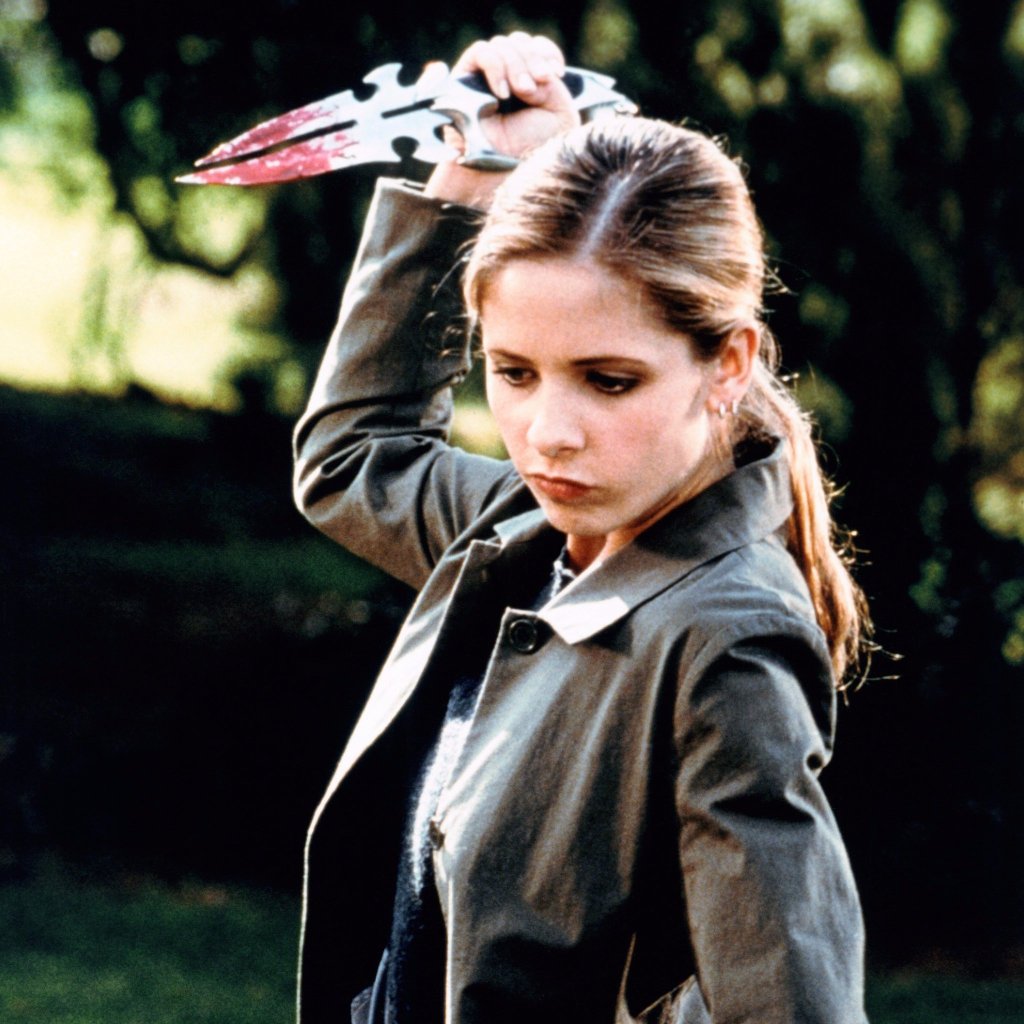
We also discussed an episode of Buffy the Vampire Slayer. Buffy is an average girl who kills vampires, and this show was simply iconic. From the fashion to the characters, this show was a staple of 90’s culture. In class we focused on the episode called Hush, in which all the characters are forced to communicate in a nonverbal way because their voices are taken by monsters who invaded their town. Buffy, her friends, and all of us watching were reminded that speaking is not the only form of communication. Communication is the backbone of forming and keeping relationships, and if speaking doesn’t work, the want of understanding between people should be strong enough to force them to get creative on how they talk to one another. Everything about Buffy is post-modern, in the way that it has a strong female lead focusing on issues of her life which is more of a career, and thanks to people like Luciell Ball, we wouldn’t get those shows.

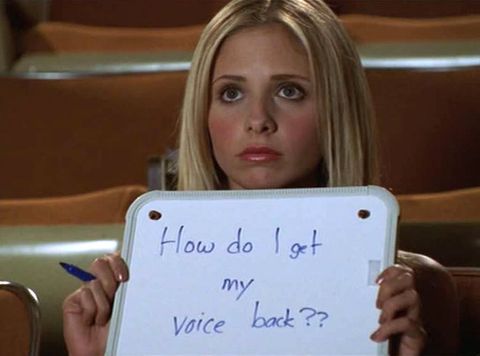
Buffy, pictured, has decided to communicate via whiteboard since her voice is gone.

In the reading called “Buffy the Vampire Slayer– Using a Popular Culture Postmodern Text in the Classroom” discusses the trend of shows in the postmodern era. Gender roles, what is deemed “funny” and genres all fall into this category, and shows from the postmodern era all reflect some kind of change in the norm that questions stereotypes. I can’t help but wonder what movement is next if we are done with the post modern era. The arts have been completely challenged at the beginning of the 20th century which brought on post-modernism, but what movement are we in now? Post-post modernism? What does that even mean? I don’t know what I would call the next movement, but I for sure see the arts becoming more unique and just fully embraced by society, or completely rejected. It’s fun to think about! What is your prediction for the next big movement.

The cast of Buffy was a cookie cutter layout for a post-modern female led show. With a male character sexualized sometimes more than the main female character, is a really good example of how gender roles are flipped and questioned in post modern TV.

Tying it Together

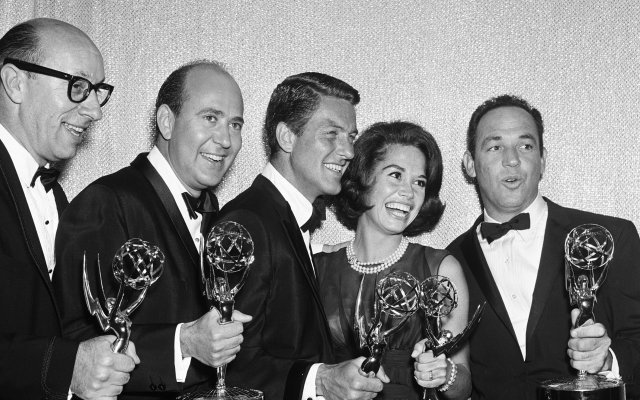
16TH ANNUAL PRIMETIME EMMY AWARDS — Pictured: Winners of Outstanding Program Achievement in the Field of Comedy for “The Dick Van Dyke Show” (l-r) actor Richard Deacon, actor/writer Carl Reiner, actor Dick Van Dyke, actress Mary Tyler Moore, director Jerry Paris at the 16th Annual Primetime Emmy Awards held at the Hollywood Palladium in Los Angeles, CA on May 25, 1964 (Photo by Frank Carroll/NBC/NBCU Photo Bank via Getty Images)

               From the beginning of television when there were only five stations, to now with literally a million shows available through streaming, television has come a long way.  At first, people did not know how the best way to use the medium was, but gradually people started seeing television as a way to connect with people and even change the culture.  This week’s screening, Pioneers of Television, episode, Funny Ladies, demonstrates through the lives of women like Lucille Ball, star of I Love Lucy and Mary Tyler Moore, co-star in the Dick Van Dyke Show, how far even the portrayal and abilities of women through TV have come.  Our other screening, the episode, Hush, from Buffy the Vampire Slayer, along with a reading called “Buffy The Vampire Slayer—Using a Popular Culture Postmodern Text in the Classroom,” help to further show how television has grown to be a respected form of art and even an educational tool.   

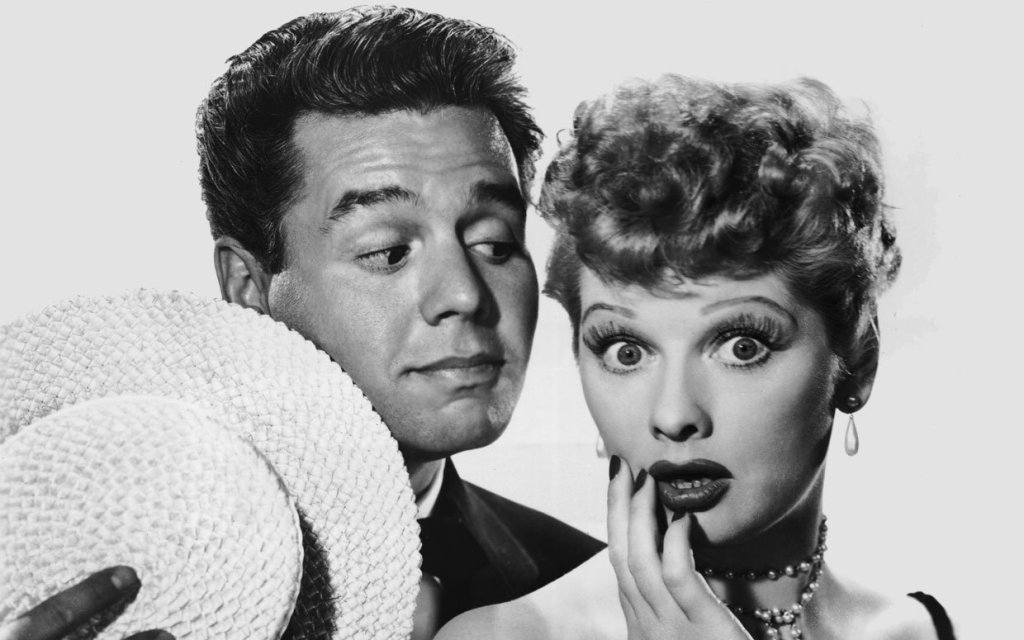
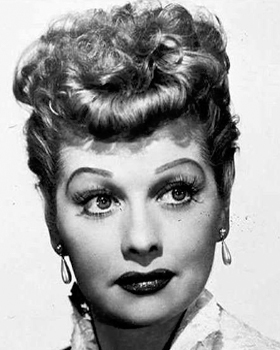
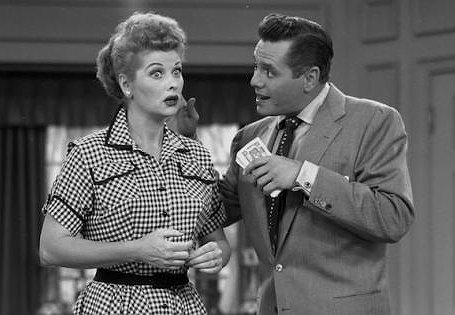
I Lovey Lucy–Desi Arnaz and Lucille Ball

               “Funny Ladies” tells about the careers of several different female comedians and how they rose to fame.  Up until the 1950s, there were not that many female comedians on television, or if a woman was a comedian, it was expected that she would have to be unattractive.  The documentary says that Lucille Ball came up against this stereotype.  Not only was she hilarious, but she was also gorgeous and confident in her physical appearance.  Lucille also showed everyone else up because, “she was all in on every bit.”  Mary Tyler Moore was also an influencer and role model for women.  She portrayed through her acting and shows that a woman could be strong, and that being a mother was one of the most important things a woman could do.  It was really a breakthrough in television for women, and not only that, but they were able to help change people’s stereotypes about women in the area of television.

Buffy the Vampire Slayer

Television went on further to impact the culture, eventually leading to various television shows being used as ways to teach students about social issues and ways that people act and communicate. “Buffy The Vampire Slayer—Using a Popular Culture Postmodern Text in the Classroom,” presents the case for using postmodern television shows as teaching tools.  It says that “Through the postmodern popular culture television show as text, we are able to tap into these discourses and inevitably open doors for discussion that are likely to unravel a whole new level of thinking in the minds of those we teach.”  The episode, Hush, from Buffy the Vampire Slayer, especially enforces this idea because it does such a good job of showing how people can communicate without talking.  At the beginning of the episode, characters are bumbling with their words and are not communicating well, but when their voices are taken away and they are forced to communicate nonverbally, they actually communicate more effectively.  Other postmodern TV shows also do a great job of providing teaching examples.

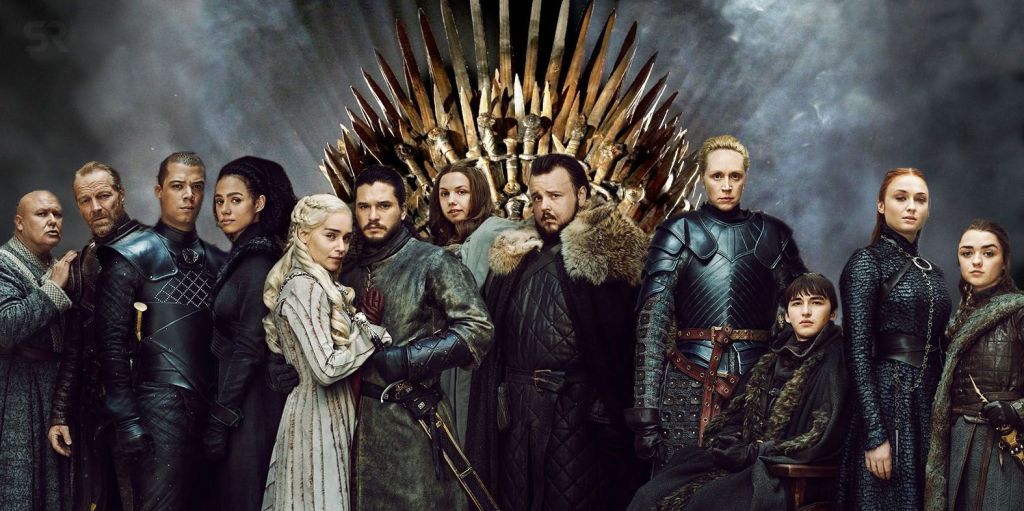
Game of Thrones Cast

From the days of television of old, to Rod Sterling’s groundbreaking morality tales of the Twilight Zone, to the postmodern shows of the early 2000s like Buffy the Vampire Slayer, to now with the Game of Thrones saga and many more, the world has gone on a ride through the land of television.  The question is: Is the ride over?  Will television have any more drastic changes or is this it?  We have just begun to use television as an educational tool, but how much more developed will that tool be?  Will we ever be able to truly tap into all that television is and could be?

Funny Ladies & Vampires

This week in class we continued the discussion and viewing of television. Starting off the week with watching Pioneers of Television: Funny Ladies. The Pioneers of Television video showed the growth and power of these women. The television industry for women started in the early 1950s to the mid 1970s. This documentary introduced me to great actors like Lucille Ball, Betty White, Joan Rivers, Carol Burnett, and Mary Tyler Moore. These women faced many hardships just for being a woman in the television industry but looked past that the hard times to get to the fame. The first women to gain fame at a time where women weren’t allowed to be funny or express what they think is right was Lucille Ball. What’s interesting to me is that Lucille Ball was born in Jamestown NY, which is less than an hour from my hometown. Growing up and going to Jamestown for many things, I have always seen murals of Lucy when she was in her acting days, statues in town parks, and the house that she was raised in. Jamestown NY chereshes Lucille Ball all over the city to this day.

Lucille Ball - Hollywood Star Walk - Los Angeles Times
Lucille Ball, born in Jamestown NY.

Women back then were expected to dress and act in a manner in which was to be funny but not too attractive. In Lucy’s acting days she was portrayed as a hilarious, beautiful, relatable actress that everyone loved. She portrayed these characteristics in every skit or scene she was in. She paved the way and set a standard for female actresses to act on. The women who I had listed were at the front of comedy and helped generations of women actresses after them, feel comfortable. In 1970 television industries were against casting African American women because of segregation back then. Until Marla Gibbs came around, she was the first African American women to have creative control and casting opportunities in the industry. Marla created her first ever sitcom called “227”. Joan Rivers appeared on television during her pregnancy and many critics did not think that was okay. There were many standards and regulations that actors had to follow in order to stay in show business. Many of the women on Pioneers of Television spoke about how there job was to speak about the things other women wanted to say but couldn’t. These actresses have the ability to speak their minds and will be heard by many people, but someone without a celebrities influence and platform, may not be heard by as many people. Over the years, television for women has seemed to feel like home. These women want to be remembered by making people laugh because they adore acting so much. At the end of the documentary Phyllis Diller says “laughter is the best medicine”, I believe you can always cheer someone up with something to make them laugh.

The Carol Burnett Show: The Lost Episodes Ultimate Collection - Time Life
Carol Burnett and Lucille Ball on “The Carol Burnett Show”
Buffy star Sarah Michelle Gellar reveals three favourite episodes
Buffy Summers- main character.

In the episode Hush in Buffy The Vampire Slayer it starts off with students waking up and realizing their voices are gone. The characters come to find out on the news it’s being called laryngitis infection. The vampires know it’s not this a laryngitis epidemic that’s on the news. The only way to get their voices back was to kill the creepy, zombie-like men and that could only be done by screaming. While everyone was losing their voices, communication becomes difficult for everyone. During the pandemic Buffy and her friend find small $10 white boards to use as communication. Some of the forms of communication they used were hand gestures, mouthing words out, sketching pictures, and electronics such as computers.

Hush...The Gentlemen in Suits Are Coming | 25YL
Ways to kill the men who took their voices.

This episodes portrays a message to the audience that speaking is not the only way of communication. There are different ways to communicate with people then your voice. In America today, online communication is more common than in person communication.

Question to the class: Do you prefer online communication or in person communicating?

Television and Funny Ladies

The episode Hush was like something I have never seen before in modern television. Shows communication and how hard it is without words. Imagine if we couldn’t speak and had to get by, by hand motioning or even everyone had to learn sign language.

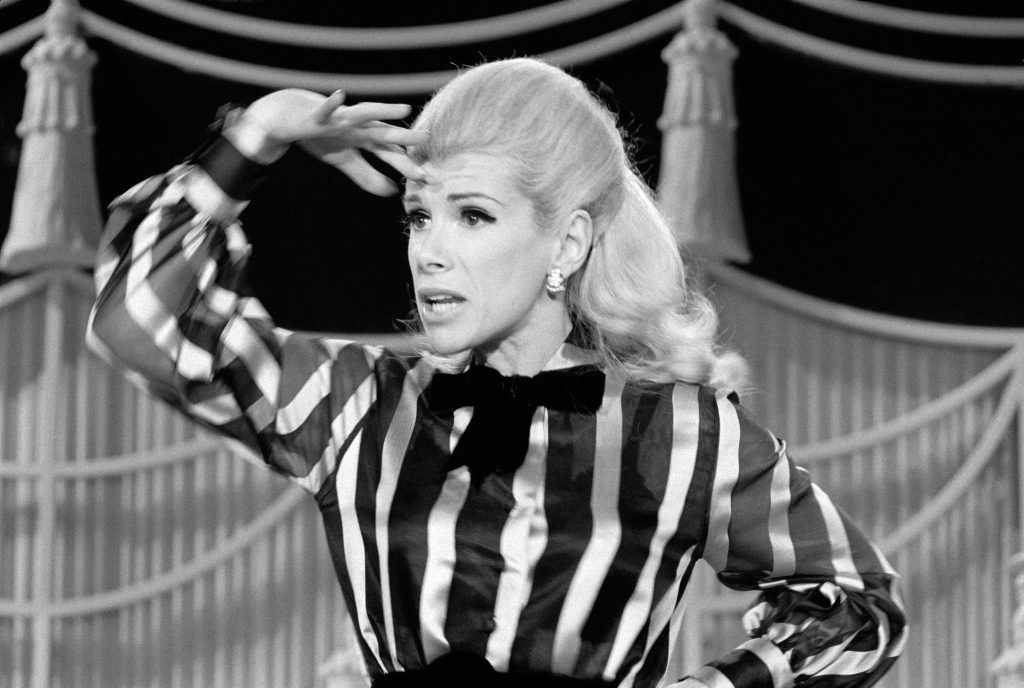
The Pioneers of Television episode Funny Ladies spotlighted a few famous women from early television. Carol Burnett, Lucy Ball, Betty White, and Joan Rivers along with Marla Gibbs. Joan Rivers changed the comedy world, telling jokes women had no business telling and bringing a new kind of humor to the stage. She did not plan to even work in comedy. She was a Broadway actress at first. She was already comfortable on stage and saw an advertisement for a comedy job for $6. She took it because it was just as good as her current job and thought it would be easy. She ended up having a long and successful career as a comedian. Lucy and Betty did very well for themselves too. Betty had her own show and had a talk show along with working as a producer. Marla on the other hand struggled to get jobs on television because of her skin color and age. She got on an episode of The Jefferson’s and was quite funny. They kept her around after that.

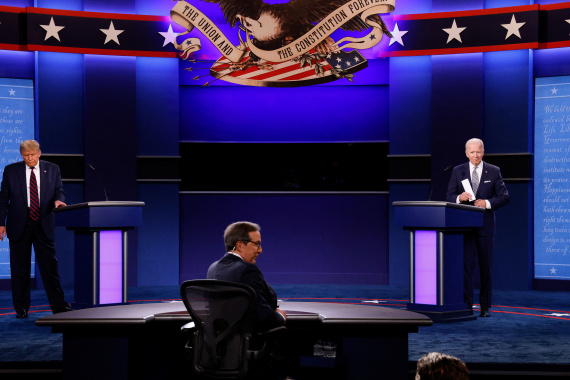
U.S. President Donald Trump and Democratic presidential nominee Joe Biden stand on stage a the end of their first 2020 presidential campaign debate held on the campus of the Cleveland Clinic at Case Western Reserve University in Cleveland, Ohio, U.S., September 29, 2020. REUTERS/Jonathan Ernst

In regards to the discussion we had in class about the Presidential Debate- it was absurd. The whole time watching it I would think to myself, Trump is clearly just trying to not lose votes and Biden seemed more open and not afraid of that. Trump wouldn’t comment on certain areas like Black Lives Matter and white supremacy groups. Trump also has still not laid out a health care plan, Biden at least has a plan and laid it out for people to hear. Trump will continue to say “we have a plan” when there is no plan. Trump would also make comments to Joe like “you just lost the far left” referring to statements Joe made that would cause him to lose voters. Yet, Trump was the one staying away from topics and not making statements to lose voters. When Biden spoke on the issue with law enforcement Trump yells “Oh you just lost the far left”. Joe did what Trump was afraid to do which was address real problems instead of just sit up there to stratify his radical left voters. Trump would not offend his radical right supporters because he knows he needs them to win. When asking about the white supremacy and he said “stand down and stand by”. I don’t believe he supports those groups but he knows those groups heavily support him. By saying stand down and stand by “was not going to lose the radical right”. By doing that he made it very evident he really only cares about be re-elected and not about helping our country get out of this terrible time.

Both candidates were guilty of interrupting, but Trump was way worse. He seemed to not be able to follow simple directions allowing for a civil debate to take place. Based on how many times he was reminded of the rules and how many times he interrupted, he had to have planned to do that to not let Joe get his points across. It was extremely disrespectful and embarrassing. Embarrassing because we can’t even have a real debate with what was going on.

U.S. President Donald Trump and Democratic presidential nominee Joe Biden stand on stage a the end of their first 2020 presidential campaign debate held on the campus of the Cleveland Clinic at Case Western Reserve University in Cleveland, Ohio, U.S., September 29, 2020. REUTERS/Jonathan Ernst

Burnett and Buffy

Some of the funniest ladies on television have helped shape comedy.  In Pioneers of Television they showcased Carol Burnett.  When I was younger, my sister and I would stay with my grandparents and I have fond memories of laying on their living room floor watching television on their old floor model television.  I watched what would be considered a lot of older television shows from the Golden Age era because that is what my grandmother introduced me to and the TV was always on these channels.  I fondly remember watching The Carol Burnett Show and I thought she was just so funny!  I enjoyed her silliness and some of the other characters on the show.  I liked how she would engage us as the audience by asking questions.  I also felt like she wasn’t afraid to just be silly and have fun, which seemed more real to me than some of the other shows at that time.  I got the impression that she, along with the other actors were genuinely having a good time and enjoying what they were doing.  I loved when they would break character.  Looking back and hearing how she helped pioneer comedy for women makes me appreciate her more.  Thanks for the laughs, Carol. 

In the Buffy episode, Hush, the residents of Sunnydale wake up to discover they have lost their voices.  The news media is calling it a laryngitis epidemic, and all must quarantine.  Early in the episode, Buffy has a dream in which she sees a girl carrying a box singing about ‘The Gentlemen.’  The girl chants:

Can’t even shout

Can’t even cry
The Gentlemen are coming by

Looking in windows
Knocking on doors
They need to take seven and they might take yours

Can’t call to mom
Can’t say a word
You’re gonna die screaming but you won’t be heard

It is determined that the Gentlemen are the ones that had stolen their voices and they are cutting the hearts out of their victims.  They must collect 7 of them.  They don’t speak at all, but they are effectively creepy through their movements and scary features. 

When the characters lose their ability to speak, they must compensate with other forms of communication.  Some of the other forms of communication used were telephone, writing tablet and pen, “mouthing words,” pointing, waiving, and other hand gestures, message boards, computer/electronic speech, pictures, body movements and displays of affection. 

Language is not confined to just speech.  Joss Whedon, Buffy creator is trying to tell us that communication comes in a variety of forms.  Humans are capable of more that just speech to get their message across.  There were many different messages in this episode, but communication is not just voice – it involves your entire body sometimes.  There are many ways to “speak” to others without saying anything at all. 

Language can sometimes get in the way of what we are really trying to convey.  For example, when Riley and Buffy have a hard time telling each other how they really feel about each other, they seem to interact better and develop a closer connection when they didn’t have their voices.  They show this closeness by hugging, kissing, and showing affection for each other. 

Riley and Buffy, Hush

Eventually, when the show is ending and they regain their voices, (after they each discover they have secret identities) they find it hard to talk about it.  I think that it is just too complicated for them to sort through and they both have genuine feelings for each other and don’t want to mess up what they have.  Riley says, “I guess we have to talk” and Buffy replies, “I guess we do.” In the beginning of the show when Riley was speaking with Willow about Riley she says, “every time we talk, I have to lie.”  I think that this was taking a toll on her even before they lost their voices.  When they were silent, they didn’t have all of the other concerns and could just be in each other’s company.  In this case and other difficult situations in life, sometimes language doesn’t accurately convey what we feel.  I think this is the point that Joss Whedon was trying to make.  I can’t think of anything that cannot be conveyed via non-verbal communication which supports his message.

Hush compensates with its lack of dialogue by using music and volume for suspense and to set the moods for the scene.  He also uses a lot of facial expressions, motions, and gestures.  For example, when the Giles tries to explain what the Gentleman are and their purpose.  Unfortunately, gestures can be misinterpreted as Buffy finds out.   Giles uses a Projector to explain what he has found out about the Gentleman.  He displays drawings and written word in a story sequence and Buffy and Willow write questions on their marker boards.  Their discussion is well presented in this scene.  You barely notice they have lost their voices because they use many different modes of expression. 

Ultimately, I think Whedon was trying to get us to think outside of the box.  That is one of the reasons I like him.  Communications come in many forms, not just language. 

QUESTION:  If you lost your voice, what would be your preferred method of communicating?

Works Cited:

Pioneers of Television: Funny Ladies, PBS, Season 3 Episode 1

https://www.pbs.org/video/pioneers-television-funny-ladies/

Buffy Primer (Canvas) https://alfredu.instructure.com/courses/12195/files/folder/Readings?preview=649650

Buffy The Vampire Slayer, HULU Season 4, episode 10

Connections of TV

Television is one of the most important and evolutionary devices ever invented in sense humans have walked the earth. Maybe that last statement is a little exaggerated, but television is still a very important tool we use as humans. It has helped us received more knowledge than ever before in human history. We can know something that happens on the other side of the planet in our own home while looking at the images. Say a volcano was erupting in California we could know about it immediately and be able to phone our family that lives in the area to know if they are okay. This is why it is a very crucial part of our every day lives.

First created in 1925 by John Baird, the modern computer has come a long ways away from the original design that only allowed for silhouettes on a screen that you weren’t able to hear. These first creations needed subtitles and were meant for the richest people that could afford them. This slowly changed to having audio that wasn’t to indulging with black and white pictures. This all changed when TV companies started to target the middle class that were able to afford things better than the working class. This eventually lead to a growing need for color that was adapted into the screenings. At first this only included a few colors such as blue, red, yellow, but quickly evolved to so much more.

TV has evolved to become a staple of our society such as when we watch football and other sports, to how we can watch shows. But TV usage is becoming a sort of outdated source with the usage of computers and smart phones. This is because it has become easier to create content and develop it on computers than it would to TV’s. People can now watch their favorite shows in the palm of their hands.

Do you guys think that TV’s will become outdated? What can replace the norm of TV’s that we have now?

TV

The thing that interests me most about television is its relationship to reality. In the video, “Tuning into media: Literacy for the Information Age,” they discuss the blurring of lines between reality and the fictional TV world. They used Doogie Howser as an example of this, taking a real life event and having the fictional characters experience and react to this event that did actually take place in reality. This got me thinking about reality TV. Now we actually have shows such as Keeping up with the Kardashians, Love Island, Jersey Shore, Cheer, etc. Which claim to be reality. This takes blurring the lines of TV and reality to a whole new level. 

Reality TV is no less based in reality than that Doogie Howser episode was. Taking inspiration at most form reality yet crafting it in a way to make it most appealing to mass audiences. Things have to be interesting all of the time, there needs to be drama, comedic reliefs, tragedy. These things don’t always happen often and organically in real life situations. This is where reality TV comes in. It takes the real world and spices it up just enough to make it a little more interesting, jaw dropping and audience grasping. 

So, with reality TV we all know that it is not in fact reality, even though it is claiming to be. But now let’s think  about shows that do in fact claim to be fiction. Shows such as Grey’s Anatomy, How to Get Away with Murder, etc. These shows are similar enough to reality that sometimes it can in fact feel real. This is because TV often mirrors the world we live in. Society and TV have an interesting relationship where they both learn and take from the other. We get ideas such as stereo types and trends from TV shows which we then take over into our real life. And TV is often based on some form of reality because that is what we know. TV shows, even if fiction, can have an impact on reality. Shows that send political messages could in turn change the political ideas of its viewers. 

Rod Serling and The Evolution of T.V.

Television has played a huge part in entertainment for Americans and people all over the world. Most people I know grew up with a Television in their house, I certainly did. However, like many millennials, I think I stopped watching television programs as companies like Netflix, HULU and other streaming services rose in popularity. I believe that I had (officially) stopped watching television sometime during my freshman year of High School. I had bought my own MacBook by then and would log into Netflix whenever, wherever I chose to. It’s really not hard to see why the traditional form of T.V. is dwindling in popularity. People are busy, aren’t home all the time- and just turning on the T.V., won’t keep the place of where you paused the show you were watching an hour ago. When did life become just so convenient?

The original ‘television set’ has come a long wayyy since first being created by German inventor Paul Gottlieb Nipkow in 1884. This idea had been in the making by various groups since the 1800’s but up to this point, only had the capability to mechanically scan pictures and then share that image to the front screen- making for kind of a boring experience. This new and improved model utilized a rotating disk with wires connected through punched holes to bring resolution to the front screen. This first invention however, was referred to as an ‘electric telescope’ as opposed to a television. In 1907, two inventors by the names of A.A. Campbell-Swinton and Boris Rosing created their own take on a new television by working with a cathode ray and mechanical scanning system. These devices paved the way for the ‘modern televisions’ that we grew up with- electronic televisions. This new concept officially introduced in 1927, would only take off in coming years and become America’s new addiction. This television had the ability to show moving objects from a camera-like viewpoint.

Video-on-demand TV circa 1953? Just deposit coins in the slot - Los Angeles  Times

I see a lot of comparisons to the evolution of computers in relation to the timeline of television sets. It’s interesting because typewriters were a major invention at one point and then were replaced by computers, which now I feel like are replacing T.V.’s. This is of course just my opinion, but does anyone else see this happening in the near future? With touch-screen becoming more popular and Apple Watches (sort of) replacing phone’s, I would like to see what future technology will bring us.

Rodman ‘Rod’ Serling was an American screenwriter most well known for narrating ‘The Twilight Zone’, a television series known for incorporating both parts mystery and horror. He was incredibly influential in forming television industry standards as well as played an active roll in politics. The documentary we watched, Rod Sterling: Submitted for your Approval, dove deeply into how he incorporated his progressive thoughts and actions into his work, questioning everything and striving for the greater good. He was known for having a passionate personality and strove to challenge current societal norms in the different plots of his shows. The Twilight Zone took off as an extremely popular show and was widely viewed by people of all ages for many years to come. Serling won six Emmy’s for his work as a writer on television shows, four being a product of ‘The Twilight Zone’.

Journey into 'The Twilight Zone': A look at Rod Serling's timeless sci-fi  masterpiece - The Hindu

I watched a few episodes of the Twilight Zone and really enjoyed them. I thought the show was incredibly really well-made, especially for the time it was produced. Most shows during the 50’s and 60’s were given extremely basic, easy-to-follow plots and lacked that riveting intellectually-stimulating element. The Twilight Zone brought never-before seen plot-twists that really surprised people and introduced the public to a new era of television.

Does anyone see a comeback in older shows like the Twilight Zone on popular streaming services like Netflix Amazon Prime or HULU?