Category Archives: Uncategorized

Should There be a Change to the Internet?

Has the internet become a negative spot for our society? Since 2008 when the internet became a popular activity for young adults, it has spiralled into many directions positive and negative. Since our internet capability has increased many companies and employers have started to use the internet for background checks. This could really make or break the chances of you getting the job. If you’re one of those people who posts everything that you do these actions could cost you not getting hired by the company. In the beginning of the internet there were two important technology advancements made, one was the personal computer, this allowed anyone with access to a phone line to get onto the internet. More advancements started to happen and at that point anyone with a computer could access the internet. We all know what web pages are because we use them everyday, but the development of the web browser is what gave us access to web pages. What’s interesting is that blogs were made to give access to people who wanted to give reviews, investigate sources and find new stories without having to be professional or a platform of publication. It gave people access to speak freely about how they feel and to speak their opinions. The internet has enough power that it has allowed itself to be available to anyone and everyone. It is shown that the “Internet Paradox” is a form of communication but, says that teenagers who use the internet are prone to lack social interaction. This is because teenagers are only focused on the device that connects them to the internet. Ever since the internet has advanced that statement, it has been disproved by the fact that many sites like facebook and World of Warcraft have made it possible for people to meet in person.

Are We About To Lose The Internet? | TechQuila

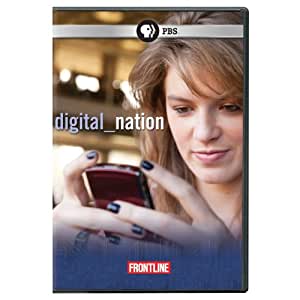
The documentary Digital Nation talked about how we’re physically in the same place but in different worlds when we are on our phones. Mostly everyday we are looking at many screens and can easily become distracted by this technology. One thing that stuck out to me is how people multitask with technology. There are people who can do homework or study and also be doing something else which seems very difficult. What came up in class is that art students are known to be good at multitasking. I believe this to be true, I have a suite mate who is an art and design major and she often times is doing two art projects at once while listening to edm music. To me this seems very difficult but to her its normal and helps her get through everything she needs to get done.
Digital Nation 2012 by Telsyte | Blurb Books

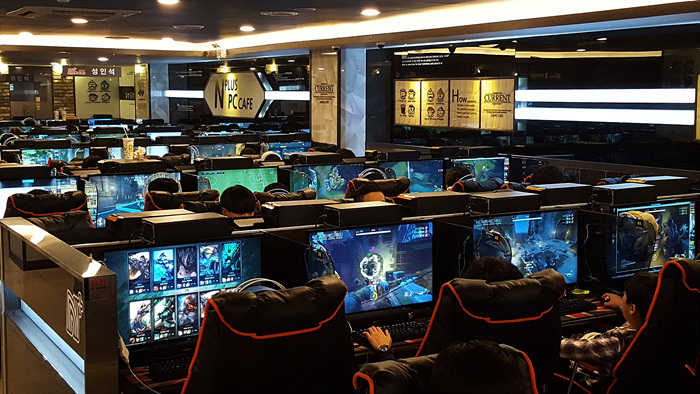
Later in the documentary they start to talk about South Korea and their internet problems. South Korea is known for their legendary internet cafes. Thousands of these cafes are open 24/7 with high internet access and teens are able to play video games all day and night. Their society has started to realize it is becoming an addiction to most of them. It is known that 1 and 3 children in Korea use the internet, this is not a good statistic seeming how young they are. A positive to come out of this is that South Korea is the first country to take control of this addiction that is happening in their country. Many of these teens have a hard time communicating with their family members. This is because of their addiction and they have become distant and have minimal social interaction. Korea has started to come out with rescue camps, where teens go to loose their addiction to the internet and video games . Many of these kids have started to have medical problems as in eye strains from staring at the screen for so long and ear complication from wearing headphones all the time. Before the internet was a big hit many researchers believed the internet was going to help people in a positive way. There are many concerns with American parents wanting to know how their children have figured out the ways of the internet without being taught. I believe it’s something to do with our generation being born into all this technology it’s easier to learn and grasp.

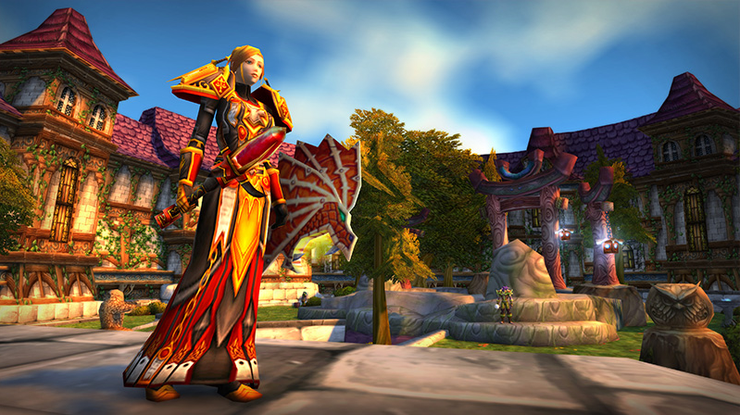
Another topic that was discussed was World of WarCraft. This game has brought millions of people together in a virtual world. The players travel to different places on mechanic birds and horses and have different quests they have to win. Many of the players have said it allows you to be different from who you truly are. It allows the players to feel special in their own kind of way. To us our imagination is a powerful tool to our brain. This game has had fan conventions that has allowed the players to meet in person. The players consider each other life long friends some of them have even married from meeting in the game. The negative aspect of the game is players have become so addicted they quit their jobs just to be able to play from morning to night. Many of the addicted players usually play 10 or more hours a week.

WoW Classic' launch draws over 1 million concurrent viewers on Twitch -  Business Insider

The United States military is using the computers to do stimulations to treat troops who are suffering from PTSD. This is a positive move for our society because we are helping troops feel normal again. There are many emotions that happen during these sessions. To the military this is a new way of recruiting by using video games its a soft sell. This shows teens what it could be like on the battlefield. The military knows it can’t embrace today’s youth, they are never going to recruit the kind of soldiers that they need though just video games but it’s a start.

Question to the class: Do you think the internet has a positive or negative affect on us?
The Internet, censorship and its affects

The internet has had mixed reviews over the course of its surprisingly short runtime. With people arguing that it’s beneficial, useful and downright needed in modern day society. While others saying that it’s a burden, things were easier before it, and it’s just caused more trouble. Who’s right and who’s wrong? Well, i’d like to believe that it’s a mix of both.

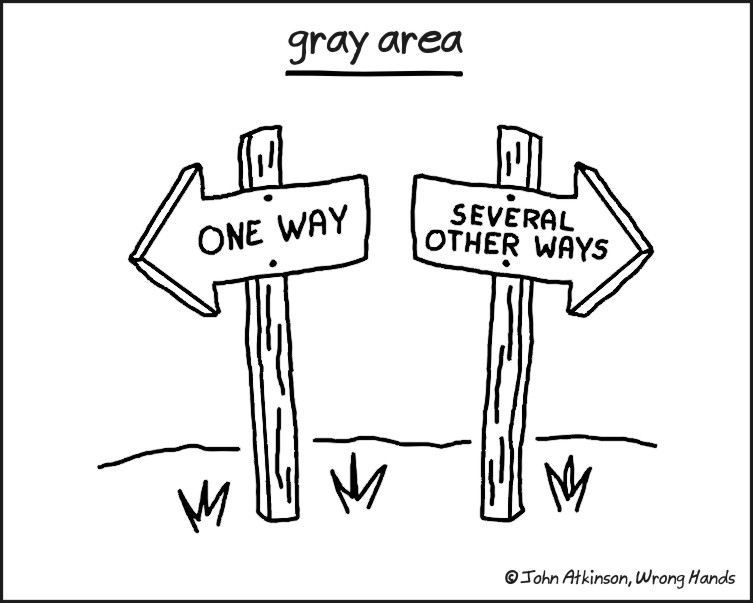
The internet, in my opinion, is much more of a grey area than most people like to believe. With the increased use of the internet in modern times we can certainly see those issues and successes come too fruition. The internet undoubtably brings people together and spreads many more opinions than used to be shared. Though, this brings its own faults into play. Just how good is having everyone, and everything shown on the internet? how far is too far and where should we draw the line as far as censorship?

The Grey Area: wetland wise use | The Ocean Imperative

Well it’s been widely know that, as long as the internet has been a topic, that children will find their way onto and around it, being privy to things that really shouldn’t be viewed by children. It’s become so widely known that even adults use this to their advantage on sites such as youtube to push “children’s content” that isn’t so much content for kids but rather using widely known characters to attract children’s attention and gain notoriety. Eventually gaining profit from such views.

YouTube finally addresses Elsagate child videos, adpocalypse - Memeburn

One such example is that of “Elsagate” back a few years ago on YouTube. This was a time where channels on YouTube would skate by the censorship bots on youtube and gain millions to BILLIONS of views on YouTube Kids by making crude, disgusting, and downright inappropriate videos marketed towards kids. Many channels on the platform who had caught wind of this had put forward complaints to youtube’s team to take these videos down, censoring the imagery that these “kids channels”. Though, the creators of such “kids channels” had argued that they hadn’t, in fact, made these videos for kids but were marketing them towards adults, hence why they weren’t penalized by YouTube’s team.

Elsagate: The Internet Has Gotten Away From Us – Vadakkus!

This, for me, is a prime example of one of the core issues with the internet in modern times. With such immediate and fast technology, we gain access to that of the web, but at the same time, there doesn’t seem to be a bar of censorship that draws the line. There’s no in-between yet, and just like we had discussed in class, while there’s a wide variety of content on the internet, there hasn’t been much in the way of censorship as of yet. We rely on certain people to do this for us. Which, in turn, hurts those in charge of such a steep task. There’s isn’t a line in the sand, and if things like these don’t go unchecked, then what may happen in the future?

The Internet

The internet has brought the world together. It has so many great impacts on this world. Like for example online shopping, music online, and marketing business. The internet has also had a tremendous down side. Humans are addicted to their phones and social media networks.

There is a lot of good on your phone. But everything on your phone is consuming your time instead of doing other things. Like instead of scrolling Pinterest you could be reading a nice book or going for a nice walk with your dog. Something further improving yourself instead of scrolling on your phone. The mind isn’t made to be starring at a screen for as long as humans do.

I also believe social media is terrible nowadays among young adults and teens. It has been created to make you want to be something they want you to be. The platforms control trends and what is cool and forcing it on you with ads and your own followers. A lot of people follow people that they have no idea who they really are. It is a bunch of fake relationships for the most part. People also spend so much time worrying about how many likes they are going to get on a photo. This has turned people into Instagram’s robots. People doing activities just for the fact to take of cool photo so their followers will think they are cool. It has become so much about status and how cool you are and the stuff your doing. Materialistic items are so sought after for status and people can’t cant refuse not posting about them. Like for example, a girl gets a new pair of shoes, sure enough you will see them on her Instagram story letting everyone know about them.

I can appreciate how far technology has come and the evolution of the internet and social media. It has turned into something completely different from the start. Instagram used to not be filled with ads and it was simply about posting pictures you wanted to share. How intelligent the platforms have become is amazing. Now it is so easy to market your company, contact people, and purchase items. You can literally clothes shop from Instagram now. Instagram can basically satisfy any need you would have. Instagram in the beginning didn’t even have videos. Instagram today is all videos or “reelz”. Just having videos alone allows you to be able to post so much more.

I think the worst thing Instagram has done is they have become the status of trends. People care more about what they look like on their Instagram’s than they do in real life. People will go to extreme lengths to look cool. Trends shouldn’t even exist. It should matter if something is cool or in style, people like what people like and that is the cool part about being yourself. No one today is being themselves. And if you are then you are the cool one. Everyone has been brainwashed into believing what is trendy.

The Internet

The internet has been an insane invention, and I’m glad that I’ve been apart of the generation to grow up with it. I have always been so in awe of the development over the years and I know it will keep expanding, because I don’t think it’s going anywhere. I think we have become so reliant on the internet that we are too far gone, meaning that without it I think our society would really suffer. We use the internet now for finding jobs, ordering groceries, finding love, literally everything these days. It would be really hard to go on with something happened to it. For example, if the internet crashed like the economy did during the corona virus crisis, it would put everyone’s lives at a huge halt.

This is a good portrayal of the connectivity of the internet across the globe. Through the sending and receiving of messages, the internet is a prime way of communications these days.

The internet is used in many different ways, and it can be best viewed generationally. Yes the internet came before social media, but I think without social media, the internet would be at a standstill. I think less people would be aware of the updates of the world, out of touch with each other and the trending topics of what they care about. My parents for example, who are 55, aren’t really into social media as much as my siblings and I are, who are in the ages between 24 and 19. They prefer to get their news on T.V., at a scheduled time. They sit down with their meals and watch the news together. Me however, I just read my news on my phone. I click links and watch videos for my news, whenever wherever. In our book, it states that, “Instead of relying on professional reporters to get information about a protest in Iran, a person could just search for “Iran” on Twitter and likely end up with hundreds of tweets linking to everything from blogs to CNN.com to YouTube videos from Iranian citizens themselves. In addition, many of these tweets may actually be instant updates from people using Twitter in Iran”, (chapter 11). I think this is a great representation of how my generation consumes on social media and how it plays a roll in our lives, compared to older generations.

This is a really interesting talk that discusses the importance of consciously consuming social media to protect your mental health.

The Internet

Internet Of Things Is Not About Chasing The Cool Factor

The internet is the thing that connects us to everyone around the world and is also one of the most misunderstood things on earth. No one really knows how it works or where everything goes (unless you are a computer genies) it’s just kind there in our lives. The internet changed or lives forever when invented in the 1960s and was made by the department of defense and was made so two computers could communicate in the same network. Now it is used for everything from social media to looking up food recipes, and the immediate consumption of news right when it happens. I do think after all that the internet has changed is the thing that it changed the most is the news. Not only did it change the amount of information we can consume it changes when we can consume it. The internet made it so people could get news at any time anywhere without having the watch tv, this makes it so people are more informed then ever now a days.

Breaking News Broadcast Concept Design Template For News Channels Or Internet  Tv Background. Breaking News Backdrop Stock Illustration - Illustration of  graphic, channel: 138274333
Tips on how to make the most of online shopping

Not only does the internet make getting news easier it has made for more informed shoppers, this is because of how easy it is to find information that you want or need. Let’s say you are in a store shopping for a pair of shoes and see a sign that says cheapest prices in town. Before the internet signs like that could influence a shopper to buy the shows, but in a world where customers can check prices and buy the product from another store before leaving your store changes everything. It has changed the way stores have had to switch to different tactics like price matching and undercutting the competition. This has made the buyer power of customers go up around the world, it has made the life of a marketing professional very hard and has made them come up with different ways to get customers in there store and buying their products.                        

The Internet, the world wide web and its impact

In the readings and the video “Who invented the internet and why?” we learn not only who invented it, but we learn the definition of the internet and about the world wide web. The origins of the internet date back to the development of packet switching developed by a British group named, The National Physics Lab and research commissioned by the U.S. Department of Defense. The network was called ARPANET. Contributions were also made by the French organization called CYCLADES.

History Of The Interent

The Internet is the global system of interconnected computer systems. The world wide web is an information system on the internet which allows documents to be connected to other documents. In the early 1970’s, the term used to describe the internet was called the “information superhighway.” It opened rural areas to global connections and made trade and communication much easier. Today, it is hard to imagine a world without the internet. What person does not use Google, YouTube, Facebook or shop on Amazon?

hiostry of the interent
History of internet

With all of its potential positives there is a downside. which is illicite and unwanted information can spread as quickly as a positive and needed information. The world of the internet is a flat world. The lack of authorial information on online forums can give the impression that the source is authoritative. What one person says on Twitter or Facebook can spread around the world in minutes. Damage done can be irreparable. We know of many cases where misinformation leads to bullying, suicide or severe depression. The internet also is fraught with stalkers, hackers, thieves, and spies. This is the underbelly of the internet.

Negatives About the Internet | Internet

On the positive side, the internet is a place where people can have discourse. People can express their opinions about politics, the economy, sports, music, film, and most anything that’s on their mind. People can publish their own books, start their own business, and become influencers before they are teenagers. These days, Twitter is the place where our President communicates. He communicates their because he can express his opinion succinctly without it being edited or misinterpreted.

Compulsive Smartphone Use Tied To Lower Well-Being, Says Study | Guy  Counseling
Man with smartphone

Certainly there are privacy issues with social media and sites, such as Facebook and Twitter, are trying to make sure that people are comfortable with the information that they release in the open and that a reasonable standard of privacy is lowered. In the PBS documentary called Digital Nation there was an examination of multitasking and its impact on the brain. The filmmakers make it clear that multitasking has a negative impact on memory. They discuss how teenagers think in paragraphs. Unlike a book, when they write, there is no beginning, middle, and end. People write in unrelated paragraphs. There is no thesis that one builds upon. The filmmakers also take issue with the way in which video games are used to lure teenagers into the military.

Digital Nation Trailer - YouTube
PBS documentary

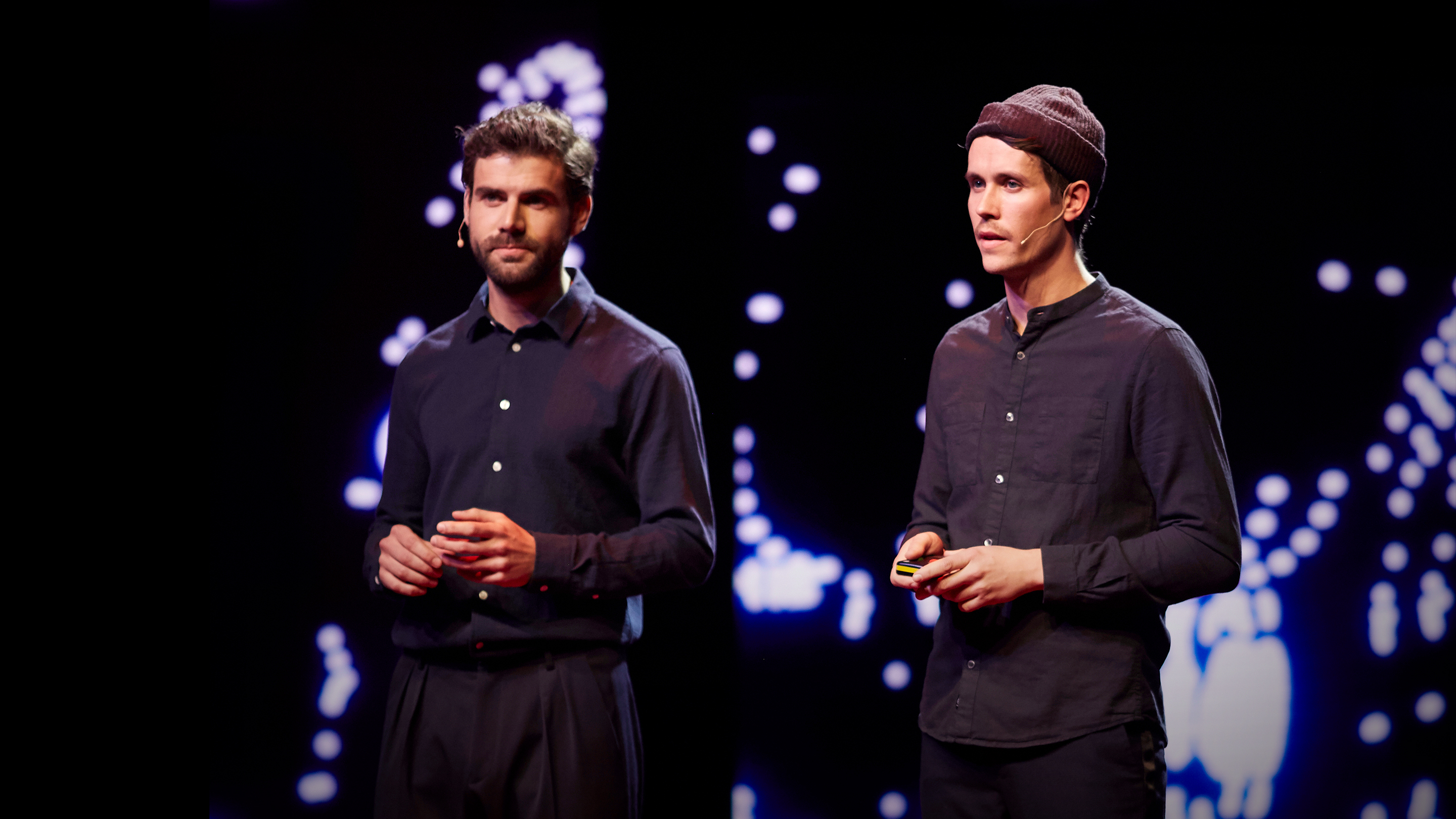
In the Ted Talk, Hans Block and Moritz Riesewieck discuss the terror of internet, the murders, rapes, and other horrors. While image recognition software can pick up images of blood how can they differentiate between surgery and a beheading? Should these images be cleaned up and disposed of or should they be cleaned up and cataloged so that they can be used for prosecution of criminals? What impact does this cataloging have on the cataloggers? How can one spend eight hours looking at these horrible images?

Hans Block and Moritz Riesewieck: The price of a "clean" internet | TED Talk
Hans Block and Moritz Riesewieck

Clearly much has happened in the 50 year history of the internet. The issues are not simple and there is much more thinking and regulation that must be brought to bear on this powerful tool. It has changed our lives for the good and the bad. There are no simple answers and there is a lot more to discover.

The Internet and Us

kids on iPads

I remember babysitting for this one little girl a few years ago.  She was only about two, but when I went over to her house, she had her own iPad/tablet device.  It was crazy to me because I did not even have an iPad, and this kid was only two!  How did she already know how to get online and look things up?  The internet has become a vital aspect of our society, especially now with many kids doing at least half of all their classes through Zoom.  All of this week’s screenings talk about various aspects of the internet and present thought-provoking questions on this thing that we have all become so dependent on. 

Interior Of Coffee Shop With Customers Using Digital Devices

               The PBS documentary, Digital Nation, although made about ten years ago, is insightful to today’s interactions with the internet.  The whole documentary begins with Rachel Dretzin telling a story about when she realized the internet had engulfed her family.  She says, “We’re all in the same house, but we’re also in other worlds.”  Digital Nation goes on to look at colleges and students and how schools are going about in their use of technology.  The growth of technology, also known as the technology curve, is amazing, but the documentary also presents warnings about this fast growth.  Todd Oppenheimer says, “My concern with this digital media is that it’s such short attention span stuff that they get bored.  It’s what I call instant-gratification education…all this bifurcates the brain…(and)keeps it from pursuing one linear thought.” 

Tony Stark and Jarvis

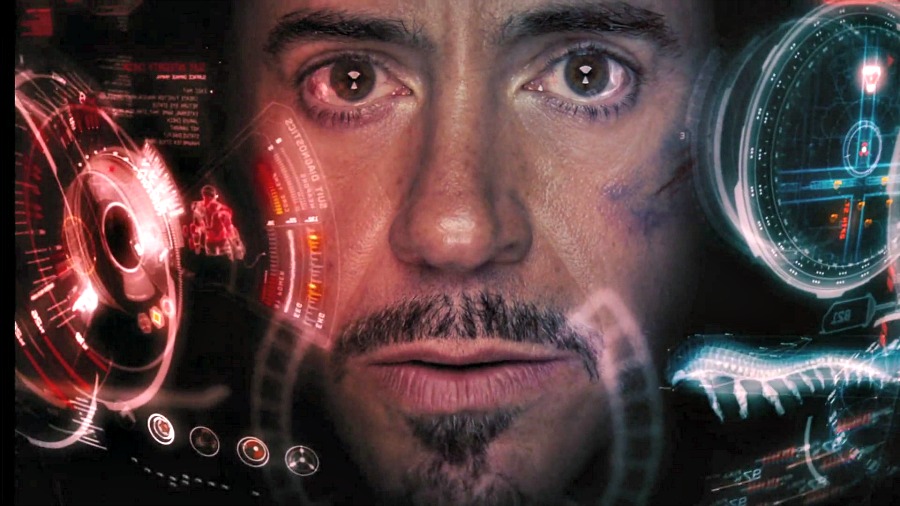
               The increase of the use of technology will only continue to grow, and the technology curve shows it.  All of the technology shown in Digital Nation seemed elementary compared to what everyone uses today.  For example, Understanding Media and Culture talks about how email has been around since the start of the internet (446-447).  While email is still used all the time, it is the norm.  It is not exciting like it was back in the early 1970s.  We have come so much further than email.  One talk that we watched in class used the example of Tony Stark and Jarvis, saying that pretty soon, everyone will have their own artificial intelligence.  The way that technology has exploded, it does not seem far off.

Teens looking at a computer

               Of course the introduction of all this technology and social media especially, is bound to cause some problems.  In the Ted Talk, “The Price of a ‘Clean’ Internet,” Hans Block and Moritz Riesewieck bring up the controversial topic of content moderators.  Content moderators click through various questionable media and decide if it should be released to be seen or not.  The problem is that while they “clean up” the internet, they are suffering consequences to their own minds for taking in all that garbage.  The other question is, should not the individuals themselves or their parents decide what is okay to see online?  It is a tough question the internet has brought us to wrestle with.

A Gamer

               At the end of the day, one can see that the internet has both helped us and harmed us in ways.  The question is, do the damages of the internet and new technology to our brains, especially young children’s brains, out-way the benefits?  How should we learn to positively interact with the internet, virtual worlds, and social media, and still make strong connections to people in the physical world?  Does one need to have real friends when they have virtual ones?

Internet do you think it’s helping the world?

Internet is one of the worlds primary source of communication and information over the years the internet has evolved but there are some concepts that stay the same. The persistence of the internet and the rules of communication for computers. This is also called protocols which was created by computer scientists to assist and control online communication for example, Facebook. People can communicate with each other but only through acceptance of protocols.   

In the early 1970’s, a corporation called RAND created the hub-and- spoke model which allowed users to send secure voices messages. It was called the hub-and -spoke because the telephone operator (hub) would connect two people (spoke) directly. During the Cold War, the United States military was concerned about a nuclear attack destroying this model.  1973, the development of the early internet called (ARPANET), there were four hosts UCLA, Stanford, UC Santa Barbara, and the University if Utah. Today, the internet has over a half of million hosts. Hosts can use protocols to be able to connect to the network of computers. In 1974, came about the TCP(Transmission Control Protocol) gateway. It’s like a postal service, without a specific address (IP address) you can’t contact that computer. The TCP is an important development for the interlinking of networks.

Email was originally an electronic message that were recorded on a computer system. Everyone had their personal folder, if you wanted to send a message you would create it in their folder.  Once the internet started to evolve email became more difficult.  Ray Tomlinson developed a system with using the @ symbol to indicate what server such as outlook, gmail, yahoo, etc.

In the 1989’s, Tim Berners-Lee and a software engineer worked together to design a different protocol to distribute documents and information throughout the local network.  Which is called the Web 1.0 this internet is creating a hypertext language (HTML) which goes above and beyond the boundaries of a single document like before. Tim Berners-Lee created his own browser named America Online. This service engages over 20,000 people, AOL had a chat room and instant messenger.

Social media can be a good thing, you can keep in touch with people within the whole world and blogs are speeding up the information on the internet which gives us a range of opinions, but news organizations can harness the bloggers sources of real time news which solves a problem that called crowdsourcing. With a positive there has to be a downside, which is news aggregators google news makes a profit off of taking journalists stories and linking them to newspapers or advertising  but they keep their profits it is not shared with the journalists.

The film Generation Like talks about todays internet and what teenagers are doing and how its affect the internet and companies. Teenagers today are putting themselves out there on an online profile for everyone to see.  A group of teenagers said that your profile is how you want people to see you and the cover photo shows your personality. The likes, follow, retweets show what is cool it shows a vulnerability for companies to take advantage of it. This is the biggest transformation with communicating with consumers in our lifetime. Companies can track people movements what they like and who their closest friends are. Also, they are taking that data and turning it into money. Teenagers do not understand the value in pictures and getting people to like their posts.  Sending a tweet, you are helping raise the value of twitter around 30 billion dollars, Facebook is around 142.23 billion its base on the volume of likes they can generate.

When I was a child advertising on tv was heavy. I wanted all the toys, but my parents told me what you get is not what is showing. The dolls are not moving by themselves, so the toys did not cool after all. Years past and I got a camera for Christmas, I would record myself is a goofy way on what is happening in my life every day. I loved being in pictures, I wanted that fame. Then I got a flip phone to take photos of other people or myself and those moments were pretty funny, I was cute and my voice was adorable when I look back on the videos, it truly showed how comfortable I was with myself the confidence of what I wore or what I was doing. At that age it did not matter what was cool or not it was based on your likes.  When I got older, I was the shy girl. I did not have a lot of friends and in 5th grade when I found out I had genetic cancer on top of my dyslexia. My confidence went down, I hit rock bottom at such a young age. I was bullied because I was different, and I hated myself I did not want to be at school, nor did I want to show my face around anyone I knew. At the point of my life I was not on any social media there was no way for me to connect without anyone behind a screen. By the time I was in middle school, even the school treated me different and I was pissed about it so I changed how they treated me I fought for what I wanted and knew I could do it. Those years I had some friends but I only had friends because of the bad life choices I made which made me look cool but after on in my years I had a bad reputation even though other people weren’t doing it but I wasn’t getting a lot of likes on my Instagram or Facebook so it was an negative affect on me than someone that’s getting hundreds of likes.

When I look at today with social media, we are not respecting each other there is always some trash talk on news, memes, social media, advertising, and much more. It is sad to think that we, Americans cannot get along as a country. Social media, or the news is not helping the situation either, we lost an Alfred university student because of it and it’s only hurt ourselves.  We might as well be at war with each other, America has not what I imagined when I was a kid.  

DIGITAL NATION OR DIGITAL DISASTER?

In the documentary, Digital Nation they talked about the dumbing down of the world through perceived multi-tasking.  How many of you think that you are great at multi-tasking?  I like to consider myself good at it and I strive to be better and better, like it is the ultimate goal in life; a true measurement of being productive.  But what if it isn’t? I certainly feel as though there has been an increase in how many different devices you are supposed to be using in order to complete your goals for the day.  When did this all start?  I do admit that I would feel like I wasn’t accomplishing what I needed to without the help of technology.  The measuring, the data, the reminders…they all help me to feel a sense of accomplishment. 

Watching Digital Nation made me feel that my tech usage day to day is NOTHING compared to what is developing.  I, at least had the gradual incline towards media consumption.  What scares me is that kids are being taught at such a young age how to multitask using various forms of media.  Like they are little adults!  In the doc it said that kids spend 50 hours per week on digital media!  Their little brains are not fully developed enough and this type of stimulation will have an effect on their brains for the rest of their lives.  I have nothing against teaching technology, but technology has changed so rapidly that I worry that we aren’t using it in moderation which can be harmful to our health.  Digital Nation referenced the problem of gaming addiction in South Korea, as well as the U.S. 

PC Bang – Seoul, Korea

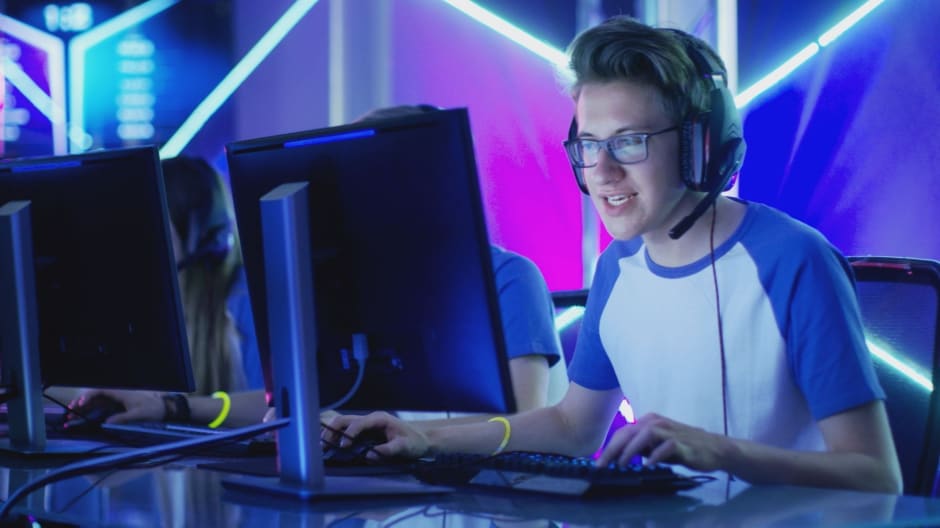
PC Cafes are a large part of Korean culture.  90% of Korean children use internet in their daily lives.  Korean kids are taught in elementary school to go online the same time they learn how to read in second grade.  One of the professors stated that “we need to meet kids where they are.  The world will require them to build, do, and to create.  Kids will need to be fluent in technology, have excellent communication skills, and be good problem solvers.”   I do agree with this to an extent.  If we are not preparing them to succeed in the world in which they are living then I feel, we are doing them a disservice.  Students will need a different skillset than what was required previously.  Since technology is rapidly evolving, schools need to be technologically capable of meeting students where they are.  I don’t think schools are ready.  All children will need access to technology.  I liked that the Principal provided the students with laptops and then monitored them.  I feel that laptops should be provided just as books would be. 

Professor Clifford Nass of Stanford said that he noticed changes in the way students write.  There are less “big ideas” and much more bursts and snippets of information and that students tend to write in paragraphs with no connection in between.  There seems to be an inability to think critically; to be able to take the time needed for deep thought.  The digital age does not allow us the time.  Students from Harvard were interviewed who said they couldn’t remember the last time they read a book.  After watching this, even a book seems like a thing of the past.  We are moving into a more virtual world.  A world in which the lines blur between reality and AI/Digital.  We see this in gaming like World of Warcraft.  I found it interesting that the people that are hard core players enjoyed coming together and meeting up!  That made me feel a little bit of relief because even going forward and no matter how advanced we become, that humanity will always seek connection.

Still, I found myself curious about the World of Warcraft and thinking, there are monsters and castles and a fantasy world?  I can see the allure in wanted to spend your time totally immersed in a fantasy world in a new “skin” doing things that you may never get to do in real life (IRL).  Still, I found it ironic that the people that were interviewed spoke so highly of people they had never met.  They were so proud of the tasks that they got to perform as a group and meeting up IRL with other gamers was like a family reunion!  They said that technology was giving them a new way to be intimate and some of them feel close relationships around games and have formed romantic relationships.  I am not sure that this is a healthy connection, but I can certainly envision these experiences becoming normal and more mainstream in the future.  Another program that was mentioned was “Second Life.”  In the current situation and how we are all meeting on Zoom, I can see versions of this becoming the way we hold meetings in the future.  Working from home may become more normalized and meeting on a sandy beach may be just what we do on a Monday morning at 9:00 am.  There was a quote in the documentary, “Every once in a while you have technology that comes along and rewrites the rules.”  Technology is part of every area of our lives.  How will you take technology and use it to express yourself?  It is up to us to decide what to hold onto and what to leave behind.

Works Cited:

Digital Nation, PBS. Frontline, February 2, 2010

TV Part 2

How TV changed and continues to change the world. 

TV has been and continues to be a space for change. The medium itself inherently comes with change. Before TV the world of media was written word or spoken word. Yet, TV brought visuals into people’s homes in a way that was never seen before. 

Watching the Buffy the Vampire Slayer episode, “Hush” highlights how important these visuals can be. When the characters lose their voices, they must communicate without words. We see them do this through physical touch, eye contact, facial expressions, and more. 

http://offline.slayerworld.net/www.restlessbtvs.com/trivia/episodes/season-4/410/index.html

These other modes of communication can share so much information even in the absence of words, as we see for the majority of the latter half of this episode. 

Now, let’s think about how this episode is teaching us. TV pioneered a new medium in which lessons can be taught. And this medium is constantly available (for those who can afford it) in almost every home across our nation. 

TV allowed women to step out of their role as housewives. In the video, “Pioneers of Television: Funny Ladies,” we see how these amazing women broke through barriers to do something they love. Having these first few pioneers’ faces on screen, allowed other women and men to see that women are good for more than house chores. They are equals to man.

https://www.pbs.org/video/pioneers-television-funny-ladies/

However, as this video highlights, women were first introduced to the world of TV as “Funny Ladies.” They were used for comedic relief, something to laugh at or laugh with in some cases. But what they did was pave the way for women to be seen. As time went on, the roles women played evolved. And now we are able to see young women as not only the main character, but a strong hero like Buffy in Buffy the Vampire Slayer. 

A lot can be learned from studying the evolution of women in television. Just as a lot was able to be learned about communication by watching the Buffy the Vampire Slayer episode. Yet, it is important to note that a lot of traditional education does not include TV studies. In fact, reading is the main way people learn. Watching TV does not feel like learning because we are taught that it is only a form of entertainment. Yet, I argue that I learn just as much from watching TV and movies than I do from reading. 

With that being said, the level of importance of what I am learning depends on what I am watching, but, the same thing happens with reading.