Category Archives: Uncategorized

Modern Day Social Media

Today’s norm is so much different then yesterday’s norm. Online technology keeps on advancing everyday. The potential of advancement in our lifetimes is too big of a concept to even grasp yet. I feel like a lot of credit needs to be given to social media for these enormous leaps from technology. Social Media has changed our whole world. From very little contact coming from technology in the beginning of my life to now, where everyone communicates online. Only about fifteen years later. 

Social Media has recently become relevent in modern day society. When it first started to take off, Facebook was the head of the run because they were the first social media platform that really took off. Nobody ever saw anything like that until Facebook appeared and completley changed the game. After that, new platforms really started to come in, such as Instagram, snapchat, myspace, Tumblr, Twitter, and now more recently TikTok. All of them are a little different from eachother. A few of those platforms primarily focus on communication while the other platforms primarily focus on entertainment and “Likes” “Follows”, everything to keep your “status” up. Social Media allows you to create whatever kind of version of yourself that you want. Which is a negative about the whole concept. Since this is the case, I feel like you can’t really trust anything that you see on social media. Pictures, videos, stories, you can never be sure what is true and what is not. 

Social Media and present day entertainment isn’t just viewed from your phone. It can also be viewed on the Television or even listened to on the radio. There was a huge roar in television entertainment had its run of “Trash TV” which were shows that were overall pretty dumb and cringe, but the catch was that you couldn’t look away because of how entertaining it was. The Jerry Springer show is the top show when talking about “Trash TV”. His show was based around confrontation and really personal/awkward problems. Usually the show would escalate to someone crying or fighting or some kind of plot twist to make the audience react. Dr. Phil is also one of these shows. It’s really bad publicity but the people love it. When watching “The Outrage Machine” it went into the subject of Outrage TV where people go crazy on camera for attention and publicity. You see this more now on social media with interviews or funny videos to try and achieve the same thing. The Fame. A lot of people will do a lot of things to get really rich and famous. Some people are okay with trying to ahieve that goal in front of a live audience and cameras broadcasting to millions of people world wide. 

Overtime, Social Media will keep advancing and become even more apart of our lives. Jobs and lifestyles are starting to appear from social media. That will only inspire people to make it bigger and better. Social Media will be an impactful thing for most if not all of our lives. 

Jerry Springer Considering Run For Ohio Governor | WOSU Radio

Does Cancel Culture Need to be Canceled?

What is cancel culture? Cancel culture is the process of boycotting or withdrawing the support of a particular group or person due to actions sought out to be wrong by society. I believe cancel culture should be “canceled” because it doesn’t allow people especially celebrities to make mistakes. Whenever a celebrity does something that is deemed to be wrong by society’s standards they are “canceled” and not given another chance. This process is similar to blackballing in Hollywood where celebrities are cast away due to the bad reputation they have in society. Instead, we should call out these people when they do something wrong and help them write their wrongs, so they can grow as a person. 

One person that has wrongfully gotten canceled was comedian Kevin Hart, who was set to be the host of the 2019 Oscars, but unfortunately, his past came back to haunt him. I’m not condoning what he did at all as it was in poor taste, but the reason he was canceled was because of the homophobic jokes pop up from around 10 years ago that was extremely demeaning towards the LGBT+ community. The stuff tweeted was not at all ok to say, but it happened in an era where dark humor and homophobic jokes were much less problematic than it is now. If he were to get canceled for this, it should have happened long before the Oscars, but internet trolls went back into his old tweets and ruined his chance at hosting, as the Oscars would not let him host the awards that year due to this issue. I believe that Hart has changed his comedy and himself from when that was tweeted and he had already issued apologies about it in the past, but this didn’t stop the internet from launching a crusade against him as he got hate tweets and other celebrities condemning his acts.

Though cancel culture can be put in a negative light, it has also helped us get the truth about celebs behind the cameras. There have been a number of A list stars that have rightfully gotten canceled such as Ellen DeGeneres, who earlier this year got called out by crew members of here show for creating a hostile and toxic work environment. If this had taken place not even 20 years ago this might have been swept under the rug and with how long Ellen has been on the air, it was for a very long time. Yes, cancel culture does create a toxic environment online but sometimes it’s very much justified. 

Cancel culture is not going anywhere anytime soon, but I do think that it has gone too far. Especially with fake news making the rounds every day of this cursed election year we have had plenty of celebrities being scrutinized by the public over every sentence they say, and some are justified, but moist is unwarranted toxic behavior that is exhibited on the internet. One question I would like to pass off to you is, Do you think the cancel culture is effective, or do most people stop caring after a couple of weeks?   

Eyes and Ears of the World

Social media is the greatest and worst thing that has ever happen to a society and its because of the the ability it has to create a movement. Headlines of social media did not take place until the early 2000,s, in 2004 MySpace was the first social media site to reach a million monthly active users. This milestone was astonishing because you can look at it as almost a start to technology. People were now able to access and delivering information instantly to millions of people. The problem with social media is that anybody can post so legitimacy is always a question of thought. Information is a powerful thing and an individual or even a group can alter an opinion to seem as truth. Most of us, if not all, are active on various social media platforms and information is often given with no proof. We the users are in charge of our beliefs behind what we see, the issue is that we are easily influenced by the actions and doings of those we see as equals or idolize. I’m at fault in that case, I’ve jumped to conclusions without evidence because their was a similar opinion between my peers that I judged as truth.

Social media has created a false image on just about everything in society. Our trends are fabricated by the upper-class we see on social media, our decisions of what to wear, what to eat, what to look like, who to call friends and etc are derived through social media. The negatives of social media are infinite because of how many opinions you have to filter through before finding a reality.

Politics and social issues are two of the most recent topics that social media has inflamed the already have many controversial beliefs. We’ve seen how Donald Trump has used social media as a platform to deliver false information to the entire world. Politicians and various news networks have thrown out opinions and false accusations that have caused huge uproar by individuals and organizations. The biggest social issues that we have today in America are social injustice and police brutality of African Americans. Social media has brought that to light, people can’t hide anymore what they are doing. A video at any time can be on you and be broadcasted to the entire world as a moments notice and due to that it has shown us what is really going on in America.

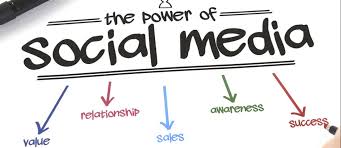
Social media is not all negative. It can and has been used as a platform that brings together like minded individuals to speak on common ideas.

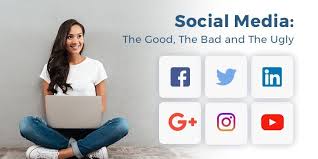
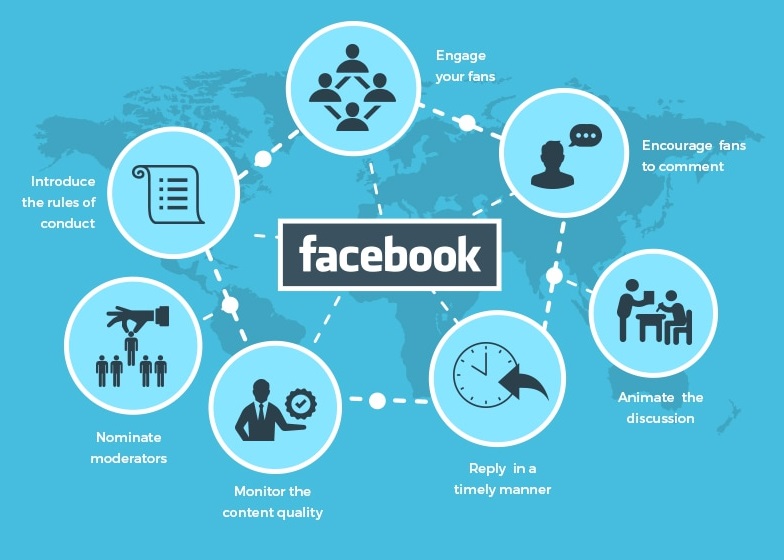
As the above image outlines, they’re several branches that are positives of social media. The two biggest for me are relationships and awareness. With millions of users with instant access to each other you can meet just anybody no matter their social class. Awareness is huge in social media because information is literally at the click of a finger. The entire world today is no accessible and that is great in part to social media.

Some questions for thought:

Do you use social media as your main platform for daily news and social events of the world?

Has social media given you false information that took you a long time to figure out the truth?

If not social media, how else would you know what is going on in the world?

Social stigma? Or just Over saturation?

Social media, just like the internet, has had its runs with mixed reviews despite its relatively short lifetime. Though, in my opinion, with the continued revolution when it comes to cellphones and the like, there’s been quite the serge in both popularity and adverse affects on the user’s psyche. For example, with the increase of younger and younger generations getting their hands on cellphones and, in turn, social media, there’s been quite the spike in confidence issues and depression in said younger generation.

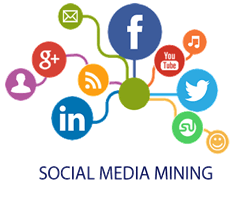
Although social media, like the internet, has its pros and its cons, there are still things that drag it down as far as ethics go and its affects towards others. One of the biggest affects that plague’s modern social media is that of said social medias mining data of its users to use and sell towards advertisers. This is pretty messed up in itself, but the idea that people entrusted with private information sells that information to other strangers is just bazaar and downright scary.

Social Media Data Mining - Javatpoint

With sites like Facebook having started this trend of using social media posts to target advertising, its been known for quite some time that other sites followed in turn. Instagram, Snapchat, and the like using certain things you post to target things you may have been, or are, interested in buying. It may seem harmless in the long run but honestly what else could this be leading to?

What do you think? Will data mining lead to other things that may pose a threat to us in the future?

Trapped in our own cocoon?

When the first developers of the internet created the baseline for what we now know I don’t think they expected it to grow and evolve into what it has today. Social media is one part of the internet that has created its own sort of style and realm to it. Social media has been bent to be this place where people with similar ideas and ideologies go to radicalize those feelings and become something I don’t think they expected to become.

When Facebook, Instagram, and Twitter were first created it was first created they were meant as a way to share different ideas, as a way to share our experiences to the world. This was a way to involve more people in what we perceived as our own world. This allowed us to create new friends, reconnect with old ones, or even reconcile with people. But social media has become a place for people to argue and twisted in their own ways even to become radicalized in their thought process. This is what one of the problems that is held within Facebook that has been scrutinized by government officials in the way it uses algorithms to trap people in their own radicalized thinking that even furthers their radicalized process. This is talked about in Facebook Dilemmas Part one that speaks on how Facebook answers questions about this process but never truly changes what they are doing because its good for business.

Machine outrage speaks on the subject of how social media can be used as a weapon of sorts to vents one anger out to the public. This anger can then be used as a news outlet whether true or not it doesn’t matter people can now use material on there to prove there point of view. People then can spend hours arguing with others on how something is right or wrong.

People get trapped in this cocoon of lies or truth that involves heavy arguing. This then makes people prone to silence if they are in the minority on a subject. I can take this from my own life in how I used to try and convince people from my home that is very conservatively isolated from the rest of the world that how people act and speak can be perceived as racist. This would lead to arguing that would last for hours. This led me to stop speaking out because its hard trying to convince a majority of people something that is easy for them to deny while on a phone. So I ask you guys this how can we as a society change our ways on social media? Is there any silver lining to how social media has made us very angry in this covid-19 world?

To Post or Not to Post, that is the Question

Type, type, type.  Pause.  Backspace.  Type, Type.  Pause.  Delete.

Social Media Apps

 Social media has opened up millions of opportunities for people all over the world.  Someone could very easily become “friends” with someone across the globe from him or her.  Not only that, but one can strengthen relationships locally through social media, or like pages and join groups of people who are interested in the same stuff he or she is.  Facebook especially has been one of the biggest players in the social media game.  With all of the plusses of social media however, as time has gone on, the minuses have become more and more prevalent.  How far should one be able to go with posts on social media?  Do the algorithms guide people into thinking a specific way?  How should social media be used and how is it being used?  One of the biggest issues with social media is the concept called the “Spiral of Silence.”

The Pew Research Study found that people who used Facebook regularly were less likely to speak up in person about a controversial topic if they thought they were in the minority.

                The Pew Research Center did an article called, “Social Media and the Spiral of Silence.”  The article says that, “A major insight… is the tendency of people not to speak up about policy issues in public…when they believe their own point of view is not widely shared. This tendency is called the “spiral of silence’” (Pew Research Center 2).  The article says that a lot of times, people will not post what they think because they do not want to cause arguments that go nowhere, and they do not want to lose friends.  It also said that, “One study found that people on Facebook start to write, but ultimately fail to share,33% of posts and 13% of comments”(Pew Research Center 23).  This is an interesting dilemma and consequence of social media.  It is not always bad to stay silent on issues that do not really matter, but for some things, one needs to stand up.  If social media is fostering the idea that one cannot speak freely unless he or she agrees with the majority, it can only mean eventual dangerous and harmful situations.

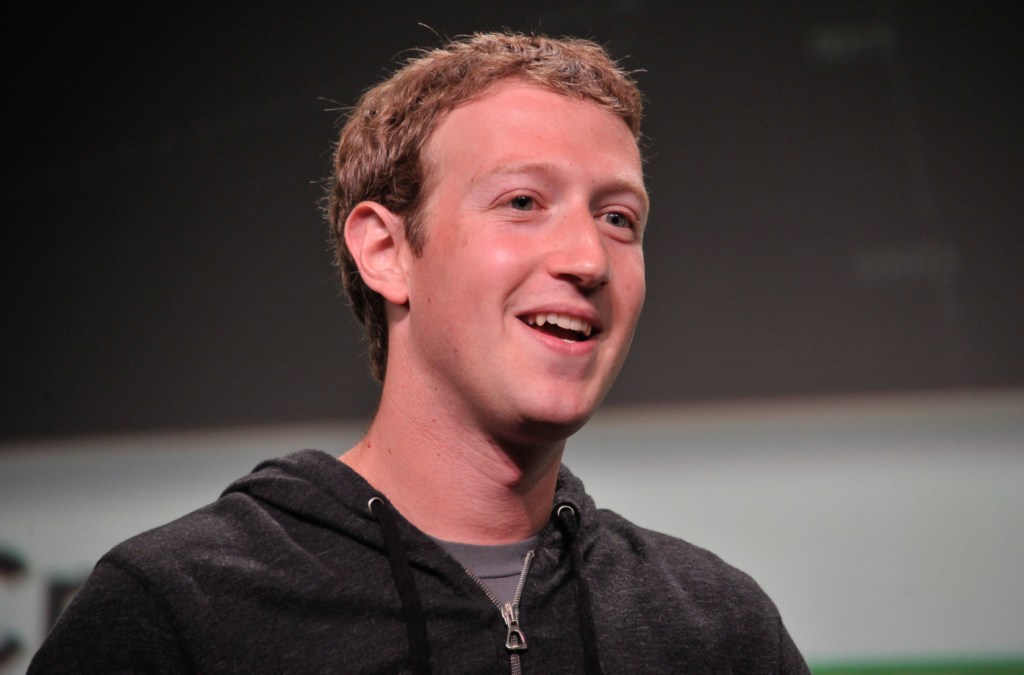
Mark Zuckerberg: Founder of Facebook

                Another issue connected to social media and Facebook in particular, is the algorithms used to guide what pops up in the newsfeed.  The Facebook Dilemma Part 1 talks about this.  One problem with the algorithms is that because they make news feeds so tailored the individual, they put people in this bubble where they are never seeing another side—dividing people even more than they were already. The documentary also points out that Facebook, with the freedom to post whatever one wants, is a news provider.  This is difficult because whatever people “like” the most gets put into more algorithms, even when the “news” is inaccurate.

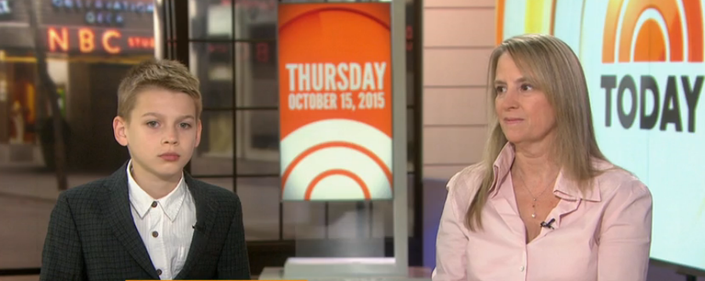
Jennifer Connell (“Auntie Christ”) and her nephew

                 Sadly, the most scandalous stuff is the most popular.  It is what gets “liked” and shared much of the time.  The Outrage Machine by the New York Times talks about this, using the example of “Auntie Christ” who was judged harshly by everyone online because the facts of her case were not accurately represented.  Danielle Keats Citron in that video says that to help combat this kind of false spread of information she hopes for, “a combination of law, and private providers, and schools, and parents…” to help train children about what to post and not post.

                 Social media has a great impact on people and will continue to for a long time.  The question is, how can we be more aware of its impacts on ourselves and our friends?  How can we guard ourselves against the “spiral of silence”?  What can we do to encourage accurate news in our newsfeeds?

The Era of Social Media

Since the day my generation was born social media has impacted all of us either in a positive or negative way. To us it’s our way of life, we have become so familiar to social media its second nature. Social media has been a platform where people post their lives and feelings to the point where they post everything about themselves. In our last blog about the internet I discussed how if you’re trying to seek a job but post everything you do on the weekends, most employers can look these things up and you’re likely to not get the job. Your first impression is everything in life that affects you getting hired or not hired. What you post online is equivalent to how people will perceive you. Social media was originally started to meet new people, build new friendships and relationships. One down fall of facebook is that if you want to deactivate your account it doesn’t officially go away, it can always be viewed or searched by many people. When people start to be comfortable with being an open book on social media, the “reasonable standard” of the privacy is being lowered. A downfall of social media is that younger teens are allowed access to these apps just by lying about their age when creating an account. One ,they are not old enough by the app rules and two ,they will experience and see things they shouldn’t.

95+ Social Networking Sites You Need To Know About in 2020 - Make A Website  Hub

In the video by frontline The Facebook Dilemma, they discuss Mark Zuckerberg’s reason to create facebook. It was to make a more open and connected world, we soon find that the apps platform had a negative impact on the privacy of the users. When facebook was first created it was known as an online directory for college students. This gave college students a way to meet new people on their campus through an app. Marks reason for the app was to connect different people using one app. After thousands of people started to make an account to facebook app, Zuckerberg became famous quickly. No one knew that facebook would become dangerous to our world. Many people explained facebook to be the greatest experiment in human history. One of the ideas in the facebook app was to have a news feed that makes you want to keep liking and scrolling because your seeing the things you want to see. One thing that stood out to everyone who watched this is Wael Ghonim. He was an egyptian activist who wanted a revolution in the streets of where he is from. He made one post on facebook and it blew up and thousands of people showed up to his event. This shows the effect social media has on people.

Conversation with Wael Ghonim | C-SPAN.org

Next is the video Machine Outrage this video explains to us how powerful social media is. Most times social media has its advantages either in a good or bad way. During this years Covid-19 pandemic many people turned to social media as an outlet. Social media saved the day during these hard times because we had nothing else to do when stuck in the house. The way people used social media turned monstrous so quickly and all of a sudden we were in the middle of it all. In the other video Generation Like it talks about the same kinds of outlooks towards social media. The video continues to talk about how social media was our worlds biggest transformation. Often if you don’t have millions of likes you dont heard or viewed by higher up influencers.

Question to the class: Do you think facebook is positive or negative to the social media platform?

Algorithms and Likes

Mark Zuckerberg had a vision of connecting the whole world.  I believe that he had a genuine naïve desire to bring people closer together when we started Facebook.  He wanted to make the world a better place.  Facebook has over 2 billion users every month and has brought about historic change in politics and privacy.  In the Frontline documentary, The Facebook Dilemma Part 1, Tim Sparapai, Facebook Director of Public Police 2009-2011 says that Facebook is the “greatest experiment in free speech in human history.”  Everyone focused on the newsfeed, which is like everyone’s personalized newspaper, but it is driven by algorithms in order to produce content that you most want to see. 

In addition, the creation of the “Like” button in 2009 was designed to “keep you scrolling” while collecting vast amounts of personal data.  Solero Cuero, Facebook Product Designer 2005-2011 describes the Like button like a “flywheel of engagement.”  It allowed them to understand people and businesses that are important to the people.  But existing laws did not hold internet companies liable for content being posted on the sites.  Facebook allowed people to speak openly; but no violence, nudity, or hateful speech. According to the documentary, a few Facebook employees began to sound the alarm that they were hearing warnings from government officials, activists, and others after Arab Spring that there could be serious unintended consequences by not investing in enough research of the negative consequences of social media and contributing to the spread of misinformation.  At the time, in the mid 2000’s,  there were not staff who understood the complexities enough to police the content.  That consisted of a room full of 20 something year old employees making judgement calls because they were trying to keep costs down.

Sheryl Sandberg was hired on in 2008 and began to experiment more with commercial data and new ways to collect personal data.  Third party companies buy out data about the consumer and collect data from the rest of our lives.  Facebook profiles us like a surveillance machine and a tool for advertisers.  Initially, Facebook did not make it clear to consumers the extent of personal data that was shared.  Essentially anyone could gain access.  Facebook then settled with the FDC.  At the time, Senior Executives were not concerned about vulnerabilities; they were concerned about revenue and growth.  Zuckerberg continued to view Facebook as not part of the problem, but part of the solution. Facebook and social media have revolutionized branding and online marketing.  If you want people to know who you are and put up a profile picture and start posting.  This becomes part of the identity that you show to the world.  The culture of Likes, Follows, Friends, and Retweets are what sells and in the world of social media, the more Likes you have the wealthier you are.  Money isn’t the only currency though.  Fame is a common goal with perks like advertisement deals with companies and free merchandise from corporate sponsors. 

The Hunger Games

In the documentary, Generation Like, they interviewed a girl named Kailey who is The Hunger Games top fan.  She is considered the top fan because she retweets, generating a buzz about the movie and encourages more revenue.  Since Kailey is a top fan she can speak directly to the actors and actresses which gets her noticed by her peers and more likes and retweets.  This acts as a source of empowerment, which is a term used by a lot of younger kids when referring to social media.  Kailey will work for likes and as a consumer is doing the work of the Marketer, promoting content between tv and social media.  There is a comparison to the Hunger Games – that the Game of Likes is like being out there alone trying to live and survive.  Kids end up taking the very marketing techniques that are used on them and use them on others.  These marketing agencies like TVGLA, a social media marketing agency examine their audience to see how we are using social media.  Using this data, they then determine how to use the audience to sell the product.  Their motive is to seem open and transparent, creating openness and trust and employing engagement strategies.  In the documentary, Generation Like, the marketing strategy is compared to creating a small brush fire, using tidbits as fuel and keeping the flames burning.  Part of the marketing campaign itself involves “Likes” and every bit of the information is being manipulated.

Question:  Do you feel like kids are being manipulated?  Do YOU feel manipulated or do you feel that Likes are empowering?

Works Cited:

PBS Frontline, Generation Like https://www.pbs.org/wgbh/frontline/film/generation-like/

PBS Frontline, The Facebook Dilemma, Part I https://www.pbs.org/video/the-facebook-dilemma-part-one-s43cuc/

WWW.

The world wide web is one of the most impressive and astounding things that humans have accomplished. The internet completley runs our lives right now. Everything that has to be done currently with COVID forces the world to be placed on the internet platform together. The network that it has created brings everyone together and makes it so much easier to communicate not face to face.

Technology has changed the world so much just in the past decade. Some changes have been very positive and some changes has been very negative. The Internet exposes the entire world. This is great because you can find out anything you want to know by just typing www. This can also be a very scary thing, however. Once the Internet started blowing up and people started realizing how much you can see, privacy became a really talked about issue and not only did this freak people out but it made people know that the internet wasn’t something to mess around with, you have to be very careful. I have had the internet my whole life. I don’t know any different. My parents however were grown adults when technology really started kicking off and the internet blew up. That must’ve been so weird at first from not having any sort of contact like that, to then being able to find out anything just by typing. Now, we are going to school through the internet. People are working their jobs from the internet. The most successful entrepreneuers are mostly online on the internet. It has completley changed the standards of norm. You can live from the internet.

Digital Nation Creative Agency - CSS Design Awards

Our screening this week was The Digital Nation. It really talked about the truth of technology and the internet. It first aired on February 2nd, 2010. Rachel Dretzin and Douglas Rushkoff are the two main people on the show. They really go into detail about the risks and possibilites of the internet. USing other people experiences and stories to break down what is happening online. It is such an advanced and complex concept that people don’t even try to understand, but there are things we need to know about the web. I really liked the film, it really opened my eyes to what is really behind the www. We are adapting and moving towards the internet world slowly as a whole but it also does talk about how bad it potentially can be for you. There is so much lost time spoent on the internet and online. It is one thing to be making money and being very productive and efficient on the web, but there are also people (mostly younger generations) that just oprefer to be online rather than do anything else, problems usually occur from that rather it would be educational or social, those are important times in a kids life. Too important to be spent on a screen. There are even third world games online where it is just a simulation to pull you from reality. An example that mostly everyone knows is SIMS. SIMS is fun but the truth is, it just a virtual reality that doesn’t benefit you in anyway. Internet will always be apart of our world from now on, it has davanced too much to ever decline again. We just can’t let it control us.

5 Tips To Reduce Your Environmental Impact On The Internet

The internet

The internet is a crazy thing. Because what is it? It can be anything because it can be used for anything. It can be a place for streaming music, watching TV, texting friends, reading a book, reading the news, watching the news, watching sports highlights, playing fantasy sports, adopting a dog, purchasing train tickets, buying shoes, directions, looking up a recipe, learning how to draw. You name it, it’s on the internet. So, what does this mean for us? As the video, “Digital Nation” points out, this means many things. 

One of which is that, since we can get all of this at the touch of our fingertips, why not do a bunch of it at once. Multitasking makes us feel more productive, even though it actually makes us less productive. But even with this knowledge that multi-tasking isn’t the best way to do things, we still do it. It’s just so easy to pick up your phone while watching the news, it’s so hard for us to resist that urge and only focus on the news. The result is that we half take in the information from our instagram feed and half take in the information from the news, and end up with very surface level knowledge of many topics.

Half of US smartphones used while watching TV

 Another thing that makes the internet crazy is that anyone and everyone can see pretty much anything you put on the internet. This causes privacy issues. Hackers steal information and companies use this information to sell us things. And then, there are things that go viral. What leads to something going viral? To me it seems completely random. For instance, a couple of months ago, the show “Tiger King” was being streamed in pretty much every household across the nation. And it seems like there is no clear reason why. What I do know, is that viral media spreads very far and very fast due to the nature of the internet. Going viral is an odd thing that unites us all. 

https://www.netflix.com/browse

Now, getting into social media. There is so much wrong with social media I think we should just get rid of it. I never post anything and rarely use any social media unless out of pure boredom. But, if social media was not there, I am sure I could find something else to alleviate my boredom. It is addictive and affects our brains in far too many ways.