Category Archives: Uncategorized

Social Media

I believe social media over all has been a good thing. I talked about this in my last blog but I think it mostly gets a bad wrap. There of course are down sides but I think the upsides balance it out.

Instagram Down Again: Users Worldwide Experience Access Issues - Variety

To start with the negatives- the biggest one being an increase in bully. It easy to hide behind a screen and say whatever you want but it’s still words out there in the world for others to read. What I also remember is having to watch the movie “Cyberbully” in health class about the effects of online bullying. It showed what was actually happening when social media was becoming more prevalent in life. The movie goes through what man kids went through in America at the time, of course – spoiler alert- the main career does live through the movie but brings up the important fact that there are kids out there that don’t make it.
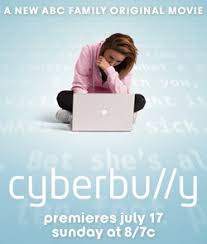
Cyberbully (2011 film) - Wikipedia

Another negative is body image that young kids are being exposed too. There has been a spike in kids and young adults having body dysmorphia because of what they see others looking like online. Our society likes certain body types over others and those are the ones that are most shown over social media.

While those are awful and we should all work on changing social media also provides positives in connecting the world. I think it’s super important to travel outside the bubble you grew up in but traveling is very expensive and outside the realm of possibility for people. With social media one can experience different cultures and learn different ways of life without having to leave their day to day job. They can also connect with people like them no matter where they are in the world. This can give people a sense of comfort especially if where they are isn’t accepting of who they are.

Snapchat down or not working? Current problems and status | Downdetector

Facebook:

Facebook is in a weird position, they started in the myspace era of social media where there weren’t many rules but now have survived till now which there are lots of restrictions on social media. Facebook has had to adapt but they are still behind compared to other forms of social media. We all know Facebook listens to us and sells the information which is wrong and they should put better regulation on, but at the end of the day it’s on the user. We know Facebook does this and if the user continues to use the site then they can’t be upset when they get targeted ads.
Facebook Watch - 161 Photos - Internet Company -

My question to the class: what social medias do you have? Is there a reason you use them? (like for me I only use facebook so my older family can see pictures of me at horse shows and bigger events in my life) What’s your favorite social media and why so?
Whats Better Than Social Media?

The good, the bad, and the potential of social media

Social media is something iconic! It is a great representation on what our generation is about and what we have to offer. Its simplifies the way we communicate and interact with one another. Not only that, it is one of the easiest ways to spread information, especially when it comes sharing events that occur in our daily lives. Although social media is great for its specialty on “spreading the word” it does kick back with some cons of the internet. The internet is something that can be used freely, the same as any social media platform such as Facebook or Twitter. With it being easily accessible it gives people the opportunity to not only use in positive ways but in negatives ways as well.

A Social Media Essay on its Destructive and Disruptive Effects | IIDE

When handled by the wrong people or even used irresponsibly, social media can become something that can ruin lives. Anything, literally anything is posted on a social media platform it can trail you. Information is something very powerful and we put our information at risk all the time. In order to create a social media account you have to insert information. When your information in submitted, that is now available for the world to see. Now these social media platforms do have “Terms and Conditions” that you are suppose to read and agree to that shows what rights you have given up . It also shows how secure your information is, but things can only be secure until theres a new way to hack through that lock. Not only that when we agree on the terms and conditions it gives that platform.

No Longer Anonymous

The internet is an incredibly prevalent part of everyone’s life in the world. it has certainly become a necessity for alot of people in 1st world countries such as America and the UK. People rely on it for work, information, finding jobs, and entertainment. However, the internet when it was not as used, was not as essential as it was today. While people used it for multiple purposes, it was not as mainstream so to speak. Before Facebook and Social Media, people were essentially anonymous.

Anonymity was a major selling point for many people in the beginning stages for the internet. Usernames did not have to be their actual names. So YouTube was filled with multiple variations of names and still is, and Myspace was just the same. However, it especially changed when Facebook became popular. Social Media switched the internets anonymous posting to one where your account can be linked to you, and found by your employers and friends. And the internet is a large place, and erasing something that’s linked to you is next to impossible.

Facebook is the most perfect example of how people are no longer anonymous. While it encourages people to reveal their identity, it is not necessary to post stuff on Facebook. But, this is a blatant lie. Facebook collects data from every single account. It tracks the posts you like, other accounts you follow, and even the hobbies that you might be interested in. It then uses this data to sponsor ads accordingly to your supposed preference. It also sells your data to other companies to then sponsor more stuff to you on your feed. They know everything about you. From the food you might like, to your friends, to the job you work at. Even if you reveal nothing to Facebook, they have everything about you.

Ever since the popularity of Social Media, posting something controversial can essentially destroy your entire life. One mistake can ruin a career. A good example of this is Kevin Hart. He was supposed to host the Oscars, and many people were excited. However, some were also trying to found ways to ruin his chance, and they did. They found posts that he made years ago being homophobic in nature, despite Kevin Hart himself making a statement that he regrets what he said and who he was before. Despite this, the internet poured out and outraged against him, forcing him to step down from hosting the Oscars.

The internet has changed quite a bit over time, and quite quickly. Peoples anonymity was quickly taken away, and everything we post will forever be there. The internet, while a great place to share and connect with people, is a dangerous place if you are not careful.

Impact of Social Media

As it became more accessible to contact the world via the internet, all any tech company wanted to do was improve it. But now, as it becomes more advanced, we are starting to think improving the internet every year is probably not such a good idea.

The internet is a collection of a million different apps and websites. Making things such as a shopping, seeing family members across the world through a video chat, or connecting with them through apps such as snapchat, face book, or Instagram a lot easier. We can contact anyone we want throughout the world in a matter of seconds. We can show everyone in the world what we are doing in real time thorough stories on snapchat, lives on Instagram, and just any post you make on Instagram. But is this necessarily the best thing. With technology rapidly growing more people are getting their hands on it. Is this the best thing, with small children seeing the violent, explicit, harassing adult world they are not yet apart of? You may think small children and infants would not get their hands on any type technology device, but according to a study done by the Erikson institute, 85% of parents allow their kids to use technology devices. These kids could click one certain apps or websites by mistake and end up seeing things they are not suppose to be seeing. Even for young adults and up, people like to be rude and disrespectful behind a screen and that has leaded to suicide more than enough times.

Overall, social media is a very risky thing to play with considering how easy it is to look things up or talk to people you have never even met.

Works cited:

Click to access Erikson-Institute-Technology-and-Young-Children-Survey.pdf

Social Media

Social media crept out of no where and has taken over the world. It has made a huge impact on how our society functions, and has given us another view on how we function as humans. I am a firm believer in everything happens for a reason, so I believer social media was destined to teach us something– not sure what that is yet, but we all know thew world has changed so much since it was invented. I’m sure we will figure that reason out when the time is right though. In the meantime, it is very fascinating to see how social media plays such a huge role in our lives. It is everywhere, always. We have full power of our consumption, which is pretty comforting, however I think abuse of social media is something we all can struggle with time to time. It is important we all remember that there is a whole real world outside what people are posting, commenting, retweeting, etc..

It is hard to understand that sometimes, because it is easy for me to get caught up in the constant reward-like feeling going on social media. It gives me what I want, when I want it, and that is such a problem sometimes! Can anyone else relate? The algorithm is a very dangerous thing, and I curse Facebook for really creating that. Sorry not sorry. The article “Blue Feed, Red Feed” by The Wall Street Journal goes into some detail about how they conducted an experiment on Facebook where sources of articles that appeared on a “blue” on someone’s feed resonated with liberal views, and “red” sources would be conservative. I think this is really interesting to show how people who tend to view the same things over and over again that are backed by the same views, will most likely to continue to view those things when they aren’t even aware. In the arctlie it says,”Scholars worry that the social network can create “echo chambers”, where users see posts only from like-minded friends and media sources.” I think this a really important concept to recognize because messages could be held back and possibly manipulated from certain groups because of their algorithm that only provides them with the same kind of information over and over again.

This is a real fear of mine because I’ve seen it happen before to me. I don’t like feeling that monitored and someone predicting my next move that much. I think it is nice social media provides you with what you want to see, but sometimes I like the search! How does everyone else feel about the algorithm issue?

Our Social World

In today’s society we have two worlds one can choose to live in. You can choose between the beautiful, real, incredibly hard world or the easy, behind a screen, tailored to your liking, fake world which is the social media world many young adults and teens get trapped living in.

When applying for a job, the employer only know what you tell them or what they have heard about you from others. At least that is how it used to be. What was private was private and that just doesn’t exist anymore. Online today, everyone has a trail of some sort, unless you haven’t associated with any platforms. When employers are hiring they now look for any reasons on your social media you could possibly not be a good fit for the job. People in the early days of social media weren’t the best at content control. Photos from parties, inappropriate language and other content you wouldn’t want your grandma to see. That is why nowadays it is so harped on that you have to watch what you are posting on your social media. It is as simple as searching someone’s name on google. You will be able to find their accounts in just a couple of clicks. It is important to look somewhat professional on your social media for this reason. You can tell a lot about a person by looking through the photos they post, and their comments.

The internet started with little to no rules in place. You could throw anything out there truth or lie, right or wrong, it doesn’t matter. And chances are, since the internet has millions of users, there is bound to be a couple people out there just like you throwing the same bullshit out there. This causes a grey area of what is real and fake on the internet. The phrase “you can’t believe everything you see on the internet” exist for a reason.

Susan Boyle, the YouTube sensation went from nothing to something because how of popular her singing video became. My aunt would listen to her all the time around 2009 I can remember. So I saw that first hand. Social media in this instance really helped someone out and worked in a good way. The problem with going viral is that so many people are lazy now, they spend time trying to go viral so they can have life set up for them that way. Teens on Tik Tok have gone viral and have made a killing off it, millions of dollars for dancing seductivly for a couple seconds. At the end of the day, sex sells.

My problem with the internet is that it is so tailored to the user. The other day I searched for guitars on the guitar center website. Today what do I see on my Instagram, a guitar center ad for a guitar. I don’t like that. Instagram now has a feature where you can shop directly from the app itself. The app is consuming peoples lives and there is not a reason to get off the app. People even get uncomfortable when they go a while without their phones. People crave the connected feeling and get stressed out when they are not connected to the world. People nowadays don’t wanna miss anything, going sometime without your phone and that feeling starts to set in.

Trapped in the social media bubble?

This weeks reading entailed discussions on where our future is going because of social media. Social media has impacted the way we live in various different ways. Some of them have been outstanding for the way we live but some have been very negative both on the ways we live and the impacts it has had on people.

Social media first took off and not many thought it would be as popular as it was. It first started with Facebook. Started by Mark Zuckerberg. Mark first started Facebook when he was in college and it was intended to be used the way we use it today. Facebook is used for several different reasons today. Some include, selling items to those around you or in a group with you on an extensions called, Facebook Marketplace. Others may be connecting with family and friends that you may not be able to see very often. Mark Zuckerberg was not planning on doing any of this. His original intention of the social media platform was so that he could talk to girls at his college that he couldn’t face to face. Now as crazy as this sounds his idea created one of the greatest social media platforms and he is doing very well to say the least. And you might think, “Who is their right mind would use a social media platform to try and find someone to date?” You would be surprised. There is numerous apps that have a sole purpose of finding someone to date or other things to keep it PG. Some of them include tinder, eHarmony, and bumble. These have become very popular and are very helpful to some people to find someone to be with. Other have different opinions on these applications.

Though social media can be very helpful to connect and give people something to do, social media has also been very negative. With everything great there is always negatives that come with it. Some of these negatives include smaller things such as connecting with people who you do not want to. Weather this be a random person or someone you had a negative experience with in the past. If it were not for social media you could avoid these people very easily. Other negatives can be very serious. These include stalking or cyberbullying. Social media can cover your identity very well it is scary. These allow you to keep up with someone’s life very closely without them knowing and it is wrong. Some use this masked media platform to talk bad or down on those who do not deserve what is being said about them.

My Question to the readers is, Do YOU think social media has been overall positive or negative?

American Idol

American Idol Main Page – TVMEG.COM

In class we were talking about freak show television with things like the Jerry Springer show, and how they exploited people with problems for views. This really made me think about the show American Idol and how that show was the epidemy of freak show tv during its glory years. They had a group of judges that were more about the entertainment than actually carrying about music. For those of you who don’t know American Idol was a show that was first aired in 2002 to 2016 but was most popular up until 2010, this show featured three grudges who where originally Simon Cowell, Paula Abdul, and Randy Jackson and was hosted by Ryan Seacrest. This show was an American singing compotation that had contestants first addition infant of the three judges by singing their favorite song. Somewhere pretty good, somewhere actually good, and somewhere so bad you could laugh. Those ones that were so bad you could laugh at left you asking yourself “how do they even get on the show?” and that’s where they become freak show tv. That’s because they let the really bad ones through so the judges can make fun of them on national tv for a laugh.

Here's What Happened to Randy Jackson and the Other OG 'American Idol'  Judges | News Break

This is the something as having people come on the Jerry Springer show to have them fight and tell their story for people to sit home and laugh at them. This is almost how I remember tv as a kid growing up in the early 2000s, it just felt like entertainment was very much based off laughing at other people’s problems. That might be why our society as a whole is so sensitive or seems so sensitive because we are so used to being attached from so many different angels.                           

Is Facebook really worth our time?

The Reading Social Media and the “Spiral of Silence” by Keith N. Hampton, Lee Rainie, Weixu Lu, Maria Dwyer, Inyoung Shin, and Kristen Purcell. That was published on August 26, 2014. This reading provides evidence of social media and how spiral of silence plays apart in social platforms. Spiral of silence is a communication theory that a social group would isolate or exclude members due to different opinions, individuals fear of isolation, which leads to silence instead of voicing opinions. There was an 1,801 adult survey which focused on Edward Snowden’s phone and email records based the 2013 revelations of widespread government surveillance of Americans. The results showed that Americans were divided. Some people believed that the NSA contractor’s leaked about surveillance and whether it was justified. 86% of Americans were more wiling to talk about the surveillance program in person, and 42% of people were willing to post their opinions on Facebook and Twitter. People that use Facebook and other social media platforms were more willing to share their opinions if there were more people that agreed. Social media is not a common source of news.  15% of people got some information on Facebook, only 3% of people got some information of Twitter, but 58% of adults got some information from Tv or the radio.  

People that have Facebook can understand how there is some great, positive reasons of having social media and then there’s negatives. People can keep in touch, you can message someone that is across the world, you can video chat. You can share with others, sharing thoughts and ideas. You can organize events and sell products. Facebook can be a time waste, privacy issues, there’s security loopholes for personal details shared through social feeds. Freedom of expression, anyone can post what they want, most of time its offensive and inappropriate content.  There’s cyberbullying, there’s various reported cases that people committed suicide after being cyberbullying through social accounts. Facebook is a major target for advertising, there’s information stored in each 2profile that can build an advertising service. There are fake profiles, some people’s profiles either get hacked or there are fake accounts. There is a lot fake news on Facebook, instead of being culpable or not believing anything. It is not hard to google to fine a reliable source.

The film Generation Like talks about today’s internet and what teenagers are doing and how its affect the internet and companies. Teenagers today are putting themselves out there on an online profile for everyone to see.  A group of teenagers said that your profile is how you want people to see you and the cover photo shows your personality. The likes, follow, retweets show what is cool it shows a vulnerability for companies to take advantage of it. This is the biggest transformation with communicating with consumers in our lifetime. Companies can track people movements what they like and who their closest friends are. Also, they are taking that data and turning it into money. Teenagers do not understand the value in pictures and getting people to like their posts.  Sending a tweet, you are helping raise the value of twitter around 30 billion dollars, Facebook is around 142.23 billion its base on the volume of likes they can generate.

The film called The Facebook dilemma talks about how Facebook disrupted the democracy. Sandberg’s team started t develop new ways to collect personal data from users wherever they went on the internet and when they were not on the internet at all. There are data broker companies, at most Americans are not aware of. These companies go out and but data from every single one of us , what we buy, where we shop, where we live, what our traffic patterns, what our families are doing, what our likes are, what magazines we read. People do not even know that this process is happening, and this data is collected for the rest of our lives. This is now being shared with Facebook so Facebook can target ads. A law student in Austria got a copy of all his data which was over 1,000 pages, the most sensitive information for him was his messages with other people. Just because he deletes important information in these messages it came back up, there was messages about love, sexuality, anything. Facebook tries to give people the impression what you share is only with friends but, Facebook is always watching.

The Myriad of Issues Surrounding Social Media

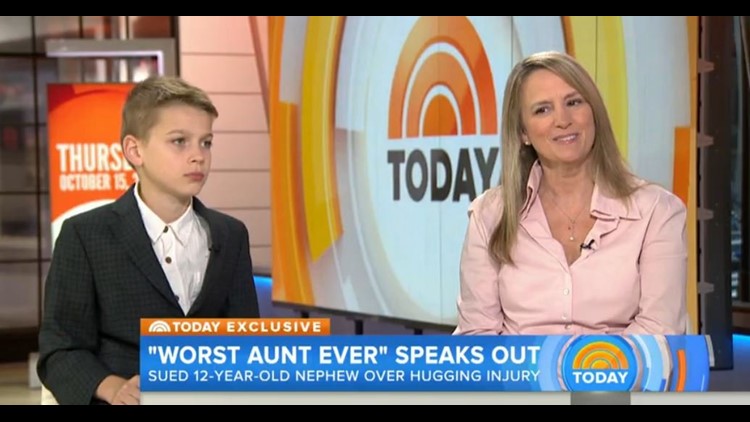
This weeks readings focused on many of the negatives of social media in particular Facebook. Among the many disturbing issues was a story about a lawsuit against an 8 year-old who had jumped in his aunts arms and caused her to fall and break her wrist. The aunt ended up suing for $127,000 for her medical bills. in an effort to pay for the surgery had to sue the nephew who would be covered by homeowners insurance. When the news media got a hold of this they interpreted it as “aunt sues the nephew for hugging her.”

She loves us': Nephew speaks out on aunt's lawsuit brought against him |  fox61.com
Jennifer Connell aunt of nephew

Once the reporters wrote their story, a social media frenzy kicked in. Stories about the “worst aunt ever”, “the auntie christ” and calls for her have her legs and other wrist to be broken circulated on twitter, facebook and other outlets. The misinterpretation of this story had to be counteracted by the aunt going on the today show with her nephew to explain the facts about the suite.

This was one obvious example of the damage of social media. The rest of our assignments focused on the subtle forms of social influence. Facebook being the largest social media outlet was discussed in almost all of the other assignments. One of PBS stories focused on “Facebook Dilemma” and how its algorithms are used to gather information on people who use Facebook. This information could be who you vote for, what you buy, what celebrities you like, what your politics is, who you message, what sports teams you like, etc. Armed with this data they can sell it and once they sell it they have no control how that data is used.

FRONTLINE | PBS - The Facebook Dilemma | Part 2 | Facebook
PBS documentary

In another PBS Documentary the “Generation Like,”Douglas Rushkoff interviewed teenagers who became influencers as a result of Facebook, Instagram, Youtube and other outlets. These overnight sensations were able to increase their likes from hundreds to millions simply by doing funny things and making commentary. These kids began to indorse products and make money from their endorsements.

Generation Like - Rushkoff
A social media influencer

Two New York Times editorials focused on Facebook. One talked about how news has shifted from being very broad to being very segmented to the viewer through social media. Now you can read the news the way you want to read it and in a Wall Street Journal article they actually had two columns of news interpreted by liberal and conservative outlets. Whether it was ISIS, abortion, guns, healthcare or Trump. The liberal and conservative outlets reported entirely different takes on the same story. This is segmentation that leads people to hear what they want hear and read what they want to read. It is an example of birds of a feather flocking together.

NY Times Editor Resigns, Saying She Was Harassed for Her Ideas | Voice of  America - English
New York Times opinion page

In another opinion piece Ross Douthat discussed that Facebook is neither liberal or conservative or Republican or Democrat. It is what we make it. It is a neutral outlet which only shapes opinion in very subtle ways through its algorithms and what it post and what it removes from their site.

Finally, a lengthy report by Pew Research Center shows that people are actually selective in what they discussed in social media. Looking at the Snowden NSA episode people were hesitant to discuss their opinion on social media outlets. They would rather talk about it amongst their family and friends. As we learned from one of the other videos what you put on the social media, even if it’s removed it still stays there forever. I would imagine that people do not want their opinions on someone who is perceived to be a traitor forever online.

Pew Research Center | Pew Research Center
Pew Research

Reading these assignments and watching these videos gives you great pause about what you say on social media, whether it is controversial or not. This information can ultimately be seen by U.S. intelligence agencies, foreign governments, or used by organizations to use that data for nefarious purposes. Not having that control of that information is indeed a fighting thought.