Movies have been bringing families and friends for as long as I can remember and most likely as long as our parents can remember. Movies were invented in 1888 and they were not like we see now. They were series of pictures played really fast that would make a video just like what we used to do as kids on our note books making little flip books. These movies didn’t have any taking in them there was just music in the background. Then after that they moved on to making silent movies which were just black and white movies that had no sound, the story was told through music and body language which is a very interesting concept when you think about it. it makes me wonder if people back them were better at reading body language then we are today due to things like silent movies or were people a lot easier to entertain. I think it could be a combination of things but I will say even the difference between even movies from the 90s till now there is a big difference in the way the story is told.
Movies back in the day where much more based off of a curve, there is a plot, a climax and the rap up. But now people don’t care as much about character building as they used to they just want the movie to get to the point and they want to movie to be as exciting as possible at all times. So, are movies getting worse or are we just getting to be too hard to please? This is what has made things like Netflix and Hulu, we don’t even want to wait for things like episode releasing or even sitting through advertisements. We are a society that runs off of immediate satisfaction that is going to soon be impossible to please.
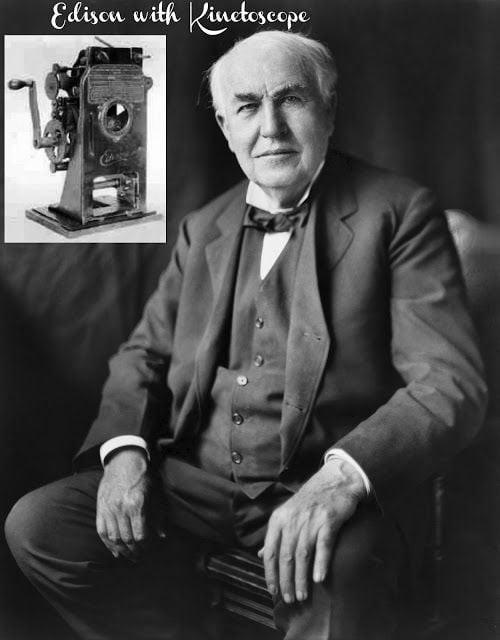
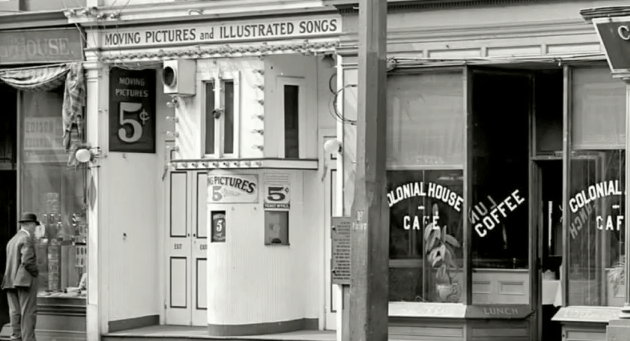
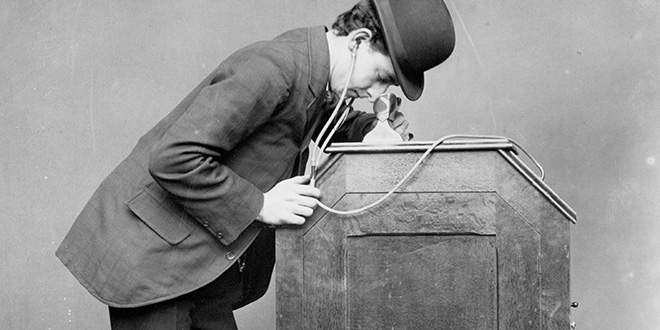
It is difficult to compress the history of the motion picture industry into 500 words. Our assignment this week started with Thomas Edison and his invention of the kinetoscope in 1891 which introduced motions pictures to a mass audience. Later, Auguste and Louis Lumiere invented the cinematographe which allowed motions pictures to be projected for an audience. By 1910, the nickelodeon had been established allowing people to pay 5 cents to see a movie.
Thomas Edison and his Invention of Kinetoscope
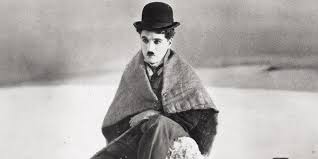
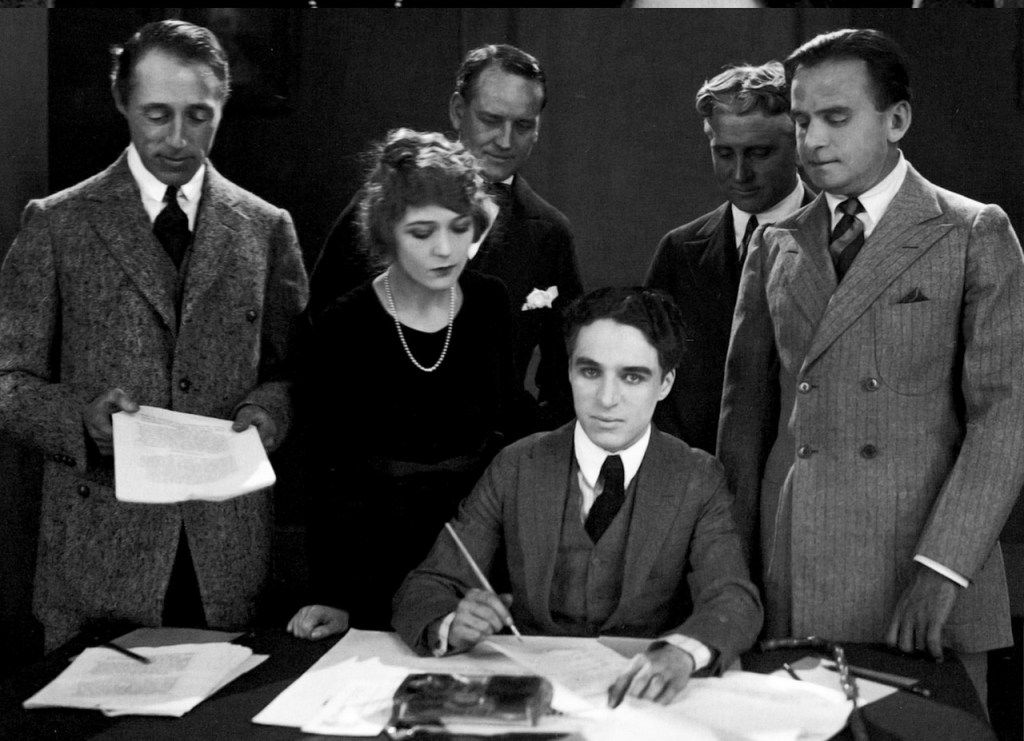
With the creation of the motion picture industry, movies took off. A majority of the population was going to the movies. Silent pictures initially were short in length and focused on comedy and romance. Charles Chaplin, Buster Keaton, Harold Lloyd and other writers/directors/actors became household names. Studios controlled the actors and the flow of movies. In 1919 Charles Chaplin, Mary Pickford, Douglas Fairbanks and D.W. Griffith founded United Artist so that they could make their own movies without interference and pressure from the studios.
Charlie Chaplin in Gold Rush
By 1927, silent pictures had run their course and talkies became the rage. The first of these was The Jazz Singer with Al Jolson. Twelve years later came color with the Wizard Of Oz and Gone With The Wind. Hollywood studios such as Paramount, Twentieth Century, RKO, MGM, and Warner Brothers dominated the industry. The Thirties and early Forties became the golden age of cinema.
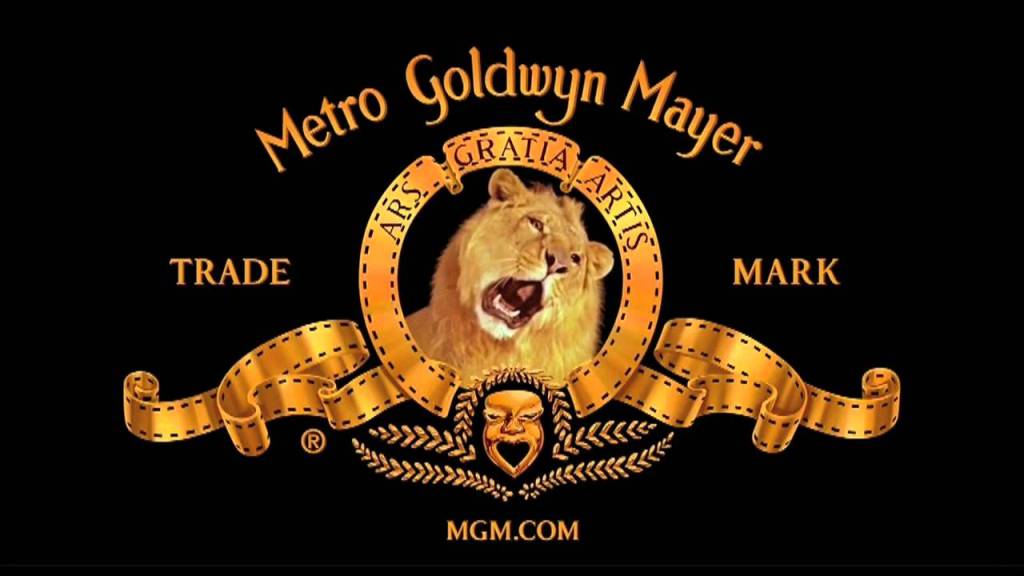
MGM Logo
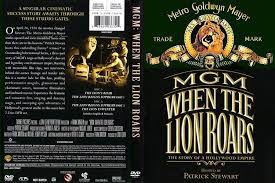
The History of Metro Goldwyn Mayer as depicted in MGM: When The Lion Roars was fascinating. The combination of the scrappy Louis B. Mayer and the sauve, quiet and unassuming Irving Thalberg were a match of opposites but they were the perfect match to run this important and influential studio. MGM discovered actors such as Clark Gable, Greta Garbo, Joan Crawford, and Spencer Tracey. Established names such as Buster Keaton, Lon Chaney and Wallace Beery joined the studio. Top directors such as King Vidor, Erich von Stroheim joined as well.
When the Lion Roars
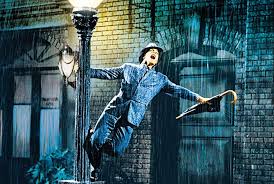
The 1950’s brought about TV. Why should people go to the movies when they could sit at home with their family watching TV? Though some great movies were released in the fifties and sixties such as Singing In The Rain, All About Eve, An American In Paris, To Kill A Mockingbird, and Bridge On The River Kwai.
Gene Kelly in Singing In the Rain
During the sixties and seventies there was a rise in films including Jaws, Star Wars, The Godfather, and Indiana Jones: Raiders Of The Lost Ark. The 1980s brought about the adoption of the VCR which brought movies into our households. The 1990’s further brought about improvements in computer animation and special effects with movies like Jurassic Park, Toy Story, and the Matrix.
Keanu Reeves in The Matrix
Though 3-D had played a role in the cinema of the 1950’s it received a renaissance in the 2000s. Today, 3-D has also entered the TV realm with an increasing number of programs in 3-D. At first 3-D was a cool profit making center for the motion picture industry with movies like Journey To The Center Of The Earth earned sixty percent of its revenue through 3-D sales. Some of the top grossing movie of all times such as Avatar and Alice in Wonderland were released in 3-D helping them get top grossing status.
Todays movie theaters not only have 3-D but have surround sound, motion seats, wind, fog, lighting, bubbles, water, scents, beds, sofas, playrooms, and lunch and dinner. What’s next is anyone’s guess.
There’s no doubt that Movies have had a major impact on the world around us. In my personal opinion, i believe it’s one of the original pillars of not only media but also art in the new age. As a kid myself, TV and Movies were the thing that got me into art, so i’m sure that there are like instances.
Though Movies have paved the way for other art such as TV and other forms of media, it didn’t start off that way. When it came to starting such a large business venture, there were obviously obstacles in the way. As we had discussed in class, it wasn’t as if the entire Movie empire had a base to start and everyone knew what to do, of course not. Instead, the movie industry and, in turn, the big five that dominated said industry, had to make a name for themselves all on their own. Directors, Actors and Actresses, Stories to tell, Theaters to show the films, it all had to come into fruition despite there being no real starting point but rock bottom
Though, as time wore on, it was only a matter of time before the government were to crack down on the monopolies that the big five movie companies had on the entirety of the movie industry. With the lack of movie theaters that guarantied the viewing of certain films made by the big five, they subsequently had to move on to other, more financial, ventures when it came to their movies.
Flashing forward to precent day where there seems to be a rise of a new “big five” in the form of streaming services, it’s sad to see shows that once used to be public now in the custody of a streaming service that you may or may not have on hand.
Things are moving forward in the Movie industry that may lead to history repeating itself in a new way. Things aren’t as they used to be and i’m personally a bit worried but intrigued.
There is nothing quite like going to the theater with a bunch of friends—popcorn, coke, and Sour Patch Kids in hand—sitting down in a red cushy seat and facing a screen that covers an entire wall. Movies are unique and have impacted hundreds of people and become a huge part of the American culture especially. While motion pictures are still impactful today, they were even more impactful as the technology to make movies came to be in the late 1800s and early 1900s. Motion picture giants like MGM, Fox, and Paramount, led the way into this motion picture era, and as Patrick Stewart said in the documentary about MGM, When the Lion Roars, “The dreams they dared to dream really did come true.”
Nickelodeon Theater
Understanding Media and Culture talks about Thomas Edison and his invention of the kinetoscope, which allowed single viewers to watch short reels of film that made little, mini movies (306). As the technology developed, so did the creativity for the use of the technology, and as the success of films grew among the people, it “paved the way for the growth of the film industry, as investors, recognizing the motion picture’s great moneymaking potential, began opening the first permanent film theaters around the country. Known as nickelodeons because of their 5 cent admission charge…” (Understanding Media and Culture 310). People were loving these motion pictures, and producers found a way to make them longer by gluing reels together (Understanding Media and Culture 311). With the potential to make full length films, companies teamed together and Hollywood was born.
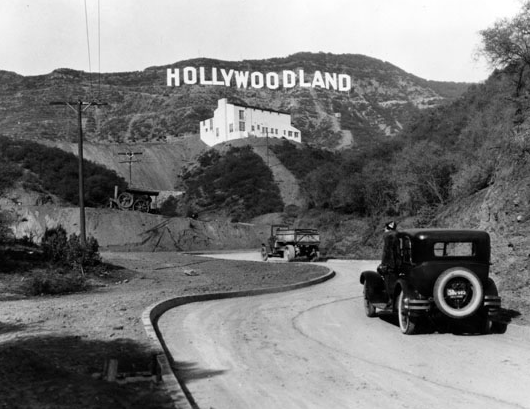
Old Hollywood
“The Studio System and Conglomerate Hollywood” by Tom Schatz talks about concept known as “vertical integration,” and the “Big Five” studios, MGM, Fox, Paramount, RKO, and Warner Bros, who were made of trifectas of companies who could produce, distribute, and exhibit their motion pictures, allowing the movie business to grow exponentially (15). This studio system flourished until 1948 when the Supreme Court ruled in the Paramount decision that the Big Five studios had to sell their theaters to break up the monopoly they held (Schatz 16). Those companies did some pretty big things before they had to downsize and decrease their production however.
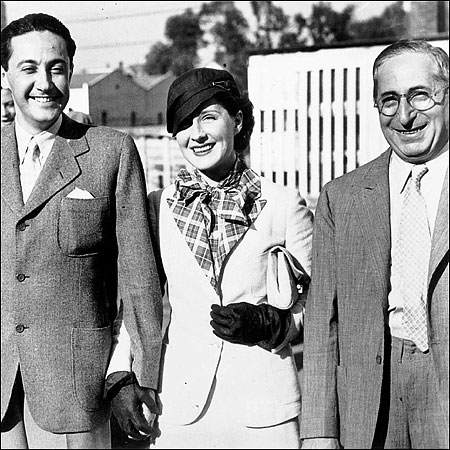
Irving Thalberg, his wife, Norma Shearer, and Louis B. Mayer
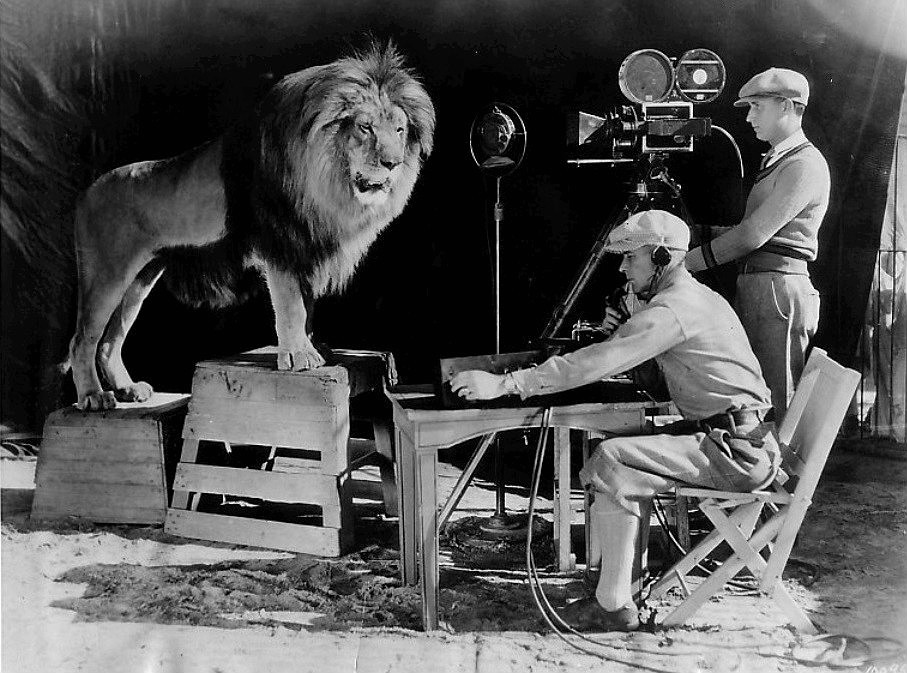
The MGM documentary, When The Lion Roars, hosted by Patrick Stewart, goes into the incredible history of MGM studios. The actress, Helen Hayes says about MGM that, “It was the great film studio of the world. Not just of America or Hollywood, but of the world.” MGM, or Metro-Goldwyn-Mayer, was a vertically integrated studio that did things no motion picture studio had done or ever will do again due to the Paramount decision. The documentary says that MGM made the goal to produce one feature film a week, with a total of fifty-two films a year. Louis B. Mayer and Irving Thalberg, the producers of MGM, did their best to fulfill this goal, literally making people into stars so they could act in the films happening each week. The icon of MGM, the roaring lion, represented the strength, grace, and power of the company well.
Leo, the MGM lion
The question is, should the Paramount decision have been made? What might MGM have done in the 2000s if they had not been stopped in 1948? Though motion pictures and motion picture companies will never be quite the same as they were in the golden years, sometimes as you sink into your seat at the theater and stuff a handful of popcorn in your mouth, you can still hear, the roar of the past.
According to the article, Structure of New Hollywood…
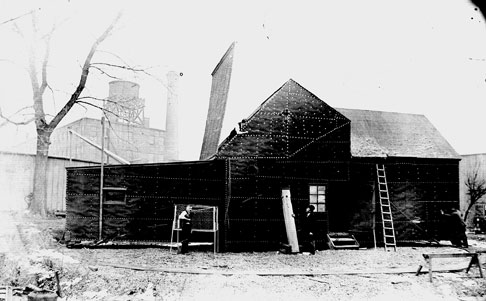
Black Maria, Thomas Edison.
From the 1920s through the 1940s, the “studio system” referred both to a factory-based mode of film production and also, crucially, to the vertical integration of production, distribution, and exhibition. The movie industry consisted of the “Big Eight studios,” whose filmmaking factories in Hollywood fed their nationwide distribution operations.
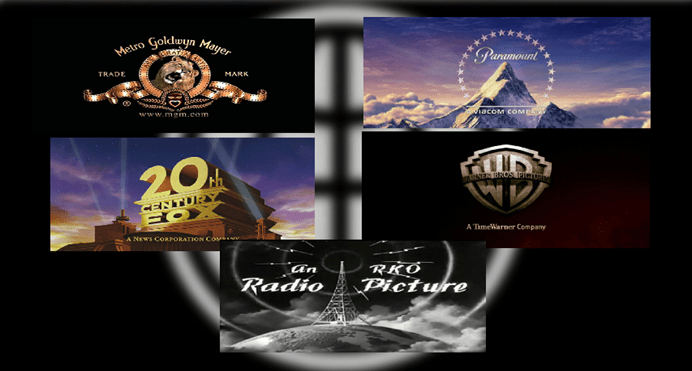
The most powerful of these firms were the fully integrated Big Five studios – MGM, Warner Bros., 20th Century Fox, Paramount, and RKO. They produced and distributed films and operated their own theater chains. The Little Three “major minor” studios – Universal, Columbia, and United Artists (UA) produced and distributed top feature films but did not own their own theaters. (Schatz. Structure..) In the You-Tube video, Film History: Rise of the Studio System, they said the only true system that was emulated around the world was the Hollywood “Classical System.” Through Hollywood’s easy to mimic comprehensive editing style, as well as its exploitation of the “Star System,” the American Studio System rose to complete power which ushered us into what we now call, “The Golden Age of Hollywood.”
The “Big Five” studios
Before the Golden Age, Independents notably Adolph Zukor, paved the way for the “Star System.” Independents began producing road shows and foreign films. Zukor gained complete control over production distribution and exhibition of films. He fully took advantage of an industrialized factory system of production. He was the first to appeal to Wall Street for financial backing attracting investors. He would gain enough capital to vertically integrate his business. He then purchased theaters and exhibition venues across the nation. Zukor looked overseas for profits and lobbied for open international markets. He was not only business savvy, but he had a deep understanding of the public. He focused the public’s attention on the “stars” influencing the idolization of them.
“Zukor’s mastery of the business of film, his political support, and his perfection of the Hollywood “Star System” ultimately explain why he became one of the most defining figures in early cinema.”
-Matthew Fielder, Film History: Rise of The Studio System
United Artists (UA)
After WWI, we severed a unified European Union and some of the stars began to rebel. In 1919, Charlie Chaplan, Douglas Fairbanks, and Mary Pickford, and D.W. Griffith established “United Artists,” a studio who declared independence from the “Independents.” They eventually ended up having to comply with the studio system since it could not keep up with the rate of production of the capital rich studios.
Economic competitors, the Soviets, sought to define their own style of cinema against the American way. Russian acting theorist, Constantin Stanislavski formulated the influential method, where actors internalize their performances, focusing on motivations and objectives. The Soviets also developed the theory of montage. In a series of experiments, Lev Kuleshov illustrated that the meaning of a montage sequence is not determined by the content of the elements of the montage, but by their juxtaposition.
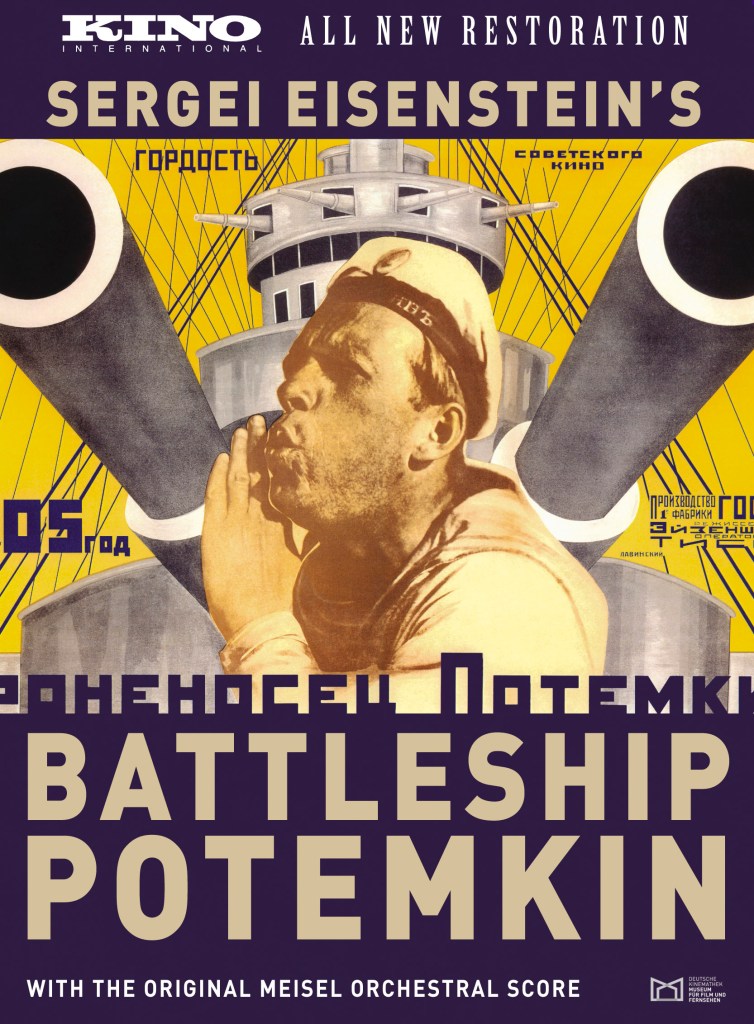
Battleship Potemkin is said to be one of the best films ever made.
“Battleship Potemkin,” a Russian Film by Sergei Eisenstein is regarded as one of the best films of all time. It dramatizes the crew and its rebellion against its Czarist officers. The film employs every experiment of montage theory to render an emotional response from the viewer. The film is considered violent by even today’s standard and the sequence highlights the massacre of the Bolsheviks under the oppressive Czarist soldiers. The film not only influenced political leaders and propogandists, it influenced the work of famous filmmakers, such as Coppola in “The Godfather” and DePalma in “The Untouchables.”
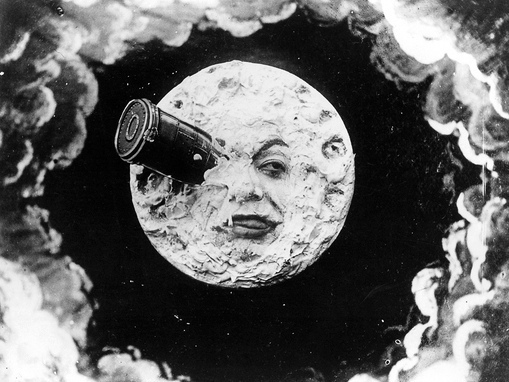
Georges Méliès’s Trip to the Moon was one of the first films to incorporate fantasy elements and to use “trick” filming techniques, both of which heavily influenced future filmmakers.
In 1948, the Paramount decree resulted in the U.S. government ordering the “Big 5” to sell their theatre chains. This leveled the playing field and opened the flood gates for anyone to make a movie.
Questions: Do you think that the “Big 5” should have been made to sell their filmmaking factories? If they were able to keep them, what effect do you think this would have on the current filmmaking industry?
Works Cited:
Schatz, Tom. Structure of New Hollywood, pp. 13-29
M Libraries. Understanding Media and Culture, ch. 8
Facebook was created to be a way for college kids to find other college kids. In the documentary, “The Facebook Dilemma (Part 1),” Mark Zuckerberg begins by explaining that in order to make this work, he needed people’s information. So, he needed to make the website interesting enough that people wanted to become a part of it and thus sharing their own information. As we all know, facebook took off. However, now it has become a corporation. It was no longer the innocent and useful tool Zuckerberg created it to be. The issue soon changed from, keeping it interesting enough so that people want to be a part of it to keeping it interesting enough so that people want to continue to use it.
As a result, more and more information was required and then shared. Keeping it interesting for everyone evolved into creating algorithms to make sure each person has their own personalized Facebook where they see what is interesting to them.
The goal of Facebook quickly became a large driver of the company. Zuckerberg’s goal was to connect the whole world. The technology was there, and he made it happen. Facebook was created by this young man who did not think far enough into the future to see this dilemma coming. The assumption was that the more technology, the more connectivity, the better. Yet, we are starting to realize that there is a threshold that we have passed at some point.
Social media seems like it has turned into such a part of life. What do you do when you wake up? Go on Facebook or Instagram? Check Twitter? It seems like during quarantine some of us may be spending more time on social media ‘interacting’ with people than in real life. During class on Wednesday, many people expressed that they were relieved to have social media as an outlet at the beginning of the pandemic as it offered entertainment, a stable way to connect with people and a sense of security. Last semester I was taking Social Media and Society when mid-semester, the pandemic took over and classes went online. Prior to this, every month we needed to record our social media usage and provide a brief explanation about why we might’ve spent more time on a certain app. After our class transitioned to Zoom however, we stopped and our professor didn’t really think it was fair to track anymore. Some people did express their usage in class claiming that their time doubled or tripled but nobody was really surprised by this. It was almost to be expected with most social and outdoor activities off-limits. Now I’m back in college and all of my classes are on Zoom except one that meets twice a week for an hour. The clubs that I’m apart of meet on Zoom as well as other college-associated events. Now I’m noticing that it’s just a force of habit to go on to Instagram or Facebook during breaks with limited time between Zoom classes.
A few years ago Facebook partnered with Instagram and became joint. I find this interesting as the Facebook logo is now under the Instagram login. Both outlets seem like a served for different purposes. Instagram for sharing pictures and Facebook for connecting with family members and sharing life updates and news articles. I never had a Twitter, although I have posted on the Fiat’s covering an event a few times. My perception is that Twitter can become a place of political arguments and animosity for opposing viewpoints which doesn’t really interest me. It’s so hard to even attempt to change a person’s opinion and then to start a feud with someone that could rile up their follows and be taken a million different ways sounds exhausting and kind of pointless. I do respect people who engage in polite discourse but can’t picture myself ever doing so. It’s nice to share what you believe but then it’s like your doing it with the intention to let others know which can come off as deceptive.
Mark Zuckerberg was a 19 year old college student at Harvard when he started Facebook in 2004. With a long-time interest in computer programming, his intent was to create a platform to connect students and allow people to find shared interests. Zuckerberg has been taken to court many times in regards to privacy issues, a hot topic dominating many media sharing platforms. It also has been in question if Facebook had any connection to the 2016 election as ads supporting Trump seemed to populate everyones feed. Personally, I don’t know what to believe as the counter-claims were simply that the election was trending at the time (why wouldn’t it be) and that campaign ads were simply popping up on people’s browsers on the app. I think it will be interesting to see if something similar happens this time around as the debates are supposed to be held on Zoom and everything is going to be digital. The documentary, ‘Mark Zuckerberg: Inside Facebook’ delves deep into it’s start and everyone involved in helping to launch it, incorporating his friends at the time who claimed to be discredited for their work given less share-hold. I find Zuckerberg’s story really interesting and admire his entrepreneurial skills that he developed from his interests at such a young age. I am a sophomore in college right now, the equivalent to when he launched Facebook and it just makes me realize that we are all capable of so much with the right tools and resources.
My questions for the class are:
Do you view social media as a time-sucker or valuable time to connect with family and friends?
Do you think there could be another majorly used app on the way in the next few years?
Social Media for earlier generations, has been the source that brought many of us together. A platform such as Facebook, Instagram, and even Youtube became a connective network that allows for individualism on personalized platforms—in turn, creating a universe where people can illuminate their interests and what brings them joy. Simultaneously, this may seem like flowers and rainbows; however, these platforms have created a different work ethic and social currency. Younger generations desire to be relevant or, even better, “famous.” Spending countless hours to be seen through the noise; this week, we dive into the world of social media and the effects it has had on young adults.
In the Frontline screening of “Generation like” by correspondent Douglas Rushkoff (The Merchants of Cool, The Persuaders), he explores the impact today’s teens face to stay relevant within their “culture — artists, celebrities, movies, brands, and even one another.” Discovering that teens find social currency essential to their impact on culture. Many teens equate their importance to their engagement and audience. How much likes, comments, or reposts a person receives emphasize their worth. Teen thoughts on engagement have fashioned a world of opportunity for brands to reach out to social influencers. Resulting in these influencers’ enormous audiences viewing the product or service of the brand. Influencers may receive free brand merch, incentives, and money for their collaboration with these brands.
This collaboration, however, enforces brand marketing by the personal creator. Creators are pushed to advertise, increase their social presence, and work on the marketing end to hopefully catch brands’ eyes. Other people who look from the outside may not understand the work behind the scene to create these profiles. Especially with keeping up an online lifestyle, these lifestyles can consume teens day, so companies like “The Audience” were made to market and promote clients’ social presence while increasing outreach and stardom.
In the second Frontline screening, “The Facebook Dilemma.” this documentary breaks down the impact Facebook had on society, especially teens. While teens spend hours picking out the best profile picture or captions, many of that wouldn’t be a reality if it wasn’t for Facebook. Created by Mark Zuckerberg, Facebook is a social network to collaborate & connect with friends, family, and the world on like-minded ideas or topics. On this platform, the guest can personalize their page with pictures, captions, friends, etc. However, it was not regulated in Facebook’s infant ages, which created an epicenter for bullying, harsh language, social conversation, and controversial behaviors. Teens and many others have joined this platform to voice their opinions on life, hoping that others would feel likewise.
Nonetheless, with Facebook outreach growing in millions every day,
“Scholars worry that the social network can create “echo chambers,” where users see posts only from like-minded friends and media sources. Facebook encourages users to “keep an open mind” by seeking out posts that don’t appear in their feeds.” (Wall Street Journal)
While having a social presence keeps many teens connected, it still is a place that is not filtered from bias and facts. It is primarily for a teen using these social platforms to realize it is more than what it seems.
Question: How has social media impact your view on society?
Social media has become one of the largest forms of communication in the modern world. Many different types of platforms have been created over the years to insure everyone stays connected over the worldwide web, but have these platforms been used for their intended purposes? or have they spun out of control.
Facebook. One of the first major forms of social media that has spread from a few thousand to millions of users everyday. This website was created by Mark Zuckerberg when he was attending Harvard University. The initial reason Zuckerberg created this platform was to get back at a girl he was dating because she dumped him. Jealously, Zuckerberg stayed up for hours setting up a website for people at his school to rate girls that attended. Very quickly word got around of this hilarious website where you could see all the girls that went to your school and rate them. This soon became a big problem, obviously, when then school heard about it. They let him keep the website up as long as it was for the benefit of the school, so, Zuckerberg made Facebook. At first it was just Harvard, then it quickly spread to universities everywhere. Now I’m pretty sure we all know about the first scandal Zuckerberg was in with being accused of stealing the idea from the Winklevoss twins very early in the life of Facebook, but that’s not the only scandal Facebook has been involved in. Facebook is now known for stealing peoples privacy within the platform. Though almost everyone knows about this, so many people still continue to use it, I know I do. Nowadays there are so many types of social media platforms that Facebook might be left in the dust. I personally only use it to keep my family updated with my life just to make my mom and grandma happy lol.
Though social media has brought people together and has brought happiness and entertainment to all, there is a dark side to the internet that almost everyone has seen. Cyberbullying. Cyberbullying is when someone repeatedly comments or posts nasty stuff about someone else over the internet. Cyberbullying may not sound that bad because its not in person face-to-face bullying, but cyberbullying is one of the leading causes of suicide nowadays. When people are talking through a screen they feel almost invincible because they aren’t looking at each other in real life. This becomes a very viscous cycle of extreme bullying. When we look at people like Jennifer Connell, her nephew ran up and hugged her by surprise and fell over breaking her wrist. She decided to try and sue for the insurance money. Once the first news outlet found out about this and published the headline “Aunt Sues Nephew For Hugging Her”, it was all down hill from their. it could the eye of so many people and they began to call her names and told her to kill herself even when they’ve never met her. it got even worse when she got the image of some prissy rich New York City girl who couldn’t hold her plate at a party. Things like this get out of hand so quickly and hatred is spread so much faster. And its not even just in social media, its also in online video games as well. I see it all the time and try to speak up so they’d stop tormenting someone, but hatred always seem to prevail. its mind blowing to me how people get so angry and flustered over a game or a headline that they let themselves say these horrible things to someone they’ve never met before.
Do you think Facebook is gonna disappear with the boomers? do you think cyberbullying will ever stop?
Ever since Facebook became public in 2006, billions of people around the world are now able to connect and share their lives with each other. The NYT article, How Facebook Warps Our Worlds talked about the general impact social media companies and specifically Facebook can have on their user’s experiences and browsing habits.
Presumed to be safe and harmless, the majority of these people continue to post and send private messages not knowing they are being tracked. Even people that are aware of this have no other place to turn to or fear of missing out on connecting with their friends and families. Every click and every post is being monitored by an algorithm and is machine learned in order to tailor ads to the user and generate money for the parties involved.
To add onto the constant monitoring, people’s opinions and facts have been being suppressed across social medias. As of this past week, thousands of Facebook and Twitter users were censored and prevented from sharing a factual NY Post article. There have also been hundreds of users on both platforms that are being unjustly locked out of their accounts and shadow banned as well simply for having a different opinion.
Do you think social media companies should be punished or prevented from doing this despite having their own freedom of speech?
Social media in its ideal form would be one of the most positive things we could experience on this Earth. It is too bad that it has succumbed to shady practices and the hidden key board warrior toxicity we see every day. The “spiral of silence” has become more widely used than ever these days because of social media. It is sad to see something so promising being manipulated.






 Mass Media and American Life