Category Archives: Uncategorized

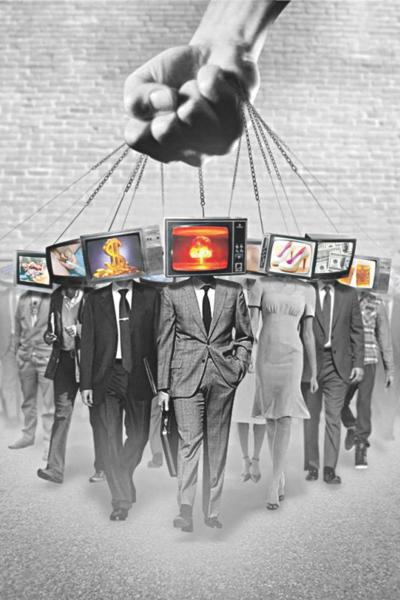
Puppets of the Media

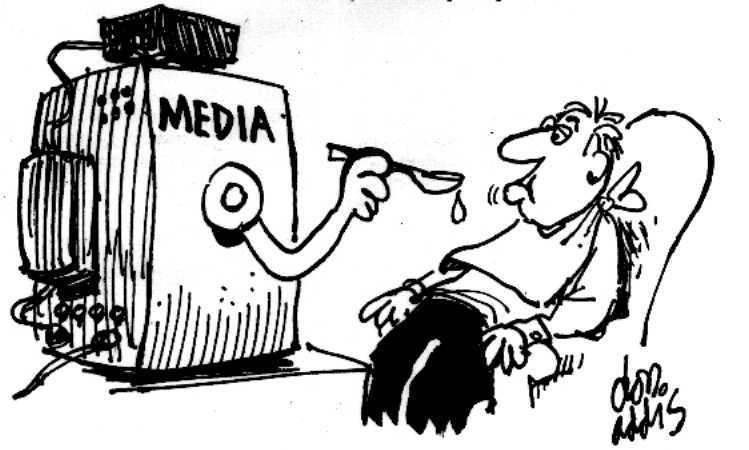
The media is disturbingly too powerful and it is due to the lack of knowledge from individuals. As a society we have put so much faith into the media for just about anything, from how to raise our kids to where we are visiting next. The media has cancelled out self-guidance and self-experiences needed to help people better understand life and their lives specifically. We live in a ‘monkey see, monkey do’ society and the media amplifies that. We idolize celebrities, we invest into fictional characters, and we even choose occupations from the media. Generation Z and millennials are adding fuel to the fire because of how these groups want things delivered. Everything for gen Z and millennials is about speed and efficiency, the best place to get both those wants is the media and it brings dilemma because the truth is often bent within media.
The media works against our knowledge and fills our minds with how they want us to perceive things. Just look at the various news stations (CNN, NMBC, FOX) they all are relatively distributing the same message but based on various external factors they’ll highlight or shadow particular messages. It is scary that finding the truth takes massive amounts of self investigation because you never know what is being hidden from you.

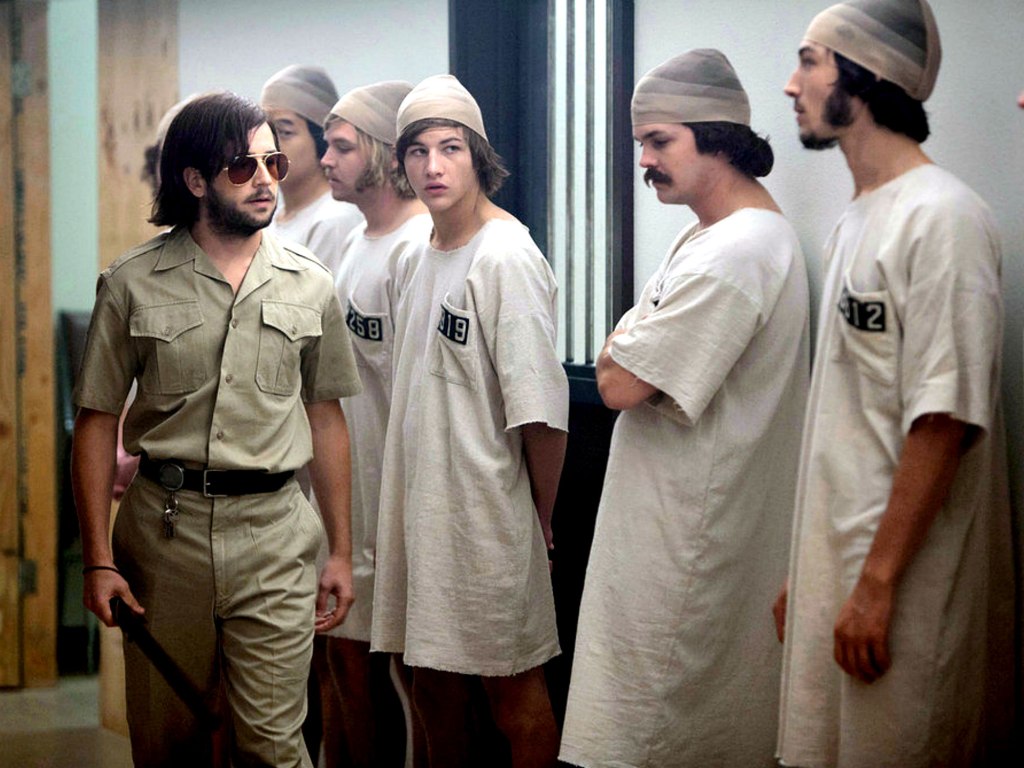
Going back to how the media has formed many different perceptions on life and watching ‘The Human Behavior Experiment’ it made me think of the Stanford Prison Experiment were people volunteered to engage in a prison experiment in which individuals were picked as prisoner or guard and told to act on their free will but no physical violence. The said experiment was suppose to last two weeks but after just six days the experiment was terminated due to emotional breakdown of prisoners and excessive aggression of guards. I referred to this because how do people play a role as guard or prisoner when they have never been in prison or worked as guards. The answer to that is the way the media has portrayed these roles. These people involved in these experiments created the role based on how the media has shown these roles. Social roles and stereotypes are also highly influenced through media.
The media has become a wrecking ball of destruction on the minds of simple minded individuals. Youth are sponges of the media because of how much time they spend on several social media platforms. The mind is not something to play with and I feel that the media purposely preys on its targets knowing they can easily be manipulated.
The media controls various aspects of of society reaching from social norms to politics to economy. The way that the media adjust and misconstrue popular trends does bring many skeptical thoughts.
Are we more Violent or more aware?

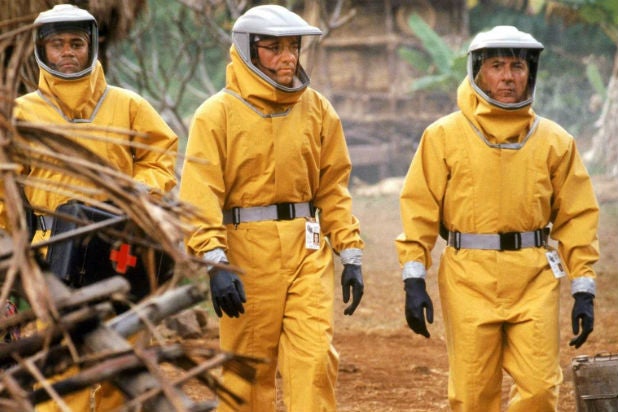
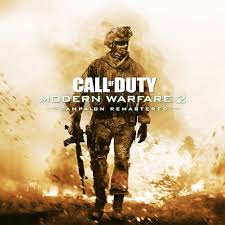
With all this violence in the world today it’s impossible to not ask yourself what is making this happen. Is it all the violent video game or movies or is it just because we hear about it more due to mass media? I tend to think that it is because we hear about almost every violent thing that happens in the world as soon as it happens, which could make you feel like you are surrounded in violence. I don’t think that humans are any more violent then we were before, but I do think that we are more scared then we have ever been. I think instead of violent movies and video games making us more violent I think it has made us more scared of it. I think this is due to people seeing things on movies and video games that would be the worst thing that could happen in a situation so it makes us fear the worst because we’ve seen the worst even if it is fake. I know I’m not the only one that uses what they see in movies to make choices sometimes if I have no other experience, but it’s not because I think that its right but because it’s all that pops into my head first. Movies are so much more relatable then they used to be, movies are now almost so realistic that it makes you feel like you are watching real life.

20 Virus Outbreak Movies, From 'The Seventh Seal' to '12 Monkeys'
Call of Duty®: Modern Warfare® 2 Campaign Remastered

After watching this week’s screening, it got me thinking about how people react to a bad situation and in particular the COVID-19 pandemic. I made me ask “would the COVID pandemic of been more controllable if people didn’t always fear the worst?” What I mean by that does the bad situations depicted in movies and video games make use fear the absolute worst case when things like sicknesses and wars? They could be connected, because when the news hit the USA that COVID-19 had started to pop up in the United States almost everyone ran to the stores to get everything they could just like every post-apocalyptic movie ever seen. Going to the stores were kind of scary to see empty shelves and not being able to get what you want. Wouldn’t have been so much easier if everyone remanded calm and just bought what we needed there would have been no shortages. I’m not saying the pandemic wasn’t scary but if we didn’t have that fear surrounding us at all times. On the other hand, there is a possibility that the panic came from our need to follow one another due to human nature which was shown in the Stanford prison experiment. Which one seems more possible to you? Why do you think Humans are seeming so violent is it because we are hearing about it more or is it because we are influenced by violence in movies and video games?   

How will you react to the arrival of COVID-19? | Star Tribune


The Media Theory

The media and the effects that it has on us as a whole is a very bizzare aspect to try and wrap your head around. It’s something that we never think about, but we all get trapped in the obligation to adapt to the media. I don’t think it is a veery good and healthy way to live but the way modern day society is, it’s hard not to be apart of the media and the behavior that comes along with it. This has never really been a problem for past genertations because we are the first genertation that solely relies on technology and social media. Nobody has ever experienced that before us so this is all a big change for us that is becoming the new norm.

Whenever I think of Media effects and behaviors, I always circle back to the Stanford Prison Experiments. One of the coolest and most intriguing things to learn and research about. Basically, the people running the test found people to participate in this experiement. All students. Half were guards and half were prisoners. Randomly selected. All of the students figured that being a prisoner would be way better than being a guard but that wasn’t the case at all. The prisoners were very poorly treated and not given good care at all and the guards were very aggressive. You weren’t allowed to touch anybody but those rules were bent a lot throughout the whole experiment. The prisoners quickly became very edgy and unsure of the whole situation. In a very creepy way, it seemed to get more real and more real as the experiemnt went on until the prisoners actually felt like real prisoners and the guards actually felt like real guards. The people taking place in the experiment became very stressed and worried when in reality, they were in the downstairs basement of a Stanford Lecture Building. They transformed the whole basement to look like a prison without any of the students knowing. I also watched the documentary on Netflix and thought it was really good.

Philip Zimbardo: Beyond the Stanford Prison Experiment | Brain Fodder

The film we were assigned for this week was called the “Human Behavior Experiments”. I really enjoyed this film as I have never seen it before it was assigned. It really shows how humans react and how we can change so quickly. It concentarted a little bit on the Stanford Prison Experiment, which was what really caught my eye. It goes into detail how people handle media effects and changes that are thrown upon us. How certain settings and moods, atmospheres that can change us in so many ways.

I think the media effects us in numerous ways but I think its very pivotal to our life. We may not even know it because it is such a norm now but our generation has completley grown up with this. Always having certain icons change how we act, dress, talk. It all effects who we are as people. Not only does the media change us, it changes everything around us. 

Social Media And The End Of The News As We Know It - Digital Future Times

The Mind Garden and Theories

It is easier to stand up for something when you have friends to stand with you. This idea connects to several communication theories.

“I’ll do it if you do it.”  I cannot count the number of times I have said that or my sibling or friend has said that.  People are insecure about acting when there are other people watching them, and there are various sociological theories that relate to this.  More importantly, however, is knowing why people do certain things or do not do certain things, and how that connects agenda setting and public policies.  Furthermore, media has an impact on people’s lives, and we can look at how media, and violent television in particular, affects people, and therefore affects the public policy.

Like the documentary, The Human Experiment showed, sometimes people will not act unless they see other people acting. This sometimes lead to harm and even death.

               The documentary, The Human Behavior Experiment, talks about the reasons people do some things and do not do others.  The documentary uses the example of authority, and when someone in authority says to do something, people will usually do it even if it seems off or wrong.  The documentary also used the example of a study of people on the phone, with one person having an emergency on one end.  If the person being studied thought he or she was the only one who was in contact with the person with the emergency, he or she was much more likely to help the person.  If however, the people being studied knew they were in a group, they were much less likely to get up and help the person in need on the line.  People want to be affirmed.  Overall, this documentary helped to show how people respond to certain stimuli.

George Gerbner, founder of the Cultivation Theory.

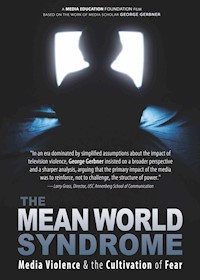
               Taking a narrower approach, the documentary, Mean World Syndrome, focuses on the study done by George Gerbner.  He wanted to know what was the correlation between violent television and violence in the world.  He found, in contrary to what many people think, which is that watching violence on TV leads to committing violent acts, is that watching violence on TV actually changes how people think about the world around them.  It is this interpretation of the “meaning of violence,” not the violent act itself.  Gerbner found that people who were heavy watcher of violent TV were more likely to be afraid of violent acts happening to them.  This theory is called the cultivation theory, and like a garden is cultivated, so is the mind in how people view the world based on their media intake.  Another theory relating to this in Mean World Syndrome is the “fish in the water” theory.  This has to do with the fact that a fish does not know it is in water because it has always been there.  In the same way, we have born into the media and have not been without it.

What reporters deem important connects to the agenda setting theory.

               The cultivation theory connects to the agenda setting theory, which measures saliency or importance.  The agenda setting theory has to do with the media (or really, politicians) pushing for certain issues in the news, and then because those are the most widely covered issues, people eventually think that they are most important and set the agenda based on this. The government can then set the public policy to match this public agenda that it and the media cultivated in the minds of the people.

               What the media says is important, as is how the people interpret it.  How does one find a healthy balance between being informed about issues and not being cultivated to believe certain things that are not true?  In looking at America today, does the agenda setting theory work?  How can we help instill in people the courage to do the right thing even if they stand alone?

Does Violences On TV Make People Violent?

People have been asking for years if watching violence on TV makes people violent. This is particularly concerning for parents with young children. One researcher, George Gerbner, studied violence in the media for 40 years. his view was not that violence causes violence but watching violence desensitizes us to violence and somewhat paradoxically more violence we see the more fearful we are of violence. In the film “Mean World Syndrome” it is stated that children see 8,000 murders on TV by the end of elementary school and 200,000 violent acts by the age of 18.

George Gerbner Biography, George Gerbner's Famous Quotes - Sualci Quotes  2019
George Gerbner

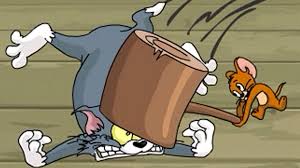
Gerbner states that most of the violence we see is “happy violence.” This is violence that is meant for a laugh. Death without the consequences. A cartoon showing someone slipping on banana peel or someone getting hit on the head with a pan. This type of violence has been around as long as media has existed.

Egyptian blames 'Tom and Jerry' for Mideast violence
Tom and Jerry: happy violence

In the film “Mean World Syndrome” we learn about the broadcast of Orson Welles’ “War Of The Worlds.” This broadcast was about the martian invasion of earth. So realistic was the broadcast that people actually believed it and panic ensued. Some people in fact jumped out of windows.

First-hand accounts of the hysteria following Orson Welles' radio broadcast  of War of The Worlds. | War of the worlds, World radio, Radio drama
Broadcast of War of The Worlds

The mean world syndrome is one where people perceive the world to be more dangerous than it is. In the slides Gerbner talks about the three groups of TV watchers which are Heavy (4 hrs or more), Medium (2-4 hrs, and Light (2 hrs and less). In Gerbner’s world heavy watchers perceived the world as more violent and dangerous than light viewers.

The Mean World Syndrome: Media Violence & the Cultivation of Fear
Poster of kid staring at TV

In the slides we also learned about the effects media has on people. We learned that the audience is not passive and that TV satisfies needs which might be cognitive (knowledge acquisition) , affective (using media to satisfy emotional needs) , personal integrative ( social validity and credibility) , social integrative ( needs to socialize with family and friends and develop or retain relations in society) , or for tension free needs (people often use media as escapism).

In the film “Human Behavior Experiments” we learn about the Bystander effect and the famous Kitty Genovese case where in 1964 Kitty Genovese was stabbed outside the apartment across the street of where she lived while people looked on and apparently ignored cries for help.

The Kitty Genovese Murder | Grim Magazine
Kitty Genovese

We also learn about the famous Stanley Milgram experiment in obedience to authority which looked at the administration of punishment of affected learning. Another famous experiment called the Stanford Prison experiment investigated the psychological effect of perceived power and its impact on how “prisoners” were treated. This famous experiment showed that though people knew they were an experiment those who were randomly assigned to being guards became increasingly violent and brutal with their “prisoners.”

Electric Schlock: Did Stanley Milgram's Famous Obedience Experiments Prove  Anything? - Pacific Standard
Milgram Experiment

It is clear from the Milgram experiment and the Stanford Prison experiment, and the many clips shown in this film that authority and insensitivity to violence can induce some bizarre behavior. One of the most recent examples of this was at the Abu Ghraib in Iraq where prisoners were openly tortured and humiliated by American soldiers in an effort to extract information from them. These guards were given orders some implicit and some direct to do what it takes to get information out of the prisoners. This, along with other atrocities shown in this film are very regretful and sad aspects of the impact that power and the subjugation of violence has on society.

But that’s just a Theory–

Since the breakout of the utter conglomerate that is media of the modern age there’s been sparked debate on just what adverse affects continued viewing and partaking in media would do to the human mind and its thoughts about the world. Even how people who are in control of the media may use this to their advantage.

How the Media Controls Your Reality - Social Rebirth


It’s no secret that media today plays a huge role in how the world has ended up today. From the minuscule micro ad to what shows may be put into your algorithm for you to watch next, there’s no denying that the media in the modern age pushes the boundaries of what should and shouldn’t be shown. Though as of recent, we’ve found a much more pressing issue when it comes to the idea of the media. That being who is using and pushing what we see when it comes to the news and what we may see as “the bigger issue”?

This very idea is shown in the Agenda setting theory. In the textbook, it’s perfectly described as this “Under this theory, the issues that receive the most attention from media become the issues that the public discusses, debates, and demands action on.” Meaning that the things we may be shown online, on TV, watching the News, may not be the things that are truly the issue but, in fact, what the media outlets showing said news wants us to focus on.

TV journalism in India: Crying for TRP or Truth | Countercurrents


This poses a bit of an issue in the grand scheme of things. Seeing as many news outlets rely on viewer attention, what’s stopping them from pushing away the real issues that plague today and pushing forward the smaller issues that some, if not most, may deem as minor issues in comparison?

I remember when I was in High School I had taken a previous Mass Media course where we had discussed this very topic. My teacher for that class, despite his love for the media, newspapers, radio, etc, had shared with us that ever since the starting days of media corporations were simply pushing forward these grim and dark stories simply because they knew it would gain viewers. Although this seemed a bit ridiculous to me at the time, over the course of the few years i started going to college, it really began to sink in that some of these new stories may, in fact, be pushed for those same reasons.

How media control informations


While that isn’t to say certain stories are fabricated, what is to be said is that the news stations and radio stations have a choice of what stories they choose to push. Whether or not it’s about some celebrities life rather than the true plagues going on in modern times is another story.

Media Control? – Thought Basket

Although it may seem, if not completely true, that the media has control over most of our lives, do you believe it should stay like this? Should there be a limit as to what these stations may have a choice in showing to their viewers?

Limited Perceptions

What kind of media messages are shaping our perception of the world?  In the documentary, Mean World Syndrome, George Gerbner PhD, University of Pennsylvania spent his life studying how violence on television affects us.  He found that over time, exposure to media violence had more complicating effects and looked at the effects of these images have on us over time.  He noted that violence has become more prominent on mainstream television and during prime times.  Not only this, but the type of violence that is shown has become more graphic and has increased, exposing us to more violent images many times during a day.  In addition, the portrayal of violence has become so much a part of the normal viewing experience and that this is woven into our overall perception of the world and manifests itself in the form of fear and anger.  Scenes of torture, extreme violence, the act of murder, and even humor surrounding violence have been more prominent in recent media.  There is a casual tone that is conveyed through murder and torture scenes.  When in the past, these scenes brought about a sense of shock and horror, they are now simply part of everyday television.  I am not certain why we need such harsh displays of violence.  Violence has always been embedded in our culture, but why the sudden increase and normalcy?  As Gerbner said,

“Commercial media has eclipsed religion, art, and oral traditions as the great story telling engine of our time.” 

There is more to our culture than violence.  Fear, hate, and anger should not be the driving narrative of our time. Gerbner’s studies found that it is not simply the quantity of violent messages that we receive, but the quality.  How all of these images add up to tell a story and the overall meaning has the greater effect on our society.  Studies have shown that the amount of violence in media has caused an increase in violent behavior in children and is sowing seeds for various mental health disorders.  In Gerbner’s studies, he debunked the Magic Bullet Theory, which is the assumption that the media content acts on us directly, leaving our minds changed.  He said it is more cultivation – the violent media images help shape our minds over a period of time.  The concept of “Mean World Syndrome” refers to heavy viewers of violence living in a meaner world.  Seeing these images over a period of time cultivates an overall perception of mayhem, violence, disease, threats of war, visions of end times, and danger lurking everywhere.  This creates the image of the world being an unsafe, vile, lawless, and mean which increases fear and anxiety. 

The nightly news has contributed to the rhetoric of predators on the loose and fear of victimization.  People think that violent crime is more prominent than it is, even though certain studies show that crime rates are decreasing.  All this fear and anxiety and the “need to protect what is ours” mentality has led to an increase in concealed weapons carrying.  Gun sales and businesses are booming across the country.  Why is this happening?  Most Americans get most of their news from television.  Unfortunately, the news does not portray a true and varying depiction of certain ethnic groups.  If you do not do your research and only listen to one narrative, you only ever get one side of the story.  For example, Hispanics are often portrayed as being violent on TV.  Latinas are always mentioned in the context of a single issue:  illegal immigration.  The media focuses on this topic and does not give attention to regular, decent, law-abiding citizens.  Crime is lower in areas (mainly cities) where a lot of Latinas live.  There is only one-sided representation, and the media is controlled by a small number of huge conglomerates.  African Americans are often shown as either extraordinarily successful or to have committed crimes.  This conveys the notion that African American Civil Rights have been addressed and there is no problem anymore.  There is no representation for anyone in-between and when someone does “step out of line” media depicts them as ungrateful. 

The culture of fear spreads to politics, raising the level of insecurity so that voting populations are more likely to demand protection.    They are then more likely to want to hear politicians who convey that they are “tough on crime.”  Even if crime rates are low, messages of fear seem to speak louder.  We need to begin the work of cultivating a more just and broad-based media to reverse mixed messages of hate and fear in order to prevent us from becoming a mean, hardened, and uncompassionate society.

Question:  How has limited media context helped shape your personal narrative?  What assumptions are made about you or something important to you based on media messaging?

Work Cited:

MEAN WORLD SYNDROME, Google Drive. https://drive.google.com/file/d/1IuvlpzYmNYy0Wi4LmiCOV-fYqjN2YdtE/view?usp=sharing

Theories

Media gatekeeping theory helps decides what information should move pass through the “gate”. The gatekeepers are a high level, data decision makers who control information flow to the entire social system. The gatekeepers are programmed to tell the difference between the two types of content so that the only preferred data points are consumed by people. These gatekeepers have the role of a watchdog with society and simply playing into the audience’s confirmation bias.

Spiral of silence is a political science and mass communication theory that was proposed by a German political scientist named Elisabeth Noelle-Neumann.  A social group or society might isolate or exclude members due to the members’ opinions. The fear of isolation consequently leads to remaining silent instead of voicing opinions.

The founder of the Cultivation theory is George Gerbner, he proposed the long-term effects of television. This theory declares that the more time people spend in the “television world”, the more likely they will believe social reality supports with reality that is reveals on television.  Gerbner believes that television was responsible for shaping viewers perceptions of social reality over time. This started the Mean World Syndrome, the heavy watchers (four or more hours) are more likely to view the world more dangerous than the light watchers which views less than two hours.

The Mean World Syndrome, I can relate. I am the baby in the family, my father was always worried about me. I could not walk alone; I could not go to my friends parties.  He was always worried that something could happen. I could get raped, I could get murdered, or I could get kidnapped. Even to this day my dad was pushing me to get a boyfriend so he could “protect” me at college. Like I get that parents worry, but it gets to the point where it is not healthy for either of us for him to worry nonstop.

Agenda setting theory was created in 1972, The media has a strong effect on what people think, media highlights certain events repeatedly which creates a sense of urgency about issues. It is a relationship between what the people think and what the mass media is telling us. The ability for news media to influence the importance placed on the topics of the public agenda.

The use and gratifications is an approach to understanding why and how people actively seek out specific media to satisfy specific needs. Its based on the socio-psychological communication tradition and focuses on communication at the mass media scale. In 1944, there was forms of uses and gratifications. There question was why people choose specific types of media. Herzog interviewed soap opera fans and developed three categories based on people that listened to soap operas. There was the emotional, wishful thinking, and learning.  In 1954, there was a dispute about people actively looked to satisfy their needs based on an order. Wilbur Schramm developed a method for determining on which form of mass media a person would select, this would help decide on the amount of gratification. A person would expect to benefit from the media and how much effort they had to make to achieve gratification. The modern applications of uses and gratifications is cellphones is the new technology that people are attached to. People use this technology because of fondness and sociability, entertainment, psychological reassurance, fashion, mobility, and immediate access.

Are You Uncomfortable?

I thought the films “A Decade Under The Influence” and “This Film Is Not Yet Rated” went together very well and it was upsetting to miss out on the conversations we may have had on these films in class. They both touch on the topic of what is appropriate and for what audience it is appropriate for.

The 70s can be looked back as more of a revolutionary renaissance when it comes to just about anything. It was a time where people wanted to express themselves and live their lives how they wanted to. At the same time they wanted films to express current issues and relatable things. This also opened up the acceptance of sexuality and gore in movies and ultimately loosened up the ratings. They film makers were getting some very edgy films compared to what they were before and had to understand what was happening in the world around them when they went to make their ratings. It seemed like these critics just like the rest of the country at the time started to open their eyes and approach this realistically. Coming from a period of recent change in the African American community and amongst women this was a time for them to truly shine and express themselves. Before there were not a lot of young or even female directors readily accepted and it was very hard to earn a name in the film industry. In the late 60s and 70s they basically opened the doors to all of these new and highly motivated film makers and directors and some of the greatest movies came out of it.

This Film Is Not Yet Rated” delves into the world of film rating and the MPAA (Motion Picture Association of America) and some of the more behind the scenes deals and bias influencing a movie’s cautionary rating. In some ways I don’t really mind how the board wanted to be anonymous but we need an understanding of who is rating our movies the way they are being rated and why. As it has been said before they are playing God with nobody to hold them accountable. I feel like we all used to take movie ratings for granted. This film has opened my mind up to the bias and secrecy behind movie ratings but also to how hard their job must be. Although we have a current movie rating system there is no consensus as to what is appropriate and what is not when you get down to it. It’s obvious that everyone views the world differently, and some people might find sex to be less of an issue than violence and vice versa. Especially in this world we are experiencing a change in the social acceptances of many different things as we grow and begin to understand them for what they are. I feel like we’ve experienced something similar back in the 70s as well. At some point we are going to realize and come to terms with the reality of todays world and what we are expected to accept and be comfortable with.

I think that some of this all comes back to appeasing the majority rather than the minority when it comes to movie ratings. If we can hold the MPAA accountable and assure quality and consistent movie ratings across the board with clear communication to the public about any changes in policy there can be a lot of good done for the film industry, but mainly for the quality/experience the viewer takes away from the movie.

There’s a lot that you need to ask yourself as you go to think about movie ratings in terms of how we are progressing as a society. One of the first questions I asked myself while approaching this new topic was “should a movie with scenes of homosexual sex receive a higher rating than that of the same movie but with heterosexual sex scenes?” but another question I feel that should be asked is “do either of these scenes make you more uncomfortable than the other, and should that affect the movie rating?”

Movies

*Posted Late with Permission*

The Motion Picture Association has a guideline system for movies. G is for general which is for young kids. PG is for parental guidance which is more for tweens. PG-13 is for teens. Restricted or R is for anyone over seventeen years old. NC-17 is for only people over seventeen. NC-17s will lose ads and announcements so they wont get a big audience in theaters. The MPA wont give independent studios or creators specific notes for ratings as those are only reserved for bigger studios. However raters are given no type of training for rating movies.

It’s crazy to me that the MPA doesn’t have a training for the movie raters. This means that two raters could probably watch the same film and give it two different ratings for just their opinions and the way they see and analyze the content of the film. That legit blows my mind.

I know that there are parents who let their kids watch like PG-13 or R rated movies when they’re young and some who wont until they come of age. My mom and I always joke that we both watched movies we shouldn’t have when we did. My great-grandma ,who raised both of us, was very hands off in our growing up unless it came to certain things. But I would sneak into my mom’s room and borrow some of her movies and watch them. The first R rated i watched was Zombieland back in 2010. I also watched Your Highness and Zack and Mimi make a Porno. I can see why I shouldnt have watched them when I was like ten. But I also watched a lot of Family Guy, South Park and American Dad. Like yes I wasnt supposed to watch them. But I like the humor in them and how they were portrayed.

I get it. You cant show kids certain things like sex especially not in extreme forms. You also cant show them violent acts. You also shouldn’t show them anything scary yet Dark Crystal is rated PG. However kids in public schools hear worse from the other kids than they say in PG and Pg-13 movies. I heard worse in my Catholic school than I have in any movie. I get that kids shouldn’t say swear words but that doesn’t mean they shouldn’t know what the swear words are. Also saying that swear words are bad words gives them more power. They’re just words. A majority of the sex scenes also aren’t that bad. Im not saying show kids sex scenes from movies but like they aren’t that bad. I think the worst one i can think of is the vine/tree rape scene from Evil Dead, which is probably why it’s rated NC-17.