Author Archives: larissaj16

Rod Serling and The Evolution of T.V.

Television has played a huge part in entertainment for Americans and people all over the world. Most people I know grew up with a Television in their house, I certainly did. However, like many millennials, I think I stopped watching television programs as companies like Netflix, HULU and other streaming services rose in popularity. I believe that I had (officially) stopped watching television sometime during my freshman year of High School. I had bought my own MacBook by then and would log into Netflix whenever, wherever I chose to. It’s really not hard to see why the traditional form of T.V. is dwindling in popularity. People are busy, aren’t home all the time- and just turning on the T.V., won’t keep the place of where you paused the show you were watching an hour ago. When did life become just so convenient?

The original ‘television set’ has come a long wayyy since first being created by German inventor Paul Gottlieb Nipkow in 1884. This idea had been in the making by various groups since the 1800’s but up to this point, only had the capability to mechanically scan pictures and then share that image to the front screen- making for kind of a boring experience. This new and improved model utilized a rotating disk with wires connected through punched holes to bring resolution to the front screen. This first invention however, was referred to as an ‘electric telescope’ as opposed to a television. In 1907, two inventors by the names of A.A. Campbell-Swinton and Boris Rosing created their own take on a new television by working with a cathode ray and mechanical scanning system. These devices paved the way for the ‘modern televisions’ that we grew up with- electronic televisions. This new concept officially introduced in 1927, would only take off in coming years and become America’s new addiction. This television had the ability to show moving objects from a camera-like viewpoint.

Video-on-demand TV circa 1953? Just deposit coins in the slot - Los Angeles  Times

I see a lot of comparisons to the evolution of computers in relation to the timeline of television sets. It’s interesting because typewriters were a major invention at one point and then were replaced by computers, which now I feel like are replacing T.V.’s. This is of course just my opinion, but does anyone else see this happening in the near future? With touch-screen becoming more popular and Apple Watches (sort of) replacing phone’s, I would like to see what future technology will bring us.

Rodman ‘Rod’ Serling was an American screenwriter most well known for narrating ‘The Twilight Zone’, a television series known for incorporating both parts mystery and horror. He was incredibly influential in forming television industry standards as well as played an active roll in politics. The documentary we watched, Rod Sterling: Submitted for your Approval, dove deeply into how he incorporated his progressive thoughts and actions into his work, questioning everything and striving for the greater good. He was known for having a passionate personality and strove to challenge current societal norms in the different plots of his shows. The Twilight Zone took off as an extremely popular show and was widely viewed by people of all ages for many years to come. Serling won six Emmy’s for his work as a writer on television shows, four being a product of ‘The Twilight Zone’.

Journey into 'The Twilight Zone': A look at Rod Serling's timeless sci-fi  masterpiece - The Hindu

I watched a few episodes of the Twilight Zone and really enjoyed them. I thought the show was incredibly really well-made, especially for the time it was produced. Most shows during the 50’s and 60’s were given extremely basic, easy-to-follow plots and lacked that riveting intellectually-stimulating element. The Twilight Zone brought never-before seen plot-twists that really surprised people and introduced the public to a new era of television.

Does anyone see a comeback in older shows like the Twilight Zone on popular streaming services like Netflix Amazon Prime or HULU?

The Powerful Affect of Music

Music is a timeless form of communication that has been utilized to unite people, spread messages and as a means of artistic expression. It changes so much every decade, often outlining generational gaps. It’s so funny to think that oldies stations are going to turn into something ancient and unheard of in the next 10-15 years. Today’s top artists have gained recognition in so many different ways. Some by social media outlets like YouTube, others through putting their music on Spotify.. This would not have been possible 20-30 years ago.

I watched the Napster Documentary in Social Media and Society last semester and just found it’s creator, Shawn Fanning so interesting. He struggled a lot growing up and used listening to music as an outlet. He didn’t feel the need to pay for to download songs (through big music corporations) and therefore created ‘Napster’ a free music platform that people could share songs on.. putting huge music/recording agencies out of business. He was even sued by the band ‘Metallica’ as well as The Recoding Industry of America’ for copyright infringement (essentially stealing copyright). In the end Shawn Fanning settled paying both a portion of money and converted Napster to a subscription system (to reduce site traffic.) Watching this documentary made me realize how powerful the internet is and how easily platforms, app’s and sites can be created. His story is just so cool.

TIME Magazine Cover: Shawn Fanning - Oct. 2, 2000 - Music - Internet -  Computers - Business

Napster made history in peer-to-peer music sharing so much that ‘Time Magazine’ featured him on their cover. He was only 19 at the time. Does anyone think that Metallica and the Recording Industry had a valid reason for suing? Or… believe it’s as simple as everyone deserving the right to free music.

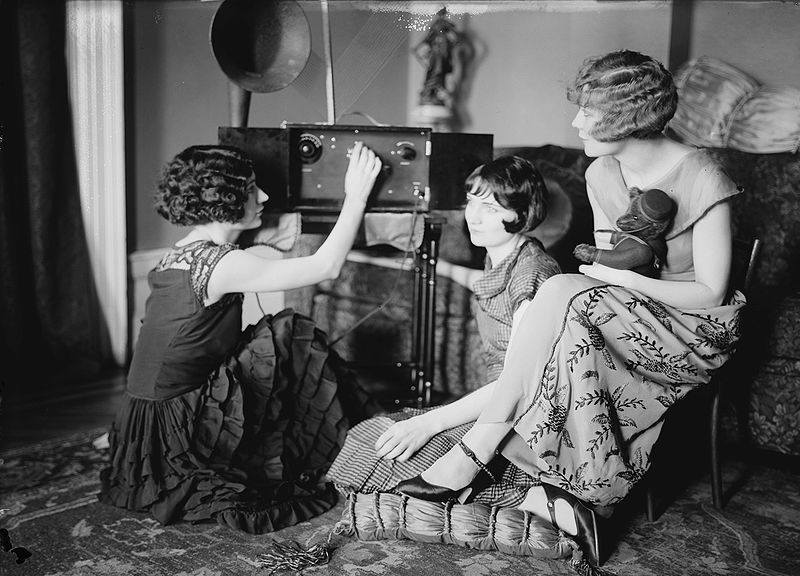
The first commercial radio station gained establishment in 1920 and paved the way for radio to be a booming business for the next decade. People took listening to the radio really seriously and would tune in to listen to the president speak and make important announcements. This was really popular during WW1 and WW2 as entire families would turn on the radio just to hear the latest announcements in battles that were won and lost- as deployment was necessary and most people had family members fighting overseas.

#tbt to when sitting around the radio and tuning it improve the sound quality was still a thing.

Movies, radio, and sports in the 1920s (article) | Khan Academy

I thought the Frasier episode we watched about radio was really funny. It’s so easy give off a fake persona on air as nobody is able to watch your facial expressions. It also really highlighted just how popular radio was ‘back in the day’. People incorporated the radio into their day just as people use music as such a vital part of living now. However odd that may seem to a lot of people, I love listening to the radio. I enjoy listen to NPR’s Story-core among other programs that I find interesting and intellectually stimulating. For me (among many other people) it’s easy and takes minimal effort to just turn on the radio in the car, if your not really in the mood to jam out. There are so many talk shows on television that are really popular however, just lack the overall convenience of turning on the radio. That being said, music consumption is still wayyy more popular.

Does anyone think that radio could make a major return? I (for one) see it with Gen. Z getting so involved in politics and leading movements.

Newspapers in the 20th Century

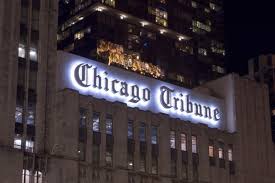
I have always found a strange fascination with newspapers. They are timeless and have (somewhat) been able to stand the test of time- even with the hurdles of improved technology and the influx of fake news. However, over past years they have been slowly dwindling. As someone from Chicago, I was heartbroken when I found out that the Chicago Tribune had closed it’s physical office a few summers ago. Their main building stood alongside the Chicago River and had been (in-building) operation since 1847. When I was younger I would strategically walk by to see what was going on inside and had actually planned to work there as an adult. They have since turned the old Tribune building into luxury condominiums on the river but the owners have decided the keep the historic sign. In Chicago, the Tribune is still in operation but made the final transition to being 100% online with building closing.

Chicago Tribune sign to remain on Trib Tower condominiums - Curbed Chicago

According to John Oliver on the Tonight Show, the downfall of newspapers is having a ripple effect on industries like print ads which are creating much less revenue digitally. He also points out that the 2015 Academy Award for best picture Spotlight could be seen as a ‘slap-in-the-face’ for actual journalists as real life investigative-journalism is just so much different than as glamorized in the 2 hour Drama. This extremely intense in-person, victim/perpetrator journalism is breeding ground for misinterpretation, lawsuits and scandal. Marty Baron, executive director of The Washington Post discussed the extreme pressures and expectations put on journalists saying that they not only need to do their traditional reporting- but participate on social media, are asked to produce a wire service that’s available 24 hours a day and be responsible for video. Not your average workload and certainly a lot to ask any working adult.

Amazon.com: Spotlight: Mark Ruffalo, Michael Keaton, Rachel McAdams, Liev  Schreiber, John Slattery, Stanley Tucci, Tom McCarthy, Michael Sugar, Steve  Golin, Nicole Rocklin, Blye Pagon Faust, Josh Singer, Tom McCarthy, Tom  McArdle: Movies

I first watched Spotlight when it came to theaters in 2015 and it’s one of my favorite movies today. With it’s criticism, it tackles the extremely sensitive topic of ongoing sexual assault in the Catholic Church and does it in a way that’s respectful of the victims and lets people know how long this major issue has been swept under the rug and covered up for sooo long, many of the victims still waiting to receive justice… But isn’t this what true journalism is all about?? This movie came out and drew people in with famous actors and actresses that everyone loves and reminded the public of this huge injustice. An ongoing issue that the Church has tried to cover up from being in the media. Sooo, it definitely gets 5 stars for me.

Are Books a Thing of the Past?

Every month, year, decade comes with change and innovation. The 2000’s brought great technological advancements that gave people of all kinds new tools and resources to work with. Computers became more advanced, smartphones became a thing and people started streaming new movies on their television through Netflix and HULU, putting old fashioned movie theaters out of business. But what about books? An important tool used for all things pleasure, knowledge and school.

The film documentary, Out of Print by Vivienne Roumani sheds light on the current status of book and publication businesses and how they are struggling fit in with the online era. The sad truth boiling down to people just not having the drive to ‘sit down and read a good book’ anymore. That’s just so much work.. when you can just open Amazon-owned Audibly on your iPhone and listen to the book your “reading” while driving or doing work around the house. Sounds a lot more practical for busy life in the 20th century where work and personal life often overlap equating to a limited amount of free-alone time. The film outlines the tech corporations which are taking over books like Amazon and Google, the main culprits of everyone’s new favorite ‘e-books’, the cheaper and more convenient alternatives to paperback books. Some books can even be found online for free.. so why even bother going to the bookstore at all? Jeff Bezos, CEO of Amazon describes novels in a interestingly unorthodox way, “When you get into a book, the book disappears.” He also describes books as a “technology”, something that may not sit right with older generations.

Access 1.4 Million Digital Books For Free At The National Emergency Library

The first books were Papyrus scrolls invented by the Ancient Egyptians. This was a four stage process from cutting a papyrus plant into strips and overlaying the pieces in a criss cross motion. Since then the more ‘recent’ printing press was invented by Johannes Gutenberg in the 15th century, providing the tools to cheaply mass produce books to the public. This was seen as an advantage for everyone, making literacy and knowledge accessible to people of all classes as well as improving the economy. The recent debate is if the big tech giants (the new booming industry) has the same golden intentions. This film seems to think not as Millennial’s were raised in the digital era. They are taught to find their assigned books for school on websites because it’s cheap and easy. The act of going to the library or bookstore is kind of a hassle when you can spend a few minutes online downloading a digital copy. Besides, if you already have an account with Amazon, it’s cheaper to just get it from there anyways. This is the premise of what this film argues as most threatening; being taken over. The big tech giants giving so many the older respected book businesses a run for their money.

The question of longevity is an open-ended one in the film, how soon will everything just be digital? Nobody really knows, people do still read paperback books and perhaps they will for the next few years but ten, twelve years down the line? While watching this I thought it would be interesting to know just when books would disappear, if they would one day turn into $2 bills or collectors items. This is a sad thought for someone who does enjoy reading paperback books

Out of Print' Doc Examines The End of Print Books and What It Portends

Introduction

My name is Larissa and this is my sophomore year at AU. I am a communications and Global Studies major. I am from Chicago and really enjoy theatre and exploring the city. I also appreciate art and going to museums like the art institute with my friends during my free time. I loved my communications class last semester, Social-Media and Society so I am very excited to see what we will be working on in American life. I’m so excited to watch the assigned movies this semester but especially to re-watch, ‘Spotlight’ because it is one of my favorite movies about journalism and the press.