Author Archives: knfonash

Realism vs. Fantasy Television

By 1950, around 6 million people owned television sets, and by 1960 more than 60 million television sets had been sold (Understanding Media, Ch. 9.1) Color television hadn’t become available until the 1950’s. Television between the 1940’s and 1980’s was known as the Golden Age. At a time when the radio was still a popular medium for getting news and entertainment, newscasters and broadcasters were still treating the television like it was the radio. Broadcast times were lengthened from the standard 15 minute radio segment to a 30 minute which increased advertising costs. In the 1950’s the major networks tried to appeal to a family audience, ignoring social and political events portraying White middle-class family structures. There was always a morality story and the shows of that time gave a “feel good” impression that you can solve any problem in a half an hour. Many American families aspired to be like the families portrayed on these shows. By avoiding topics like racial segregation, war, and poverty, shows like Leave it to Beaver and Father Knows Best blanketed over the deprivation and injustices a good majority of Americans were experiencing.
Old floor model television

Walter Kronkite, a news journalist of the 1960’s brought hard-hitting news to the living rooms of Americans by reporting news events as they occurred, such as the JFK assassination. He built the trust of Americans and people relied on him to report the facts. This notion of stopping everything when the news came on or making certain that you were in front of the TV at 6:00pm because that’s when the news came on. At the time of the Vietnam War, news crews were capturing vivid images of the war. Some images reached the screen as well as the newspapers and magazines, such as images of children that were burned by napalm. Many Americans felt immense stress during these times and turned to television. In particular, and one of my favorite: fantasy television. Shows like I Dream of Jeannie and Bewitched provided a way to escape from the horrors that were happening in real life. These shows provided comedy and a way to escape from everyday realism. For awhile in the 1960’s, television was either hard-hitting news or escapism.
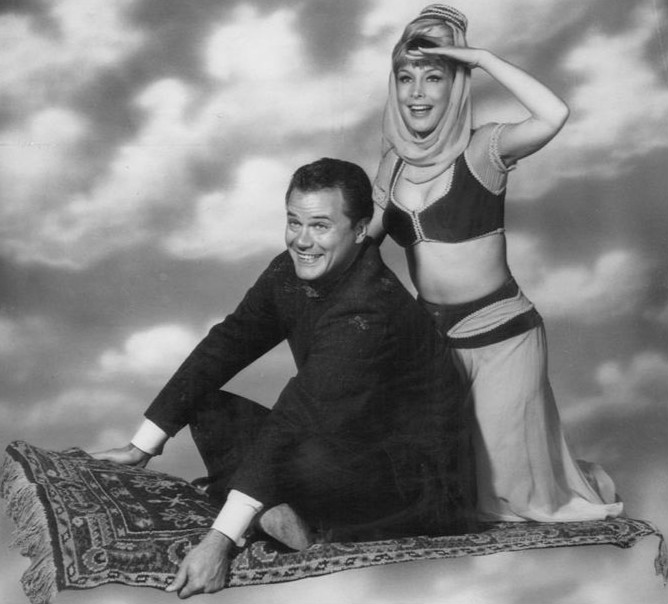
The television show, I Dream of Jeannie.1965

A popular series that premiered on October 2, 1959 was The Twilight Zone. It took the art of live tv and bridged several different genres like horror, drama, and sci-fi. The actors on Twilight Zone were doing live television during a time when radio was still a way to get news and televisions were just starting to gain popularity.

The documentary American Masters, is based on the career of Rod Serling, one of the main writers on the hit TV show. Live television is something that the actors on the set of Twilight Zone described as exciting and unpredictable. If you messed up, it was curtains for you! Their passion for the excitement of being on stage and the spontaneity of the moment was evident in their voices. You get the impression that they are well aware that they had been a part of something truly rare and great. It was these live performances and shows that paved the way for sitcoms and comedies that are so popular even today.

“I don’t have any background. We WERE the old days!!

-John Frankenheimer

Rod Serling passed away in 1975 at the young age of 50. Serling was a passionate writer who according to his wife, Carolyn tried to continuously live up to his success like he had something to prove. He wrote a lot of episodes based on morality lessons and he saw the human condition as something to think about. He often portrayed characters in realistic and simplistic manners, which helps his audience identify with the story lines. A lot of Serlings writings came from having PTSD and war memories. Serling wasn’t afraid to tackle political issues or highlight social injustices. He would face backlash from the network because the networks didn’t want to cover these issues like racism and war and they were concerned about the ratings. Other television shows of that time steered clear of such issues. He would have to defend his writing to CBS execs. Still, Serling felt the need to write about real life situations and found it frustrating and stifling that he wasn’t allowed to just ….write.

The Twilight Zone

In the documentary, they recreated a Twilight Zone episode based around Rod Serling’s death. Rod had entered…..the TWILIGHT ZONE!

Question: Do you have a favorite show from the 1950’s and 1960’s? What is it?

Works Cited:

Understanding Media and Culture: An Introduction to Mass Communication, online text, M Libraries Publishing

Rod Serling: SUBMITTED FOR YOUR APPROVAL (GOOGLE DRIVE)

https://www.syfy.com/syfywire/the-first-episode-of-the-twilight-zone-premiered-in-1959
Piracy in the Music Industry

Aviici

Piracy in the music industry has been a reoccurring problem in the during the last fifty years. 

Piracy in the music industry has been happening for a long time.  It didn’t just begin with Napster, it has been happening in the form of cultural appropriation, hijacking, and copyright infringement. (ie. The sampling of an artist’s music without their permission).  Napster was a game changer in the way we consume music, but if we examine how the hijacking of African American music occurred after the Great Migration, we will see that this has been a practice of the music industry for a long time.  (2010, Understanding Media. CH. 6.2) The music industry giants didn’t like that it was being done to them (with respect to the musical artists).

Napster Logo-Sam Hanks design

Napster rocked the music industry in 1999 by creating a system to download songs from musicians and artists which created massive controversy and turned the music industry on its head. Napster was inevitably going to happen at some point. We saw similar algorithms like Limewire. Some people said that the business model at the time wasn’t working, and that the future of the music industry was already moving towards programs like Napster, but it needed to be regulated.  Napster was instrumental in starting what would become membership based music subscriptions. They needed investors who weren’t afraid to look ahead to the future. They needed people to see where music was going – into the consumer’s hands. Napster gave people the accessibility to choose new artists and independent musicians who haven’t been able to get their music out into the mainstream.  Napster had over 50 million members.

Shawn Fanning started the program Napster, a programmer and hacker started in 1998. It uses an algorithm to download music in the form of an mp3.  The program spread across college campuses like wildfire.  The masses were divided on whether this was piracy or simply bringing the music to the people.  One thing was certain – it changed the way we consume music forever.  Most of the internet was information storage and retrieval; not sharing bandwidth with one another.

Sean Parker, co-founder, “Suddenly you were connected to everyone.” This revolutionized the way we use computers- the way we interact with one another. Sean Fanning thought that every way this would be a better system:  allow people to connect over music, allow independent musicians to get their music out there.

The top music industry heads were freaking out. There were a lot of pre-realeases that were being downloaded and this shook them.  What will happen with record stores and the way people get their music?  There was no denying that the record industry giants were behind the times.  The future of the music industry was knocking.  People no longer had to go to record stores to buy their music – they could just download it from their home.  Technology was very beneficial to the record companies, such as CD’s and LPs. “All of a sudden technology and how music was going to be recorded went somewhere else.”

“A bomb went off.  I don’t know what happened. The cat wasn’t going back in the bag.”

-Don Ienner/Chairman & Founder IMO Entertainment and Dashbid.

Napster offered convenience, price, and choice.  It put music into the consumer’s hands.  The band, Metallica sued Napster.  Metallica thought that the choice should be in the artist’s hands and they should have choice of whether to sell their music.  Napster was ordered to remove millions of songs owned by the record labels. Jon Stewart joked, record companies fought tooth and nail over the issue.  It’s the record companies that hold the patent to cheat musicians out of money.”

On October 31, 2000, Bertelsmann Media Group invested 80 million dollars in Napster to create music subscription service. 

Aspiring artists no longer need to rely on expensive publicists, recording studios, or contacts within the industry; they can connect directly with fans to sell their music.

Person Listening Music Headphones Concept

With respect to the musical artists, I have to applaud Napster for sticking it to the Big Music Industry giants. They have been cheating artists out of their profits from record sales since going back to the Great Migration.

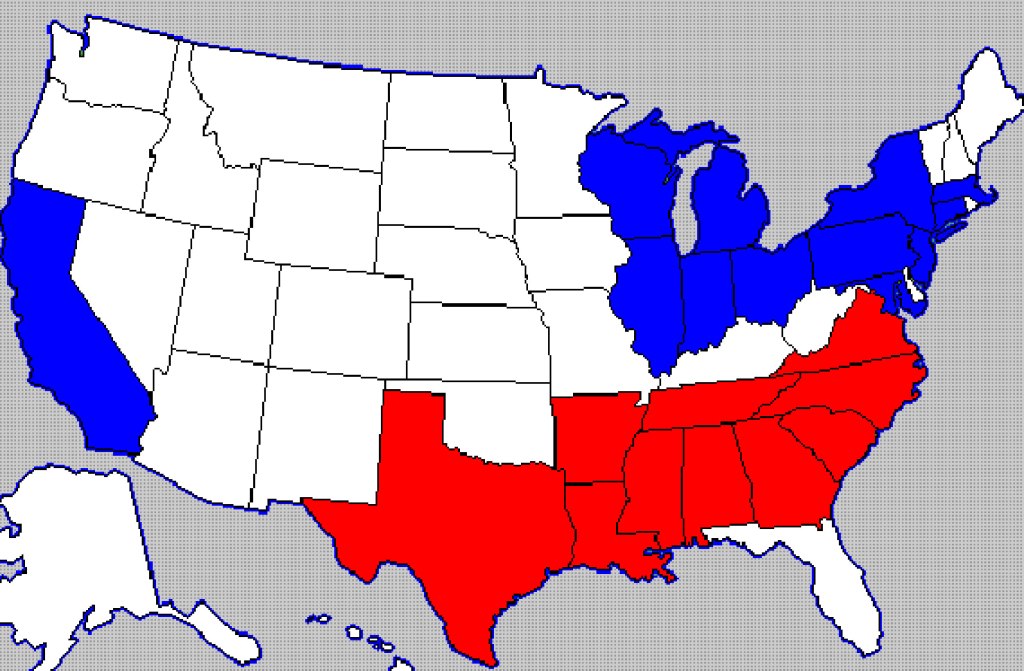
During the Great Migration, the 12 states in blue had the largest population growth of Black individuals, while the states in red had the 10 largest net losses (Martin).

To capitalize on the public’s enthusiasm for rock and roll and to prevent the loss of further potential profits, big record companies signed White artists to cover the songs of Black artists. (2010, Understanding Media) Because Music Industry giants like RCA could widely promote, the hijacker’s hits would often outsell the original version. Many White artists and producers would also take writing credit for the songs they covered and would buy the rights to songs from Black writers without giving them royalties or songwriting credit. Independent record producer Danny Kessler of Okeh Records said,

“The odds for a black record to crack through were slim. If the black record began to happen, the chances were that a white artist would cover—and the big stations would play the white records…. There was a color line, and it wasn’t easy to cross (Szatmary).”

Piracy transpires in many forms in the record industry. From copyright infringement, to cultural appropriation and hijacking….

Napster rocked the music industry in 1999 by creating a system to download songs from musicians and artists which created massive controversy and turned the music industry on its head. Once digital music technology was introduced to the world, its domination of the music industry was almost instantaneous.    For better or worse, it changed the way that we consume music.

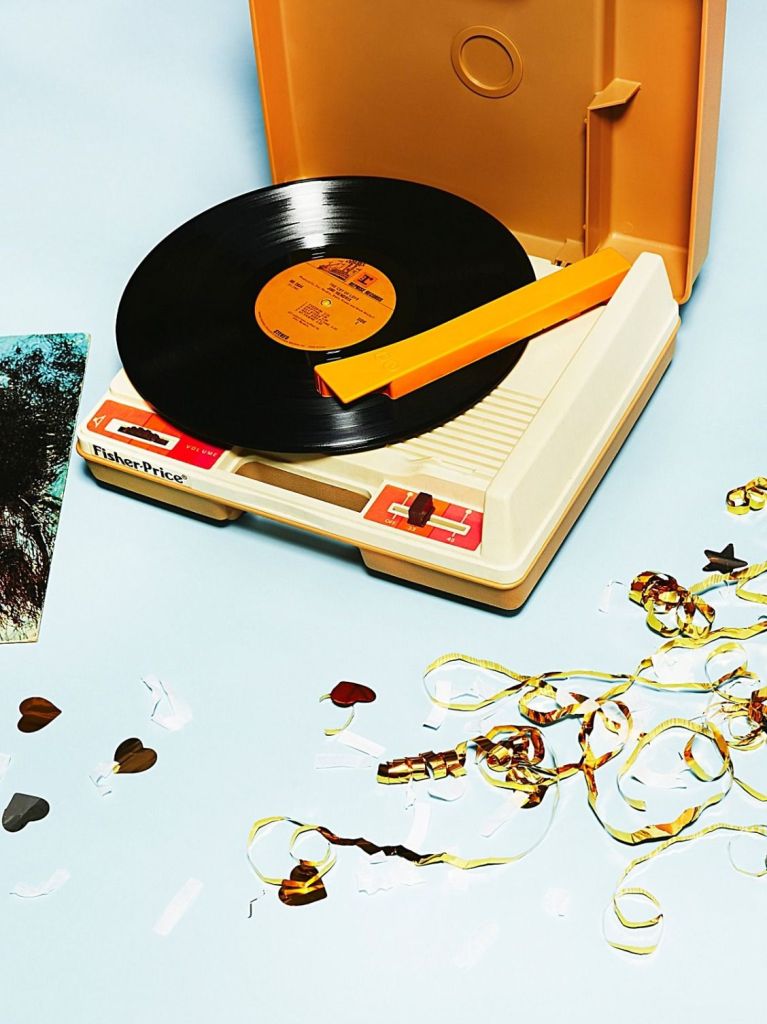
I think I had one of these growing up.

Do you think the down-loaders were stealing music?

Do you think that fans and music lovers should be able to download music from their favorite artists?

One of my favorite songs right now. Heard it on Sirius XM ALT Nation. Speaking further on the single, Simpson says, 
“‘Summer’ is so much more than a song about the summer. ‘Summer’ is about bottling escaping nostalgia, being present, being flung into the afterthought of the future. It’s sarcastic, it’s cheeky, it kisses your forehead. ‘Summer’ sees you, remembers you, and doesn’t forget you. ‘Summer’ is what you were looking forward to that ended up letting you down but you were so fucked on it exceeding expectations you didn’t even realize it. ‘Summer’ is a person, summer is a place, summer is a thing, summer is a feeling, if it is the song of your summer.”

check her out: https://www.onestowatch.com/blog/simpson-is-ready-to-make-her-mark

Works Cited:

Downloaded, 2013

2010, Understanding Media, M Libraries Publishing

THE FUTURE OF JOURNALISM

Truth matters more now than ever

In 1791, the First Amendment was born. Then in 1798, the Sedition Act in reaction declared writing, printing, uttering, or publishing any false, scandalous, malicious writings against the United States government. Then, when Thomas Jefferson was elected President in 1800, he allowed the Sedition Act to lapse, claiming that he was lending himself to a great experiment. This free press experiment has continued to modern times.

David Simon, journalist and creator of the hit television series The Wire warns if fact-checkers aren’t allowed to attend local government meetings, we could see significant state and political corruption due to unaccountability. Journalists are ground zero in reporting the truths of the world. With more and more people getting their news online and through unreputable resources, what is the future world of the news industry going to look like? In the article, The Guy Who Wouldn’t Write a Hit: An Interview with David Simon, Mr. Simon mentions that he was encouraged to write what he knows and to put himself in someone else’s shoes. He says, “what we filed was so depressing that NBC refused to make it.” He was pressured to write in life’s victories and “fluff.” As he moved into the world of television, his journalism career “just kind of fell away.” I think that we will slowly rely more and more on individualistic reporting in the future, which is both good AND scary. How can we actually regulate everything that is being reported? How can we see what may or may not have been edited? At the same time, there would be more transparency.

The creation of the internet and digital publishing has changed what we consider to be truthful and reputable sources of journalism.

One area of journalism I find interesting is Interpretive Journalism. Established in the 1920’s and 1930’s, it was used to explain issues and to provide readers with a broader context for the stories they encounter. This type of journalistic reporting goes beyond the basic facts of an event or topic to provide context, analysis, and possible consequences. There is a need to separate objective news from opinions and analysis. We have a lot of this now, but I think this type of news reporting will become more popular, especially if we continue to devalue journalists.

John Oliver on Journalism: “The future of journalism could be in trouble. What is true is not always what is popular.”

Another area of journalism that has increased in popularity is advocacy journalism. Advocacy journalists promote a particular cause and intentionally adopt a biased, nonobjective viewpoint to do so effectively. Despite the challenges and potential pitfalls inherent to advocacy journalism, this type of journalism has increased in popularity over the past several years. In the text, Understanding Media….Newspapers, USA Today reporter Peter Johnson states, “Increasingly, journalists and talk-show hosts want to ‘own’ a niche issue or problem, find ways to solve it, and be associated with making this world a better place (Johnson, 2007).” For example, Oprah Winfrey is used as an example of having used her show as a platform for issues and concerns, which made her one of the most famous advocacy journalists. While many praise Winfrey for using her celebrity to draw attention to causes she cares about, others criticize her techniques, claiming that she uses the advocacy style for self-promotion.

Yet despite this somewhat harsh critique, many view Winfrey as the leading example of positive advocacy journalism. Regardless of the arguments about the value and reasoning underlying her technique, Winfrey unquestionably practices a form of advocacy journalism. In fact, thanks to her vast popularity, she may be the most compelling example of an advocacy journalist working today.

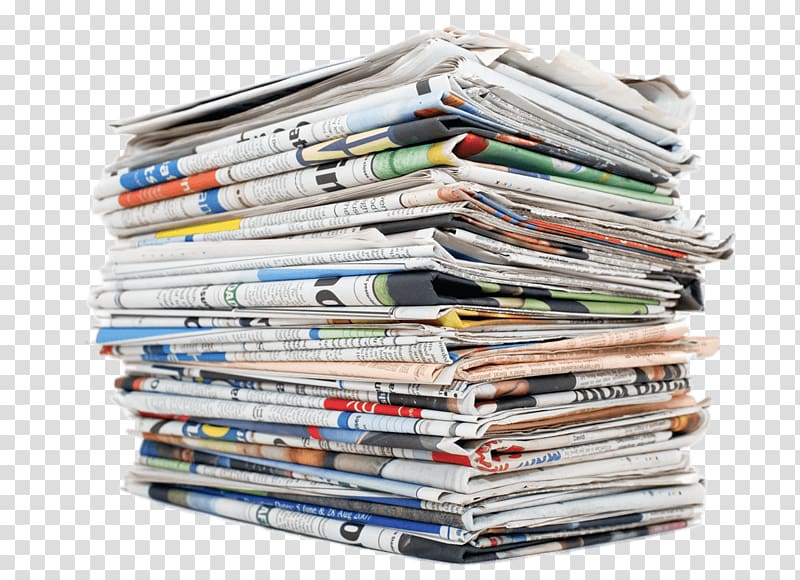
As individuals turn to the Internet to receive news for free, traditional newspapers struggle to remain competitive and hold onto their traditional readers.

Blogs have offered a new take on the traditional world of journalism. Blogs feature news and commentary entries from one or more authors. However, journalists differ on whether the act of writing a blog is acutually a form of journalism. Many old-school reporters do not believe blogging ranks as formal journalism. Unlike journalists, bloggers are not required to support their work with credible sources. This means that stories published on blogs are often neither verified nor verifiable. Despite the blurry lines of what constitutes “true” journalism—and despite the fact that bloggers are not held to the same standards as journalists—many people still seek out blogs to learn about news. Thus, blogs have affected the news journalism industry. Beyond the lack of accountability in blogging, blogs are free from the constraints of journalism in other ways that make them increasingly competitive with traditional print publications. Significantly, Internet publication allows writers to break news as soon as it occurs. Unlike a paper that publishes only once a day, the Internet is constantly accessible, and information is ready at the click of a mouse. (2010, Understanding Media…Online Journalism Redefines News)

With declining readership and increasing competition from blogs, most newspapers have embraced the culture shift and have moved to online journalism. For many papers, this has meant creating an online version of their printed paper that readers will have access to from any location, at all times of the day.

Some benefits of online writing:

As newspapers contemplate making the transition from print to online editions, several editors see the positive effect of this particular issue. N. Ram, editor in chief of The Hindu, claims, “One clear benefit online editions can provide is the scope this gives for accommodating more and longer articles…. There need be no space constraints, as in the print edition (Viswanathan, 2010).” With the endless writing space of the Internet, online writers have the freedom to explore topics more fully and to provide more detail. Online writing also provides a way for beginners to enter the professional realm of writing.

The online newspaper is, in reality, still trying to figure out what it is. Indeed, this is an uncomfortable position familiar to many online-only papers: trapped between the printed news world and the online world of blogs and unofficial websites. Despite these challenges, newspapers both in print and online continue to seek new ways to provide the public with accurate, timely information. Newspapers have long been adapting to cultural paradigm shifts, and in the face of losing print newspapers altogether, the newspaper industry continues to reinvent itself to keep up with the digital world. (Understanding Media)

Have YOU ever read a printed newspaper? Where do you get most of your news?

Works Cited:

2010, M Libraries Publishing, Understanding Media and Culture

https://www.nybooks.com/daily/2018/08/22/an-interview-with-david-simon/

News article of the week:

“Facebook said, it will begin barring politicians from placing new ads on Facebook and Instagram”

Books and Libraries: Are we nearing the end?

In the screening, “Out of Print,” they talked about libraries becoming obsolete because it is more convenient for people to look for reading materials online.  This made me a little sad when I think about the architectural marvels that some of these libraries are.  I think that being in a good library is like going to a museum. 

There is something about the smell of old books and the way they are organized on their shelves and even if I don’t read a ton of books, it is the feeling that I could if I wanted to.  The feeling that anything that I want to learn about is right there.  You may have to work a little to get the information or find that book that resonates with you or is just what you need to nourish your soul in that moment. 

I understand why people would simply want to search for their research online.  In today’s fast paced world and everyday obligations, we may not have the time to go to the library and do research, so it is more convenient to access a digital library.  It seems like libraries are being used more for accessing the internet and a sort of gathering place. I wonder what will happen to all the books and libraries if we just stop using them? Will we simply move forward without them or will they continue to exist alongside digital materials?

I can relate to the overall experience of getting a new book or enjoying the look of old books.  There is a certain nostalgia for entering a library and immediately being able to see the massive collection of books and how they are arranged.  I also see the appeal in having books to collect and display.  I may not read them all, but I like to have them in case there is an urge.  Currently, I have several books that I have started and not finished.  Some books, I got bored with and some I got close to the end and got out of it what I needed and that was it.  Maybe the internet has affected me in that I will start a couple different books and read them simultaneously when I do read a book.  Mostly, I search online about what I want to know, keeping in mind to get my information from reputable sources.

In the documentary, “Out of Print,” (2013) Professor Wesch mentions that “we have to start questioning what a book is because they will cease to exist in large part.”  There are now several ways to access the same book.  How does that change the significance of publishing?  When digitizing becomes standard, what will we consider the equivalent to writing a book?  Meryl Streep asks, “If books are the foundation of society, how does that change the world of ideas and how does that change us”?

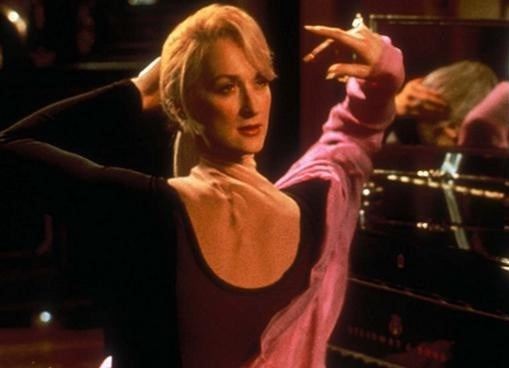
How I picture Meryl Streep. 😉 One of my favorite movies of the early ’90’s, “Death Becomes Her.” (1992)
old papyrus scroll isolated on white background 3d render

I think we are evolving just as we have evolved from using papyrus scrolls and just like we have moved from typewriters to PC’s. I found it interesting that according to our text, Project Gutenberg, the oldest digital library existed three years before the Internet went live.(Ch. 3.6, Digitizing Libraries) Did they already anticipate what is happening now?  Overall, I am split on whether digitizing libraries is the best route to take.  I think that I will find myself looking to the internet for the answers to my questions and the research to support them.  Do you see yourself going to the library to access information for research or are you more comfortable using a digital library?

INTRO!

Hi, my name is Kendra and I am happy to be taking this course! I am a transfer student in the Communications major. I am interested in learning and specializing in Graphic and Interaction Design and User Experience. I live locally in New York, but I have lived in several other states and when I was younger, I lived in a couple of other countries. I think the way we communicate has changed so rapidly in the past ten years. I am interested in studying how these changes will impact us as a society.

This is my lovely dog, Athena. She enjoys helping with projects, chasing chipmunks, chasing the cat, lounging in her yard, and hugs and attention.