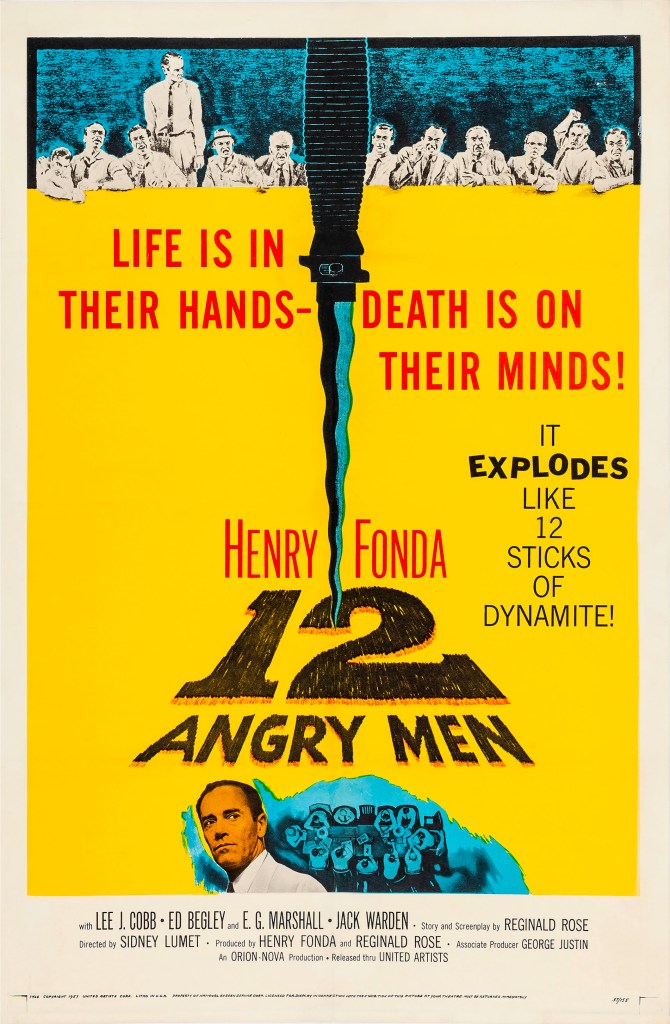
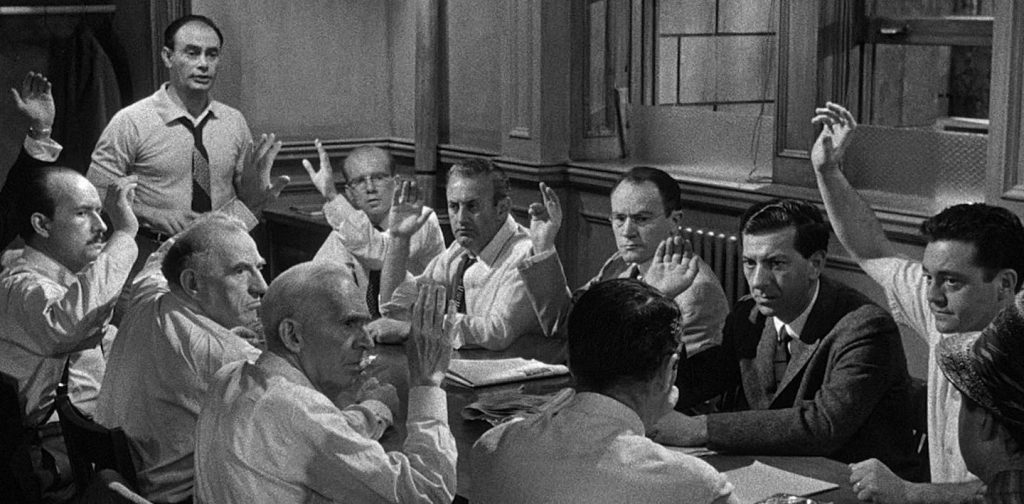
The movie, 12 Angry Men was a great example of the term, “Groupthink” and how it can play out. At first, the jurors were quick to base their vote of guilty on faulty ways of thinking. Several already had preconceived notions and prejudices against the person in question. Many had their own motives outside of justice for wanting to vote guilty. They had shown complete disregard for a man’s life for their own selfish reasons. A couple of the men would rather get it over with so they can get back to their lives. They did not view the accused as a person that was equal and deserved to have their case thoroughly examined or even entertained. Their inability and refusal to think of all of the possibilities in the case could have cost an innocent man his life.
Some of the jurors felt indifferent and had lazy reasons for their verdicts. They had what is called herd mentality, influenced by their peers and just going along with what everyone else thinks. They had to be coaxed to even think for themselves. When the group is slowly starts to see that they do not have proper evidence to convict the man, they end up voting not guilty. The final juror takes a little convincing and it seems that he is the hardest one due to prejudice and pre-conceived notions involving the upbringing of the accused. This movie to me is about ethics and conveys that sometimes you have to go against others to get to the root of an issue and do what is right. If the juror had not had the courage to go against the group, they could have sent an innocent man to the electric chair!
Looking back over the semester, I am thankful for the opportunity to blog. I think it is an excellent way to analyze the readings and materials that we were assigned and it helped to provide a safe space in which to get creative and explore different ways of writing. I also enjoyed having several different ways in which to learn, ie. Readings, watching you-tube clips, movies, listening to podcasts, websites, etc. I was able to see just how many various forms of media are woven into our everyday lives. Being an older student, it was nice to take a look back a little and see where we are and how far we have come. This was a great class because it introduced us to the many different types of media and gave us some of the background and history on various forms of media. I really enjoyed working on my essay and diving a little deeper into early Hollywood. I think that was one of my favorite chapters. I also found Gerbner’s theories interesting about how violence in the media shapes our thoughts and perceptions over time. I have felt that the media we see every day has generally become more violent recently. I never understood why it is okay to show extreme violence in everyday culture, but when it comes to showing the body, that is deemed inappropriate. I think after taking this class I will be even more mindful of the media I consume, but now I have a little bit of the background to make more informative decisions. Thank you for a great semester and class!
Fans, short for fanatic sometimes seek out other fans in person and participate in meet up groups and themed parties. Fans sometimes attend conventions and dress up on cosplay to show their appreciation for their favorite character. (Fandom pdf. Canvas) Fans sometimes identify with characters, for example “trekkies” or Star Trek fans. There are different forms and levels of Fandom (Fandom, pdf. Canvas) :
Mild: Fan clubs, autograph seeking, creating art, writing fiction or prose, making videos, etc.
Active: Seeking other fans in person – more than simple acknowledgement, participate in meet up groups, themed parties, attending conventions, renting out hotels. Through this, social integrative needs are fed.
Pro-Active: Engage with producers, showrunners, actors – participate in active creation of show – determine storylines, bring back shows from cancellation. (Fandom pdf. Canvas)
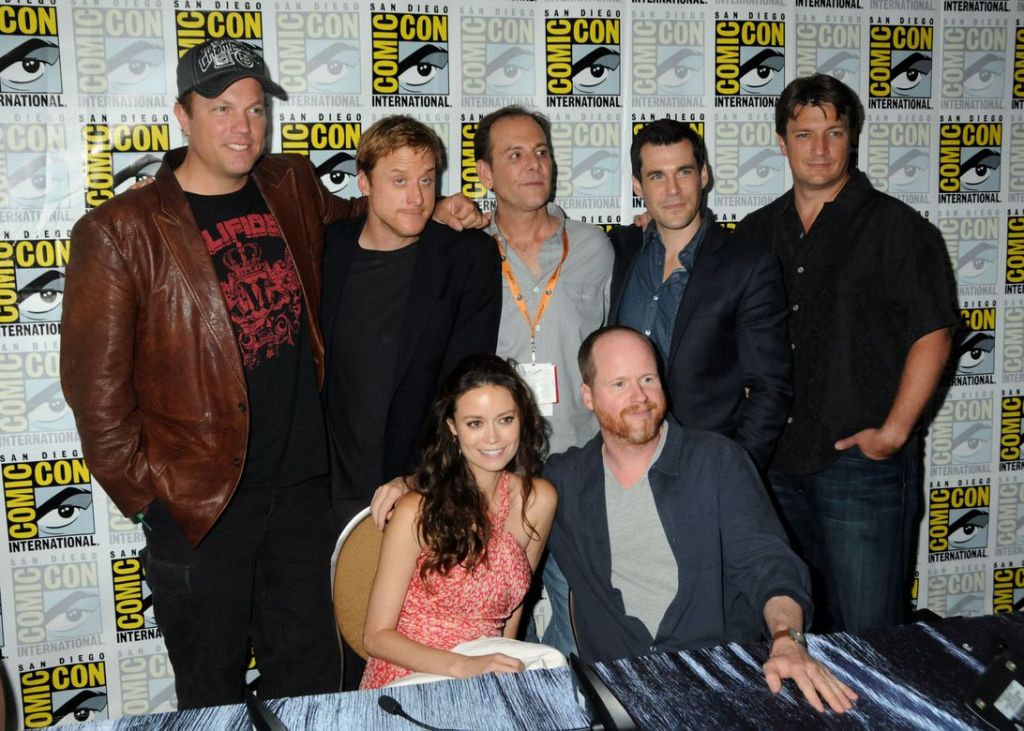
This made me think of the show, Firefly which wrongfully got cancelled on Fox and fans wrote and tried everything to bring it back, resulting in the movie, Serenity
In Henry Jenkin’s On Participatory Culture, he says in a folk culture, which he compares fandom to, media is used to share with others. Participants learn from each other and share their knowledge for something they are passionate about, such as a craft or a movie, or a book. Fans write stories to one another in the form of video blogs, pictures, and other forms of media. He poses the question: What if we could get fans to geek out for democracy and society the same way they geek out over a movie or story, like Harry Potter for instance.
“How do we grow from participating in our culture to participating in our civic structures?”
-Henry Jenkins
What does it mean to be as passionate about society as you are about anime, games, and other forms of pop culture? He references The Harry Potter Alliance who organizes around human rights issues, founded on the premise of good vs. evil. They are Dumbledore’s army – 100,000 young people who mobilized and work on a wide range of human rights issues. These kids who were involved in fandom found a vehicle to think politically. They found a way for them to be themselves; citizens in a new way.
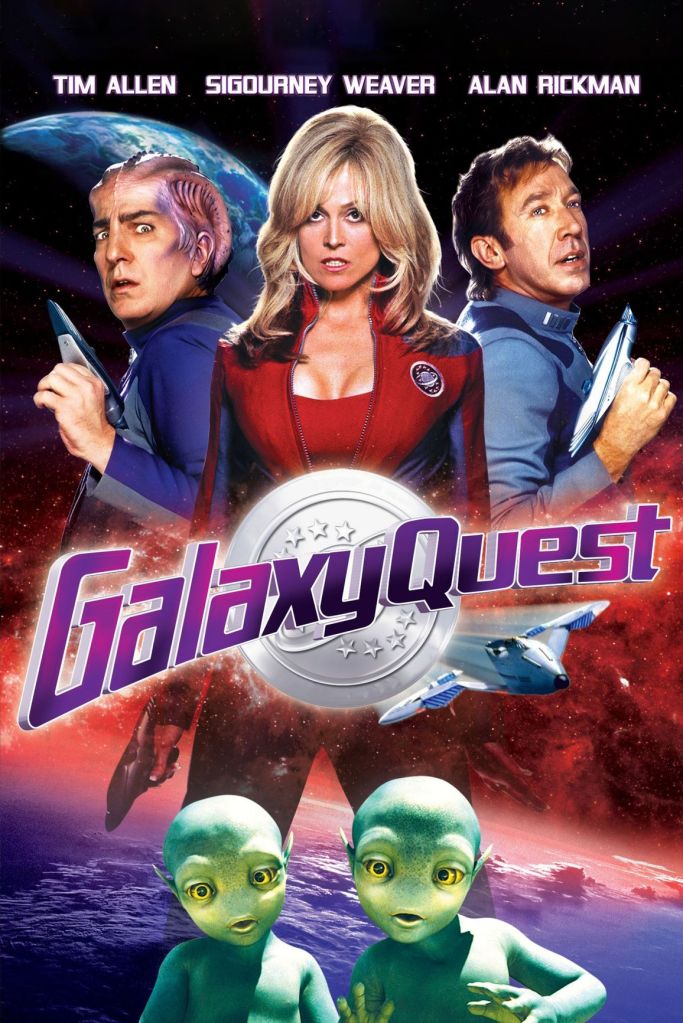
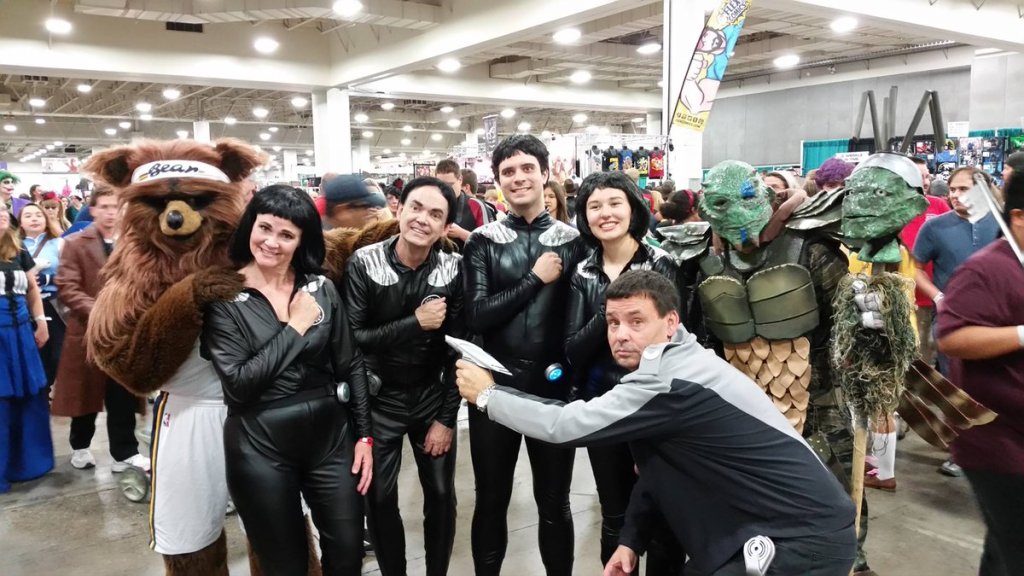
Another great example and display of fandom culture is the fans who are really the center of the movie Galaxy Quest. This is one of my favorite movies because it has a bit of everything in it. In Never Surrender: A Galaxy Quest Documentary, they showed how the fans are what made the movie real and mirrored that fandom in real life. They showed a convention for the Galaxy Quest movie and the fans who were dressed up in cosplay. I just thought this was such a fun way to appreciate the movie!
In 1999, when Galaxy Quest was released this movie portrayed a different tone and feel compared to the usual action-filled sci-fi film. In the documentary, they said that Dreamworks felt it was important for the film to have good special effects and costumes. In my opinion, the effects still hold up. The fact that they mimic the sci-fi show, Star Trek is an added bonus and adds an extra element, keeping it light and fun but also with a little bit of drama and set in the atmosphere of space. The fans that were interviewed said that they really wouldn’t change any aspects of the movie and they thought that Tim Allen was perfect for the role of captain. I think that Galaxy Quest is a feel good movie that incorporates a little fun, sarcasm, drama, adventure, and some life lessons. I guess I’m a fan.
Fans at a Galaxy Quest convention
Question: What is your favorite movie to “geek” out over?
Works Cited:
Fandom pdf. Canvas
You-Tube, 2013. Henry Jenkins on Participatory Culture
Amazon, Never Surrender: A Galaxy Quest Documentary
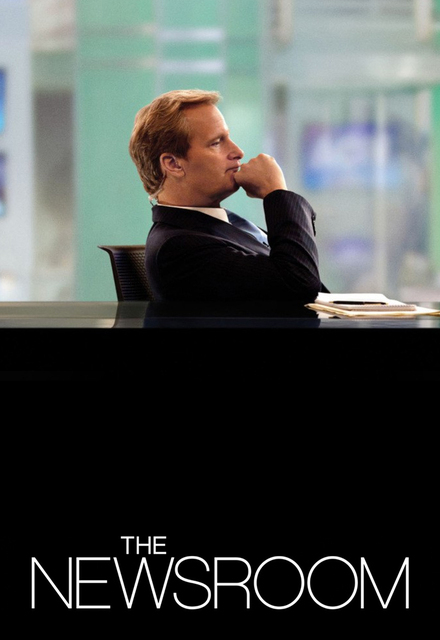
The pilot of The Newsroom highlighted some very present viewpoints surrounding newscasters and journalism. Will McAvoy publicly expresses his discontent with the way society and America currently is in his opening speech that he reluctantly makes. He remembers a time when we weren’t afraid to report the news and when we paid attention when the news came on and that reporters took pride in their reporting. We believed the news anchor because we didn’t have to worry about “fake news.”
As the episode unfolds it becomes clear that Will has not been a great boss to his employees because most of them are prepared to leave and go work for another news station. After giving his big speech he goes on vacation and there are changes within the office, including his old flame who has returned and is now taking the role of his Executive Producer. Will seems to me like a tough person who grew bitter over the years maybe because he still has feelings for Mackenzie. I think the speech he gave and when he said, “America is not the greatest country” that he was speaking the truth and from the heart. That maybe things aren’t as great as they used to be and that there was a time when we took pride in what we did as a country (in his case reporting the news). The entire episode focused on his effect on those around him and we caught a glimpse of a man who used to inspire and a crew who used to believe in him but grew tired of being treated poorly. I am thinking that when Mackenzie left, that things went downhill. She seems to balance him out and guide him into being the person that people look up to and a version of himself that he is proud of. This episode was meant to show us ‘how far we have fallen’ and to helps us to remember that fast and convenient is not always better.
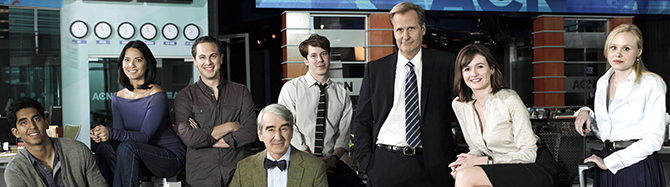
The Newsroom crew
As stated in our book, Understanding Media, ‘the internet has generally replaced TV and Radio as the source of immediate information. Live streams, blogs, and Twitter as well as other outlets make sure that news circulates within minutes of occurrence. With this continuous cycle of news, I wonder how and if we actually follow up on what is being reported to see what unfolds? There is no one to filter it and interpret if it is actually “news-worthy.” I do think that we have to be conscious news and media consumers and do our own research, but I also think that there are so many “headlines” that our heads are spinning!
Newspapers, television, and radio are struggling to compete with free access to immediate coverage. “Newsrooms are asking their staffs to focus on producing first accounts more quickly in order to feed multiple platforms,” (Understanding Media) which means more resources are spent distributing it rather than gathering information. This means that some stories may get reported on excessively; other stories go unnoticed while facts go unchecked. Journalist Patricia Sullivan states, “Right now almost no online news sites invest in original, in-depth and scrupulously edited news-reporting.” (Understanding Media) In order to investigate stories, it takes time and research. How can we be certain we are getting the full story if we expect the full report right away? I appreciated the way the team in The Newsroom worked together to get their information from several sources and checked to make certain they were credible before reporting.
Question: What online apps do you use to get your news? When was the last time you watched the news on television?
Works Cited:
HBO, The Newsroom: We Just decided To
Understanding Media and Culture: An Introduction to Mass Media, Chapter 14 Ethics of Mass Media
The 1920’s to 1950’s were an exciting time for the film industry. Many famous actresses and early pioneers of film graced the screens during this time. However, for African Americans and persons of color, Old Hollywood was a different experience laden with racism, discrimination, and misrepresentation to the public. This lack of representation, along with a reliance upon stereotypes, contributed to underlying racial messaging that has helped shape a culture in film and television which disregards everyday life experiences of the African American (and other persons of color). Many talented actresses at the time were forced to play roles such as the “mammy” and hypersexualized provocateur that misrepresented them and brought shame to their race. These portrayals through film and cinema have helped to shape and solidify the images of public perception (although these images have changed over the years and representation has improved in recent years). The concept of identity, and how a person presents themselves to make a living, is not only an issue that has historically hindered Black actors and actresses, but everyday Black Americans as well. (How the Camera Sees Color) The beginnings of Hollywood filmmaking were neither kind nor truly representational for minorities.
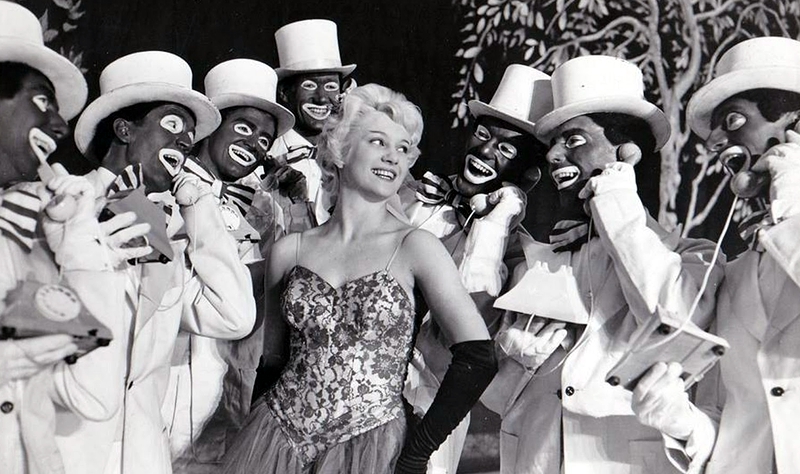
Minstruel shows, racially offensive and used Blackface.
Colorism and racism plagued early Hollywood, from silent films to minstrel shows, to segregation on set and has long influenced opportunities available to African Americans in the film industry. Colorism is defined by the National Museum of African American History and Culture as the discrimination against individuals based on their skin tone. In response to this discrimination, historically, African Americans often found alternate ways to present themselves when starring in films. Some actors moved outside the mainstream film industry while others played into stereotypes. The effects of colorism have proven to be damaging to the identity of Black Americans by leading to internalized oppression in the Black community. (On Dark Girls) http://static.oprah.com/pdf/dark-girls.pdf
When African Americans were cast, lighter skinned actors obtained the more prominent roles. Roles for darker skinned actors and actresses amplified racist stereotypes, such as the role of the “mammy.” This put many lighter and darker skinned African Americans into a situation where many felt as though they could not simply be Black without being categorized. This caused many lighter skinned African Americans to make attempts at passing for White in public settings in order to compete for more opportunities, which led to increased tensions in the Black community. (How Camera Sees Color) Some actresses felt it necessary to pass for White and many African Americans turned to other means of altering their skin tone. Even lighter-skinned actresses and actors would have their makeup done in a way to make them appear even lighter. Frequently, advertisements would make actors and actresses not only appear light-skinned, but almost white. Many young children and teenagers of darker complexion began to think that it was “bad” or “evil” to have dark skin and so much that some used harmful chemicals to lighten their skin. These actions have proven to have serious implications on many levels.
D.W. Griffith’s Birth of a Nation galvanized African American writers, thinkers, and filmmakers. The film, a box office record-breaker, is also hugely racist, a Civil War story that casts African-Americans as rapists and the Ku Klux Klan as heroes. It was widely protested by African American audiences. (Early African American Film)
As White and light skinned actors and actresses became the stars of most Hollywood films in the early 1900’s, darker skinned individuals had few opportunities for performing on screen. When they did have an opportunity, it was primarily to play on racist stereotypes and assumptions about Black people. Many Black actors and actresses, whether they wanted to or not, were subjected to skin appearance alterations including blackface. Blackface is the use of makeup to exaggerate skin tone and facial features and was used in the entertainment industry to present a stereotypical and racist image. (How the Camera Sees Color) Soon African Americans audiences grew tired of seeing themselves portrayed in such stereotypical and racist ways and decided to take matters into their own hands. Between the 1910’s and 1950’s, African American movie theaters grew in popularity by featuring race movies. Race movies portrayed Black actors and actresses in a way that Black viewers could relate to. These films were produced as part of the African American ‘uplift movement’ and were designed with African American audiences in mind. (Early African American Film) In a popular film, Micheaux’s Within Our Gates rather than casting African Americans as “pickaninnies” the characters are “deeply engaged in the political and intellectual life of the day, debating racial uplift and waging philanthropic campaigns even as they wrestle with the romantic torments typical of melodramas of the period.” (Early African American Film) While hundreds of race films were produced in the early 20th century, they were excluded from the mainstream. Although African Americans responded in creative and resourceful ways to discrimination during this period, colorism in Hollywood remains a pressing issue well into the 21st century.
Oscar Micheaux’s 1919 film, Within Our Gates, is one of the few examples of a race film that garnered some attention – and and audience- from the White press. (Early African American Film)
The historic absence of African American actors and actresses in leading roles has been evident throughout the history of Hollywood films. As Black women struggled with areas of Otherness in order to emerge as Hollywood actresses in their own right, mainstream cinema erased, marginalized, and devalued them denying them their cinematic voice and reducing them to “the body.” In addition, many Black actresses’ contributions have been minimized or completely erased in the Hollywood histories of cinema. If a role were obtained, it was frequently positioned as the “shadow” for leading White female actresses of the time. In many films prior to the 1960’s, the Black actress’s main function was to illuminate the virtue, beauty, morality, sexuality, sophistication, and other qualities embedded in the “whiteness of the female character.” (The Struggle for Visibility..) If she were of mixed race, (which many were) the Black actress was the “dark” self and usually reflected negatively on the White female actress. In addition, the Black actress was typically cast in a minor role and usually played the maid/subservient, mammy, matriarch, or hypersexualized woman who was a shadow in the background of the film. In playing the shadow to the leading White character, she contrasted with what was considered correct, upstanding, or morally befitting. It was rare that the Black actress could expect to be viewed or judged based on her acting talent. The industry always identified her based on her race and sexuality. In addition, Black actresses had to be prepared for segregated practices on the studio lot and for accommodations inferior to her White associates. Segregated seating in public transportation, public facilities, and restaurants, as well as pay inequities made the Black actress’s experience in the Hollywood industry difficult.
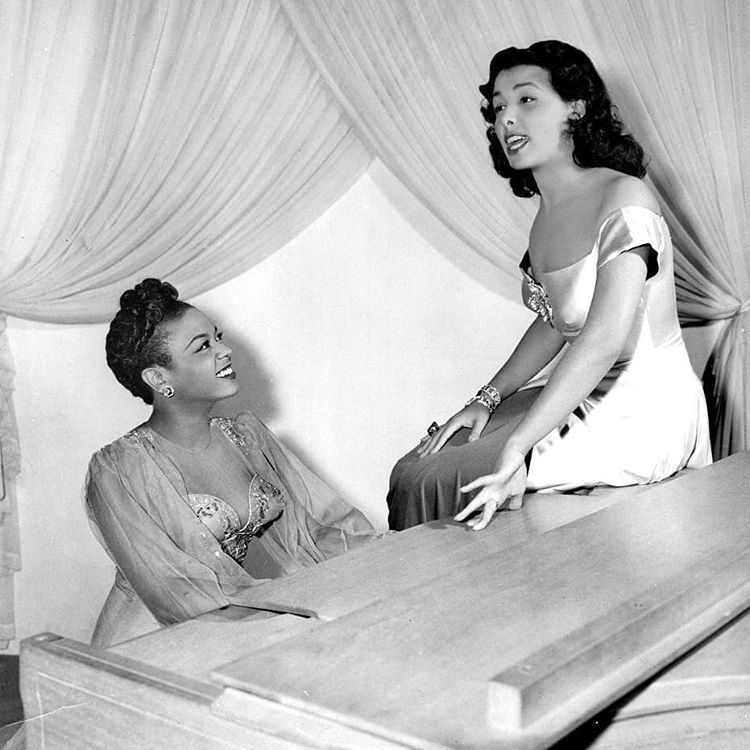
1940’s, Lena Horne and Hazel Scott
By the end of the 1920’s, the best-known Black actress working in Hollywood films was Nina Mae McKinney. The 1930’s introduced many new White screen actresses, most notably Bette Davis, Joan Crawford, Shirley Temple, Ginger Rogers, Katherine Hepburn, Jean Harlow, Mae West, and Loretta Young. Black actresses began to gain prominence as the screen companion, or shadow of these actresses. They included Louise Beavers, Hattie McDaniel, and Fredi Washington. With the beginning of the 1940’s, White actresses such as Jane Russell, Lana Turner, Lauren Bacall, Rita Hayworth, and Judy Garland began to gain prominence. (The Struggle for Visibility) Only a few Black actresses such as Lena Horne, Hazel Scott, and Ethel Waters were able to come close to the sort of fame these actresses had. The complications of racial identities with the roles they were asked to play on screen manifested in controversies within the Black community and the Black press. There were not solely the issues of “passing,” but also the issues of how a Black actress’s on-screen roles reflected on the entire Black community. The controversy ranged from actresses such as Hattie McDaniel who was accused of actually “being” the “mammy” figure she represented on screen to Dorothy Dandridge whom many had assumed internalized the role they played on screen. Lena Horne and Hazel Scott were able to negotiate lucrative contracts with major Hollywood studios that excluded them from playing roles that Blacks considered demeaning to the race. Beautiful, talented, well-spoken, and with an air of confidence and pride, Horne and Scott did not fit the image of Blacks that southern Whites preferred at the time. Scott was an activist who revealed the complexities and magnitude of issues that centered on Black actresses, which spilled over into the society at large. These issues were debated in the Black press, the Black community, in Hollywood, and in American society at large during that era. As African Americans struggle for more representation in media and film, we can look back at the early pioneers who fought for so much more than just a starring role.
The early 20th century was indeed an exciting time for Hollywood and film, but the African American actress had a more complicated role to fill. Not only did she have to grapple with playing the role without belittling herself or bringing shame on her community, but she also faced issues of colorism, racism, and discrimination. Working on set included navigating segregation issues and playing the shadow to more prominent White actresses at the time. The early film industry distorted the image of the African American female for its own personal gain and assisted in shaping and cultivating racist points of views in culture, film, and early cinema.
What kind of media messages are shaping our perception of the world? In the documentary, Mean World Syndrome, George Gerbner PhD, University of Pennsylvania spent his life studying how violence on television affects us. He found that over time, exposure to media violence had more complicating effects and looked at the effects of these images have on us over time. He noted that violence has become more prominent on mainstream television and during prime times. Not only this, but the type of violence that is shown has become more graphic and has increased, exposing us to more violent images many times during a day. In addition, the portrayal of violence has become so much a part of the normal viewing experience and that this is woven into our overall perception of the world and manifests itself in the form of fear and anger. Scenes of torture, extreme violence, the act of murder, and even humor surrounding violence have been more prominent in recent media. There is a casual tone that is conveyed through murder and torture scenes. When in the past, these scenes brought about a sense of shock and horror, they are now simply part of everyday television. I am not certain why we need such harsh displays of violence. Violence has always been embedded in our culture, but why the sudden increase and normalcy? As Gerbner said,
“Commercial media has eclipsed religion, art, and oral traditions as the great story telling engine of our time.”
There is more to our culture than violence. Fear, hate, and anger should not be the driving narrative of our time. Gerbner’s studies found that it is not simply the quantity of violent messages that we receive, but the quality. How all of these images add up to tell a story and the overall meaning has the greater effect on our society. Studies have shown that the amount of violence in media has caused an increase in violent behavior in children and is sowing seeds for various mental health disorders. In Gerbner’s studies, he debunked the Magic Bullet Theory, which is the assumption that the media content acts on us directly, leaving our minds changed. He said it is more cultivation – the violent media images help shape our minds over a period of time. The concept of “Mean World Syndrome” refers to heavy viewers of violence living in a meaner world. Seeing these images over a period of time cultivates an overall perception of mayhem, violence, disease, threats of war, visions of end times, and danger lurking everywhere. This creates the image of the world being an unsafe, vile, lawless, and mean which increases fear and anxiety.
The nightly news has contributed to the rhetoric of predators on the loose and fear of victimization. People think that violent crime is more prominent than it is, even though certain studies show that crime rates are decreasing. All this fear and anxiety and the “need to protect what is ours” mentality has led to an increase in concealed weapons carrying. Gun sales and businesses are booming across the country. Why is this happening? Most Americans get most of their news from television. Unfortunately, the news does not portray a true and varying depiction of certain ethnic groups. If you do not do your research and only listen to one narrative, you only ever get one side of the story. For example, Hispanics are often portrayed as being violent on TV. Latinas are always mentioned in the context of a single issue: illegal immigration. The media focuses on this topic and does not give attention to regular, decent, law-abiding citizens. Crime is lower in areas (mainly cities) where a lot of Latinas live. There is only one-sided representation, and the media is controlled by a small number of huge conglomerates. African Americans are often shown as either extraordinarily successful or to have committed crimes. This conveys the notion that African American Civil Rights have been addressed and there is no problem anymore. There is no representation for anyone in-between and when someone does “step out of line” media depicts them as ungrateful.
The culture of fear spreads to politics, raising the level of insecurity so that voting populations are more likely to demand protection. They are then more likely to want to hear politicians who convey that they are “tough on crime.” Even if crime rates are low, messages of fear seem to speak louder. We need to begin the work of cultivating a more just and broad-based media to reverse mixed messages of hate and fear in order to prevent us from becoming a mean, hardened, and uncompassionate society.
Question: How has limited media context helped shape your personal narrative? What assumptions are made about you or something important to you based on media messaging?
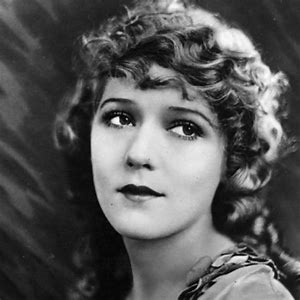
Why Be Good highlighted the 1920’s during a period when people were coming out of the Victorian era and people were introduced to film and cinema and began to wonder, ‘what is appropriate?’ It was a time of social, military, and artistic advancement. At the time, many churches frowned on theatricals as being worldly. Women actresses like Mary Pickford offered a fresh, honest approach to acting. She was a nude actress but did not do anything she did not feel like doing. She was also the most beloved female movie star and for a time, the most powerful woman in Hollywood. She wielded great influence on the studios and her audiences. Women would see the elaborate outfits she was wearing, and she became a fashion symbol.
Mary Pickford, 1920’s
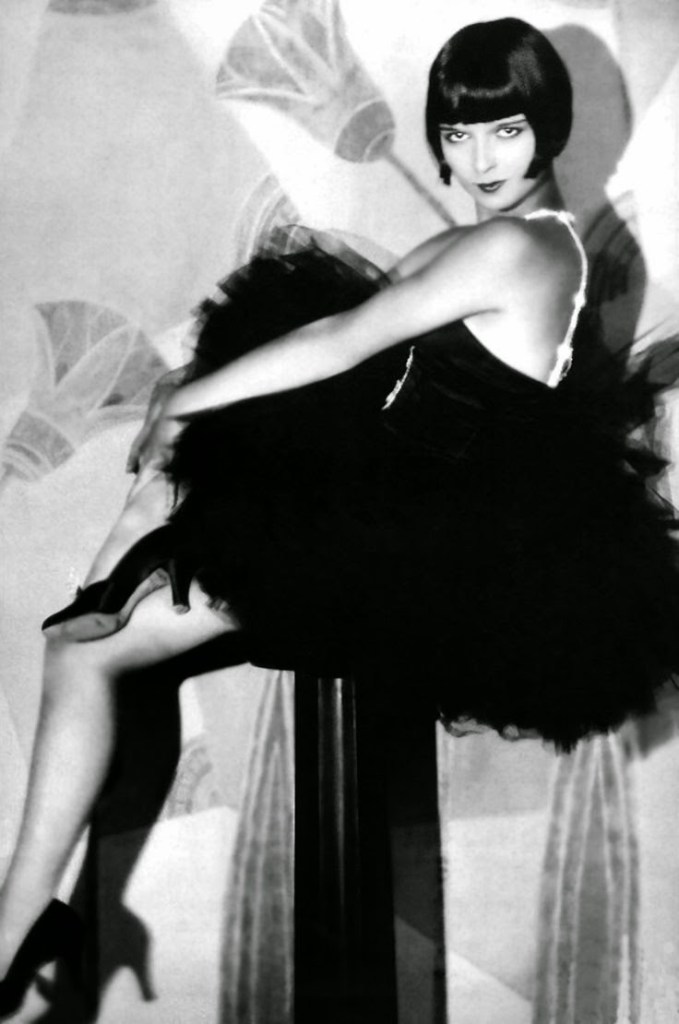
It was the era of the flapper, a whole new revolution for women. It was considered art to see a women nude. Actresses like Clara Bow and Louise Brooks helped usher us out of the Victorian Era and for the first time, viewers were seeing emotions and sexuality on film. Soon, the studio conglomerates began to realize the effect these actors had on the public and their persona. The artists were living in a time when sexuality was being revolutionized and filmmakers were testing out the boundaries of film by portraying women nude and in a more natural. It was a time of celebration and though women were being celebrated on screen, the studios expected them to maintain a “clean persona” off screen and above all else to stay out of the papers.
Louise Brooks
Eventually, the studios would try to constrict what the actors/actresses did on their own time because they did not want a scandal in the newspapers. Anything goes on screen they said. The studios were fine if the actor/actresses were bringing in the money. This seemed like the studios owned the actresses and some of them rebelled. Mary Pickford, along with Douglas Fairbanks, Gloria Swanson formed the United Artists, or UA to have total creative and financial control over their movies. In 1934, the Production Code Administration was established and required films to obtain approval before released.
“A filmmaker does not want censorship. A filmmaker wants to be free to tell a certain kind of story and to make the films they want to make.” – from Why Be Good
Within a span of 35 years, rapid change of what is created on screen, censorship, and what is viewed on screen transformed. In 1968, the film industry set up a censoring rating system, categorized by the Ratings Board. Basically, a bunch of people whose identities are unknown who decide what is morally ethical and what is not and therefore should be censored. It was total genius that in This Film Is Not Yet Rated Kirby Dick, Filmmaker and Interviewer hired a Private Investigator to find out who the members of the Ratings Board were. Jack Valenti oversaw the board until Dan Glickman took over in 2005. Most of the members were married and parents and were trying to assign ratings to films that they considered unsuitable or that have nudity and violence. They most harshly rated being nudity. Violence seems to not be a real issue to them. Who gives THEM the right to determine what we can or cannot watch?
The ratings include:
NC – 17 – No children 17 or under
R – Restricted, no children under 12
PG-13 – Parents are strongly cautioned
PG – Parental Guidance suggested
G – General Audiences
The problem I have with the Rating system and the Board Members is like Kimberly Pierce, Director of “Boys Don’t Cry” verbalized, who gives them the right to decide what is morally right?” Adding to that, to prevent a filmmaker from being able to market their own film without constraints? Personally, I feel like violence should be more censored than sexuality. The ratings board should not be a private organization, it should be public, and they should only serve for a period of time. I think that people should have the right to decide for themselves and artists should have more freedom to create their movies.
Question: Do you think that the current movie ratings system is working? What do you like about it or what would you change?
According to the article, Structure of New Hollywood…
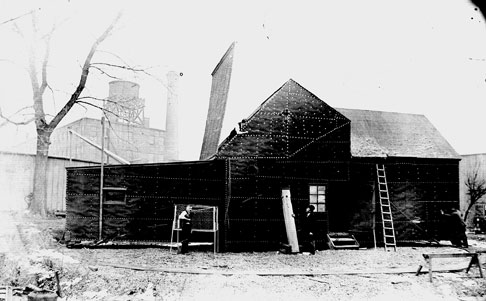
Black Maria, Thomas Edison.
From the 1920s through the 1940s, the “studio system” referred both to a factory-based mode of film production and also, crucially, to the vertical integration of production, distribution, and exhibition. The movie industry consisted of the “Big Eight studios,” whose filmmaking factories in Hollywood fed their nationwide distribution operations.
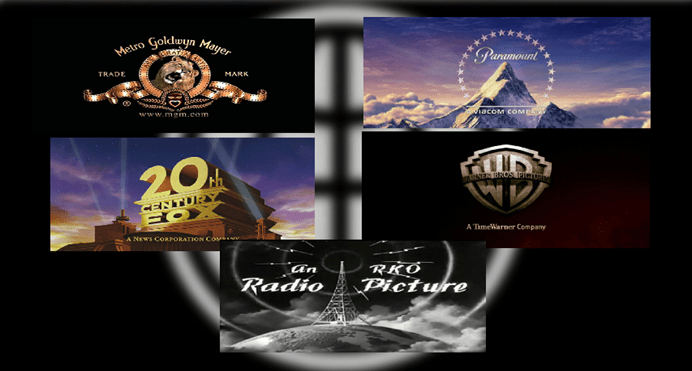
The most powerful of these firms were the fully integrated Big Five studios – MGM, Warner Bros., 20th Century Fox, Paramount, and RKO. They produced and distributed films and operated their own theater chains. The Little Three “major minor” studios – Universal, Columbia, and United Artists (UA) produced and distributed top feature films but did not own their own theaters. (Schatz. Structure..) In the You-Tube video, Film History: Rise of the Studio System, they said the only true system that was emulated around the world was the Hollywood “Classical System.” Through Hollywood’s easy to mimic comprehensive editing style, as well as its exploitation of the “Star System,” the American Studio System rose to complete power which ushered us into what we now call, “The Golden Age of Hollywood.”
The “Big Five” studios
Before the Golden Age, Independents notably Adolph Zukor, paved the way for the “Star System.” Independents began producing road shows and foreign films. Zukor gained complete control over production distribution and exhibition of films. He fully took advantage of an industrialized factory system of production. He was the first to appeal to Wall Street for financial backing attracting investors. He would gain enough capital to vertically integrate his business. He then purchased theaters and exhibition venues across the nation. Zukor looked overseas for profits and lobbied for open international markets. He was not only business savvy, but he had a deep understanding of the public. He focused the public’s attention on the “stars” influencing the idolization of them.
“Zukor’s mastery of the business of film, his political support, and his perfection of the Hollywood “Star System” ultimately explain why he became one of the most defining figures in early cinema.”
-Matthew Fielder, Film History: Rise of The Studio System
United Artists (UA)
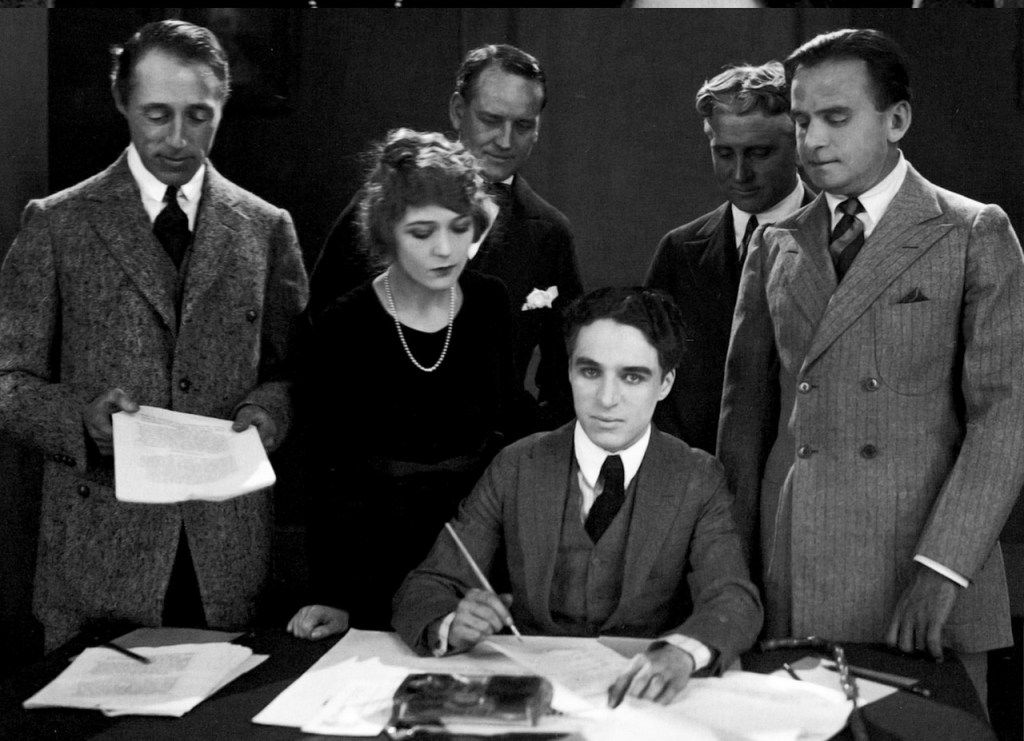
After WWI, we severed a unified European Union and some of the stars began to rebel. In 1919, Charlie Chaplan, Douglas Fairbanks, and Mary Pickford, and D.W. Griffith established “United Artists,” a studio who declared independence from the “Independents.” They eventually ended up having to comply with the studio system since it could not keep up with the rate of production of the capital rich studios.
Economic competitors, the Soviets, sought to define their own style of cinema against the American way. Russian acting theorist, Constantin Stanislavski formulated the influential method, where actors internalize their performances, focusing on motivations and objectives. The Soviets also developed the theory of montage. In a series of experiments, Lev Kuleshov illustrated that the meaning of a montage sequence is not determined by the content of the elements of the montage, but by their juxtaposition.
Battleship Potemkin is said to be one of the best films ever made.
“Battleship Potemkin,” a Russian Film by Sergei Eisenstein is regarded as one of the best films of all time. It dramatizes the crew and its rebellion against its Czarist officers. The film employs every experiment of montage theory to render an emotional response from the viewer. The film is considered violent by even today’s standard and the sequence highlights the massacre of the Bolsheviks under the oppressive Czarist soldiers. The film not only influenced political leaders and propogandists, it influenced the work of famous filmmakers, such as Coppola in “The Godfather” and DePalma in “The Untouchables.”
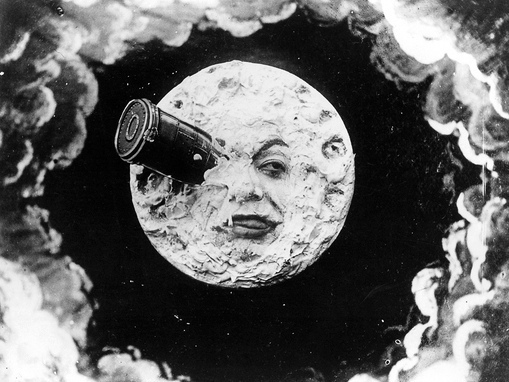
Georges Méliès’s Trip to the Moon was one of the first films to incorporate fantasy elements and to use “trick” filming techniques, both of which heavily influenced future filmmakers.
In 1948, the Paramount decree resulted in the U.S. government ordering the “Big 5” to sell their theatre chains. This leveled the playing field and opened the flood gates for anyone to make a movie.
Questions: Do you think that the “Big 5” should have been made to sell their filmmaking factories? If they were able to keep them, what effect do you think this would have on the current filmmaking industry?
Works Cited:
Schatz, Tom. Structure of New Hollywood, pp. 13-29
M Libraries. Understanding Media and Culture, ch. 8
Mark Zuckerberg had a vision of connecting the whole world. I believe that he had a genuine naïve desire to bring people closer together when we started Facebook. He wanted to make the world a better place. Facebook has over 2 billion users every month and has brought about historic change in politics and privacy. In the Frontline documentary, The Facebook Dilemma Part 1, Tim Sparapai, Facebook Director of Public Police 2009-2011 says that Facebook is the “greatest experiment in free speech in human history.” Everyone focused on the newsfeed, which is like everyone’s personalized newspaper, but it is driven by algorithms in order to produce content that you most want to see.
In addition, the creation of the “Like” button in 2009 was designed to “keep you scrolling” while collecting vast amounts of personal data. Solero Cuero, Facebook Product Designer 2005-2011 describes the Like button like a “flywheel of engagement.” It allowed them to understand people and businesses that are important to the people. But existing laws did not hold internet companies liable for content being posted on the sites. Facebook allowed people to speak openly; but no violence, nudity, or hateful speech. According to the documentary, a few Facebook employees began to sound the alarm that they were hearing warnings from government officials, activists, and others after Arab Spring that there could be serious unintended consequences by not investing in enough research of the negative consequences of social media and contributing to the spread of misinformation. At the time, in the mid 2000’s, there were not staff who understood the complexities enough to police the content. That consisted of a room full of 20 something year old employees making judgement calls because they were trying to keep costs down.
Sheryl Sandberg was hired on in 2008 and began to experiment more with commercial data and new ways to collect personal data. Third party companies buy out data about the consumer and collect data from the rest of our lives. Facebook profiles us like a surveillance machine and a tool for advertisers. Initially, Facebook did not make it clear to consumers the extent of personal data that was shared. Essentially anyone could gain access. Facebook then settled with the FDC. At the time, Senior Executives were not concerned about vulnerabilities; they were concerned about revenue and growth. Zuckerberg continued to view Facebook as not part of the problem, but part of the solution. Facebook and social media have revolutionized branding and online marketing. If you want people to know who you are and put up a profile picture and start posting. This becomes part of the identity that you show to the world. The culture of Likes, Follows, Friends, and Retweets are what sells and in the world of social media, the more Likes you have the wealthier you are. Money isn’t the only currency though. Fame is a common goal with perks like advertisement deals with companies and free merchandise from corporate sponsors.
The Hunger Games
In the documentary, Generation Like, they interviewed a girl named Kailey who is The Hunger Games top fan. She is considered the top fan because she retweets, generating a buzz about the movie and encourages more revenue. Since Kailey is a top fan she can speak directly to the actors and actresses which gets her noticed by her peers and more likes and retweets. This acts as a source of empowerment, which is a term used by a lot of younger kids when referring to social media. Kailey will work for likes and as a consumer is doing the work of the Marketer, promoting content between tv and social media. There is a comparison to the Hunger Games – that the Game of Likes is like being out there alone trying to live and survive. Kids end up taking the very marketing techniques that are used on them and use them on others. These marketing agencies like TVGLA, a social media marketing agency examine their audience to see how we are using social media. Using this data, they then determine how to use the audience to sell the product. Their motive is to seem open and transparent, creating openness and trust and employing engagement strategies. In the documentary, Generation Like, the marketing strategy is compared to creating a small brush fire, using tidbits as fuel and keeping the flames burning. Part of the marketing campaign itself involves “Likes” and every bit of the information is being manipulated.
Question: Do you feel like kids are being manipulated? Do YOU feel manipulated or do you feel that Likes are empowering?
In the documentary, Digital Nation they talked about the dumbing down of the world through perceived multi-tasking. How many of you think that you are great at multi-tasking? I like to consider myself good at it and I strive to be better and better, like it is the ultimate goal in life; a true measurement of being productive. But what if it isn’t? I certainly feel as though there has been an increase in how many different devices you are supposed to be using in order to complete your goals for the day. When did this all start? I do admit that I would feel like I wasn’t accomplishing what I needed to without the help of technology. The measuring, the data, the reminders…they all help me to feel a sense of accomplishment.
Watching Digital Nation made me feel that my tech usage day to day is NOTHING compared to what is developing. I, at least had the gradual incline towards media consumption. What scares me is that kids are being taught at such a young age how to multitask using various forms of media. Like they are little adults! In the doc it said that kids spend 50 hours per week on digital media! Their little brains are not fully developed enough and this type of stimulation will have an effect on their brains for the rest of their lives. I have nothing against teaching technology, but technology has changed so rapidly that I worry that we aren’t using it in moderation which can be harmful to our health. Digital Nation referenced the problem of gaming addiction in South Korea, as well as the U.S.
PC Bang – Seoul, Korea
PC Cafes are a large part of Korean culture. 90% of Korean children use internet in their daily lives. Korean kids are taught in elementary school to go online the same time they learn how to read in second grade. One of the professors stated that “we need to meet kids where they are. The world will require them to build, do, and to create. Kids will need to be fluent in technology, have excellent communication skills, and be good problem solvers.” I do agree with this to an extent. If we are not preparing them to succeed in the world in which they are living then I feel, we are doing them a disservice. Students will need a different skillset than what was required previously. Since technology is rapidly evolving, schools need to be technologically capable of meeting students where they are. I don’t think schools are ready. All children will need access to technology. I liked that the Principal provided the students with laptops and then monitored them. I feel that laptops should be provided just as books would be.
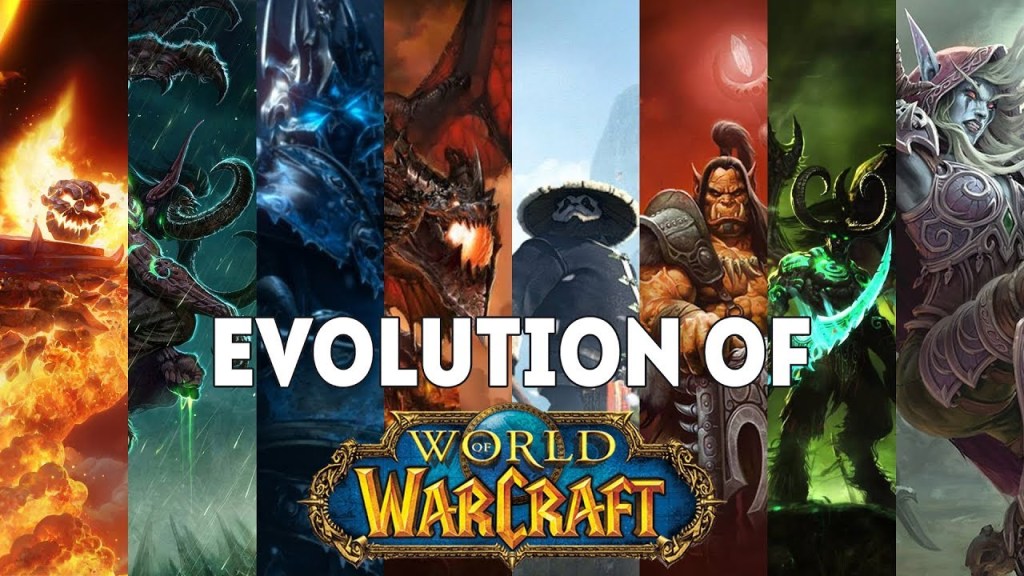
Professor Clifford Nass of Stanford said that he noticed changes in the way students write. There are less “big ideas” and much more bursts and snippets of information and that students tend to write in paragraphs with no connection in between. There seems to be an inability to think critically; to be able to take the time needed for deep thought. The digital age does not allow us the time. Students from Harvard were interviewed who said they couldn’t remember the last time they read a book. After watching this, even a book seems like a thing of the past. We are moving into a more virtual world. A world in which the lines blur between reality and AI/Digital. We see this in gaming like World of Warcraft. I found it interesting that the people that are hard core players enjoyed coming together and meeting up! That made me feel a little bit of relief because even going forward and no matter how advanced we become, that humanity will always seek connection.
Still, I found myself curious about the World of Warcraft and thinking, there are monsters and castles and a fantasy world? I can see the allure in wanted to spend your time totally immersed in a fantasy world in a new “skin” doing things that you may never get to do in real life (IRL). Still, I found it ironic that the people that were interviewed spoke so highly of people they had never met. They were so proud of the tasks that they got to perform as a group and meeting up IRL with other gamers was like a family reunion! They said that technology was giving them a new way to be intimate and some of them feel close relationships around games and have formed romantic relationships. I am not sure that this is a healthy connection, but I can certainly envision these experiences becoming normal and more mainstream in the future. Another program that was mentioned was “Second Life.” In the current situation and how we are all meeting on Zoom, I can see versions of this becoming the way we hold meetings in the future. Working from home may become more normalized and meeting on a sandy beach may be just what we do on a Monday morning at 9:00 am. There was a quote in the documentary, “Every once in a while you have technology that comes along and rewrites the rules.” Technology is part of every area of our lives. How will you take technology and use it to express yourself? It is up to us to decide what to hold onto and what to leave behind.
Some of the funniest ladies on television have helped shape comedy. In Pioneers of Television they showcased Carol Burnett. When I was younger, my sister and I would stay with my grandparents and I have fond memories of laying on their living room floor watching television on their old floor model television. I watched what would be considered a lot of older television shows from the Golden Age era because that is what my grandmother introduced me to and the TV was always on these channels. I fondly remember watching The Carol Burnett Show and I thought she was just so funny! I enjoyed her silliness and some of the other characters on the show. I liked how she would engage us as the audience by asking questions. I also felt like she wasn’t afraid to just be silly and have fun, which seemed more real to me than some of the other shows at that time. I got the impression that she, along with the other actors were genuinely having a good time and enjoying what they were doing. I loved when they would break character. Looking back and hearing how she helped pioneer comedy for women makes me appreciate her more. Thanks for the laughs, Carol.
In the Buffy episode, Hush, the residents of Sunnydale wake up to discover they have lost their voices. The news media is calling it a laryngitis epidemic, and all must quarantine. Early in the episode, Buffy has a dream in which she sees a girl carrying a box singing about ‘The Gentlemen.’ The girl chants:
Can’t even shout
Can’t even cry The Gentlemen are coming by
Looking in windows Knocking on doors They need to take seven and they might take yours
Can’t call to mom Can’t say a word You’re gonna die screaming but you won’t be heard
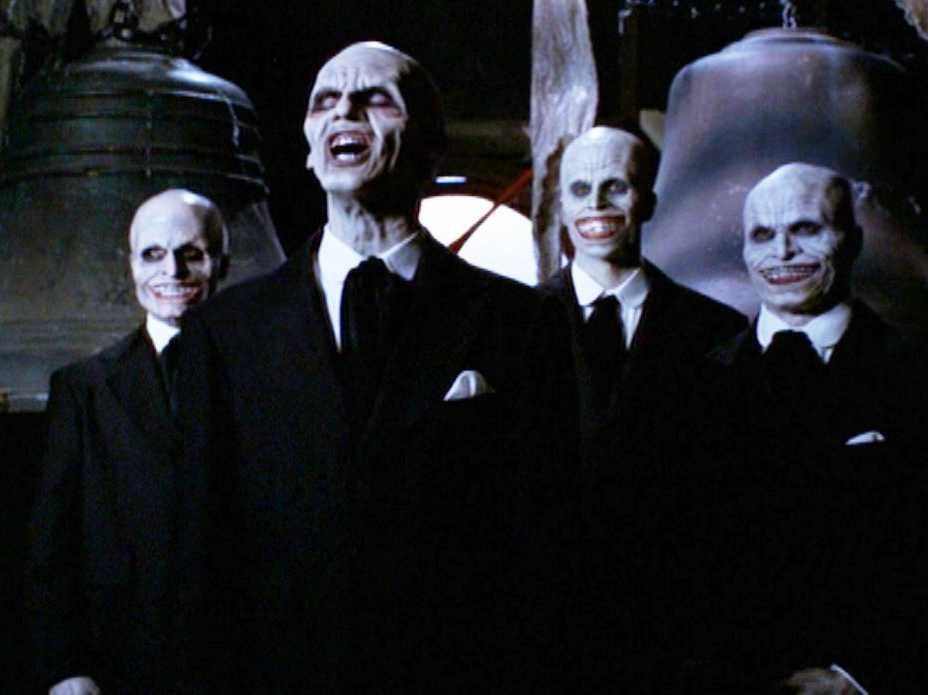
It is determined that the Gentlemen are the ones that had stolen their voices and they are cutting the hearts out of their victims. They must collect 7 of them. They don’t speak at all, but they are effectively creepy through their movements and scary features.
When the characters lose their ability to speak, they must compensate with other forms of communication. Some of the other forms of communication used were telephone, writing tablet and pen, “mouthing words,” pointing, waiving, and other hand gestures, message boards, computer/electronic speech, pictures, body movements and displays of affection.
Language is not confined to just speech. Joss Whedon, Buffy creator is trying to tell us that communication comes in a variety of forms. Humans are capable of more that just speech to get their message across. There were many different messages in this episode, but communication is not just voice – it involves your entire body sometimes. There are many ways to “speak” to others without saying anything at all.
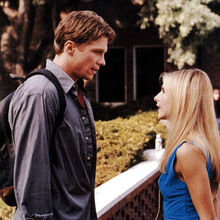
Language can sometimes get in the way of what we are really trying to convey. For example, when Riley and Buffy have a hard time telling each other how they really feel about each other, they seem to interact better and develop a closer connection when they didn’t have their voices. They show this closeness by hugging, kissing, and showing affection for each other.
Riley and Buffy, Hush
Eventually, when the show is ending and they regain their voices, (after they each discover they have secret identities) they find it hard to talk about it. I think that it is just too complicated for them to sort through and they both have genuine feelings for each other and don’t want to mess up what they have. Riley says, “I guess we have to talk” and Buffy replies, “I guess we do.” In the beginning of the show when Riley was speaking with Willow about Riley she says, “every time we talk, I have to lie.” I think that this was taking a toll on her even before they lost their voices. When they were silent, they didn’t have all of the other concerns and could just be in each other’s company. In this case and other difficult situations in life, sometimes language doesn’t accurately convey what we feel. I think this is the point that Joss Whedon was trying to make. I can’t think of anything that cannot be conveyed via non-verbal communication which supports his message.
Hush compensates with its lack of dialogue by using music and volume for suspense and to set the moods for the scene. He also uses a lot of facial expressions, motions, and gestures. For example, when the Giles tries to explain what the Gentleman are and their purpose. Unfortunately, gestures can be misinterpreted as Buffy finds out. Giles uses a Projector to explain what he has found out about the Gentleman. He displays drawings and written word in a story sequence and Buffy and Willow write questions on their marker boards. Their discussion is well presented in this scene. You barely notice they have lost their voices because they use many different modes of expression.
Ultimately, I think Whedon was trying to get us to think outside of the box. That is one of the reasons I like him. Communications come in many forms, not just language.
QUESTION: If you lost your voice, what would be your preferred method of communicating?
Works Cited:
Pioneers of Television: Funny Ladies, PBS, Season 3 Episode 1









 Mass Media and American Life