Author Archives: jpbatra828

Weight of the World- Final

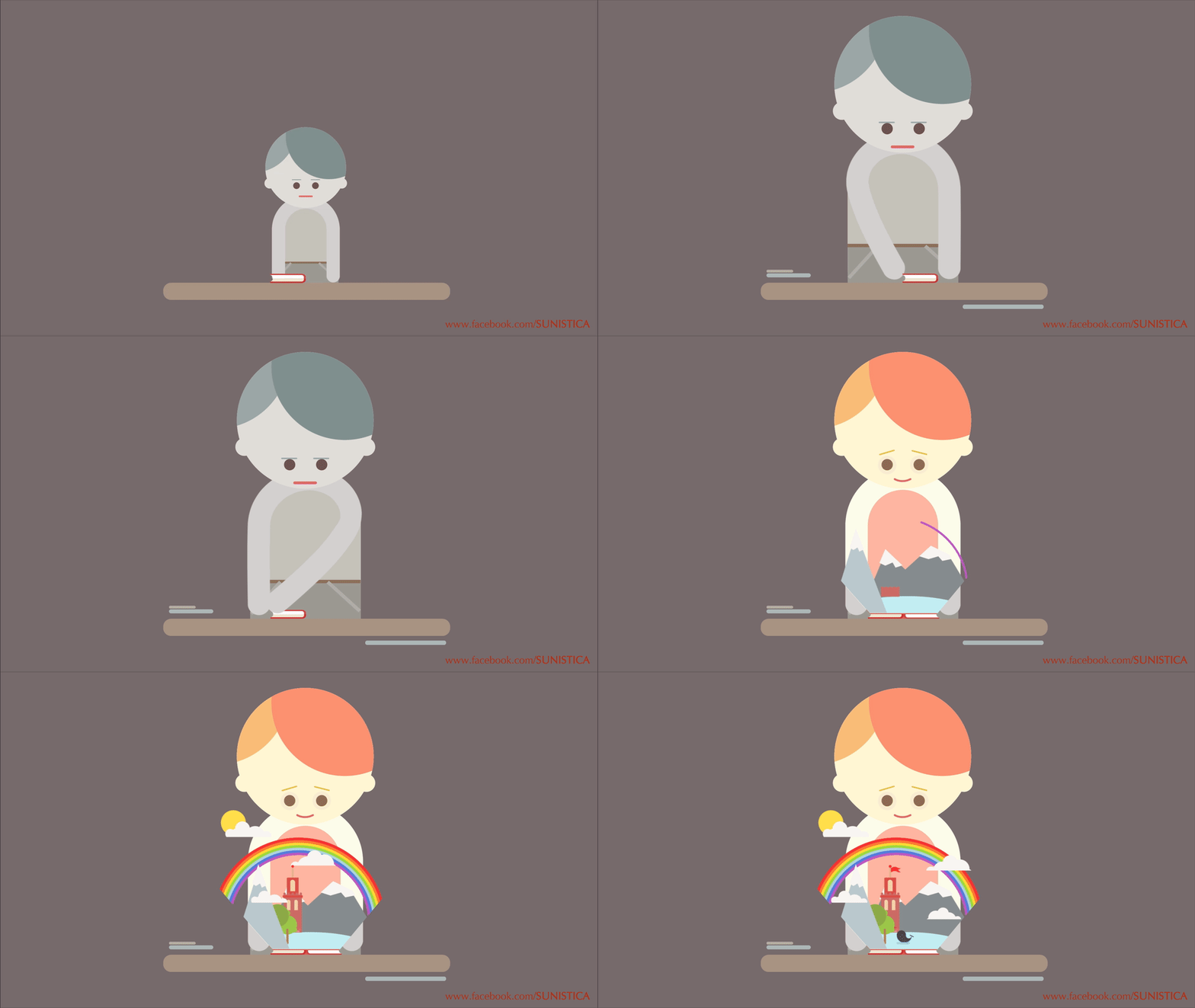
Living in the age that we do right now can feel very suffocating for the youth, even though we have to live through a disease that has left us spreading apart and is shutting down nearly every social gathering. This has left us with very limited options in terms of how we communicate because now instead of in-person meetings, most people are using social media and programs such as “Zoom”. This has lead, to not only the youth, but society as a whole feeling like the weight of the world is on their shoulders and social media hasn’t helped that for several reasons. 
One reason why I believe we, as a society is stressed, is because of a topic I have actually talked about multiply times in my blog, “Fake News”. To touch on the topic because I did go into it deep in my last blog but in short “Fake news” is the biggest threat to our democracy because it has caused the American people to doubt what’s real and has made a strong division between Democrats and Republicans, as they are creating what seems to be a social media civil war. Over the last 4 years, both sides have been coming for each other throats on which information is correct and incorrect and this has been the absolute worst because of the virus and election both taking over this year. According to Statista.com, a study from 2018 found “14 percent of people admitting that they have deliberately shared a fake political news story online, it is clear that these fake news stories will continue to gain traction as long as people are still willing to share them online.” This stat is extremely concerning because this is from 2 years ago and due to the times we are living through I confidently say the number has most likely gone up. 
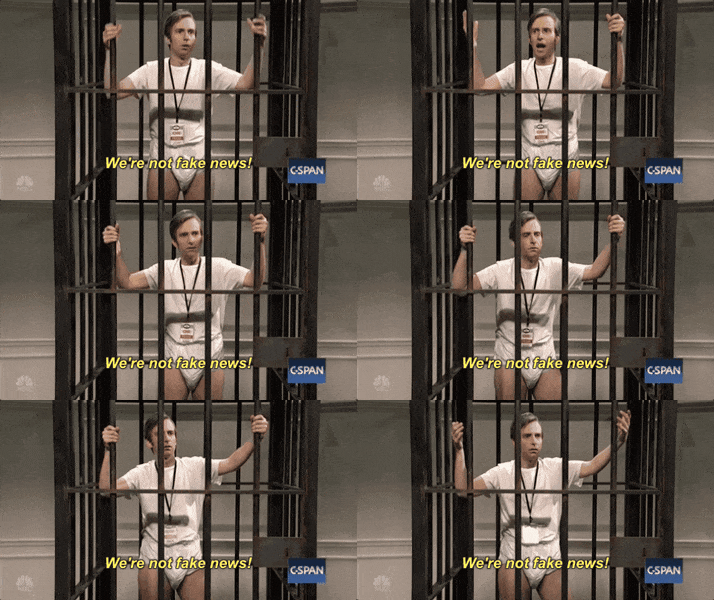
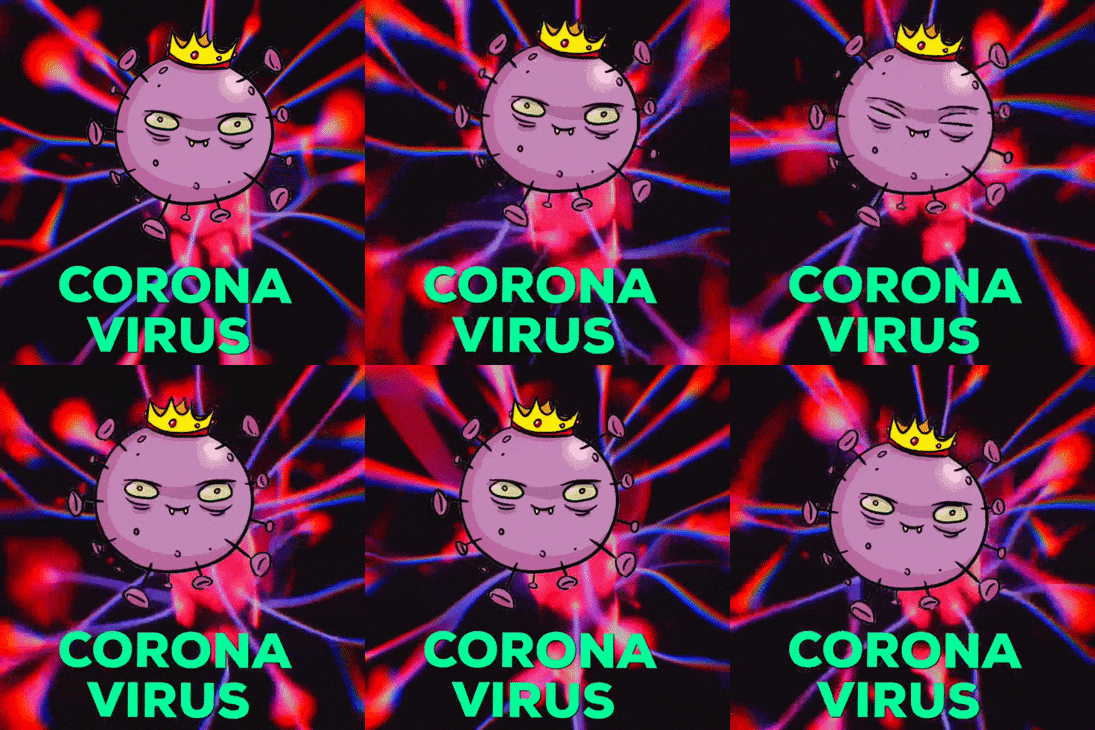
Another reason why society is stressed is because of social media and the repercussions of it. According to businessinsider.com “The Harris Poll conducted between late March and early May, found that between 46% and 51% of US adults were using social media more since the outbreak began. In the most recent May 1–3 survey, 51% of total respondents — 60% of those ages 18 to 34, 64% of those ages 35 to 49, and 34% of those ages 65 and up – reported increased usage on certain social media platforms.” This is alarming because social media addiction is very real and dangerous for everyone, but most importantly the youth because according to another report from mcleanhospital.org “Social media has a reinforcing nature. Using it activates the brain’s reward center by releasing dopamine, a “feel-good chemical” linked to pleasurable activities such as sex, food, and social interaction. The platforms are designed to be addictive and are associated with anxiety, depression, and even physical ailments. According to the Pew Research Center, 69% of adults and 81% of teens in the U.S. use social media. This puts a large amount of the population at an increased risk of feeling anxious, depressed, or ill over their social media use.” One thing that can cause mental health illness from social media are “Trolls”, a person or people that say controversial things or baseless claims with no evidence. For example, a troll could be someone who comments that “Coronavirus doesn’t exist” under a tweet that clearly shows how the virus is affecting day to day life. The abundance of trolls because of the pandemic has led to false information (much as I talked about) before to be spread and during this election year has led to confusion and uneasiness for people because it is very tough to find the truth. 
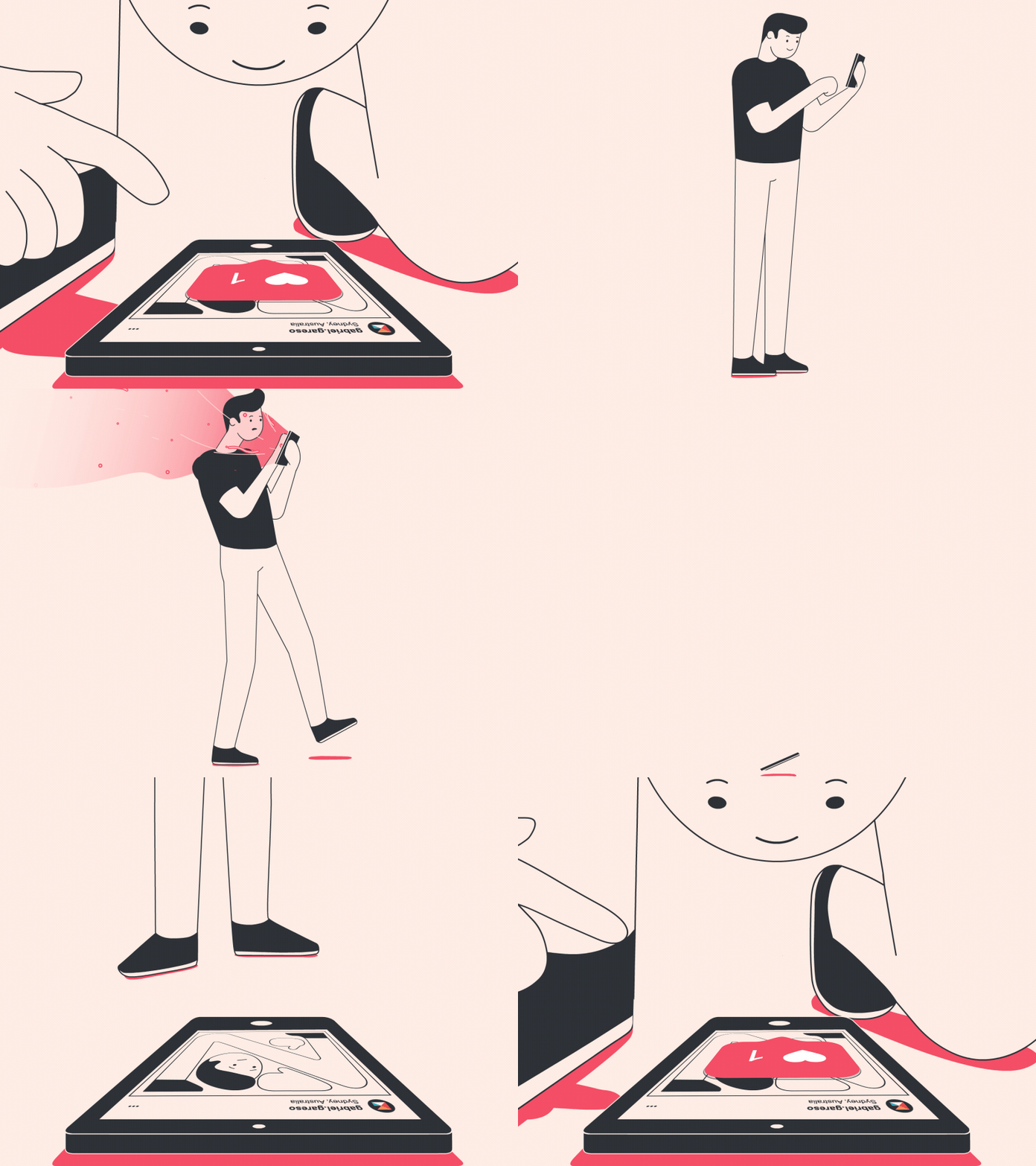
Last the pressures of social media and the need to be active have to lead to us as a society consuming more info than we can handle. As I said in the opening paragraph in last week’s blog titled “Oversaturated in Media” I stated  “Living in 2020 means that most people are being exposed to more info in 1 week than people 50 years ago would be in their entire life. Technology has made us lazy yet smarter as we can look up any question you have in a little box in your pocket. We are in an age where we are oversaturated with content, which is causing anxiety and depression to grow among the younger generation.” This has stressed us out because people before social media weren’t told every single piece of news told from around the world, instead ignorance was bliss and they had no one to worry about except their own country. But now we can hear about news from everywhere and anywhere, which might sound like it would be a good thing but knowing everything that’s going on can cause anxiety and make people live in fear. During the Trump presidency is when this hit its peak because there was always something new every day and since the people had to wait till the next election to get him out this lead to people getting scared for their livelihoods and day-to-day lives.
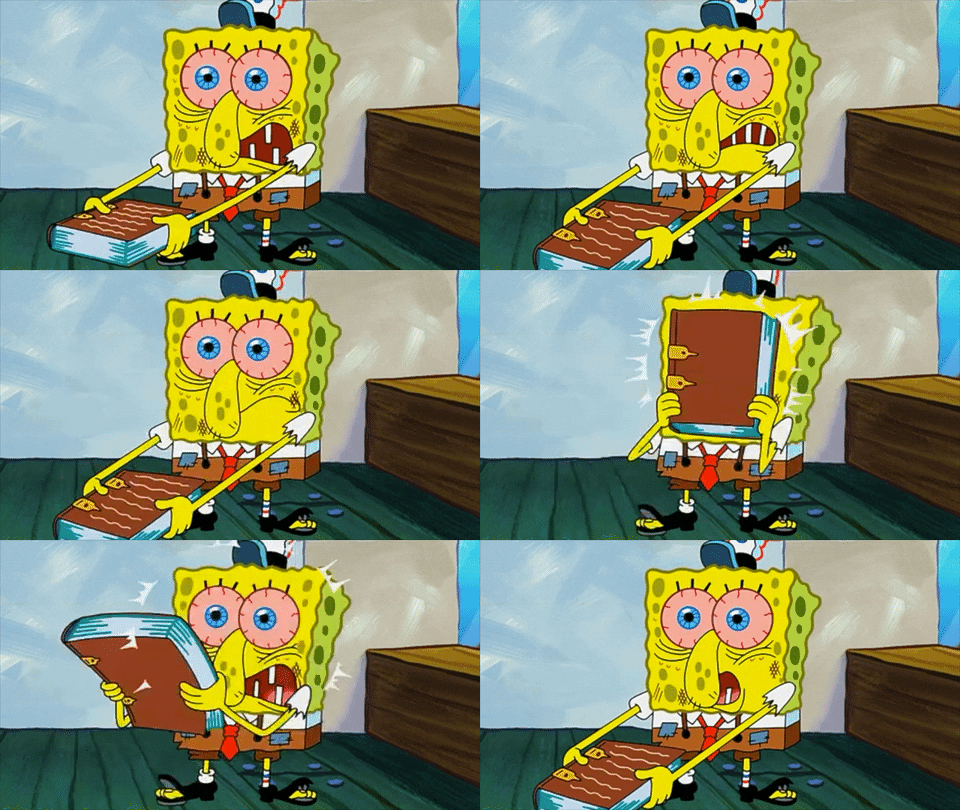
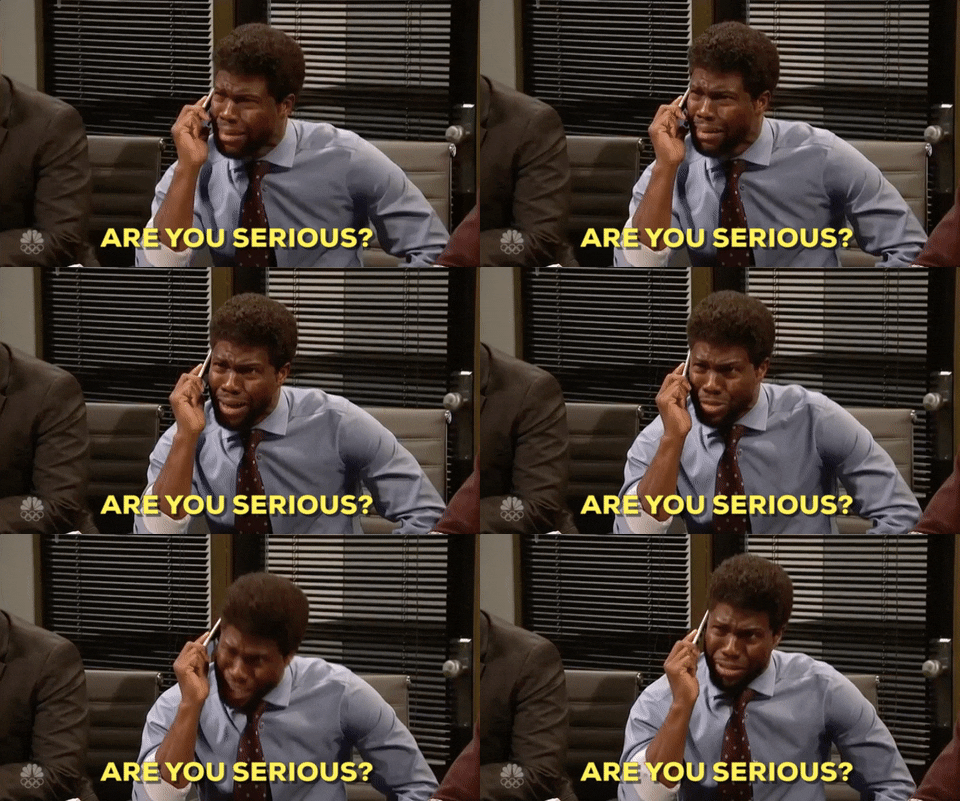
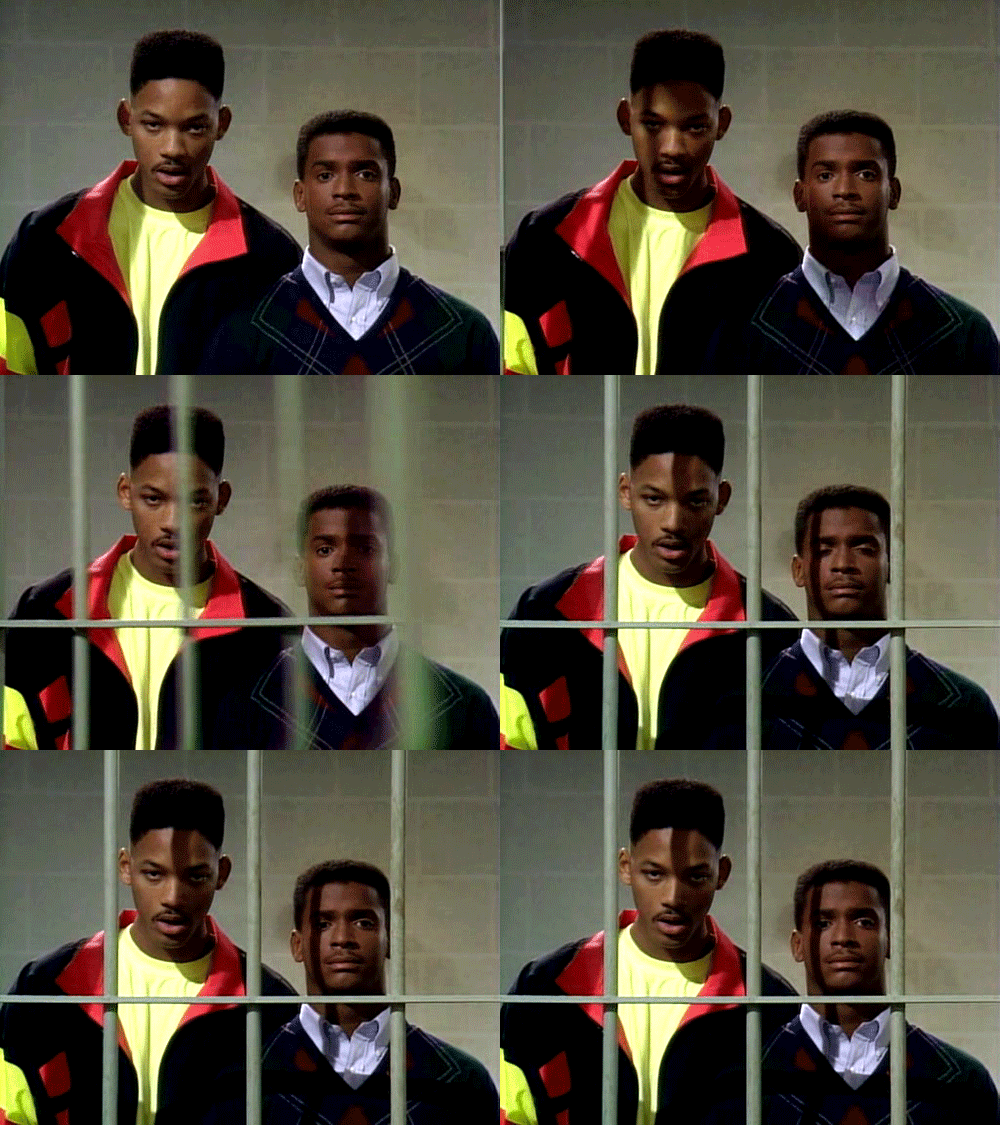
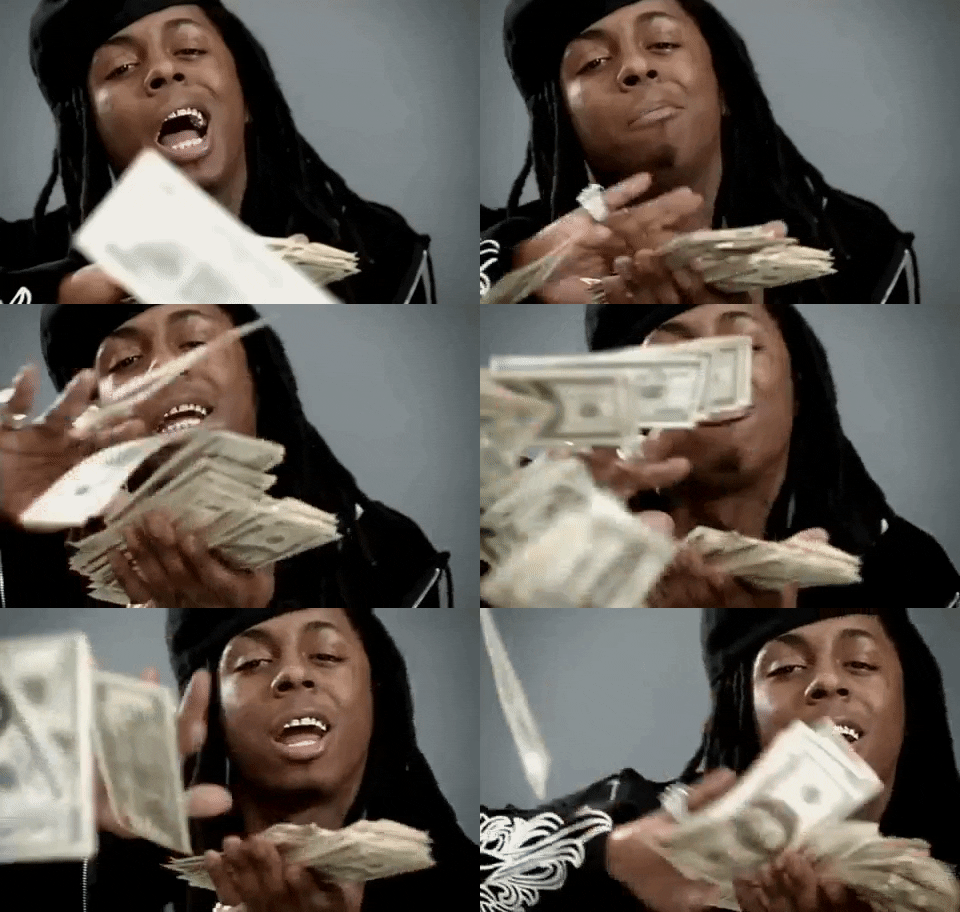
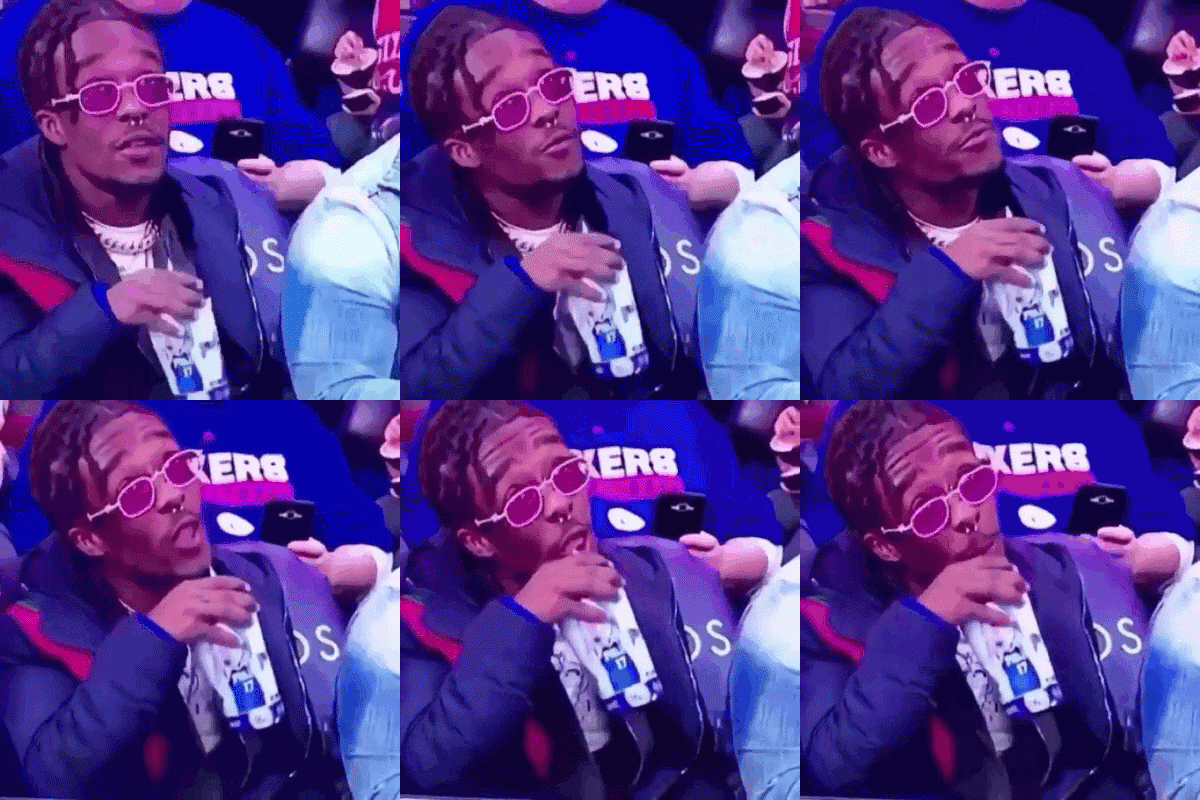
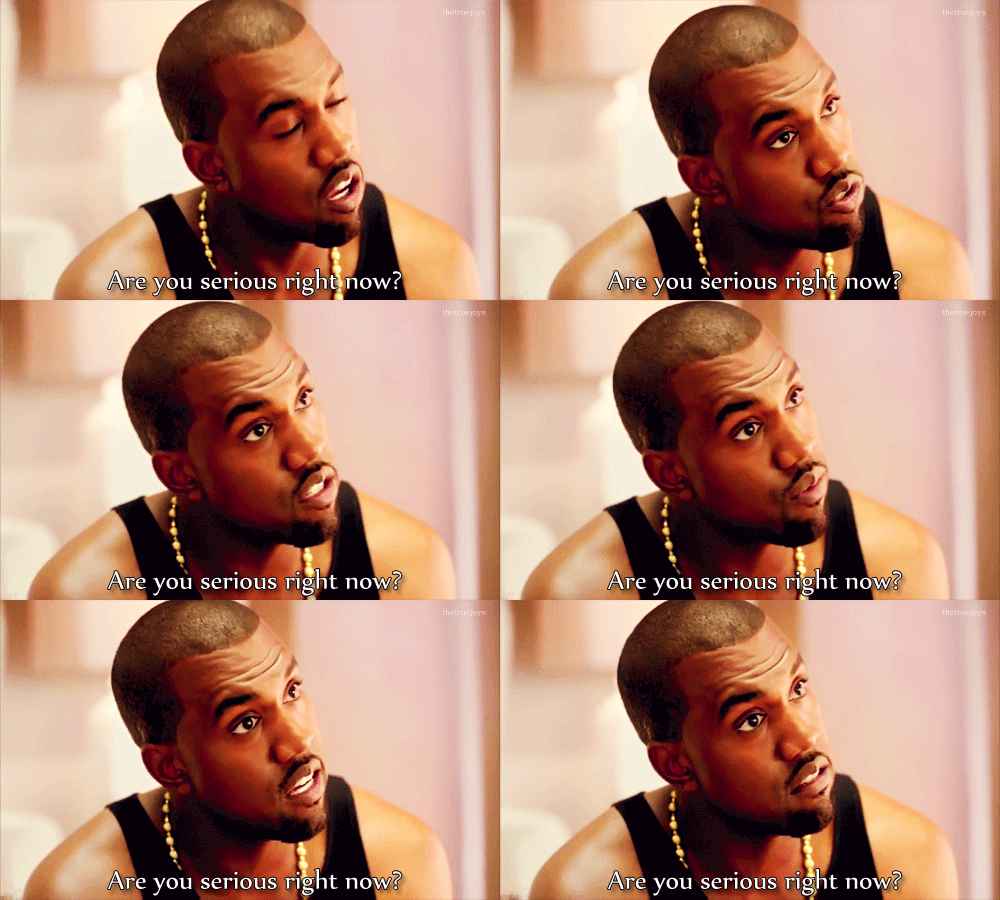
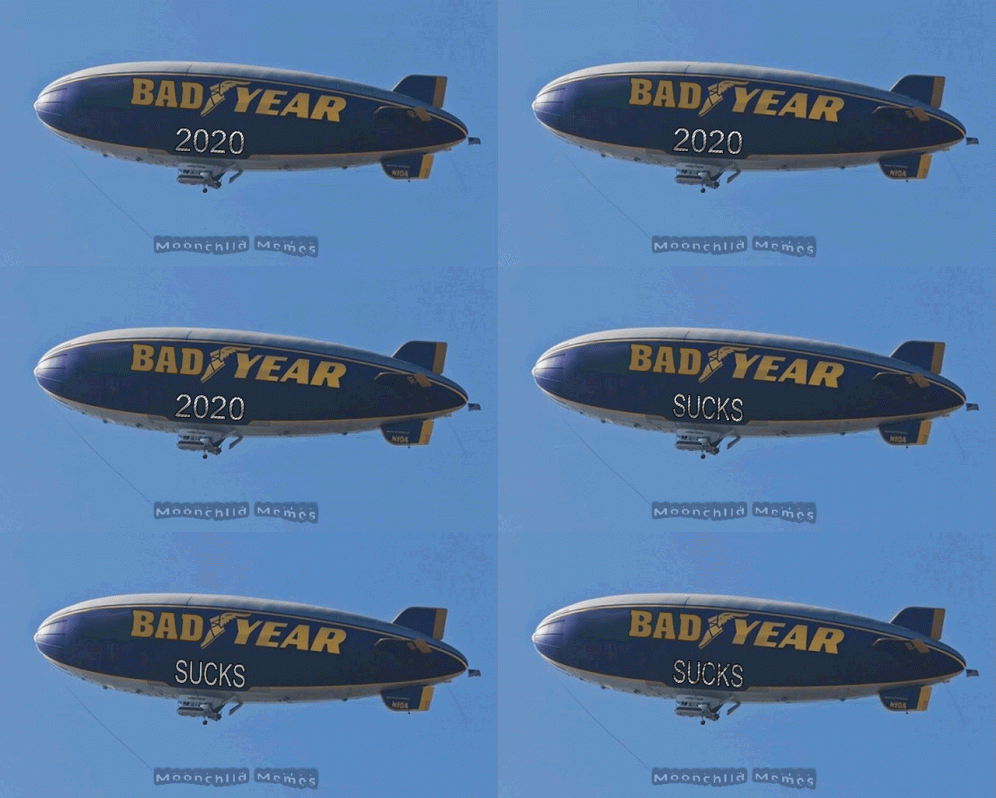
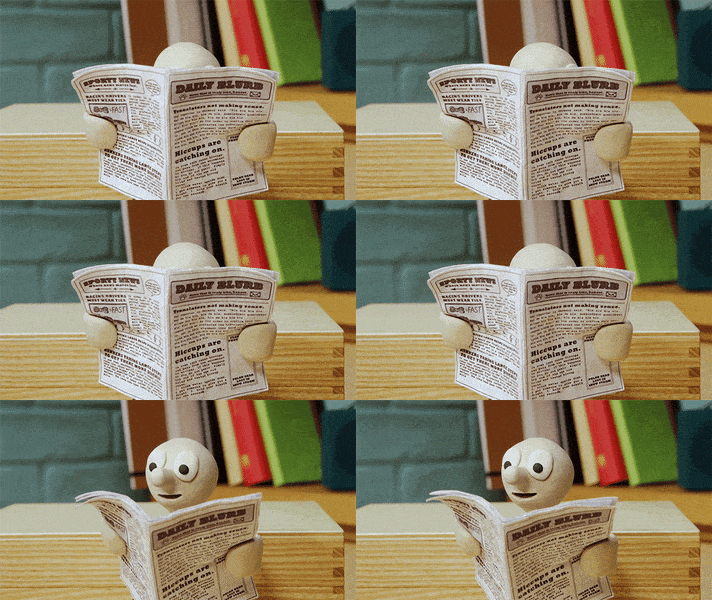
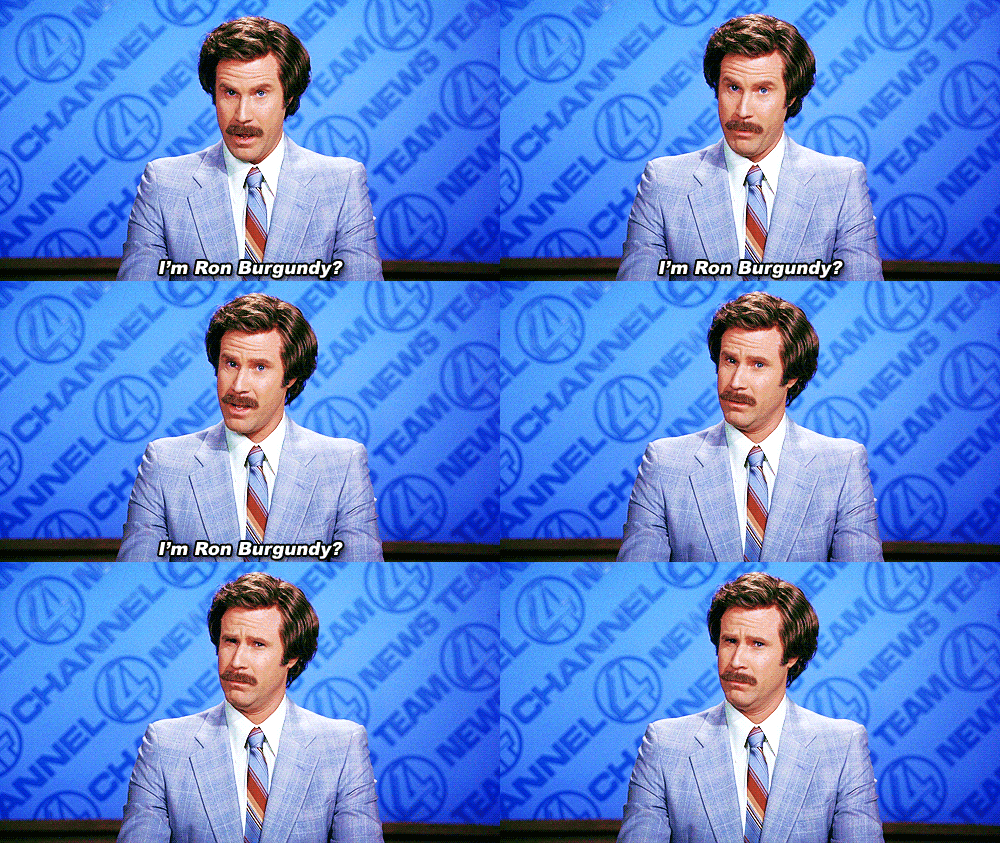
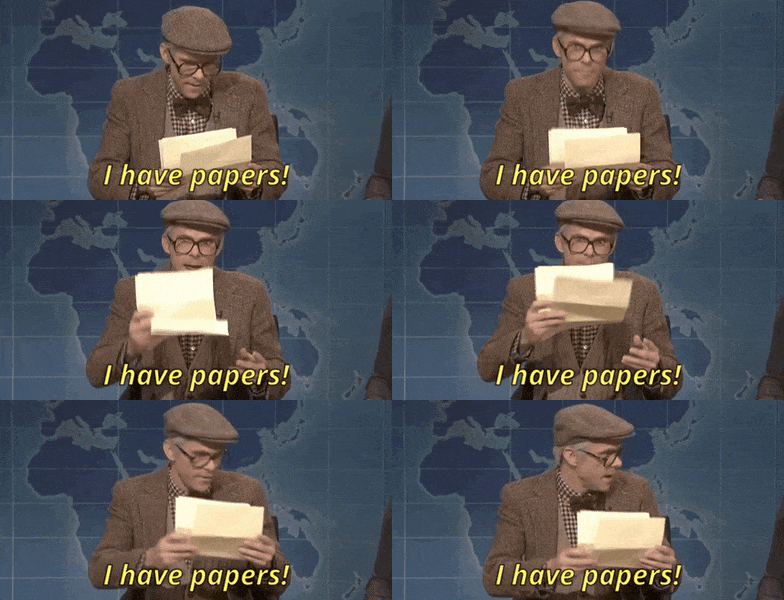
An accurate depiction of someone reacting to a troll

In conclusion, people living in 2020 are much more stressed and have a lot more on their plate than people did 20,10, or even 5 years ago. Corona, the election, and social media has led people to be more depressed and anxious causing a lot more to be on everyone’s plate   
Oversaturated in Media

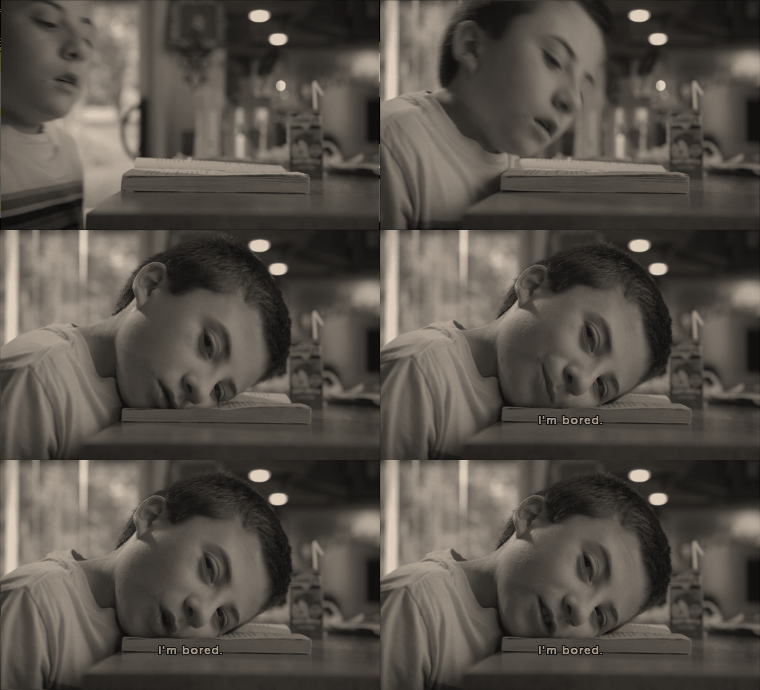
Living in 2020 means that most people are being exposed to more info in 1 week than people 50 years ago would be in their entire life. Technology has made us lazy yet smarter as we can look up any question you have in a little box in your pocket. We are in an age where we are oversaturated with content, which is causing anxiety and depression to grow among the younger generation 

We as humans crave attention and social media is a place where people of different walks of life can connect and talk to each other on sites like Twitter, so when you add the 2 they mix just as well as oil and water. Social media trolls have taken over all major social media sites and have caused a stir or controversy under almost every comment section. This has caused arguments and has been quite annoying lately as we are going through one of the most polarizing elections in recent history and everyone is on edge due to COVID-19. Trolls as of recent have been more aggressive and in high volumes because of this and even just saying “TRUMP 2020” will incite arguments and give the troll “clout” (a term used when someone on the internet gains attention and followers). With all of this, you can see why this is extremely frustrating for kids growing up in this day and age with social media right at their fingertips. 

Another factor in this is a fake news in which there has been an abundance of in 2020. I did gloss over this topic in one of my blogs a couple of weeks back but this topic has been the circle of debate for all of 2020 and the topic has affected all our lives in every way possible since news about specifical coronavirus and the elections have been different in almost every single news channel or page. Fake news has caused the American people to doubt what’s real and has made a strong division between Democrats and Republicans as they both pitting themselves in what seems to be a social media civil war as they coming for each other throats on which information is correct and incorrect. This has confused the youth on who they should believe and adds an unbelievable amount of stress to what they already have on their plates. According to NPR “The National Survey on Drug Use and Health, a government survey that tracks mental health and substance use in individuals age 12 and over in the U.S. They looked at survey responses from more than 200,000 adolescents ages 12 to 17 and almost 400,000 young adults ages 18 and over between 2005 and 2017. They found the rate of individuals reporting symptoms consistent with major depression over the past year increased 52 percent in teens and 63 percent in young adults over a decade. Girls were more vulnerable than boys. By 2017 one out of every five teenage girls had experienced major depression in the last year.” This stat is extremely concerning and has most likely increased in 2020 due to the hectic year we have had. 

One question I would like to pass off to the reader is that have you experienced an increase in anxiety or depression since Corona has started and how has the recent news cycle affected your day to day life?

The Death of 2-D Animated Motion Pictures

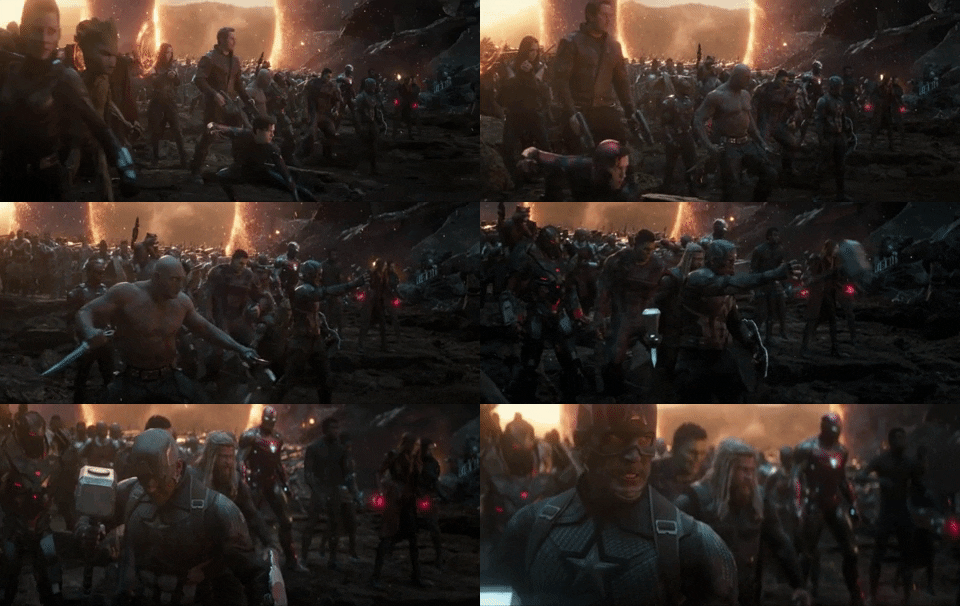
In the early days of movies, the most prominent forms of film were live-action, stop motion, and 2D animation. Now in the present day live-action has reached heights that weren’t fathomable back in the early 1900s with movies integrating CGI and hardware that can create almost anything you can think of. This has led to movies like the critically acclaimed best-selling movie of all time, Avengers: Endgame which shattered almost all movie records last year. I’m not here to talk about live-action though, this is about the death of 2D film and how movies like endgame will probably keep it from coming back to the form it once was.

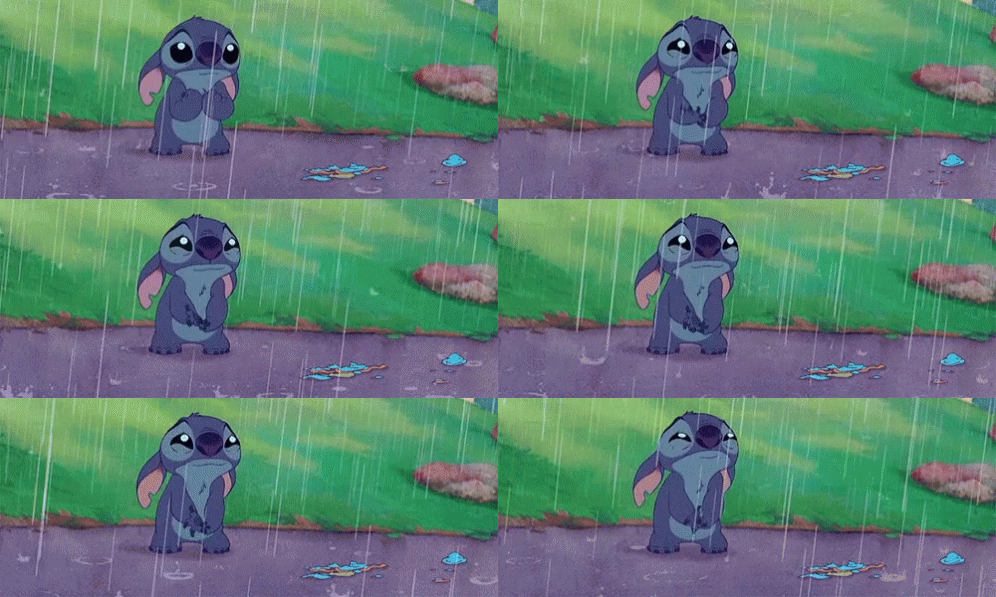
The beginning of the end started with the introduction of 3D animation which became very popular in the mid to late 90s where movies like “Toy Story”, “Bugs Life”, “Shrek”, and many more hit the scene. These movies were at first seen as a fad that would soon fade out, but my 2D loving 13-year-old self was soon mortified at the future of the genre with the release of “Princess and the Frog” as it was the last 2D movie Disney would release ever (or at least for the time being). 2D animation used to be such a juggernaut but where did it go wrong? Well the progression of technology would make these art styles obsolete and Disney being the money-hungry corporation they are wasn’t finding success in their 2D market which cause a second animation dark age for them with movies like “Fantasia 2000,” “Dinosaur,” “The Emperor’s New Groove,” “Atlantis: The Lost Empire,” “Lilo and Stitch,” “Treasure Planet,” “Brother Bear,” “Home on the Range,” “Chicken Little,” “Meet the Robinsons,” and “Bolt.” All of the movies listed (with the exception of 2) did below average for what Disney is used to and most are 2D films so the solution for Disney was to completely phase out the genre that they were built upon. This was a huge blow to the industry since most studios like to copy the Disney formula and try to copy their art style like Dreamwork with “Shrek” or Illumination with “Despicable Me”. 

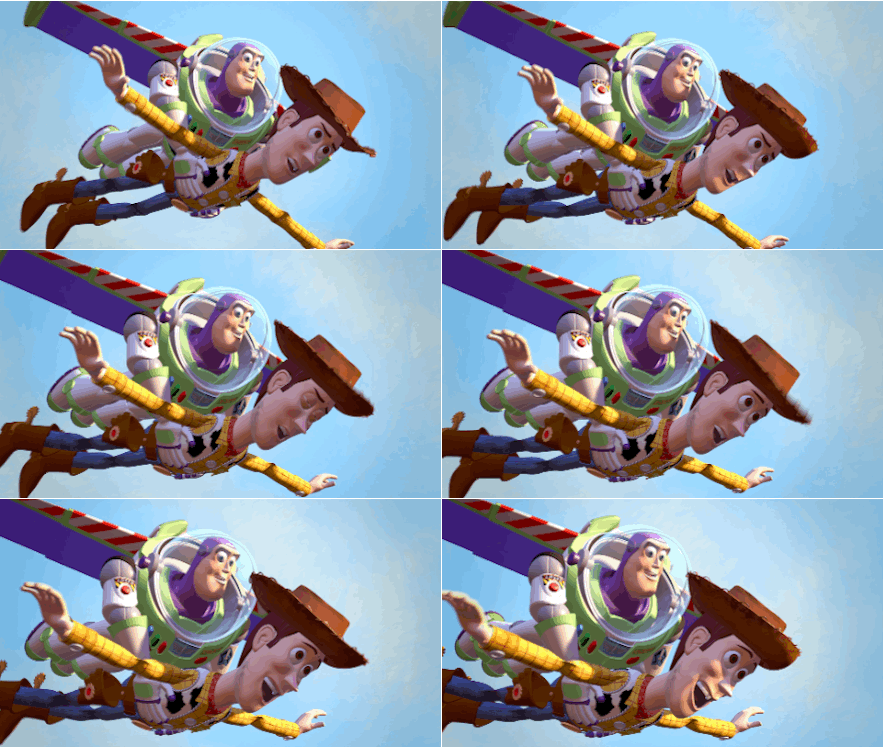
Why is this a problem though? Doesn’t this change in the industry show the growth we have made since the early days of animation? Well to kill 2 birds with one computer and answer both questions, I’d like to say as someone who used to study 2D animation and wanted to make it his career for a short period of his life 2D animation allows for so many different styles and designs that don’t look generic much like the movies coming out now. When was the last time you saw a 3D animation that really redefined or stood out over the rest? Look at Toy Story 2, 3, and 4 which were all released 10 years apart from each other (give or take), they all look almost the exact same with little details changed to the art style. Now think about the different art styles of kids shows you have seen on TV where drastic changes to shows like Spongebob help give the audience a different view of the same character. Also, creative freedom with 3D can actually limit creators as it is extremely expensive to do big scenes in 3D film but for 2D it’s much easier, and require fewer resources. 

The question I would like to pass off to you is that do you disagree with the disappearance of 2D film or was it time to pull the plug and let 3D shine.

Does Cancel Culture Need to be Canceled?

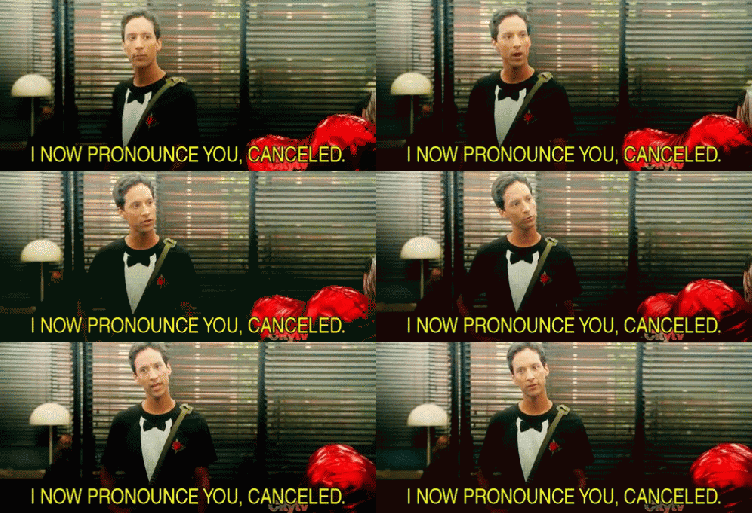
What is cancel culture? Cancel culture is the process of boycotting or withdrawing the support of a particular group or person due to actions sought out to be wrong by society. I believe cancel culture should be “canceled” because it doesn’t allow people especially celebrities to make mistakes. Whenever a celebrity does something that is deemed to be wrong by society’s standards they are “canceled” and not given another chance. This process is similar to blackballing in Hollywood where celebrities are cast away due to the bad reputation they have in society. Instead, we should call out these people when they do something wrong and help them write their wrongs, so they can grow as a person. 

One person that has wrongfully gotten canceled was comedian Kevin Hart, who was set to be the host of the 2019 Oscars, but unfortunately, his past came back to haunt him. I’m not condoning what he did at all as it was in poor taste, but the reason he was canceled was because of the homophobic jokes pop up from around 10 years ago that was extremely demeaning towards the LGBT+ community. The stuff tweeted was not at all ok to say, but it happened in an era where dark humor and homophobic jokes were much less problematic than it is now. If he were to get canceled for this, it should have happened long before the Oscars, but internet trolls went back into his old tweets and ruined his chance at hosting, as the Oscars would not let him host the awards that year due to this issue. I believe that Hart has changed his comedy and himself from when that was tweeted and he had already issued apologies about it in the past, but this didn’t stop the internet from launching a crusade against him as he got hate tweets and other celebrities condemning his acts.

Though cancel culture can be put in a negative light, it has also helped us get the truth about celebs behind the cameras. There have been a number of A list stars that have rightfully gotten canceled such as Ellen DeGeneres, who earlier this year got called out by crew members of here show for creating a hostile and toxic work environment. If this had taken place not even 20 years ago this might have been swept under the rug and with how long Ellen has been on the air, it was for a very long time. Yes, cancel culture does create a toxic environment online but sometimes it’s very much justified. 

Cancel culture is not going anywhere anytime soon, but I do think that it has gone too far. Especially with fake news making the rounds every day of this cursed election year we have had plenty of celebrities being scrutinized by the public over every sentence they say, and some are justified, but moist is unwarranted toxic behavior that is exhibited on the internet. One question I would like to pass off to you is, Do you think the cancel culture is effective, or do most people stop caring after a couple of weeks?   

Representation in T.V

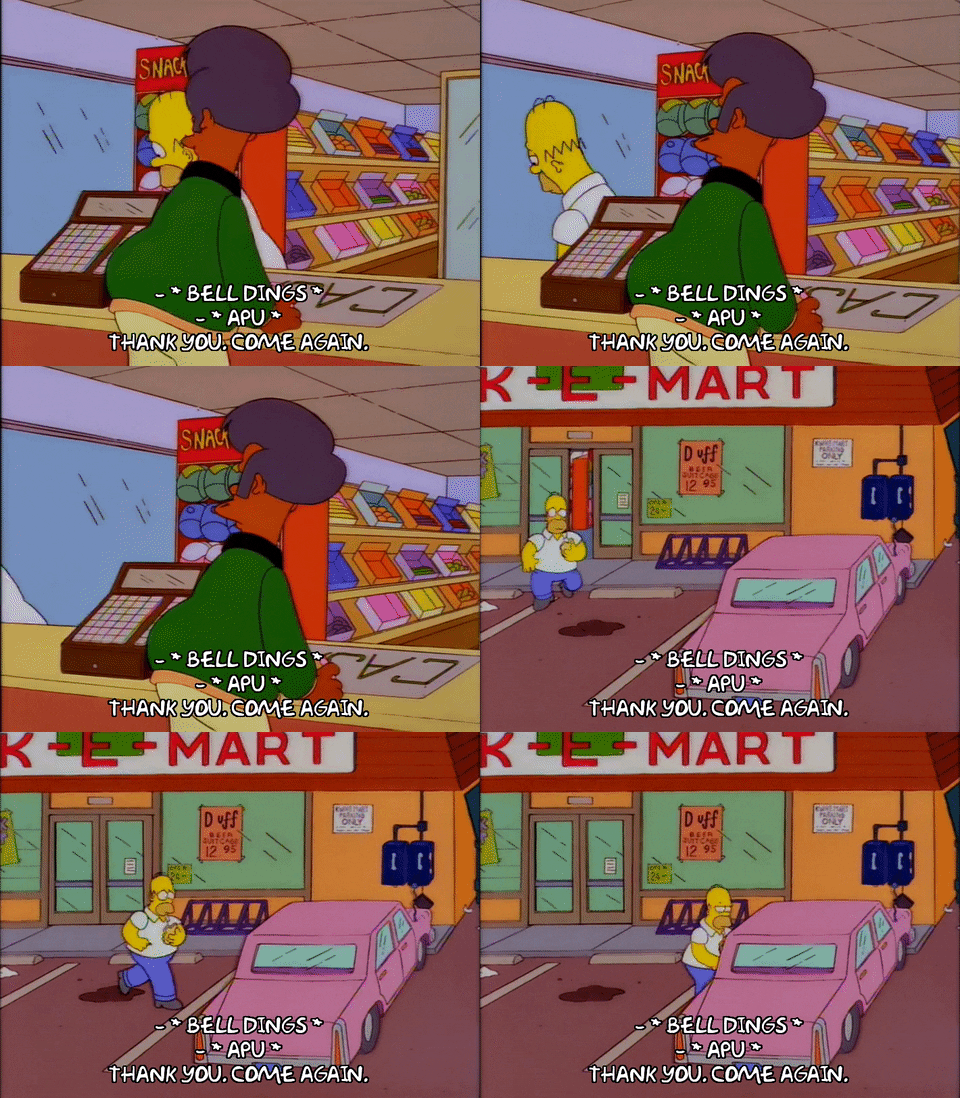
You ever turn on the T.V and just randomly flip through the channels just to see what’s on? Me, neither because I don’t have cable but as a kid growing up in the 2000s I used to get bored very quickly so, I would flip through my TV for hours on end, and doing this helped morphed what shows I would consume. Why is this important, you’re probably asking yourself… well growing up I never seen characters that were like me unless they were following a racist Indian stereotype ie Apu from the Simpsons, Raj from Big Bang Theory, Baljeet from Phineas and Ferb, etc. T.V in the 2000s and early 2010s feels very outdated nowadays with a lack of representation of certain ethnic groups and very harsh language (especially towards the LGBT+ community).

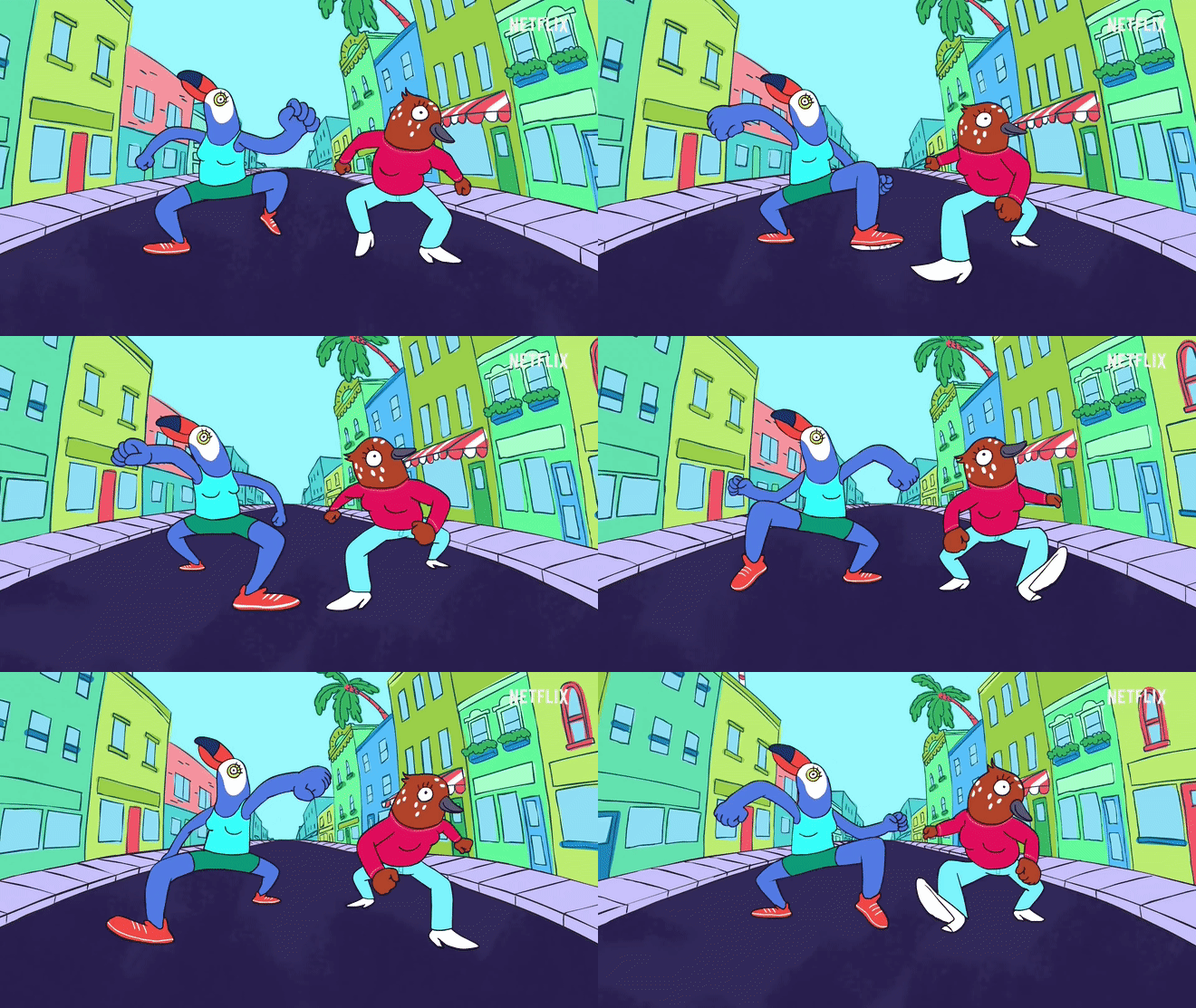
This isn’t anything new but after watching the Pioneers of Television episode, Funny Ladies in class, it blew my mind that women comics were so groundbreaking for it’s because now in 2020 we get shows like Tuca and Bertie, Broad City, and Unbreakable Kimmy Shmidt, shows that wouldn’t be here without I Love Lucy. I feel like representation in television has gotten a lot better as you get gems like Master of Naan which features an Indian main character who isn’t the brain of the cast or owns a 7/11 but we still have a long way to go as shows like to whitewash characters (meaning that they use a white actor for a character who wasn’t meant to be white i.e Iron Fist on Netflix) or use an all-white cast with little diversity. 

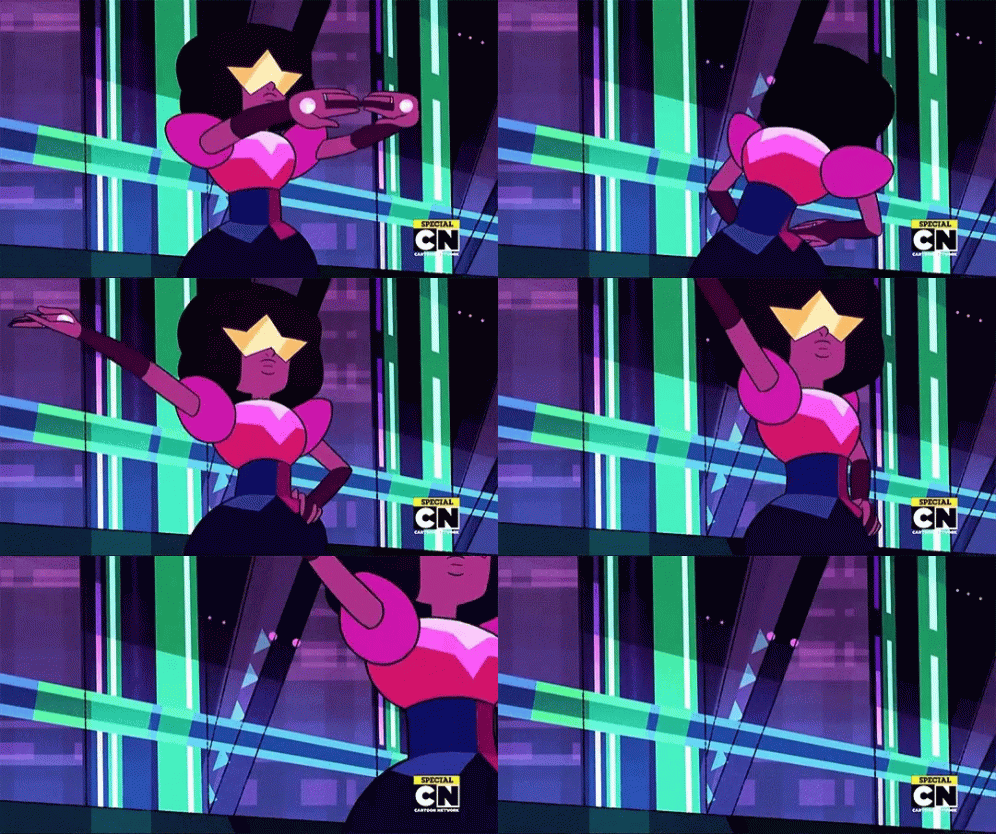
One show that has one of the most diverse casts is Steven Universe which features characters with many different ethnic backgrounds and most of the cast is a part of the LGBT+. This show much like I Love Lucy has ushered an era of inclusivity and diversity within T.V as shows have tried to copy or take inspiration for example Adventure Time, Craig of the Creek, and Big Mouths. Just 10 years ago it was unheard of to have just 1 openly gay cartoon character on T.V but now with the vast amount of TV shows going to Netflix or Hulu they can take much more creative liberties with their work to give representation that these groups greatly deserved. 

One question I would like to pass off to the reader is that do you believe that we should have more T.V shows that include more representation or do you believe that doing that will sacrifice the artist’s vision if it’s forced. I believe that it shouldn’t be forced because as an artist, you can’t force art, you have to just let it happen.       

Streaming vs T.V: Is There Even a Battle?

The 2010s have brought lots of changes into our daily lives, for example, everyone owns a smartphone, everyone has a laptop, and we are using the internet to take classes for school and work. The internet has changed everything and T.V is no exception, since the internet was created and put in the power of the public, it has fought with T.V for the attention of viewers. Youtube was the first of many to butt heads with Hollywood because of people posting full movies, T.V shows, and clips, and snippets of scenes for free. This didn’t last long as many companies sued YouTube for allowing illegal streaming on their site but it did help start a new revolution of videos on the internet that still compete with T.V to this day. 

` After YouTube came Netflix and their “brand new” service that mails movies to your door… yeah late 2000s Netflix was weird and not at all juggernaut it is today. They did introduce streaming later and that’s when it got huge but initially, Netflix was made exclusively for renting movies through the mail which posed no threat to TV at the time. Most big corporations thought it was gonna fail, for example, Blockbuster had a chance to buy Netflix for a fraction of its cost today and now look where each of them is today in 2020. Netflix now has grown to be the biggest threat to T.V since the beginning of the internet because not only do they have old properties such as “The Office” or “Breaking Bad”  but they have made their own critically acclaimed shows such as “BoJack Horseman” and “Stranger Things” that actually have won T.V show awards such as the Emmys. This year according to CNBC.com Netflix got 160 nominations for the Emmys which is an insane number given that T.V used to dominate the award. 

After Netflix hit it big with its streaming service big companies such as Disney started to hop on the streaming bandwagon. Now the industry has become oversaturated with streaming platforms such as HBO Max, Disney+, Amazon Prime Video, Hulu, and many, many more. Each of these entails a subscription you must pay monthly just to access these videos but this is the problem with having too many services. No one wants to pay for these many streaming services each month as it can get extremely costly, so T.V does have the upper hand here but as of late T.V has been merging with these companies so, not only do you get to watch on-demand, you also can watch live T.V anywhere. This has caused the tension between streaming and T.V to cool off because of the partnerships they have but this doesn’t mean the war is over since TV is still fighting for the audience. 

One question I would like to pass to the reader is, do you believe that T.V will be obsolete and we will all use streaming services or does T.V have it’s niche audience to keep it running for a while.  

Free “Insert Artist Here”

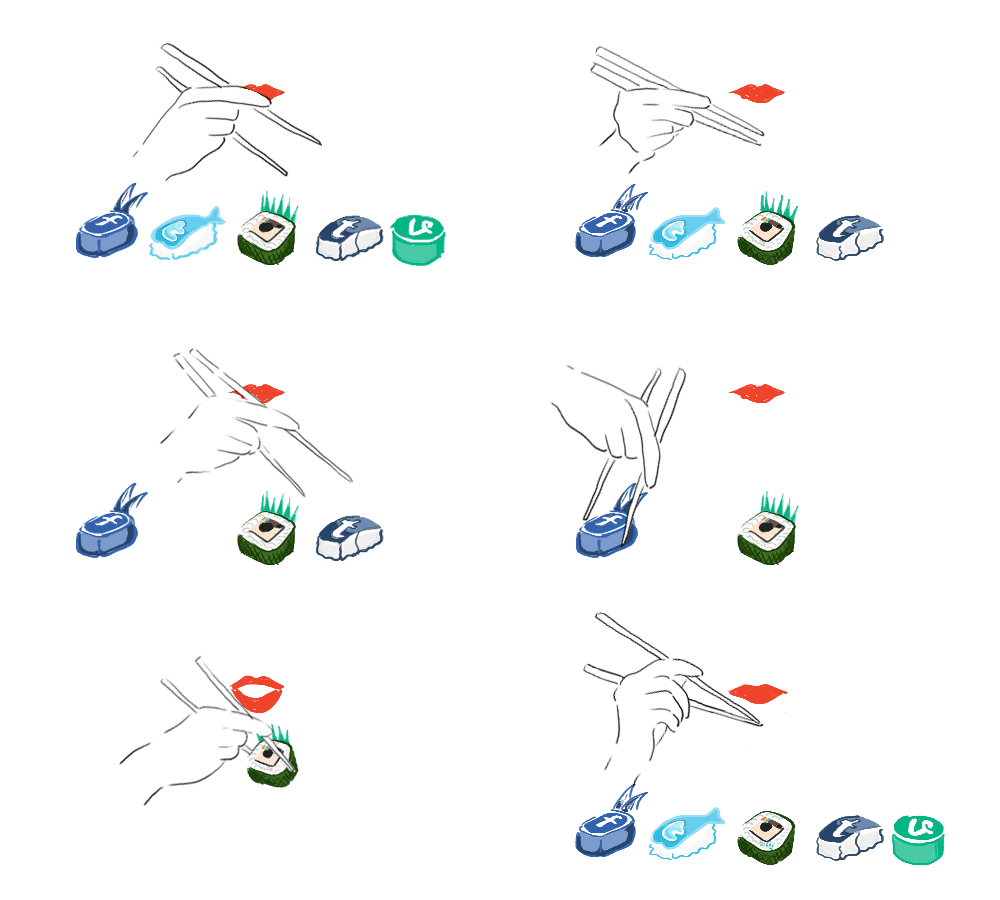
Free Kanye, Free Uzi, Free Tunechi, Free Ski Mask, Free…. I think you get it. The last 20 years have changed music and the way we consumed it but with that change came more corruption within the industry. Artists as of recently have been getting themselves into really bad contracts where they either can’t get off their deal or they do and they lose their masters worth thousands (or even millions) of dollars. Lets back it up for a moment, masters according to HipHopDx.com “…is a term used to refer to the original sound recording copyright of a song. When an artist records a song, he or she is also creating an original sound recording protected under United States copyright law.” This is essential for artists that want to make money off sampling and streaming services but in some contracts artist sign, they aren’t allowed to own their masters that they might want to use in the future if they terminate their contract. 

The most famous example of an artist losing their masters because of a terrible contract is Taylor Swift (and now maybe Kanye??). She has expressed her frustration on Twitter and other social medias a numerous amount of times but as of now she currently doesn’t own a single one of her 6 previous records, that belongs to her (old) label, “ Big Machine Records”. Other examples an artist going through contract disputes is Lil Uzi Vert, an Atlanta rapper who has released some of the most viral songs of the 2010s such as “XO TOUR LIFE”, was in a heated contract dispute for 3 years and during that time had dropped almost nothing because he wanted to get out his contract, the details are unknown about what the feud was about but from 2017-2020 Uzi’s label wouldn’t him drop features with other artists either. At the beginning of this year he was finally set free after begging his label and creating a social media stir with people on twitter creating the #FreeUzi movement to show their support of him. After that he dropped his long-awaited album, Eternal Atake, then he dropped a second album the next week. He didn’t have any industry help from anyone during his promotion for his album and reached the #1 spot by himself.

Labels since then have been called out by young rappers who signed B.S deals at the beginning of their careers because they had no understanding of what was in it before they signed it. As recently as last night Kanye West, one of the most controversial figures in music (and in general), posted a video of himself peeing on a Grammy he won, then proceeded to post his contracts from labels over a series of over 100 tweets, after all of that he had said that signing to a label is “Modern-day slavery”. While he is acting manic, I understand that he is frustrated with his label because they have been conning artists since music streaming became mainstream. These examples are just the tip of the iceberg and within the next year I can guarantee another artist will be put in this situation again because of how the industry works, all they want is money and nothing else. 

One question I want to pass off to you is, do you believe artists should sign to big labels or do you think it’s smarter to go independent and try to create your own following?

2020: A Year of MisInformation

In this chapter of the textbook, it had focused on newspapers and the effects they have had on shaping this country. One part, in particular, had caught my eye though because it had covered yellow journalism and how it gave false info about the Spanish-American war and how “Both Hearst and Pulitzer filled their papers with huge front-page headlines and gave bloody—if sometimes inaccurate—accounts of the war.” (p. 138). This reminds me of the sensational, and clickbaity headlines of news sites in the current internet age. 

It has gotten so bad that people can’t trust the news anymore, for example, this year we are going through a terrible pandemic in the middle of an election year, so the chances of finding non-bias information on the issue are slim because of how politized it has become. One major talking point out of everything to come out of the pandemic is how effective are masks? Most people know that putting on a mask will help slow the spread of Covid-19 but due to the president of the U.S spreading false and dangerous information to his millions of followers, some nutjobs are still going out without a mask, knowing the consequences and ignoring then or not believing that the virus is real because they can’t trust the media. This is just the tip of the iceberg as there have been multiple incidences this year where the spread of false information has caused a divide in the country.

When the news first broke out about George Floyd, there were millions of articles uploaded about it, and with that came the clickbaity articles talking about previous criminal history and vilifying him to try and silence the angry mob wanting justice for his death. There were also news sources leaving out important details and gatekeeping information to their viewer base so they can make their twisted narrative of how it all went down. This isn’t at all the first time nor will it be the last time this happens in our current society but it is a very recent and modern example of how the news can manipulate its audience much like publications back in the early days of journalism. 

The current landscape of journalism is a lot different then what it says in the textbook, for example, when it says “ The online newspaper is, in reality, still trying to figure out what it is. Indeed, this is an uncomfortable position familiar to many online-only papers: trapped between the printed news world and the online world of blogs and unofficial websites.” (p.164) this statement does hold up now but now instead of trying to compete with print, they are trying to compete with social media and the bloggers that breaking the news seconds after it happens. (ie Shaun King, a left-wing activist that posts injustices daily to his Instagram and Twitter accounts). 

One question I would like to leave up to you (the reader) is where do you get your news from currently? This might be a simple question but I want you to think, who is it coming from, is this person (or publication) a reliable source, are they bias toward one part of the political spectrum? I usually get mine from twitter because it’s easier and more accessible for me. 

Are Books on their Way Out?

Since the beginning of written history, books have had an integral part in our everyday lives because of the information that contains but recently books have become a little outdated because of the internet and digital media. In the reading, it says “According to the NEA, the overall 10 percent drop in literary readers represented a loss of 20 million potential readers, most of them young. In 1982, young adults (people aged 18–34) were most likely to engage in literary reading; by 2002, they were the least likely group.” (p.82) This decrease is most likely greater now then it was in 2002 due to the internet being much easier to access now compared to 18 years ago. Not only are most classes (as of writing this) are taking place online but more teachers are most likely going to assign textbooks online rather than forcing students to buy the paper copy because of how widely available it is on the internet and how cost-effective it is. Along with the fact that they are up to date with the info online because it’s easier to fix small errors through a webpage compared to a paper copy. 

Another factor that is driving consumers away is the waste that they produce. Books are filled with hundreds (if not thousands) of pages in each book wasting paper, in turn killing trees, and rather then having multiple uses, books have only one purpose for their entire lifetime and once its ruined, it becomes waste that is extremely unnecessary in the age of the internet. The reading back statement up when it says “E-books differ from their print equivalents in many significant ways. For one, there’s no physical production cost, which means that e-books are generally less expensive than traditional books. There’s also no cost to store or transport e-books. Because an e-book’s publisher doesn’t need to order a set print-run, a text issued as an e-book doesn’t ever have to go out of print. E-books also appeal to readers who want instant gratification. Instead of having to travel to a brick-and-mortar bookstore or wait for a delivery, a reader can download an e-book in a matter of minutes.” (p.108)

 “In 2009, the average American spent 56 percent of his or her free time watching TV, and less than 7 percent of his or her free time reading (Bureau of Labor Statistics, 2010). Video game sales rose 19 percent in 2008 alone and have continued to climb (MSNBC, 2009).” (p.111) This evidence from 11 years ago is still relevant because of the rise of social media such as Youtube, Instagram, Twitter, TikTok, etc taking young readers away from the books and grabbing their attention through quick spurts of entertainment that are no longer than 5 minutes. A lot of the youth nowadays have almost no attention span because of the clickbaity media landscape that they were raised up in. The internet was built to keep the attention of viewers for as long as possible, and that’s shown with the over-saturation of ads and pop up links that force users to interact with sites like Snapchat and Instagram. 

One question I would like to poise to you (the reader) is that do you believe books will be COMPLETELY useless and digital E-books will take over or do think that books will still serve a purpose long after we are gone?       

Intro Blog

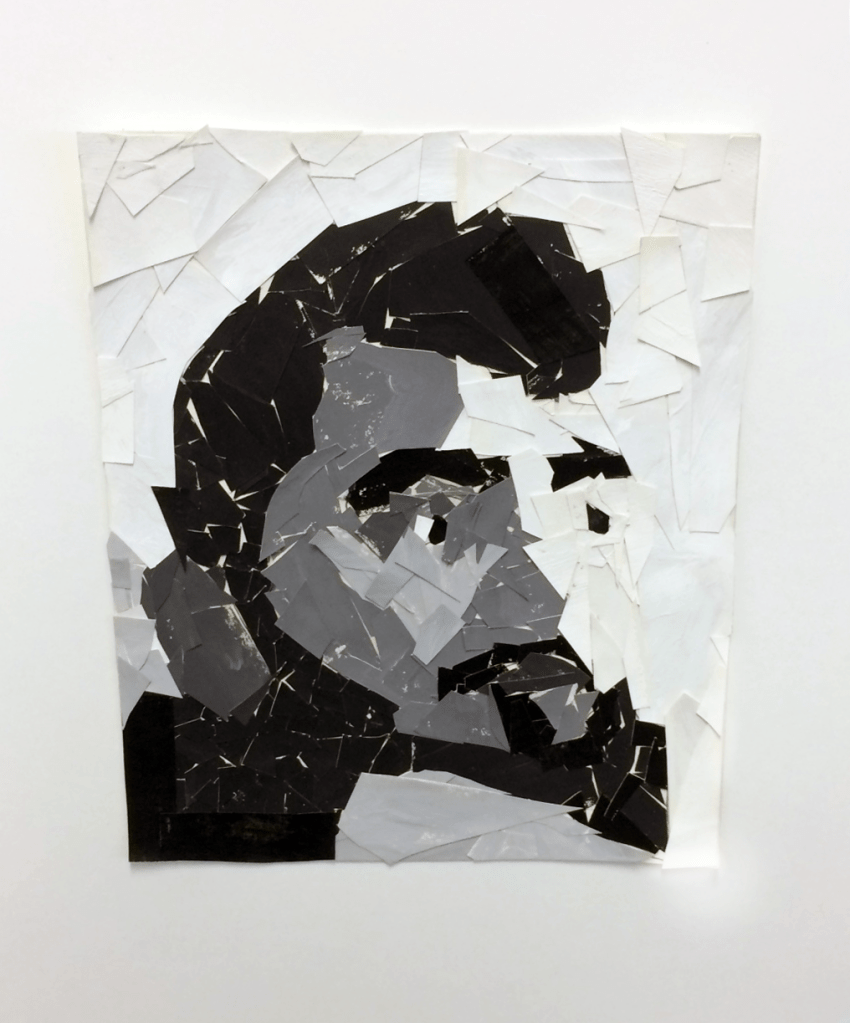
Hi!, My name is Jaspal Batra but I prefer to be called JP. I am an Art and Design Student and went to Westchester Community College for my Associates Degree before coming here to finish my BFA. This is my first year at Alfred University and I can’t wait to meet my classmates and Professors when we go back to in person classes. Also heres a piece that I made when I was at WCC