
Ever since its mainstream introduction back in the late ’30s, animation has proved to be a powerhouse when it came to not only children’s entertainment but also adult entertainment. From Max Fleischer’s Betty Boop and Popeye and then eventually Walt Disney, with his many critically acclaimed creations, it’s no wonder that animation has become what it has today. (which is what?)
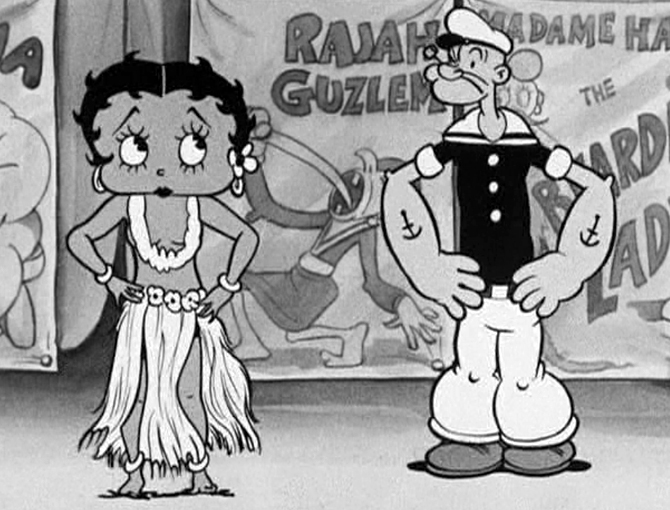
Though things had started out relatively strong and ramped up in the 19 to 2000’s era, there’s been a recent decline in mainstream 2D animated films with less and less 2D animation seen in the modern day. Why is that? With the rise of live-action remakes within the “house of mouse” alongside the take over of live-action sitcoms on TV networks traditionally known for animation, such as the Disney Channel and Nickelodeon, why does it feel as though animated entertainment is taking a back seat?
One of the reasons I believe classic cell animation has been taking a backseat to live action and even 3D animated movies recently is, sadly, money. With the more recent purchase of companies like Lucas films and Marvel, Disney’s focus is no longer on what originally made them the powerhouses they are today. But then again, there’s more to it than that. For me what I believe is the true reason why Disney hasn’t been so successful at, or even motivated, to make 2D animated films is that they are chasing what they once had.

For example, when you think of Disney animation, you may think of movies like The Lion King (1994), Aladdin (1992), Mulan (1998), or even Hercules (1994), etc., To name a few. Though you may initially think of these movies when Disney pops into your mind, you’ll find that there’s a common theme when it comes to these movies. They were all produced between the years 1989 and 1999. This is what’s categorized as the Disney Renaissance. A stretch of years that proved to be the most prosperous for the Disney Corporation. With the help of many workers such as lyricist Howard Ashman, composer Alan Menken, animator Glen Keane, director Kirk Wise, and director Kevin Lima, Disney had pushed their films into high gear when it came to not only stories but music and so on.
Although The Walt Disney company had started off their legacy with their golden age of animation, Snow White and the Seven Dwarfs (1937), Pinocchio (1940), Fantasia (1940), Dumbo (1941), and Bambi (1942), Disney had fallen out within the company after the tragic passing of Walt Disney himself in 1966. With the company on the verge of bankruptcy, it was on the shoulders of the new crew of men coming in the company to take it out of its rut. Which, in turn, caused the rise of Disney once more in the form of the Disney Renaissance. But why did these movies make their mark on the world and how did they go about it?
Well, we can’t go any further on the topic, without addressing the very large elephant in the room. When it comes to Disney, you may think about their music first. Well, you can certainly thank Alan Menken and Howard Ashman for that. Disney’s music-filled animated movies first started out as simple animated films with some songs within them, though with the introduction of these two men, Disney would surge into animated musicals. This had been one of the reasons The Little Mermaid had become such a success and the first animated movie to pave the way for the Disney Renaissance era.
There’s a Youtube video, and subsequently, my favorite You-tuber, who covers this much better than I could ever hope to relay. Though, he relays a saying from PBS:Think Tank: that I find really interesting and something that i feel holds very true and is a big issue with modern Disney movies. “When the emotion becomes too strong for speech, you sing; and when it becomes too strong for song, you dance”. I love this adage because it holds so true for modern Disney. From what I’ve noticed in modern animated movies that try their hand at “the Disney formula” they never seem to pick this up, not even Disney themselves. They’re too busy trying to fill the hole that Disney left off that they’re forgetting the key aspects of what made Disney’s movies back then so powerful. In the video below, the video even explains why he believes the movie Tarzan was the reason this golden era of Disney ended. Music was, and is still, such a big part of Disney but it’s the way they’re going about using their music that makes their movies so palatable and great.
Disney is a large multination corporation with many holdings and subsidiaries, and from what i’ve noticed the companies that try to follow in its footsteps tend to miss what used to make them such a powerhouse. One of the last key things that i think made Disney so synonymous with creativity and expression was the fact they weren’t afraid to tell strange and fantastical stories. From old grimm stories to stories about families of the future, there wasn’t a fear of showing these amazing stories that went beyond the imagination. Though, with modern times I see that such a big company, such as Disney, are more focused on remakes, live action, and sequels. Although Walt himself wasn’t that gracious of a man, I can hardly believe that he’d be alright with all that’s gone on today with his company. Disney used to be that of imagination and creation, but now it’s just the shell of what it once was.
Work Cited:
“Think Tank: Transcript for ‘The American Musical, Part 2.’” PBS, Public Broadcasting Service, http://www.pbs.org/thinktank/transcript1261.html.
Pallent, Chris. Demystifying Disney: A History of Disney Feature Animation. Continuum Books, 2011
 Mass Media and American Life