
The 1920’s to 1950’s were an exciting time for the film industry. Many famous actresses and early pioneers of film graced the screens during this time. However, for African Americans and persons of color, Old Hollywood was a different experience laden with racism, discrimination, and misrepresentation to the public. This lack of representation, along with a reliance upon stereotypes, contributed to underlying racial messaging that has helped shape a culture in film and television which disregards everyday life experiences of the African American (and other persons of color). Many talented actresses at the time were forced to play roles such as the “mammy” and hypersexualized provocateur that misrepresented them and brought shame to their race. These portrayals through film and cinema have helped to shape and solidify the images of public perception (although these images have changed over the years and representation has improved in recent years). The concept of identity, and how a person presents themselves to make a living, is not only an issue that has historically hindered Black actors and actresses, but everyday Black Americans as well. (How the Camera Sees Color) The beginnings of Hollywood filmmaking were neither kind nor truly representational for minorities.
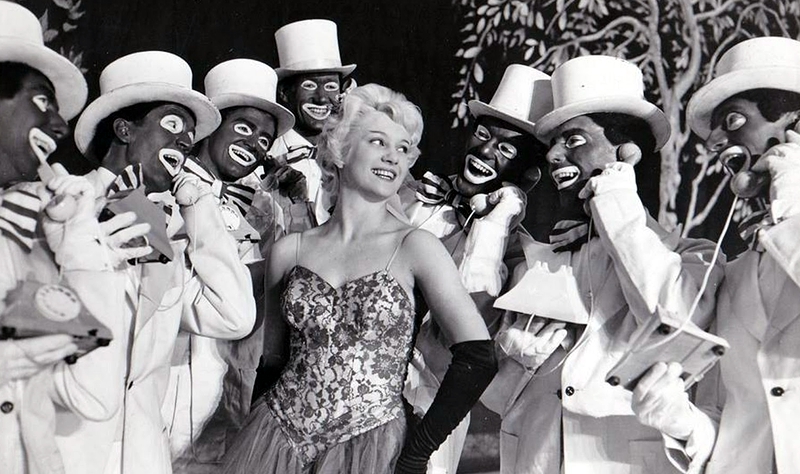
Colorism and racism plagued early Hollywood, from silent films to minstrel shows, to segregation on set and has long influenced opportunities available to African Americans in the film industry. Colorism is defined by the National Museum of African American History and Culture as the discrimination against individuals based on their skin tone. In response to this discrimination, historically, African Americans often found alternate ways to present themselves when starring in films. Some actors moved outside the mainstream film industry while others played into stereotypes. The effects of colorism have proven to be damaging to the identity of Black Americans by leading to internalized oppression in the Black community. (On Dark Girls) http://static.oprah.com/pdf/dark-girls.pdf
When African Americans were cast, lighter skinned actors obtained the more prominent roles. Roles for darker skinned actors and actresses amplified racist stereotypes, such as the role of the “mammy.” This put many lighter and darker skinned African Americans into a situation where many felt as though they could not simply be Black without being categorized. This caused many lighter skinned African Americans to make attempts at passing for White in public settings in order to compete for more opportunities, which led to increased tensions in the Black community. (How Camera Sees Color) Some actresses felt it necessary to pass for White and many African Americans turned to other means of altering their skin tone. Even lighter-skinned actresses and actors would have their makeup done in a way to make them appear even lighter. Frequently, advertisements would make actors and actresses not only appear light-skinned, but almost white. Many young children and teenagers of darker complexion began to think that it was “bad” or “evil” to have dark skin and so much that some used harmful chemicals to lighten their skin. These actions have proven to have serious implications on many levels.
As White and light skinned actors and actresses became the stars of most Hollywood films in the early 1900’s, darker skinned individuals had few opportunities for performing on screen. When they did have an opportunity, it was primarily to play on racist stereotypes and assumptions about Black people. Many Black actors and actresses, whether they wanted to or not, were subjected to skin appearance alterations including blackface. Blackface is the use of makeup to exaggerate skin tone and facial features and was used in the entertainment industry to present a stereotypical and racist image. (How the Camera Sees Color) Soon African Americans audiences grew tired of seeing themselves portrayed in such stereotypical and racist ways and decided to take matters into their own hands. Between the 1910’s and 1950’s, African American movie theaters grew in popularity by featuring race movies. Race movies portrayed Black actors and actresses in a way that Black viewers could relate to. These films were produced as part of the African American ‘uplift movement’ and were designed with African American audiences in mind. (Early African American Film) In a popular film, Micheaux’s Within Our Gates rather than casting African Americans as “pickaninnies” the characters are “deeply engaged in the political and intellectual life of the day, debating racial uplift and waging philanthropic campaigns even as they wrestle with the romantic torments typical of melodramas of the period.” (Early African American Film) While hundreds of race films were produced in the early 20th century, they were excluded from the mainstream. Although African Americans responded in creative and resourceful ways to discrimination during this period, colorism in Hollywood remains a pressing issue well into the 21st century.
The historic absence of African American actors and actresses in leading roles has been evident throughout the history of Hollywood films. As Black women struggled with areas of Otherness in order to emerge as Hollywood actresses in their own right, mainstream cinema erased, marginalized, and devalued them denying them their cinematic voice and reducing them to “the body.” In addition, many Black actresses’ contributions have been minimized or completely erased in the Hollywood histories of cinema. If a role were obtained, it was frequently positioned as the “shadow” for leading White female actresses of the time. In many films prior to the 1960’s, the Black actress’s main function was to illuminate the virtue, beauty, morality, sexuality, sophistication, and other qualities embedded in the “whiteness of the female character.” (The Struggle for Visibility..) If she were of mixed race, (which many were) the Black actress was the “dark” self and usually reflected negatively on the White female actress. In addition, the Black actress was typically cast in a minor role and usually played the maid/subservient, mammy, matriarch, or hypersexualized woman who was a shadow in the background of the film. In playing the shadow to the leading White character, she contrasted with what was considered correct, upstanding, or morally befitting. It was rare that the Black actress could expect to be viewed or judged based on her acting talent. The industry always identified her based on her race and sexuality. In addition, Black actresses had to be prepared for segregated practices on the studio lot and for accommodations inferior to her White associates. Segregated seating in public transportation, public facilities, and restaurants, as well as pay inequities made the Black actress’s experience in the Hollywood industry difficult.
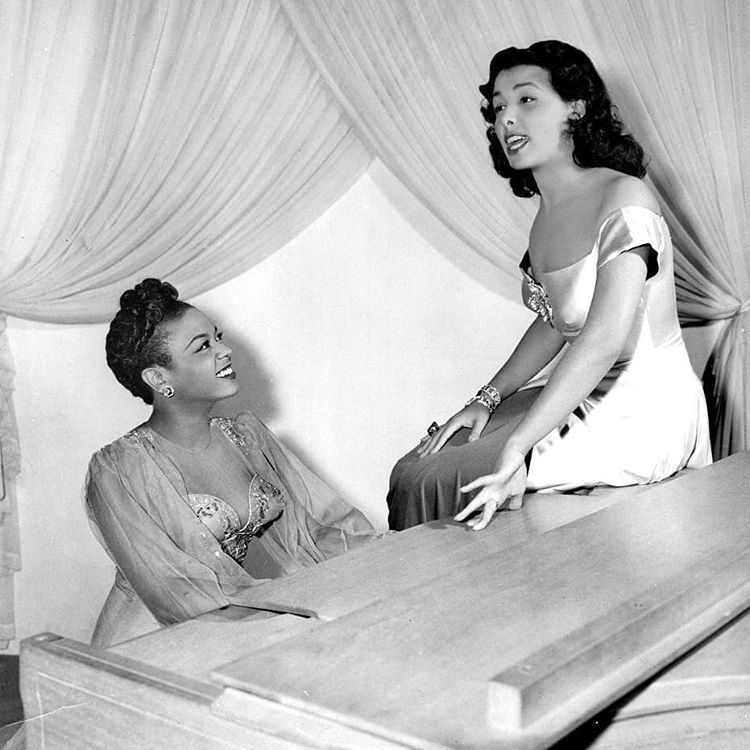
By the end of the 1920’s, the best-known Black actress working in Hollywood films was Nina Mae McKinney. The 1930’s introduced many new White screen actresses, most notably Bette Davis, Joan Crawford, Shirley Temple, Ginger Rogers, Katherine Hepburn, Jean Harlow, Mae West, and Loretta Young. Black actresses began to gain prominence as the screen companion, or shadow of these actresses. They included Louise Beavers, Hattie McDaniel, and Fredi Washington. With the beginning of the 1940’s, White actresses such as Jane Russell, Lana Turner, Lauren Bacall, Rita Hayworth, and Judy Garland began to gain prominence. (The Struggle for Visibility) Only a few Black actresses such as Lena Horne, Hazel Scott, and Ethel Waters were able to come close to the sort of fame these actresses had. The complications of racial identities with the roles they were asked to play on screen manifested in controversies within the Black community and the Black press. There were not solely the issues of “passing,” but also the issues of how a Black actress’s on-screen roles reflected on the entire Black community. The controversy ranged from actresses such as Hattie McDaniel who was accused of actually “being” the “mammy” figure she represented on screen to Dorothy Dandridge whom many had assumed internalized the role they played on screen. Lena Horne and Hazel Scott were able to negotiate lucrative contracts with major Hollywood studios that excluded them from playing roles that Blacks considered demeaning to the race. Beautiful, talented, well-spoken, and with an air of confidence and pride, Horne and Scott did not fit the image of Blacks that southern Whites preferred at the time. Scott was an activist who revealed the complexities and magnitude of issues that centered on Black actresses, which spilled over into the society at large. These issues were debated in the Black press, the Black community, in Hollywood, and in American society at large during that era. As African Americans struggle for more representation in media and film, we can look back at the early pioneers who fought for so much more than just a starring role.
The early 20th century was indeed an exciting time for Hollywood and film, but the African American actress had a more complicated role to fill. Not only did she have to grapple with playing the role without belittling herself or bringing shame on her community, but she also faced issues of colorism, racism, and discrimination. Working on set included navigating segregation issues and playing the shadow to more prominent White actresses at the time. The early film industry distorted the image of the African American female for its own personal gain and assisted in shaping and cultivating racist points of views in culture, film, and early cinema.
Works Cited
Regester Charlene B., African American Actresses: The Struggle for Visibility, 1900—1960, Indiana University Press, 2010. ProQuest Ebook Central. https://ebookcentral.proquest.com/lib/pensu/detail.action?docID=547023
Smithsonian: The National Museum of African American History and Culture https://nmaahc.si.edu/explore/stories/collection/how-camera-sees-color
The Association of Black Psychologists, On Dark Girls
Early African American Film, Reconstructing the History of Silent Race Films, 1909-1930 https://dhbasecamp.humanities.ucla.edu/afamfilm/whatis/history
You-Tube. The Birth of a Nation, 1915. https://www.youtube.com/watch?v=nGQaAddwjxg
You-Tube. Within Our Gates, 1919. https://www.youtube.com/watch?v=gtwrCto9az0
 Mass Media and American Life