
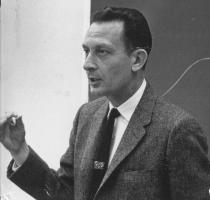
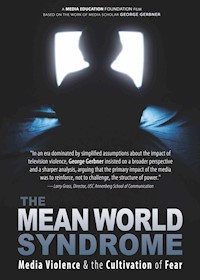
People have been asking for years if watching violence on TV makes people violent. This is particularly concerning for parents with young children. One researcher, George Gerbner, studied violence in the media for 40 years. his view was not that violence causes violence but watching violence desensitizes us to violence and somewhat paradoxically more violence we see the more fearful we are of violence. In the film “Mean World Syndrome” it is stated that children see 8,000 murders on TV by the end of elementary school and 200,000 violent acts by the age of 18.
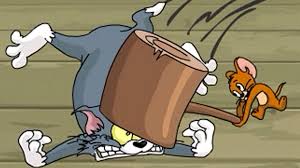
Gerbner states that most of the violence we see is “happy violence.” This is violence that is meant for a laugh. Death without the consequences. A cartoon showing someone slipping on banana peel or someone getting hit on the head with a pan. This type of violence has been around as long as media has existed.
In the film “Mean World Syndrome” we learn about the broadcast of Orson Welles’ “War Of The Worlds.” This broadcast was about the martian invasion of earth. So realistic was the broadcast that people actually believed it and panic ensued. Some people in fact jumped out of windows.

The mean world syndrome is one where people perceive the world to be more dangerous than it is. In the slides Gerbner talks about the three groups of TV watchers which are Heavy (4 hrs or more), Medium (2-4 hrs, and Light (2 hrs and less). In Gerbner’s world heavy watchers perceived the world as more violent and dangerous than light viewers.
In the slides we also learned about the effects media has on people. We learned that the audience is not passive and that TV satisfies needs which might be cognitive (knowledge acquisition) , affective (using media to satisfy emotional needs) , personal integrative ( social validity and credibility) , social integrative ( needs to socialize with family and friends and develop or retain relations in society) , or for tension free needs (people often use media as escapism).
In the film “Human Behavior Experiments” we learn about the Bystander effect and the famous Kitty Genovese case where in 1964 Kitty Genovese was stabbed outside the apartment across the street of where she lived while people looked on and apparently ignored cries for help.

We also learn about the famous Stanley Milgram experiment in obedience to authority which looked at the administration of punishment of affected learning. Another famous experiment called the Stanford Prison experiment investigated the psychological effect of perceived power and its impact on how “prisoners” were treated. This famous experiment showed that though people knew they were an experiment those who were randomly assigned to being guards became increasingly violent and brutal with their “prisoners.”

It is clear from the Milgram experiment and the Stanford Prison experiment, and the many clips shown in this film that authority and insensitivity to violence can induce some bizarre behavior. One of the most recent examples of this was at the Abu Ghraib in Iraq where prisoners were openly tortured and humiliated by American soldiers in an effort to extract information from them. These guards were given orders some implicit and some direct to do what it takes to get information out of the prisoners. This, along with other atrocities shown in this film are very regretful and sad aspects of the impact that power and the subjugation of violence has on society.
 Mass Media and American Life
I thought it was very good to make the distinction between how people normally view as the impact of violence and how it actually impacts people based on Gerbner’s theory. I have heard so many times that watching violence causes violence, but that always seemed off, and yet, we do know that watching so much violence has to have some sort of an impact. I also thought it was shocking how many murders on TV children have seen by middle school. If possible, that seems like something that people should try to limit in the future.
LikeLike