
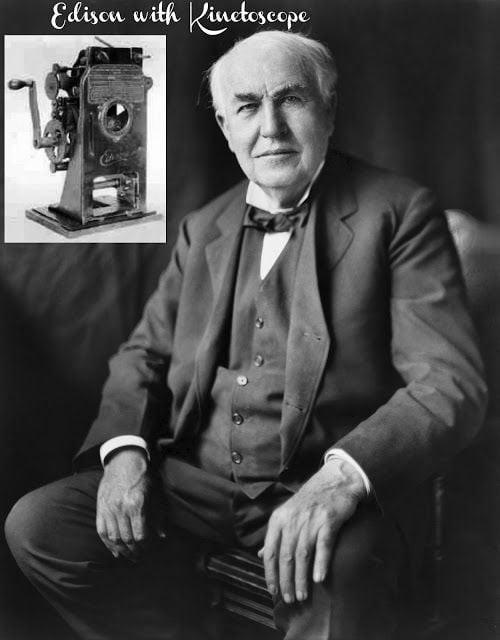
It is difficult to compress the history of the motion picture industry into 500 words. Our assignment this week started with Thomas Edison and his invention of the kinetoscope in 1891 which introduced motions pictures to a mass audience. Later, Auguste and Louis Lumiere invented the cinematographe which allowed motions pictures to be projected for an audience. By 1910, the nickelodeon had been established allowing people to pay 5 cents to see a movie.
With the creation of the motion picture industry, movies took off. A majority of the population was going to the movies. Silent pictures initially were short in length and focused on comedy and romance. Charles Chaplin, Buster Keaton, Harold Lloyd and other writers/directors/actors became household names. Studios controlled the actors and the flow of movies. In 1919 Charles Chaplin, Mary Pickford, Douglas Fairbanks and D.W. Griffith founded United Artist so that they could make their own movies without interference and pressure from the studios.
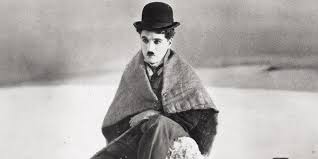
By 1927, silent pictures had run their course and talkies became the rage. The first of these was The Jazz Singer with Al Jolson. Twelve years later came color with the Wizard Of Oz and Gone With The Wind. Hollywood studios such as Paramount, Twentieth Century, RKO, MGM, and Warner Brothers dominated the industry. The Thirties and early Forties became the golden age of cinema.
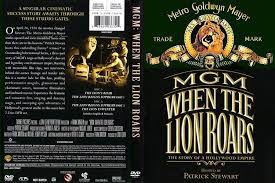
The History of Metro Goldwyn Mayer as depicted in MGM: When The Lion Roars was fascinating. The combination of the scrappy Louis B. Mayer and the sauve, quiet and unassuming Irving Thalberg were a match of opposites but they were the perfect match to run this important and influential studio. MGM discovered actors such as Clark Gable, Greta Garbo, Joan Crawford, and Spencer Tracey. Established names such as Buster Keaton, Lon Chaney and Wallace Beery joined the studio. Top directors such as King Vidor, Erich von Stroheim joined as well.
The 1950’s brought about TV. Why should people go to the movies when they could sit at home with their family watching TV? Though some great movies were released in the fifties and sixties such as Singing In The Rain, All About Eve, An American In Paris, To Kill A Mockingbird, and Bridge On The River Kwai.
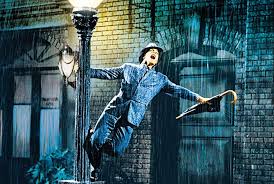
During the sixties and seventies there was a rise in films including Jaws, Star Wars, The Godfather, and Indiana Jones: Raiders Of The Lost Ark. The 1980s brought about the adoption of the VCR which brought movies into our households. The 1990’s further brought about improvements in computer animation and special effects with movies like Jurassic Park, Toy Story, and the Matrix.

Though 3-D had played a role in the cinema of the 1950’s it received a renaissance in the 2000s. Today, 3-D has also entered the TV realm with an increasing number of programs in 3-D. At first 3-D was a cool profit making center for the motion picture industry with movies like Journey To The Center Of The Earth earned sixty percent of its revenue through 3-D sales. Some of the top grossing movie of all times such as Avatar and Alice in Wonderland were released in 3-D helping them get top grossing status.
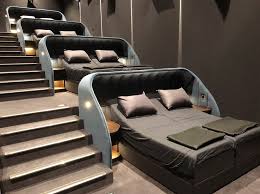
Todays movie theaters not only have 3-D but have surround sound, motion seats, wind, fog, lighting, bubbles, water, scents, beds, sofas, playrooms, and lunch and dinner. What’s next is anyone’s guess.
 Mass Media and American Life
The history of the motion picture industry is incredible. I especially found the developments that MGM made were super interesting. For instance, the production of the movie, Ben Hur, was fascinating. The MGM documentary said there were 3,500 extras in it! I agree that movies and theaters will continue to progress, but I wonder if we will ever really return to the glory days of film.
LikeLiked by 1 person