
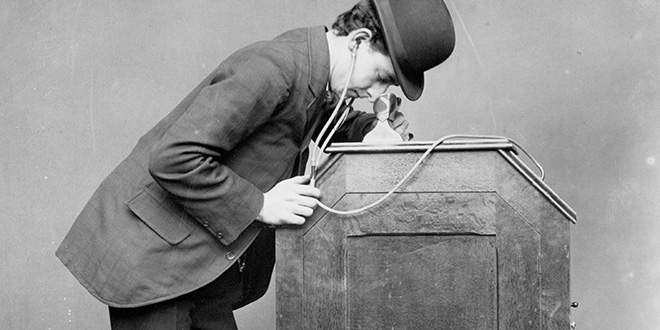
According to the article, Structure of New Hollywood…
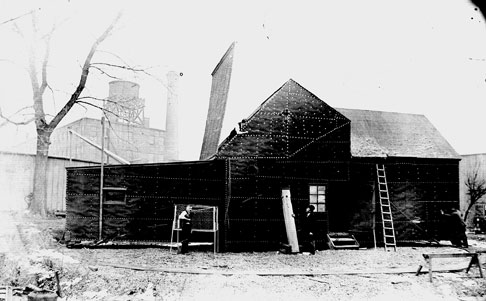
From the 1920s through the 1940s, the “studio system” referred both to a factory-based mode of film production and also, crucially, to the vertical integration of production, distribution, and exhibition. The movie industry consisted of the “Big Eight studios,” whose filmmaking factories in Hollywood fed their nationwide distribution operations.
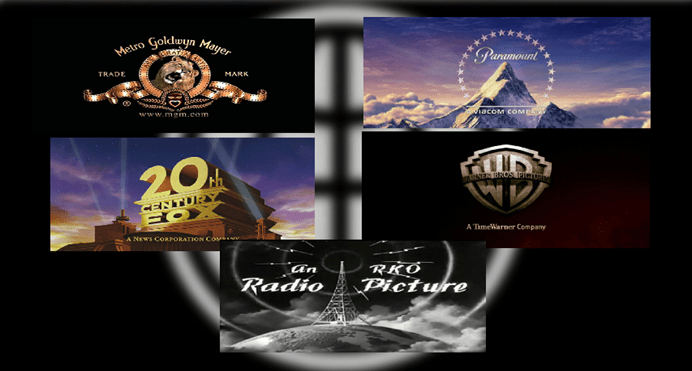
The most powerful of these firms were the fully integrated Big Five studios – MGM, Warner Bros., 20th Century Fox, Paramount, and RKO. They produced and distributed films and operated their own theater chains. The Little Three “major minor” studios – Universal, Columbia, and United Artists (UA) produced and distributed top feature films but did not own their own theaters. (Schatz. Structure..) In the You-Tube video, Film History: Rise of the Studio System, they said the only true system that was emulated around the world was the Hollywood “Classical System.” Through Hollywood’s easy to mimic comprehensive editing style, as well as its exploitation of the “Star System,” the American Studio System rose to complete power which ushered us into what we now call, “The Golden Age of Hollywood.”
Before the Golden Age, Independents notably Adolph Zukor, paved the way for the “Star System.” Independents began producing road shows and foreign films. Zukor gained complete control over production distribution and exhibition of films. He fully took advantage of an industrialized factory system of production. He was the first to appeal to Wall Street for financial backing attracting investors. He would gain enough capital to vertically integrate his business. He then purchased theaters and exhibition venues across the nation. Zukor looked overseas for profits and lobbied for open international markets. He was not only business savvy, but he had a deep understanding of the public. He focused the public’s attention on the “stars” influencing the idolization of them.
“Zukor’s mastery of the business of film, his political support, and his perfection of the Hollywood “Star System” ultimately explain why he became one of the most defining figures in early cinema.”
-Matthew Fielder, Film History: Rise of The Studio System
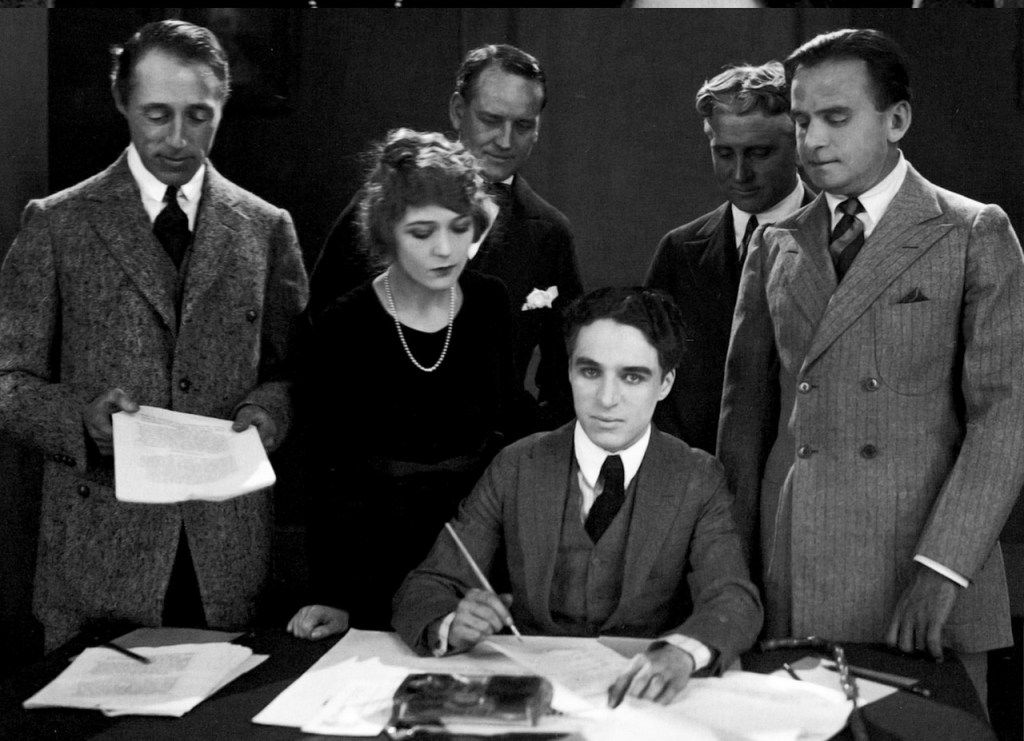
After WWI, we severed a unified European Union and some of the stars began to rebel. In 1919, Charlie Chaplan, Douglas Fairbanks, and Mary Pickford, and D.W. Griffith established “United Artists,” a studio who declared independence from the “Independents.” They eventually ended up having to comply with the studio system since it could not keep up with the rate of production of the capital rich studios.
Economic competitors, the Soviets, sought to define their own style of cinema against the American way. Russian acting theorist, Constantin Stanislavski formulated the influential method, where actors internalize their performances, focusing on motivations and objectives. The Soviets also developed the theory of montage. In a series of experiments, Lev Kuleshov illustrated that the meaning of a montage sequence is not determined by the content of the elements of the montage, but by their juxtaposition.

“Battleship Potemkin,” a Russian Film by Sergei Eisenstein is regarded as one of the best films of all time. It dramatizes the crew and its rebellion against its Czarist officers. The film employs every experiment of montage theory to render an emotional response from the viewer. The film is considered violent by even today’s standard and the sequence highlights the massacre of the Bolsheviks under the oppressive Czarist soldiers. The film not only influenced political leaders and propogandists, it influenced the work of famous filmmakers, such as Coppola in “The Godfather” and DePalma in “The Untouchables.”
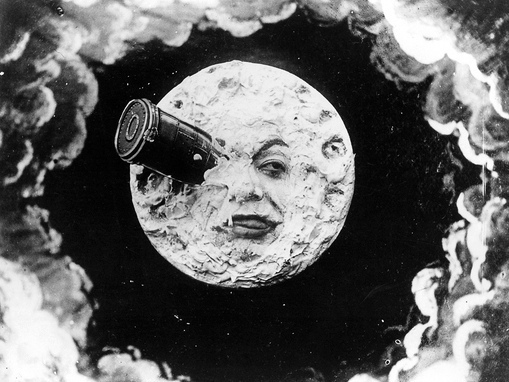
In 1948, the Paramount decree resulted in the U.S. government ordering the “Big 5” to sell their theatre chains. This leveled the playing field and opened the flood gates for anyone to make a movie.
Questions: Do you think that the “Big 5” should have been made to sell their filmmaking factories? If they were able to keep them, what effect do you think this would have on the current filmmaking industry?
Works Cited:
Schatz, Tom. Structure of New Hollywood, pp. 13-29
M Libraries. Understanding Media and Culture, ch. 8
You-Tube, Film History: Rise of The Studio System
 Mass Media and American Life
I have mixed feelings about the big 5 studios being forced to sell their theaters. I think that it is a good thing in that more people are now able to make movies, but it could have been really cool to see what MGM would have done in even these past few years if they were allowed to keep their theaters. Would they still have stuck to their goal to do 52 films a year? It would be pretty awesome for there to be a new movie coming out each week. I’m glad for all the movies they were able to make before the Paramount decision.
LikeLiked by 1 person