
This weeks readings focused on many of the negatives of social media in particular Facebook. Among the many disturbing issues was a story about a lawsuit against an 8 year-old who had jumped in his aunts arms and caused her to fall and break her wrist. The aunt ended up suing for $127,000 for her medical bills. in an effort to pay for the surgery had to sue the nephew who would be covered by homeowners insurance. When the news media got a hold of this they interpreted it as “aunt sues the nephew for hugging her.”
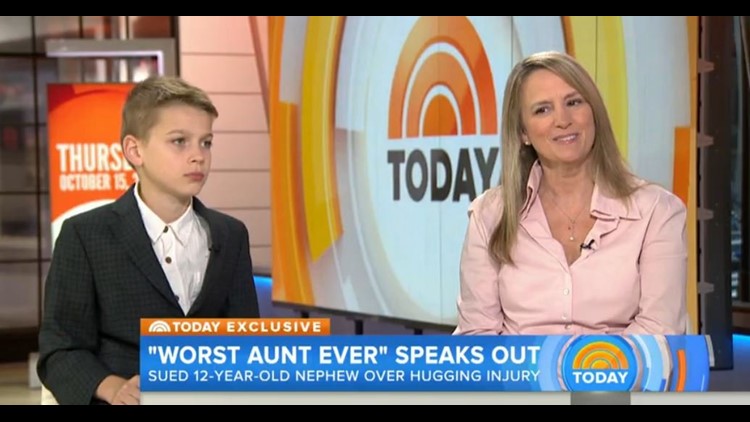
Once the reporters wrote their story, a social media frenzy kicked in. Stories about the “worst aunt ever”, “the auntie christ” and calls for her have her legs and other wrist to be broken circulated on twitter, facebook and other outlets. The misinterpretation of this story had to be counteracted by the aunt going on the today show with her nephew to explain the facts about the suite.
This was one obvious example of the damage of social media. The rest of our assignments focused on the subtle forms of social influence. Facebook being the largest social media outlet was discussed in almost all of the other assignments. One of PBS stories focused on “Facebook Dilemma” and how its algorithms are used to gather information on people who use Facebook. This information could be who you vote for, what you buy, what celebrities you like, what your politics is, who you message, what sports teams you like, etc. Armed with this data they can sell it and once they sell it they have no control how that data is used.
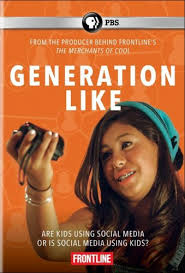
In another PBS Documentary the “Generation Like,”Douglas Rushkoff interviewed teenagers who became influencers as a result of Facebook, Instagram, Youtube and other outlets. These overnight sensations were able to increase their likes from hundreds to millions simply by doing funny things and making commentary. These kids began to indorse products and make money from their endorsements.
Two New York Times editorials focused on Facebook. One talked about how news has shifted from being very broad to being very segmented to the viewer through social media. Now you can read the news the way you want to read it and in a Wall Street Journal article they actually had two columns of news interpreted by liberal and conservative outlets. Whether it was ISIS, abortion, guns, healthcare or Trump. The liberal and conservative outlets reported entirely different takes on the same story. This is segmentation that leads people to hear what they want hear and read what they want to read. It is an example of birds of a feather flocking together.
In another opinion piece Ross Douthat discussed that Facebook is neither liberal or conservative or Republican or Democrat. It is what we make it. It is a neutral outlet which only shapes opinion in very subtle ways through its algorithms and what it post and what it removes from their site.
Finally, a lengthy report by Pew Research Center shows that people are actually selective in what they discussed in social media. Looking at the Snowden NSA episode people were hesitant to discuss their opinion on social media outlets. They would rather talk about it amongst their family and friends. As we learned from one of the other videos what you put on the social media, even if it’s removed it still stays there forever. I would imagine that people do not want their opinions on someone who is perceived to be a traitor forever online.

Reading these assignments and watching these videos gives you great pause about what you say on social media, whether it is controversial or not. This information can ultimately be seen by U.S. intelligence agencies, foreign governments, or used by organizations to use that data for nefarious purposes. Not having that control of that information is indeed a fighting thought.
 Mass Media and American Life