
Music is a timeless form of communication that has been utilized to unite people, spread messages and as a means of artistic expression. It changes so much every decade, often outlining generational gaps. It’s so funny to think that oldies stations are going to turn into something ancient and unheard of in the next 10-15 years. Today’s top artists have gained recognition in so many different ways. Some by social media outlets like YouTube, others through putting their music on Spotify.. This would not have been possible 20-30 years ago.
I watched the Napster Documentary in Social Media and Society last semester and just found it’s creator, Shawn Fanning so interesting. He struggled a lot growing up and used listening to music as an outlet. He didn’t feel the need to pay for to download songs (through big music corporations) and therefore created ‘Napster’ a free music platform that people could share songs on.. putting huge music/recording agencies out of business. He was even sued by the band ‘Metallica’ as well as The Recoding Industry of America’ for copyright infringement (essentially stealing copyright). In the end Shawn Fanning settled paying both a portion of money and converted Napster to a subscription system (to reduce site traffic.) Watching this documentary made me realize how powerful the internet is and how easily platforms, app’s and sites can be created. His story is just so cool.

Napster made history in peer-to-peer music sharing so much that ‘Time Magazine’ featured him on their cover. He was only 19 at the time. Does anyone think that Metallica and the Recording Industry had a valid reason for suing? Or… believe it’s as simple as everyone deserving the right to free music.
The first commercial radio station gained establishment in 1920 and paved the way for radio to be a booming business for the next decade. People took listening to the radio really seriously and would tune in to listen to the president speak and make important announcements. This was really popular during WW1 and WW2 as entire families would turn on the radio just to hear the latest announcements in battles that were won and lost- as deployment was necessary and most people had family members fighting overseas.
#tbt to when sitting around the radio and tuning it improve the sound quality was still a thing.
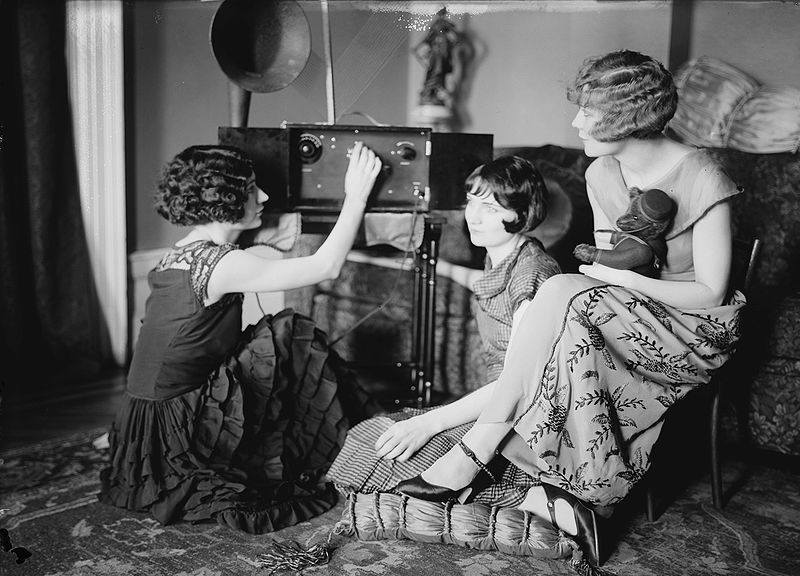
I thought the Frasier episode we watched about radio was really funny. It’s so easy give off a fake persona on air as nobody is able to watch your facial expressions. It also really highlighted just how popular radio was ‘back in the day’. People incorporated the radio into their day just as people use music as such a vital part of living now. However odd that may seem to a lot of people, I love listening to the radio. I enjoy listen to NPR’s Story-core among other programs that I find interesting and intellectually stimulating. For me (among many other people) it’s easy and takes minimal effort to just turn on the radio in the car, if your not really in the mood to jam out. There are so many talk shows on television that are really popular however, just lack the overall convenience of turning on the radio. That being said, music consumption is still wayyy more popular.
Does anyone think that radio could make a major return? I (for one) see it with Gen. Z getting so involved in politics and leading movements.
 Mass Media and American Life
I think the radio could make a come back for sure but not like we see it know and have seen in the past. We will probably see more people staring to stream radio through their phone on an app made by the radio station.
LikeLike
I definitely think there’s merit to both sides when it comes to artists suing Napster. I for one believe it’s fantastic Napster was created, I feel like it opened up so many avenues that are now a core focus of the musicians present today. But I also understand where artists were coming from at that time, they put lots of hard work into their music and they put money into it too, then they find out people have made it easier to avoid paying them. As someone who gets asked to make free art a lot, I can somewhat understand that frustration. I do feel that it’s less Artist vs. Consumer and more like the stagnant corporations who have made it such a sticky situation.
LikeLike
I do not think we will see a return to the radio. I think we will see an evolution in streaming apps. Where the radio used to be the place to go to listen to music and other stories/ information. We have already seen this evolution begin. Talk radio is now replaced with podcasts. It’s the most efficient way to get the information and fits in well with our routines of going to our phones for pretty much everything.
LikeLike
I do not think radio will make a major return because of all the technology and streaming devices that are being created. The youth is moving onto having iPhones and downloading their own music onto there. The only reason they even have a chance of listening to the radio is in the car and most people play their own music from their phones.
LikeLike