
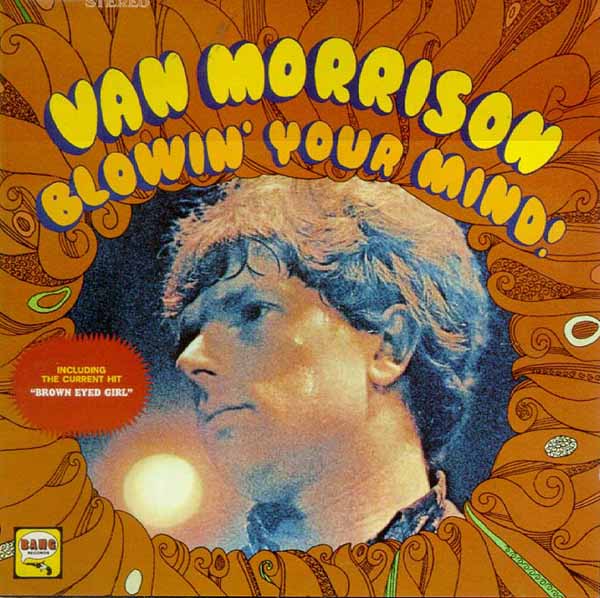
My fingers pluck the strings of my ukulele, and the popular Van Morrison song floats out.
“That’s “Brown Eyed Girl,” my middle-aged neighbor comments as recognition crosses his face.
“Yep,” I smile. “We were listening to the Oldies station at work, and I thought this one would be a good one for my uke.”
“The Oldies station? Man—70s and 80s songs being on the Oldies station. That’s crazy.”
This conversation I had with my neighbor helps to demonstrate the fact that music spans time, ages, and cultures. Music is magic. You can listen to a song over and over and it does not get old, and I can enjoy the same music that my neighbor did when he was a kid. Understanding Media and Culture goes through the history of music in Chapter 6. Along with different genres of music is how it has morphed in the way it has expanded to people. Again, the reason for this change, like with most forms of mass media, is due to the introduction of technology. Digitizing music completely changed the game. The question becomes then, how does one make music easily accessible to the public but also allow for the artists and music industry to make a living? How do artists combat piracy when it is so common?
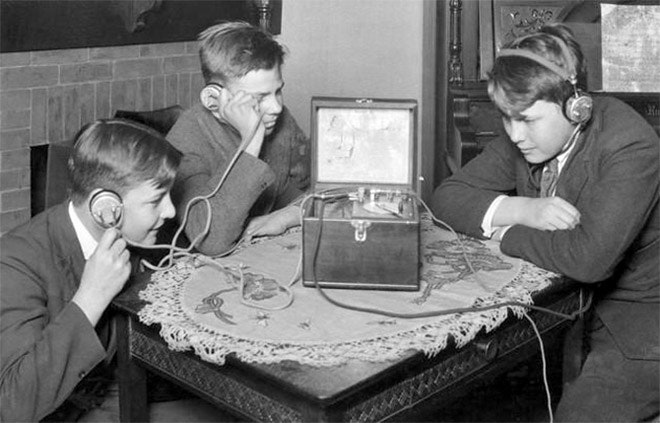
Understanding Media and Culture says that, “In 1877, Edison discovered that sound could be reproduced using a strip of tinfoil wrapped around a rotating metal cylinder…” (214). His invention led to the gramophone, “which used flat discs to record sound” (214). Eventually, radio was developed. The textbook says that, “Radio was an affordable medium that enabled listeners to experience events as they took place… This development was a threat to the entire recording industry, which began to campaign for, and was ultimately granted, the right to collect license fees from broadcasters” (216).
The introduction of radio is where we first see this idea of “free” music, and if you fast forward several decades, the same sort of problem occurred with the introduction of Napster. The documentary, Downloaded, tells the story of Napster. Basically, Napster was the inspiration for the streaming sites of today, and it made it so that people should get online and share whatever music they had with their friends, and they could download whatever they wanted. Unfortunately, it led to a lot of pirating of music. Though some artists were boosted in popularity by people being able to listen to their songs for free, other established bands were losing a ton of money because of it. Chris Blackwell says in Downloaded that, “This is the first time technology actually attacked the existing system and started to take it away.” Napster had to go to court, and even though the company was shut down, it inspired streaming sites like Apple Music and Spotify who have the same concept as Napster, but they are able to do everything legally and artists still get paid for their work.

Everyone agrees that music is meant to be shared and enjoyed by all, but the question is, how can we do that in a way that benefits all involved—the artists, the music industry, and the public? What can citizens do to encourage artists in making music, and how can we discourage piracy?
 Mass Media and American Life
I’m not sure there will never be a way to control and allow music to benefit everyone involved but that’s part of the beauty of music in my opinion. There will always be those who motivate themselves off of greed and power who will always look to screw artists over every chance they get and those who make music just to make money. There will also be those who just make music because they love it and don’t care about money.
But one of the greatest outcomes of something like this is that every good invention or idea was created because of a struggle they needed to overcome. Today we can see countless artists embracing their music and straying away from terrible record deals and publicity because they’ve become more aware of what actually goes on. We also have social media as a tool for artists to grow too. As listeners the only thing we can do to encourage these artists is to just support their passion the best they can and spread their music around for them. The only thing that will solve this is time.
LikeLike