
The 20th Century was responsible for a lot of things, but with media it started with the radio. The first commercial radio station was established in 1920. When you think about families huddled around the radio listening to music, a radio play such as the one we saw in Frasier or a comedy show, it brings warm feelings to think about a family time listening to that radio instead of a group of people sitting the at the dinner table with devices in hand. Everyone is in their own little word and no one is talking or laughing together.
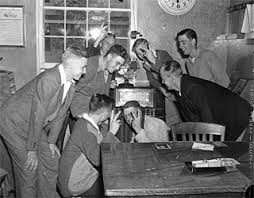
The post war prevalence of radio hugely impacted popular music. Radio airplay of popular songs helped promote record sales. The thirties saw the rise of jazz and blues, vaudeville and ragtime. Rhythm and blues laid the groundwork for rock and roll. Popular music diversified in the 1960s and brought about folk and soul music. Ten years later we had disco and punk. Hip-hop dominated the 1980s and pop became successful in the 90’s and 2000’s. In a period of 80 years over a dozen music genres emerged largely thanks to the radio. That radio evolved from a small box that you plug into the wall to a transistor that you carry around. It further evolved into multiple bands such AM and FM were there are more specialized stations then later to satellite radio where one can find increasingly specialized stations where one can listen to information about one’s sport team or one singer such as Frank Sinatra.

The radio pushed music into the forefront of world culture. Whole industries began to form around music. There was a relationship between culture and music with music influencing youth culture, migration and racial integration. Record labels began to form and records evolved from 78s to 45s to LPs and from vinyl to tape. Bands and singers became successful overnight and made hundreds of millions of dollars.
This all came tumbling down with the creation of Napster.
With the advent of the computer and the ability to digitize music, people could swap music from one hard drive or MP3s to another hard drive thus by passing the record company and copyright laws. Eighteen year old Sean Fanning changed the world with his discovery of Napster, a pioneering peer-to-peer file sharing internet software that utilized digital audio files. With this discovery, he threatened to bring the music industry to it’s heels. This now multi-billion dollar industry was not about to let some 18 year old pull the rug out from under them. Lawsuit after lawsuit was filed and copyright lawyers had a field day. How they asked can Napster bypass the copyright laws? The company that was changing how we listen to music in two short years would be dead. Though the sharing of music through audio songs encoded in MP3 format was not permissible, the digitization of music allowed for a revolution in the music industry leading to new forms of purchasing music such as through iTunes or listening to whatever one wanted listen to with Pandora or Spotify.


In short 80 years it is remarkable to think about the revolution that happened in music. Today we walk around with are airpods stuck in our ears listening to music throughout the day whether it’s doing our homework or eating are dinner. It is hard to imagine a family huddled around the radio waiting for their favorite program or music show. It is also hard to imagine where music would be without the radio or the ability to digitize the songs. Music is such an integral part of our lives — it influences so many aspects of our culture — and the ability to listen to any song you want at any time of day would likely not happen without the discoveries of radio and Napster.
 Mass Media and American Life
Industries were definitley inspired and moved by music. Music is a pivotal part of the world we live in. It holds power to the people around us.
LikeLike