
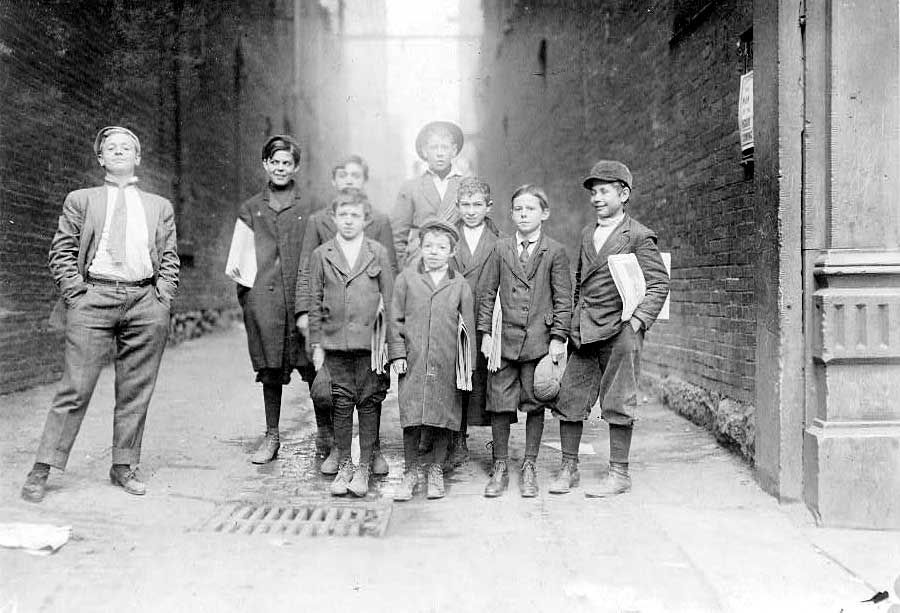
“Extra! Extra! Read all about it!” the little boy on the street corner shouts. It is 1899, and in his waving hand is a copy of the New York World, published by Joseph Pulitzer. The juicy headline beckons those walking by to stop and pick up their own copy from the boy. The boy smiles as the paper exchanges between his hands and the young woman’s. The more scandalous the headline—the more copies he sells. It’s going to be a good day.
The textbook, Understanding Media and Culture, talks about the subject of newspapers in chapter 4. Newspapers have been around for quite a long time with the first weekly newspaper using Gutenberg’s press being printed in 1609 (Understanding Media and Culture, 131). Newspapers, like books and other printed materials, have evolved, and like most evolution, it is not always a good thing. Through the years of experimenting with how newspapers are written and what articles are found within, one can see the highs and lows of the newspaper business. Always connecting with the content in the newspaper is the subject of money. What articles make the most money? Should making the most possible money be the goal of a newspaper? How far is too far with “scandalous” articles? Where does important news fit in? Can articles that portray the truth and important issues also be profitable financially?

Through laws like the First Amendment in the United States, newspapers have had the freedom to write about important issues and not be worried about being prohibited by the government for what they wrote (Understanding Media and Culture, 135-136). Unfortunately, some publishers took advantage of this freedom, and they realized that to make the most money, they had to write articles with bold headlines that may or may not be very accurate. Understanding Media and Culture says that, “In the late 1800s, New York World publisher Joseph Pulitzer developed a new journalistic style that relied on an intensified use of sensationalism—stories focused on crime, violence, emotion, and sex” (138). “Sensationalisim” is still a tactic used to today, and it demonstrates how newspapers have adapted to make money and survive.
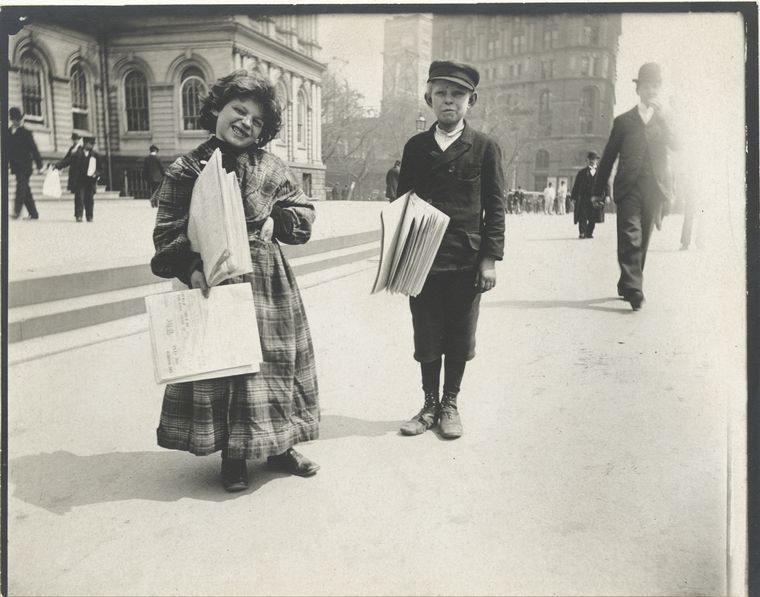
Sadly, newspapers are downsizing and cutting off workers because people just do not read them anymore. Part of this is because of the introduction of the internet. The TV show, The Wire, in a short clip on YouTube demonstrates this in the words, “It’s a bad time for newspapers.” Newspapers need to make money to survive, so again, this could lead to less important and less accurate articles. In the article, “The Guy Who Wouldn’t Write a Hit: An Interview with David Simon” by Claudia Dreifus, David Simon talks about leaving The Baltimore Sun because its quality was going down. Simon made a tough choice, but that is what people need to do for the truth to continue to be told. John Oliver on Last Week Tonight also brings up this balance of expansion and the danger of just going after what is popular when he says, “It is clearly smart for newspapers to expand online, but the danger in doing that is the temptation to gravitate toward whatever gets the most clicks.”
So again, the question remains: How does a newspaper balance the need to survive with the need to write important articles that may not be as popular? Should it be the publisher to make this choice? How much of a change can individual journalists make? As a consumer of media, what media choices can one make to help the newspaper industry both financially and in its content?
 Mass Media and American Life
The problem for newspaper is the access to free knowledge that we are now used to in the media age. If I want to know what’s going on I don’t have to go down the street to the paper boy I can just roll over in bed and grab my phone when I wake up. As for the stories they should write I think it’s a hard call, of course the ‘click- bait’ title on facebook is going to get more interest than a normal news article but we still need that news.
LikeLike