
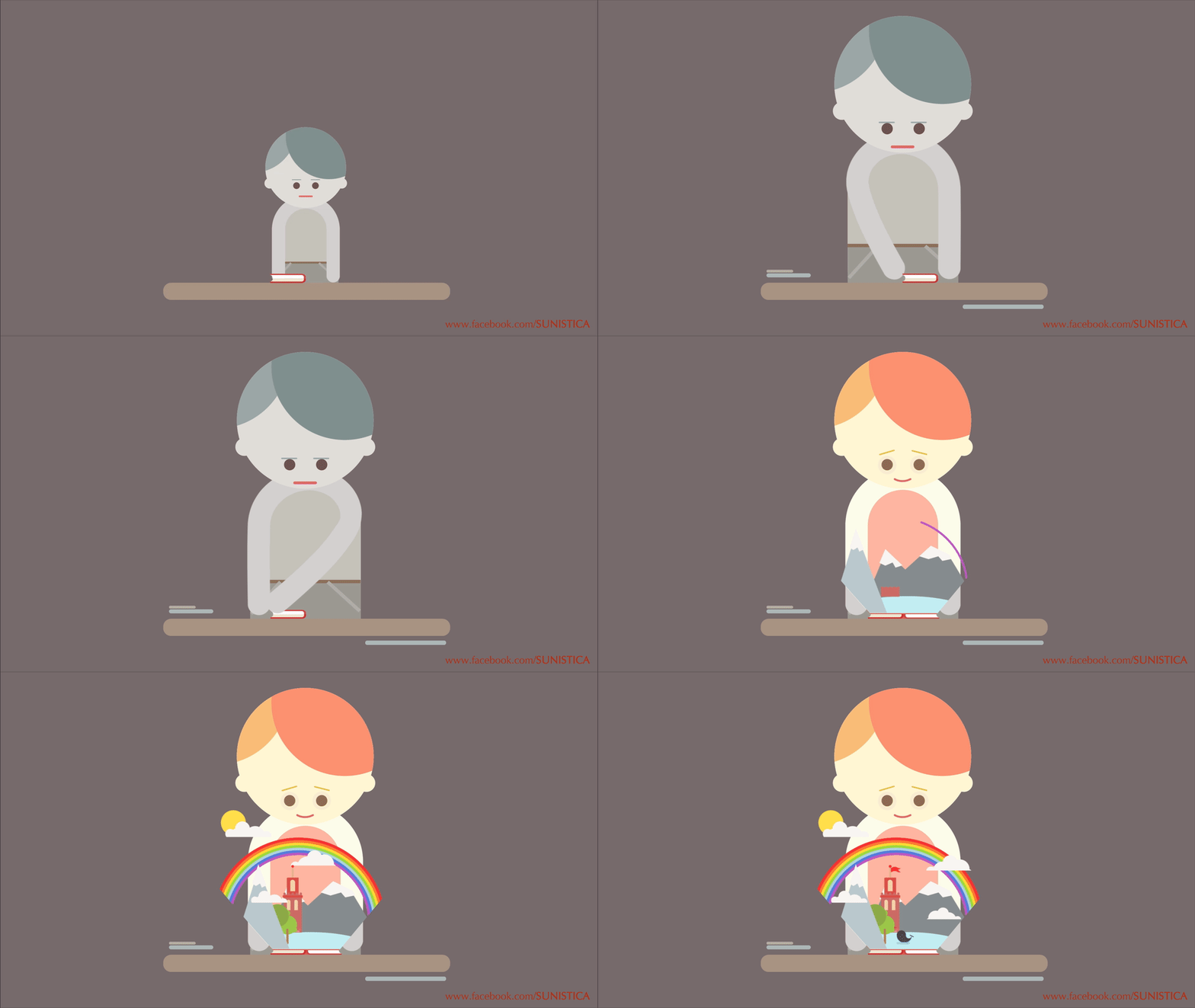
Since the beginning of written history, books have had an integral part in our everyday lives because of the information that contains but recently books have become a little outdated because of the internet and digital media. In the reading, it says “According to the NEA, the overall 10 percent drop in literary readers represented a loss of 20 million potential readers, most of them young. In 1982, young adults (people aged 18–34) were most likely to engage in literary reading; by 2002, they were the least likely group.” (p.82) This decrease is most likely greater now then it was in 2002 due to the internet being much easier to access now compared to 18 years ago. Not only are most classes (as of writing this) are taking place online but more teachers are most likely going to assign textbooks online rather than forcing students to buy the paper copy because of how widely available it is on the internet and how cost-effective it is. Along with the fact that they are up to date with the info online because it’s easier to fix small errors through a webpage compared to a paper copy.
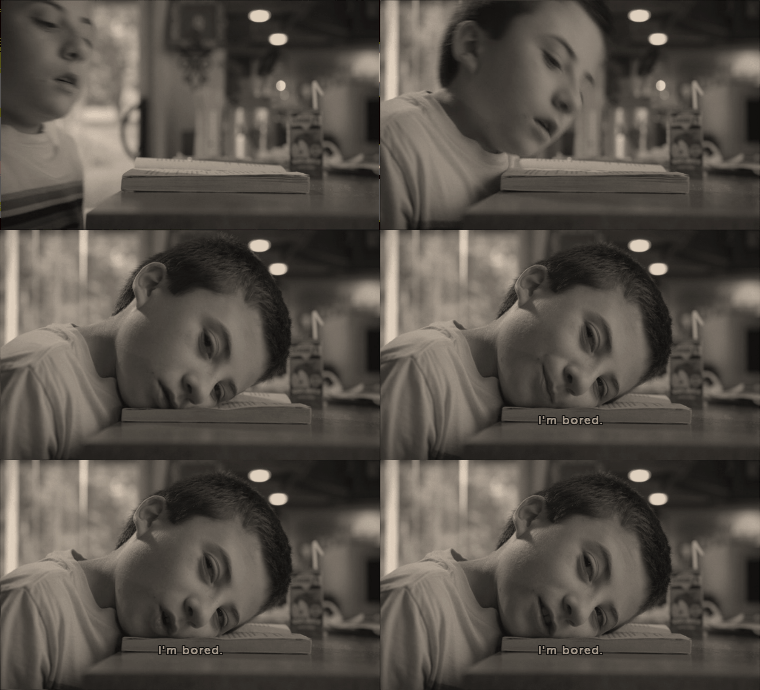
Another factor that is driving consumers away is the waste that they produce. Books are filled with hundreds (if not thousands) of pages in each book wasting paper, in turn killing trees, and rather then having multiple uses, books have only one purpose for their entire lifetime and once its ruined, it becomes waste that is extremely unnecessary in the age of the internet. The reading back statement up when it says “E-books differ from their print equivalents in many significant ways. For one, there’s no physical production cost, which means that e-books are generally less expensive than traditional books. There’s also no cost to store or transport e-books. Because an e-book’s publisher doesn’t need to order a set print-run, a text issued as an e-book doesn’t ever have to go out of print. E-books also appeal to readers who want instant gratification. Instead of having to travel to a brick-and-mortar bookstore or wait for a delivery, a reader can download an e-book in a matter of minutes.” (p.108)
“In 2009, the average American spent 56 percent of his or her free time watching TV, and less than 7 percent of his or her free time reading (Bureau of Labor Statistics, 2010). Video game sales rose 19 percent in 2008 alone and have continued to climb (MSNBC, 2009).” (p.111) This evidence from 11 years ago is still relevant because of the rise of social media such as Youtube, Instagram, Twitter, TikTok, etc taking young readers away from the books and grabbing their attention through quick spurts of entertainment that are no longer than 5 minutes. A lot of the youth nowadays have almost no attention span because of the clickbaity media landscape that they were raised up in. The internet was built to keep the attention of viewers for as long as possible, and that’s shown with the over-saturation of ads and pop up links that force users to interact with sites like Snapchat and Instagram.
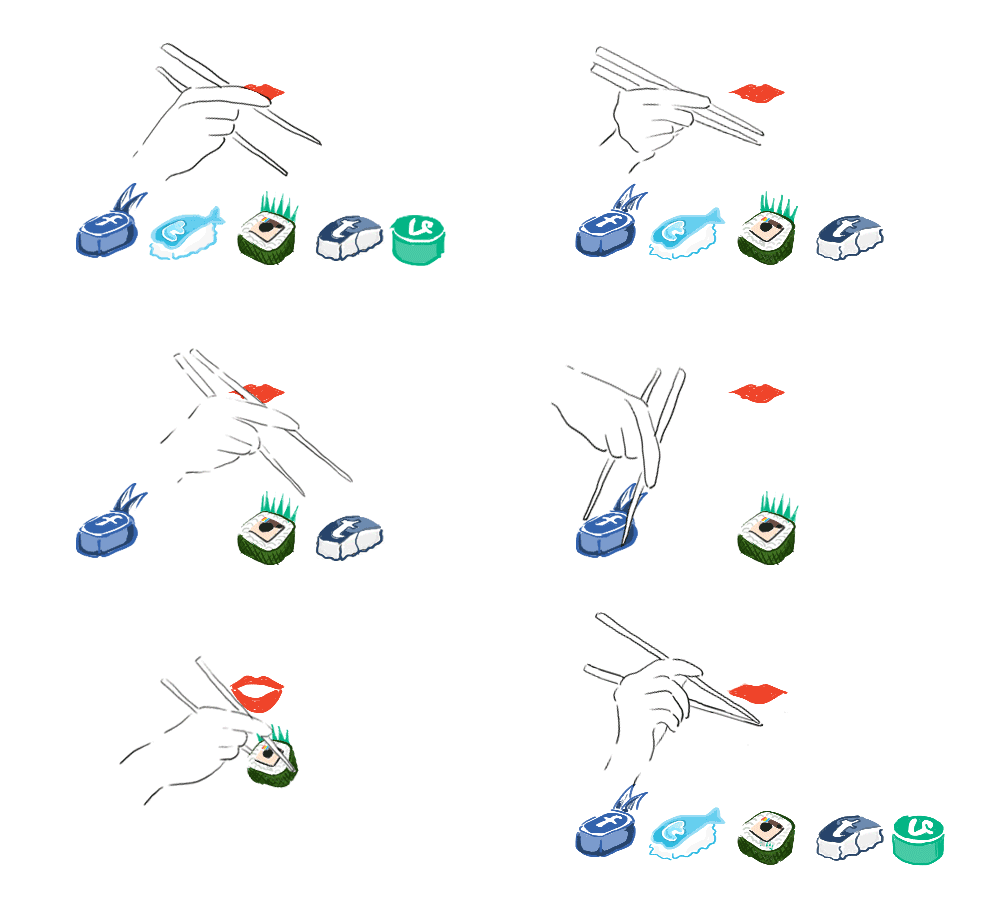
One question I would like to poise to you (the reader) is that do you believe books will be COMPLETELY useless and digital E-books will take over or do think that books will still serve a purpose long after we are gone?
 Mass Media and American Life
Books will always be useful. As much as we would like to believe that ebook is the new wave of reading books like what was references in the film “Out-of-Print”, readers may become an oddity instead of necessity. However, I believe it would take a long time for it to be discontinued entirely. Book has shown the relevancy of society and the culture it was produced in, so continuing it would be a misfortune of history. Also, today there are plenty of novelty readers, like myself, who find having a physical book to hold and write in as more soothing to the reader.
LikeLike