
Every month, year, decade comes with change and innovation. The 2000’s brought great technological advancements that gave people of all kinds new tools and resources to work with. Computers became more advanced, smartphones became a thing and people started streaming new movies on their television through Netflix and HULU, putting old fashioned movie theaters out of business. But what about books? An important tool used for all things pleasure, knowledge and school.
The film documentary, Out of Print by Vivienne Roumani sheds light on the current status of book and publication businesses and how they are struggling fit in with the online era. The sad truth boiling down to people just not having the drive to ‘sit down and read a good book’ anymore. That’s just so much work.. when you can just open Amazon-owned Audibly on your iPhone and listen to the book your “reading” while driving or doing work around the house. Sounds a lot more practical for busy life in the 20th century where work and personal life often overlap equating to a limited amount of free-alone time. The film outlines the tech corporations which are taking over books like Amazon and Google, the main culprits of everyone’s new favorite ‘e-books’, the cheaper and more convenient alternatives to paperback books. Some books can even be found online for free.. so why even bother going to the bookstore at all? Jeff Bezos, CEO of Amazon describes novels in a interestingly unorthodox way, “When you get into a book, the book disappears.” He also describes books as a “technology”, something that may not sit right with older generations.
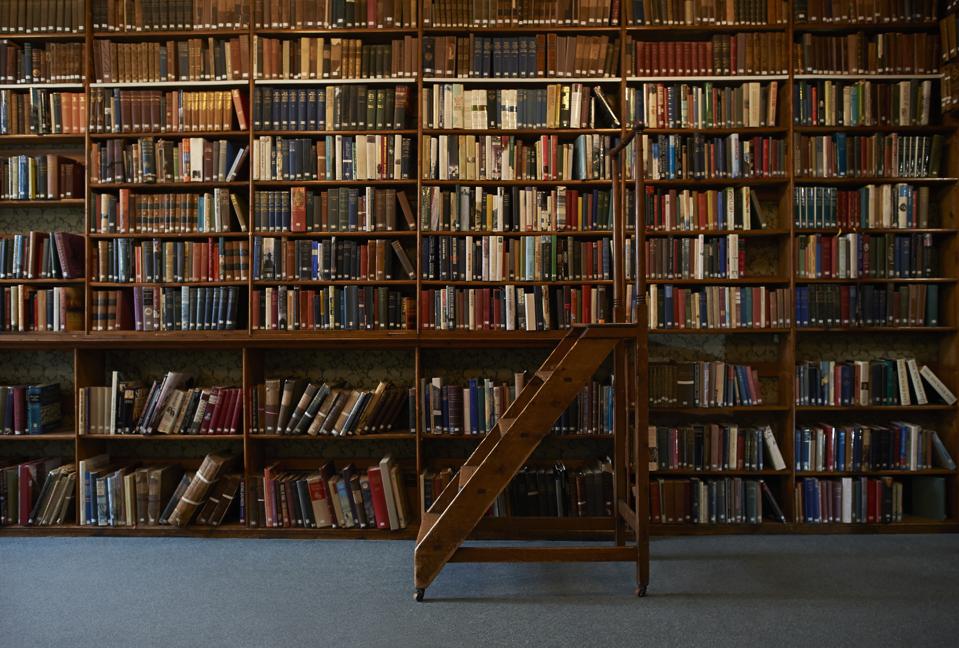
The first books were Papyrus scrolls invented by the Ancient Egyptians. This was a four stage process from cutting a papyrus plant into strips and overlaying the pieces in a criss cross motion. Since then the more ‘recent’ printing press was invented by Johannes Gutenberg in the 15th century, providing the tools to cheaply mass produce books to the public. This was seen as an advantage for everyone, making literacy and knowledge accessible to people of all classes as well as improving the economy. The recent debate is if the big tech giants (the new booming industry) has the same golden intentions. This film seems to think not as Millennial’s were raised in the digital era. They are taught to find their assigned books for school on websites because it’s cheap and easy. The act of going to the library or bookstore is kind of a hassle when you can spend a few minutes online downloading a digital copy. Besides, if you already have an account with Amazon, it’s cheaper to just get it from there anyways. This is the premise of what this film argues as most threatening; being taken over. The big tech giants giving so many the older respected book businesses a run for their money.
The question of longevity is an open-ended one in the film, how soon will everything just be digital? Nobody really knows, people do still read paperback books and perhaps they will for the next few years but ten, twelve years down the line? While watching this I thought it would be interesting to know just when books would disappear, if they would one day turn into $2 bills or collectors items. This is a sad thought for someone who does enjoy reading paperback books

 Mass Media and American Life
I believe books as we know them are coming to an end and people are looking towards more straight forward reading approaches that tells the point more quickly. It is evident that people now look more for how much and how quickly we can absorb things so books will most likely have to cater more towards this new ideology.
LikeLiked by 1 person
I completely agree with you @anthonipope! Books are much more of a hassle when comparing to an Ebook or finding readings online. The convenience of our advanced technology will continue to overpower the traditional paper books by far.
LikeLike
I think that books are definitely something that has lost its luster in the past ten years due to people having something better to do or watch because everything is at our fingertips now a days.
LikeLike
I agree with the author that the E-books have taken over the paper book industry. However, I mostly read paper books. If I were to read an E-book I would get distracted by incoming messages. I also like to know when each chapter ends and when I will finish the book. It is for this reason that I think the paper books will still be around for years to come.
LikeLike